It may come as a surprise, but about 30% of vegans could have high cholesterol. This shows the importance of paying attention to cholesterol for vegans. Though their diet doesn’t include animal products, other factors can raise cholesterol levels. This article will share tips to manage and keep cholesterol levels healthy, focusing on what vegans can eat.
Key Takeaways
- Monitor intake of saturated fats found in some plant-based alternatives.
- Emphasize whole foods over processed vegan products.
- Include heart-healthy fats like nuts, seeds, and avocados in the diet.
- Stay informed about vitamin B12 and calcium intake on a vegan diet.
- Engage in regular physical activity to support cholesterol management.
- Track and adjust dietary choices based on health indicators.
Understanding Cholesterol and Its Types
It’s vital to know about cholesterol for heart health, especially on a vegan diet. Our bodies make this waxy substance, needed for cell walls and hormones. Even though our liver makes all we need, what we eat affects its levels. Two main kinds, LDL and HDL cholesterol, are crucial to watch.
What is Cholesterol?
Cholesterol has many roles in our bodies. While the liver takes care of making it, some foods can raise its amount. Knowing the difference between LDL and HDL cholesterol is key for heart health. Too much LDL can harm us, leading to heart problems.
The Role of HDL and LDL Cholesterol
LDL cholesterol is called “bad” because it can clog arteries, raising heart disease risk. On the other hand, HDL is “good” cholesterol. It clears LDL from arteries, helping our hearts. By understanding these, we can choose foods that help our heart.
For those eating plant-based, this info is crucial. Studies show vegans often have lower cholesterol than meat-eaters. Vegans can manage cholesterol by eating right, like choosing whole foods and good fats, and eating lots of fiber.
Why Do Some Vegans Have High Cholesterol?
It can be tricky to understand why some vegans have high cholesterol. Different things play a part in this, from what they eat to their genes.
The Impact of Processed Vegan Foods
Processed vegan foods are easy to pick but not always good for cholesterol. Items like pastries and some vegan meats have a lot of saturated fats, like those from coconut oil. These fats can push up the bad cholesterol, posing risks for vegans with high cholesterol.
Also, trans fats in certain processed foods can mess with cholesterol levels. So, eating mostly whole foods and keeping processed vegan items to a minimum is key for heart health.
Genetic Factors Affecting Cholesterol Levels
Genes have a big say in your cholesterol levels. Some people have genetic cholesterol factors, like familial hypercholesterolemia, that give them high cholesterol no matter their diet. For those with this genetic twist, following a vegan diet isn’t enough. They need special diets designed just for their cholesterol issues.
The Role of Refined Carbohydrates
Refined carbs and sugars are also troublemakers for cholesterol. Eating a lot of these can spike your triglycerides, hurting your cholesterol health. Vegans with high cholesterol need to watch their carb intake. Picking healthy carbs is crucial for a heart-friendly vegan diet.
Vegans with High Cholesterol: Key Diet Changes
For those managing high cholesterol, making vegan diet changes is key. Switching to a whole foods diet significantly impacts health. Eating fresh fruits, vegetables, legumes, nuts, and seeds brings many benefits.
These foods are packed with dietary fiber and healthy fats. They help improve your cholesterol levels.
Emphasizing Whole Foods
A whole foods diet provides numerous benefits for vegans. Research shows that vegan diets can lower cholesterol levels. Total cholesterol drops by 0.34 mmol/L and LDL-C by 0.3 mmol/L compared to omnivorous diets.
Adding various plant-based foods boosts fiber intake. This supports better cholesterol management.
Reducing Processed Vegan Items
Limiting processed foods is crucial for vegans. Many vegan products are high in saturated fats and sugars, harming cholesterol levels. Avoiding these can lower LDL levels.
A study showed a 14% decrease in harmful lipoproteins for those on plant-based diets. This underscores the importance of balanced eating. Learn more about plant-based eating benefits here.
Plant-Based Diet for High Cholesterol Management
A plant-based diet helps manage cholesterol levels well. It focuses on heart-healthy fats and high fiber foods. These elements are key for better heart health. Choices should include the right fats and lots of dietary fiber to cut down cholesterol.
Incorporating Heart-Healthy Fats
Heart-healthy fats are a must for lowering cholesterol. Choose foods high in unsaturated fats, such as:
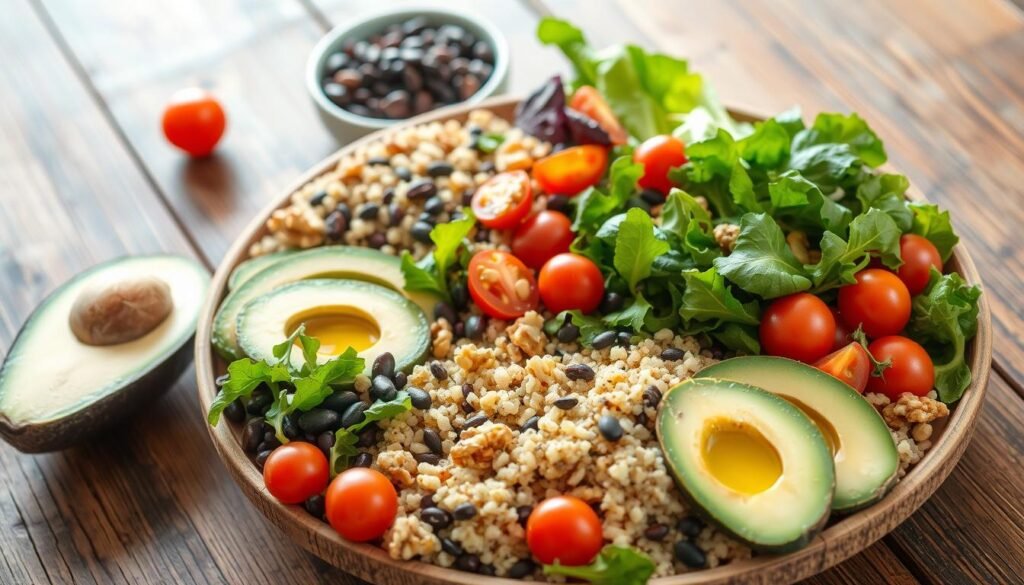
- Avocados
- Olive oil
- Nuts & seeds (like almonds and chia seeds)
- Fatty fish (if pescatarian)
These foods offer important nutrients and support the heart. Plant-based diets may lower LDL cholesterol by up to 30%. Avoid saturated and trans fats found in processed foods to prevent cholesterol spikes.
The Importance of Fiber
Fiber plays a big role in cholesterol management. It reduces cholesterol’s absorption in the gut. Foods rich in fiber in a plant-based diet include:
- Legumes (such as lentils and chickpeas)
- Whole grains (like oats, quinoa, and brown rice)
- Fruits (such as apples, berries, and oranges)
- Vegetables (including broccoli, carrots, and Brussels sprouts)
Eating these fiber-rich foods helps lower LDL cholesterol and boosts digestion. Adults should get at least 25 grams of fiber every day. Following a plant-based diet offers many health benefits along with delicious food choices.
| Food Source | Type of Fat | Fiber Content (per serving) |
|---|---|---|
| Avocado | Heart-healthy (Monounsaturated) | 10 g |
| Olive Oil | Heart-healthy (Monounsaturated) | 0 g |
| Almonds | Heart-healthy (Unsaturated) | 3.5 g |
| Lentils | Low-fat | 15.6 g |
| Oats | Low-fat | 8 g |
Vegan Foods for Heart Health
Choosing vegan foods for a healthy heart means eating lots of fruits, veggies, and grains. These foods not only taste great but also help keep your cholesterol in check.
Fruits and Vegetables to Include
Adding different fruits and vegetables can boost your health. Fruits for cholesterol management include:
- Berries: Blueberries and strawberries are full of antioxidants.
- Apples: They have soluble fiber that helps lower bad cholesterol.
- Leafy greens: Veggies like spinach and kale are great for your heart.
- Cruciferous vegetables: Foods like broccoli and Brussels sprouts fight cholesterol.
Eating these fruits and veggies gives you vitamins and minerals. These nutrients are key for good heart health on a plant-based diet.
Whole Grains That Support Healthy Cholesterol Levels
Whole grains also help keep cholesterol balanced. Whole grains and cholesterol include:
| Whole Grain | Benefits | Amount of Fiber (per cup cooked) |
|---|---|---|
| Oats | Full of beta-glucan, which lowers bad cholesterol. | 4 grams |
| Quinoa | A complete protein source and very high in fiber. | 5 grams |
| Brown Rice | Good for digestion and overall heart health. | 3.5 grams |
| Barley | Has soluble fiber to help reduce cholesterol absorption. | 6 grams |
Adding these whole grains to your meals can boost fiber and nutrients. This can help manage cholesterol and promote heart health. Sticking to a diet rich in fruits and grains is great for cholesterol.
Lowering Cholesterol on a Vegan Diet
Lowering cholesterol with a vegan diet needs a detailed plan. This plan should include diet changes and ways to live better. Making small changes every day can really help your cholesterol levels. This leads to a healthier heart.
Effective Lifestyle Modifications
Changing how you live is key to managing cholesterol. Here are some good strategies:
- Consume daily servings of cooked oatmeal between one to one and a half cups to achieve a reduction in cholesterol by 5-8%.
- Utilize heart-healthy oils, such as canola, olive, corn, and avocado oils, to support lower cholesterol levels.
- Limit processed and fast foods that may elevate cholesterol levels.
- Reduce alcohol intake, as excessive consumption raises LDL cholesterol and triglyceride levels.
- Be mindful of sugary drinks and reduce their consumption to improve cholesterol ratios.
Regular Physical Activity Recommendations
Regular exercise is important for heart health and cholesterol. It boosts HDL cholesterol and your overall health. Work out for 30 minutes a day with activities like:
- Walking or jogging in nature
- Cycling or swimming
- Group classes like Zumba or yoga
Enough sleep, around 6-7 hours, helps cholesterol levels stay healthy. Using stress management techniques, like mindfulness or meditation, is also important. This helps keep your lifestyle balanced.
| Lifestyle Modification | Impact on Cholesterol |
|---|---|
| Daily Oatmeal Consumption | Reduces cholesterol by 5-8% |
| Using Heart-Healthy Oils | Supports lower cholesterol levels |
| Reducing Alcohol Intake | Decreases LDL and triglyceride levels |
| Regular Physical Activity | Increases HDL cholesterol |
| Improving Sleep Quality | Essential for maintaining cholesterol levels |
By making these lifestyle changes and following a vegan diet, you can manage your cholesterol well. This is great for your heart’s health.
Building a Vegan Meal Plan for High Cholesterol
A well-thought-out vegan meal plan for high cholesterol focuses on foods good for the heart. It includes heart-healthy breakfast choices and cholesterol-lowering lunch and dinner ideas. This ensures you get balanced nutrition all day.
Breakfast Ideas for Heart Health
Starting your day with a healthy breakfast is key for good cholesterol levels. You can choose from:
- Oatmeal topped with fresh berries and a sprinkle of chia seeds
- Chia pudding made with almond milk and diced fruits
- Smoothies featuring spinach, banana, and plant-based protein powder
Such meals are rich in fiber, antioxidants, and healthy fats. They all support heart health.
Lunch and Dinner Options to Lower LDL
For lunch and dinner, there are many meals designed to lower LDL cholesterol:
- Quinoa bowls with black beans, corn, avocado, and leafy greens
- Vegetable stir-fries with tofu and a mix of colorful vegetables over brown rice
- Salads featuring kale, chickpeas, and a lemon-tahini dressing
These meals are not only tasty but also packed with important nutrients. They help manage cholesterol levels. A carefully planned vegan meal plan for high cholesterol can guide you in meeting your dietary needs well.
| Meal Type | Calories | Protein (g) | Carbohydrates (g) | Fat (g) |
|---|---|---|---|---|
| Breakfast | 400 | 15 | 60 | 15 |
| Lunch | 600 | 30 | 80 | 20 |
| Dinner | 800 | 35 | 100 | 25 |
Cholesterol-Lowering Vegan Recipes
Looking into vegan recipes that lower cholesterol can lead to tasty ways to live healthier. These simple vegan dishes are good for you and highlight cooking that’s kind to the heart by using pure ingredients. Foods high in fiber like legumes, whole grains, and fruits are key in controlling cholesterol.
Simple Recipes to Try at Home
Starting with easy recipes lets you make meals that are good for your heart with little effort. Here are some great options to try:
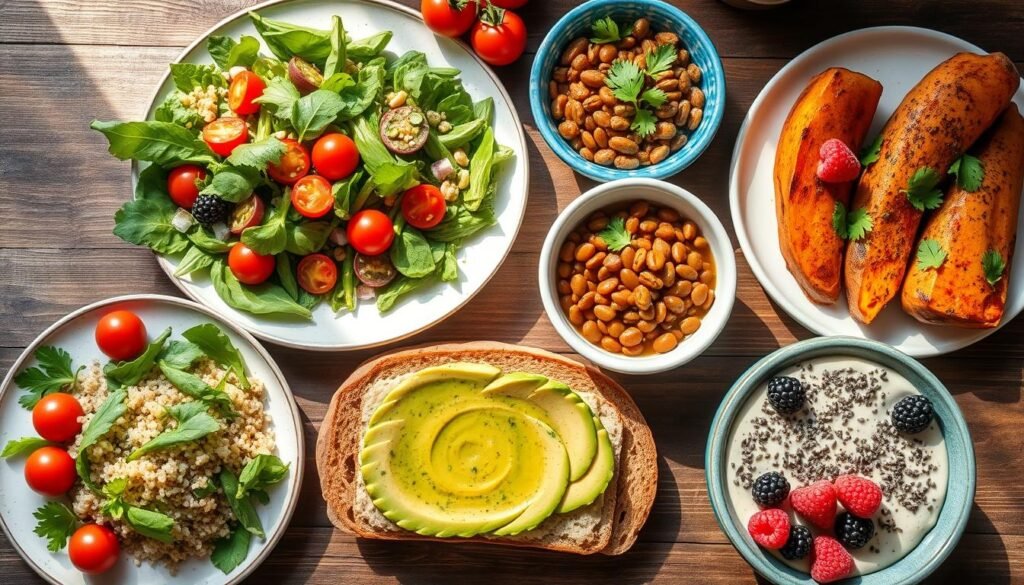
- Avocado Chickpea Toast
- Blueberry Overnight Oats
- Crunchy Thai Peanut & Quinoa Salad
- Sweet Potato & Kale Chilli
- Classic Chocolate Cake
The foods in these dishes, like chickpeas, oats, and various veggies, are ideal for lowering cholesterol. Mixing these ingredients means you can cook in a heart-healthy way without losing out on taste or fulfillment.
Ingredients to Focus on for Heart Health
Concentrating on certain foods can make your cholesterol-lowering vegan recipes even more effective. Here are some key ingredients to include:
| Ingredient | Benefits |
|---|---|
| Oats | Contains beta-glucans that help bind LDL cholesterol |
| Lentils | Rich in fiber and protein, supports heart health |
| Chickpeas | Helps regulate cholesterol levels and adds satiety |
| Berries | High in antioxidants and beneficial for overall health |
| Leafy Greens | Loaded with vitamins and essential nutrients |
Adding a variety to meals can change your eating habits for the better while leading to fun in the kitchen. To discover more vegan recipes good for cholesterol, check out this resource. It’s a great way to spice up your cooking path.
Vegan Supplements for High Cholesterol Support
Eating a balanced vegan diet is crucial for your health, especially for cholesterol. Even with the goodness of plants, some might find gaps in their diet. These gaps can interfere with managing cholesterol. Adding vegan supplements is an effective way to fill these gaps and maintain healthy cholesterol levels.
Nutritional Gaps in a Vegan Diet
A vegan diet sometimes lacks certain important nutrients. This can affect cholesterol control. Studies show vegans might not get enough vitamin B12. They need 2.4 mcg a day. If you can’t get this from food, taking a supplement with 25–100 mcg of cyanocobalamin is helpful.
Omega-3 fatty acids are also scarce in a vegan’s diet. Experts often suggest taking EPA and DHA supplements for heart health. Iron is another necessary nutrient, important for energy. Men and women have different needs. Vegans might need to consume more than the usual RDA because plant-based iron doesn’t absorb as well.
Recommended Supplements for Cholesterol Management
To better manage cholesterol, vegans can take specific supplements. Here’s a quick list of them and how they help:
| Supplement | Recommended Dosage | Main Benefit |
|---|---|---|
| Vitamin B12 | 25–100 mcg | Supports nerve function and energy production |
| Omega-3 (EPA & DHA) | 1,000 mg | Enhances heart health and reduces inflammation |
| Iron | 8 mg (men/post-menopausal women), 18 mg (adult women) | Supports healthy red blood cell production |
| Calcium | 1,000 mg (ages 19-50), 1,200 mg (over 50) | Maintains bone health |
These cholesterol management supplements help close the dietary gaps. They ensure proper cholesterol management for those following a vegan lifestyle.
The Importance of Regular Health Monitoring
Regular health checks are key for managing cholesterol well, especially for vegans. They keep you updated on your levels, helping you tweak your diet and lifestyle as needed. By testing cholesterol, vegans learn how their plant-based diet affects their cholesterol over time.
Understanding the Need for Cholesterol Testing
Cholesterol tests are a main part of staying healthy. They show important details about HDL (good) and LDL (bad) cholesterol. Testing often tracks how well diet changes are working to control cholesterol. For vegans, it’s important to know their cholesterol levels. This is because some plant-based foods can impact cholesterol differently than animal foods.
Tracking Other Health Indicators
Besides cholesterol, watching other health markers is vital. Monitoring blood pressure and blood sugar gives a full picture of heart health. These factors are closely connected to cholesterol, so it’s crucial to keep an eye on them. Taking a wider approach to health allows vegans to take charge of their well-being. It also helps in keeping cholesterol levels in check.
Managing Cholesterol as a Vegan
Vegan diets help manage cholesterol, but you need the right guidance. It’s smart to work with healthcare professionals. They can offer advice based on your dietary needs.
Regular meetings with healthcare experts ensure vegans get the right support. This support is tailored to their specific health situations.
Consulting Healthcare Professionals
If you’re struggling with cholesterol on a vegan diet, get professional help. Healthcare providers can check your cholesterol and recommend a diet plan. They often suggest eating more fiber and plant sterols to lower bad cholesterol.
With the right diet, your cholesterol levels can improve a lot.
Community Support and Resources
Joining the vegan community can offer lots of help. You get access to meal ideas and inspiring success stories. This kind of support encourages people to stay on track with their diets.
Making diet changes is easier with advice from professionals and support from the community. Both can help you manage your cholesterol better. For more vegan tips, check out this helpful resource.
Conclusion
Keeping cholesterol in check is key for heart health. This is true for vegans too, who might see high cholesterol even with a plant-based diet. Knowing why cholesterol levels go up is key. Making a diet plan full of whole foods and good fats helps a lot.
Lots of research tells us that a good vegan diet can really lower bad cholesterol. Some studies found that people on a vegan diet lowered their cholesterol by more than 15 mg/dL. For vegans looking to manage cholesterol, eating lots of fiber, antioxidants, and omega-3s is vital. It’s also smart to talk to a doctor to make sure your diet fits your needs.
It’s important to keep an eye on your cholesterol regularly. Working out, staying calm, and having people support you can make a big difference. These actions help vegans control their cholesterol and stay healthy. If you want to know more about vegan diets and cholesterol, check out this link: vegan dietary benefits and risks.