Did you know that high levels of LDL cholesterol greatly increase the risk for heart problems? LDL cholesterol, or “bad” cholesterol, is a key player in making plaque in your arteries. This plaque can block blood flow and raise the chance of heart attacks and strokes.
In this section, we will look at how LDL cholesterol and plaque are connected. We’ll see why it’s important to keep cholesterol under control for a healthy heart.
Key Takeaways
- Elevated LDL cholesterol is directly associated with the risk of atherosclerotic cardiovascular events.
- LDL cholesterol contributes to plaque formation within blood vessels, which can lead to heart disease.
- Managing LDL levels is crucial for reducing the risk of heart attacks and strokes.
- Atherosclerosis is a progressive condition that highlights the importance of regular cholesterol monitoring.
- Lifestyle changes and medical interventions can significantly reduce high LDL cholesterol levels.
What is Cholesterol?
Cholesterol is a wax-like, fat-like substance that’s key in building cell membranes and making hormones. The liver makes most of our cholesterol. The rest comes from foods like meat and dairy. It’s important for our health, but we need to keep it balanced.
There are two main kinds of cholesterol. LDL, or low-density lipoprotein, is often called “bad” cholesterol. HDL, or high-density lipoprotein, is known as “good” cholesterol. Too much LDL can clog arteries, raising the risk of heart issues. HDL cholesterol helps clear excess cholesterol, keeping us healthy.
It’s crucial to keep LDL and HDL cholesterol in check to protect the heart. Too much LDL can lead to coronary artery disease, strokes, and heart attacks. What we eat and how much we move can affect these levels. For example, eating lots of saturated fats can raise LDL, while not exercising might lower HDL.
Getting your cholesterol checked regularly is important since there are no clear symptoms of high cholesterol. Living a heart-healthy lifestyle can keep your cholesterol levels right. This includes staying active and eating well. Sometimes, though, medicine is needed to manage cholesterol.
| Type of Cholesterol | Function | Health Implications |
|---|---|---|
| LDL (Low-Density Lipoprotein) | Transports cholesterol to cells | High levels lead to plaque formation in arteries |
| HDL (High-Density Lipoprotein) | Removes cholesterol from blood | High levels protect against cardiovascular diseases |
Types of Cholesterol: LDL vs HDL
Understanding cholesterol types is key for heart health. There are many kinds, but LDL and HDL matter most.
LDL is called bad cholesterol because it makes artery plaque. This can lead to heart issues. Keeping LDL under 130 mg/dL is good, but with heart disease, aim for under 70 mg/dL.
HDL is good cholesterol. It moves cholesterol to the liver to get rid of it. This helps clear your arteries. Women need over 50 mg/dL and men need over 40 mg/dL of HDL.
In the US, 17% have high cholesterol, often due to diet, genes, and lifestyle. Diet influences about 10-12% of these cases. Exercise helps, especially if done for 20 minutes four times a week. Losing weight also boosts HDL and reduces LDL, which is great for your heart.
| Cholesterol Type | Common Name | Ideal Levels | Health Implications |
|---|---|---|---|
| LDL | Bad Cholesterol | Below 130 mg/dL (70 mg/dL if high-risk) | Increases risk of heart disease, plaques in arteries |
| HDL | Good Cholesterol | Above 50 mg/dL (40 mg/dL for men) | Protects against cardiovascular disease, helps clear arteries |
https://www.youtube.com/watch?v=0U7YHRW5dyc
How LDL Cholesterol Contributes to Plaque Formation
Understanding LDL cholesterol and its role in plaque buildup is key to knowing how atherosclerosis works. Studies show high levels of LDL cholesterol can speed up this disease. LDL cholesterol entering artery walls starts harmful processes, hurting our heart health.
The Process of Atherosclerosis
Atherosclerosis comes from cholesterol and plaques forming in arteries. High LDL cholesterol, smoking, and diabetes damage the arteries’ inner layer. This damage allows LDL particles to move past the protective lining, mainly those under 70 nm in size.
This leads to more plaque and swelling in artery walls. These actions contribute to the start of atherosclerosis, making arteries prone to more damage.
Impact on Blood Vessels
As plaques continue to form, blood vessels change in harmful ways. LDL cholesterol working with artery walls results in more smooth muscle and components. This makes blood vessels narrower.
With narrower vessels, blood flow drops. This can cause serious heart issues. Keeping LDL levels in check is crucial.
Cardiovascular Disease and LDL Cholesterol
Every year, cardiovascular disease causes about 650,000 deaths in the US. It’s closely linked with high LDL cholesterol levels. Knowing about this connection helps people protect their heart health.
Understanding Coronary Artery Disease
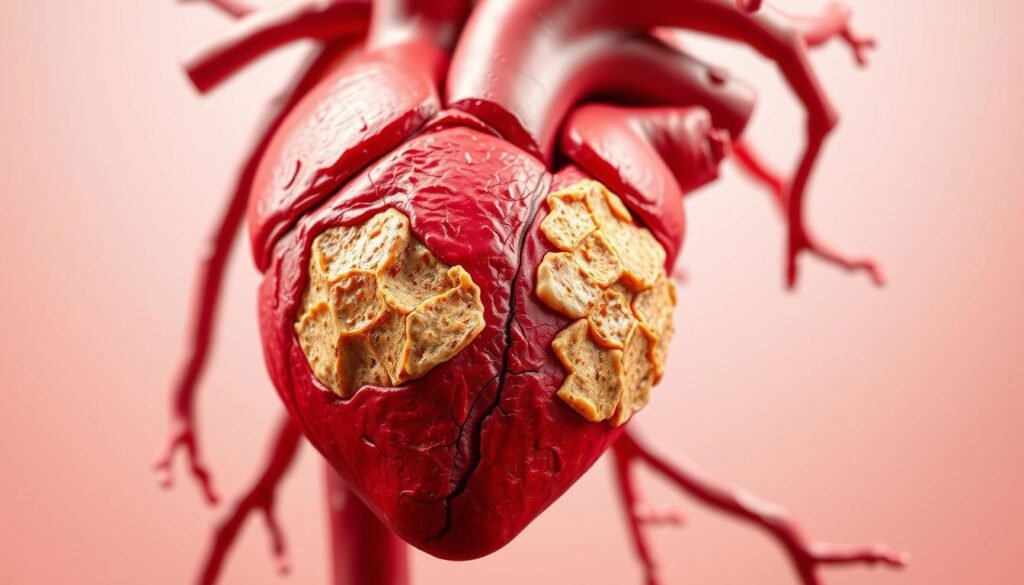
Coronary artery disease (CAD) happens when LDL cholesterol forms plaque in heart arteries. This condition, atherosclerosis, narrows arteries, causing angina and heart attacks. Research shows lowering LDL cholesterol can shrink plaque, improving heart health.
- Statins can lower LDL cholesterol by over 60%.
- Fibrates and niacin can also help adjust lipid levels, but with possible side effects.
- Plant sterols can modestly cut cholesterol levels.
Effects of High LDL Levels on Heart Health
High LDL cholesterol is a big risk for heart disease. Studies show that 90% of heart attacks are due to modifiable factors, like high cholesterol. Focusing on heart health with diet and exercise can lower these risks. A diet rich in fiber and low in fat, regular exercise, and not smoking can better heart health and reduce cardiac risks.
Risk Factors for High LDL Levels
Understanding the risk factors for high LDL levels is key. Many things contribute to high cholesterol. This includes what we eat, our genes, and how we live. Knowing these factors helps us make better health choices.
Dietary Influences
What we eat greatly affects our LDL levels. Foods rich in saturated and trans fats raise cholesterol. These are found in fatty meats, full-fat dairy, and processed foods. Eating more fruits, veggies, and whole grains helps keep cholesterol in check.
Genetics and Family History
Our genes play a big role in our cholesterol levels. Some people have a condition that makes their LDL levels very high. This can happen no matter their lifestyle. Knowing your family history can help you watch out for cholesterol problems.
Impact of Lifestyle Choices
Your lifestyle has a big impact on cholesterol. Not moving enough, smoking, and being overweight are all risks. Moving more can lower your weight and improve heart health. Stopping smoking also helps by increasing good cholesterol levels. Eating well and exercising are key to lower cholesterol risk.
Cholesterol Testing and Tracking Levels
Understanding the need for regular cholesterol tests is key to managing levels well, especially LDL. Spotting high cholesterol early can greatly lower heart risk. Guidelines suggest how often and when you should get blood tests.
When to Get Tested
The American Heart Association says adults should start getting cholesterol tests every 4–6 years starting at age 20. By age 40, you might need tests more often, depending on personal risks. If you have a family history of heart disease, had high cholesterol before, or have type 2 diabetes, you may need to test more often. Kids should get tested at ages 9-11 and then 17-21, the CDC recommends.
Interpreting Your Cholesterol Numbers
Knowing what your cholesterol numbers mean is vital for looking after your heart. A cholesterol test looks at total cholesterol, LDL (the “bad” kind), HDL (the “good” kind), and triglycerides. The CDC says good levels are:
| Cholesterol Type | Target Level |
|---|---|
| Total Cholesterol | Below 200 mg/dl |
| LDL Cholesterol | Below 100 mg/dl |
| HDL Cholesterol | At or above 60 mg/dl |
| Triglycerides | Below 150 mg/dl |
Getting tested regularly helps you take charge of your cholesterol. Eating well and exercising can reduce bad cholesterol. Monitoring your levels helps avoid heart problems. For more on managing high cholesterol and preventing heart attacks, visit this resource.
Lipid Management Strategies
Managing lipids is key to lowering heart disease risk. Changes in diet and exercise can lower bad cholesterol. This helps keep the heart healthy.
Dietary Changes to Lower LDL
For a healthier heart, changing what you eat is key. Important changes include:
- Incorporating more fruits, vegetables, and whole grains which are rich in fiber.
- Reducing saturated fats found in red meat and full-fat dairy products.
- Choosing healthier fats like those found in olive oil and avocados.
- Including omega-3 fatty acids from fish such as salmon and mackerel.
These dietary adjustments lower bad cholesterol and boost overall health. Studies show they greatly reduce heart disease risk.
Importance of Regular Exercise
Exercise is a powerhouse for managing lipids. It can:
- Enhance HDL cholesterol levels, further aiding in the reduction of overall cardiovascular risk.
- Promote weight loss, which is beneficial for those with elevated LDL levels.
- Improve heart function and circulation, leading to better lipid profiles.
Moderate exercises like walking or cycling for 150 minutes a week are beneficial. Mixing aerobic and resistance exercises is best for cholesterol management.
| Strategy | Impact on LDL Levels |
|---|---|
| Dietary Changes | Can reduce LDL levels by 10-15% |
| Regular Exercise | May lower LDL levels by 5-10% |
| Combining Diet and Exercise | Can lead to a greater reduction of LDL levels |
In summary, diet and exercise are crucial for managing lipids. They lower bad cholesterol and improve heart health.
Medications for Controlling LDL Cholesterol
Many people with high cholesterol can’t fix it with lifestyle changes alone. They need medication for LDL management. Statins are key in this process. They lower LDL cholesterol a lot. They also lower the chance of heart attacks or strokes. Doctors often recommend statins, like Lipitor and Crestor. This is for adults who have heart disease or very high LDL levels. People with diabetes may also need to take statins.
Statins: Understanding Their Role
Statins are great at lowering bad (LDL) cholesterol and can even boost good (HDL) cholesterol. They also cut down triglycerides, which are fats in your blood. Using statins leads to less major heart problems. If you need more help, cholesterol-lowering medications can be customized to fit your health needs.

Other Cholesterol-Lowering Medications
Apart from statins, there are other ways to manage cholesterol. Ezetimibe lowers cholesterol absorption in your gut. PCSK9 inhibitors are strong drugs that lower LDL. Fibrates focus on triglycerides but also help with LDL a little. Niacin lowers triglycerides too. Omega-3 fatty acid ethyl esters, from fish oils, are good for high triglycerides. This shows there are many ways to manage cholesterol well.
| Medication Class | Main Action | Effect on LDL | Effect on Triglycerides |
|---|---|---|---|
| Statins | Inhibit cholesterol production | Significantly lowers | Mildly lowers |
| Ezetimibe | Reducing cholesterol absorption | Lowers | Mildly lowers |
| PCSK9 Inhibitors | Enhances LDL clearance | Powerfully lowers | Mildly lowers |
| Fibrates | Lower triglycerides | Mildly lowers | Significantly lowers |
| Niacin | Reduces triglyceride levels | Mildly lowers | Significantly lowers |
| Omega-3 Fatty Acids | Lower triglycerides | Mildly lowers | Significantly lowers |
Knowing these options helps doctors and patients work together for the best LDL management. The right mix of meds and lifestyle changes can really improve heart health.
Preventing Atherosclerosis and Plaque Buildup
To keep your heart in good shape, it’s smart to act early against atherosclerosis. This condition means plaques build up in arteries, causing heart problems. Making small changes in your life is key to lowering your risk of this disease.
Lifestyle Adjustments for Heart Health
Positive changes in your lifestyle are crucial for fighting atherosclerosis. These steps boost your heart health and cut down on risks:
- Maintain a balanced diet: Eating whole grains, fruits, veggies, and healthy fats helps manage cholesterol and promotes a healthy heart.
- Engage in regular exercise: Try to get at least 2.5 hours of aerobic exercise weekly. It fights a sitting lifestyle, lowers blood pressure, and helps with weight.
- Avoid smoking: Giving up smoking is a major change that decreases your chance of getting atherosclerosis.
- Monitor weight carefully: Staying at a healthy weight reduces heart strain and helps keep blood pressure and cholesterol in check.
Also, keeping tabs on your blood pressure and cholesterol levels is a proactive step for prevention. It keeps you updated on your health status.
Importance of Monitoring Inflammation
Watching inflammation levels helps in the fight against atherosclerosis. Inflammation can worsen heart conditions and increase plaque in arteries. Getting regular check-ups and blood tests inform you about your inflammation status, aiding in timely lifestyle tweaks.
Knowing how inflammation and heart health connect helps you make smarter health decisions. By adjusting your lifestyle and monitoring inflammation, you lower your atherosclerosis risk. This leads to a healthier heart and body.
LDL Cholesterol and Plaque Formation
The link between LDL cholesterol and plaque formation is key for cardiovascular health. High “bad cholesterol” levels make arterial plaque build up. This can lead to heart attacks and strokes, emphasizing the need for deep understanding.
Plaque consists of fats, cholesterol, waste, calcium, and fibrin. LDL cholesterol enters artery walls as it moves in the bloodstream. With time, plaque accumulates, narrowing blood flow and raising atherosclerosis risks. Studies show this process can start in children under 10, making early cholesterol checks vital.
About 94 million American adults over 20 have high cholesterol levels. This shows how widespread high cholesterol is as a health issue. Unhealthy diets, smoking, obesity, and lack of exercise all increase LDL cholesterol and plaque risks. Men face higher risks after 45, and women after 55.
To fight plaque and enhance heart health, lifestyle changes are essential. Eating better, exercising, staying at a healthy weight, and stopping smoking can help. If these steps aren’t enough, doctors might suggest statins to lower LDL cholesterol. Knowing these facts helps people actively manage their heart health and avoid plaque problems.
Conclusion
Knowing how LDL cholesterol and plaque work together is key in preventing heart disease. Over one-third of Americans have high LDL cholesterol levels. It’s important we focus on eating right and living healthy to protect our hearts. Studies show high LDL leads to plaque in our arteries. This can cause serious health problems.
Even though some research, like a study in BMJ Open, questions the link between LDL and heart disease, most experts agree LDL is a big part of the problem. People, especially those over 60, see different effects on their health related to LDL. despite these debates, keeping cholesterol levels healthy remains critical.
We can lower LDL cholesterol by eating well, exercising, and sometimes taking medicine. This approach helps us fight heart disease. Taking steps to manage cholesterol can make a big difference. It leads to a healthier life for those worried about heart disease.