Have you ever wondered why some young individuals get heart disease, despite being healthy? This might be due to familial hypercholesterolemia (FH). FH is a genetic disorder. It causes very high levels of low-density lipoprotein (LDL) cholesterol in the blood. Knowing about this hereditary high cholesterol is important. If untreated, it can greatly increase the risk of heart problems.
FH usually comes from families and is autosomal dominant. This means if one parent has the gene mutation, their child has a 50% chance of inheriting it. About 1 in 200 adults in the United States has the FH gene mutation. That’s roughly 1.3 million people nationwide. Shockingly, only about 10% know they have it. This shows why it’s critical to spread awareness and screen families.
It’s crucial to catch and treat FH early. Often, its effects show up from infancy. People with one copy of the gene (HeFH) might have LDL cholesterol levels over 190 mg/dL. Those with two copies (HoFH) can see levels over 400 mg/dL. Without treatment, HoFH could cause heart disease in kids as young as 2 or 3. So, understanding FH shows us how genetics play a big role in managing cholesterol and preventing heart disease.
Key Takeaways
- Familial hypercholesterolemia is a hereditary condition leading to high cholesterol and increased heart disease risk.
- Only about 10% of individuals with FH are aware they have it.
- Early detection and treatment can dramatically reduce the risk of cardiovascular events.
- Type of FH affects the age of onset and severity of symptoms.
- Cascade screening is crucial for identifying at-risk family members.
What is Familial Hypercholesterolemia?
Familial hypercholesterolemia is a condition you get from your family. It causes very high levels of cholesterol. This happens because of genetic mutations. These mutations make it hard for your body to manage cholesterol.
People with this condition have a lot of LDL cholesterol, which is bad. This puts them at risk for heart disease and other heart problems.
Some children show signs of this disease early, especially if both parents pass it on. Without treatment, it can lead to serious health issues. Young people could have heart attacks before turning 20.
Having this condition means a higher chance of getting heart disease early. Men might have heart attacks before 50. Women might face this risk before 60.
Some groups have this condition more than others. For example, Ashkenazi Jews, some Lebanese, and French Canadians. About 1 in 250 people have it. But in places like England, people often don’t know they have it because there’s no screening.
Finding this condition early and starting treatment can really help. Medicines like statins can lower cholesterol. This helps people live a life similar to those without the condition. Getting help early is very important.
Causes of Familial Hypercholesterolemia
Familial hypercholesterolemia (FH) is mainly caused by an LDL receptor mutation. This makes it hard for the body to get rid of LDL cholesterol. Because of this genetic issue, LDL cholesterol levels can get very high early in life, leading to health risks. Other genes like PCSK9 and Apolipoprotein B also play a role in this condition, making it harder to manage cholesterol.
FH is passed down in an autosomal dominant way. This means if a parent has the gene change, each child has a 50% chance of getting it too. Knowing your family’s medical past is crucial for spotting risks early. The rarer homozygous form happens when a child gets the faulty gene from both parents, causing more severe symptoms.
About 1 in 500 people are heterozygotes for FH, having just one altered gene. However, the homozygous type, which is very rare, occurs in 1 in a million. These cases can have serious effects like heart attacks before 30 years old. This fact shows the importance of genetic testing to spot FH and its causes.
| Factor | Description |
|---|---|
| LDL Receptor Mutation | Impaired removal of LDL cholesterol from the blood. |
| PCSK9 Variants | Modifications that affect LDL cholesterol regulation. |
| Apolipoprotein B Alterations | Influences the metabolism of cholesterol. |
| Inheritance Pattern | Autosomal dominant; 50% chance of passing the gene to children. |
| Homozygous FH | Severe form; heart attacks may occur before age 30. |
How Common is Familial Hypercholesterolemia?
In the United States, familial hypercholesterolemia (FH) affects about 1 in 250 people. Around the world, that number is slightly higher, with 1 in 311 having FH. Sadly, only about 1% of the 25 million affected globally are diagnosed.
For people with heart issues, the chances of having FH are much higher. It’s found in 1 out of 17 people with cardiovascular diseases. Those with coronary artery disease have an even higher rate, 1 in 16. And for stroke survivors, it’s 1 in 75.
Most people get diagnosed with FH around the age of 50. But experts recommend early screenings. Cascade genetic screening is key in finding FH. It helps raise awareness and is cost-saving. Check out more on familial hypercholesterolemia.
If a parent has FH, their kids have a 50% chance of inheriting it. Some groups, like French Canadians and Dutch Afrikaners, see higher rates of FH because of genetics. But fewer than half of those with FH are getting correct treatment. This leads to many undiagnosed cases and a high risk of early heart disease.
Types of Familial Hypercholesterolemia
Familial Hypercholesterolemia (FH) comes in two main types: heterozygous and homozygous. Knowing the differences is key for the right diagnosis and treatment.
Heterozygous FH (HeFH) is more common. It happens in about 1 in 200 to 500 people worldwide. You get it if one parent passes on the gene. This can push LDL cholesterol levels very high, sometimes over 190 mg/dL if not treated. If you have HeFH, there’s a 50% chance your kids might inherit it. That’s why it’s important to check the whole family.
Homozygous FH (HoFH) is much less common, affecting between 1 in 160,000 to 1 million people. This type happens when both parents pass on the gene, causing very high LDL cholesterol, sometimes over 400 mg/dL. Kids with HoFH can get heart disease very early, even at 2 or 3 years old, if not caught and treated quickly.
Kids with FH often have total cholesterol levels around 6.7 mmol/L. Adults’ levels can be over 7.5 mmol/L. It’s important to know about these types of FH. Early diagnosis and treatment can really help lower the risk of heart disease. Medicines like statins can start to help around age 8 for children.
Symptoms of Familial Hypercholesterolemia
The symptoms of familial hypercholesterolemia can be hard to spot. Sometimes there are no clear signs until serious heart problems show up. Many people don’t know they have it, which can lead to big health issues later. Testing cholesterol regularly is key, especially if someone in the family has it.
Some might see physical signs, like cholesterol deposits called xanthomas. These can show up on the Achilles tendons or eyelids. If one person in the family has it, there’s a 50% chance it can be passed to kids or brothers and sisters. This makes it vital to keep an eye on everyone’s health.
Signs of early heart disease might include chest pain. This could mean there’s a problem with the heart’s arteries even in younger people. If both parents have the gene, their kids might show symptoms very early. Without treatment, they could have a heart attack or stroke before turning 20.
People with this condition are way more likely to get coronary heart disease if it’s not managed. Starting screening and treatment around 8 or 9 years old can greatly reduce heart disease risk by 30. Living a heart-healthy life is important, and sometimes medicine is needed too.
For special care, the Lipid Clinic has programs to help control this disorder.
| Physical Signs | Description |
|---|---|
| Xanthomas | Cholesterol deposits appearing in skin areas, such as eyelids and tendons. |
| Corneal Arcus | A white or gray ring around the iris of the eye. |
| Chest Pain | Potential early heart disease symptom manifesting at a young age. |
Diagnosing Familial Hypercholesterolemia
To diagnose familial hypercholesterolemia, doctors review the patient’s medical history and do a physical exam. They also conduct specific tests in the lab. The LDL cholesterol test is very important because high levels, over 190 mg/dL, can signal a problem. Genetic testing can confirm if familial hypercholesterolemia is the issue. It helps doctors understand if relatives might be at risk too.
About 60% to 80% of people suspected to have the condition are confirmed by genetic testing. But, 20% to 40% might get a negative test result even if they have it. This shows why other clues, like family history and physical signs, matter. The first family member tested should show signs of the condition. If a specific FH-causing mutation is found, other relatives can be tested for it.
- Positive results indicating the presence of a genetic mutation related to familial hypercholesterolemia.
- Negative results where LDL cholesterol levels remain above or below 190 mg/dL.
- Variants of uncertain significance (VUS), where the implications of the genetic change are unclear.
It’s key for relatives of someone with an FH mutation to get tested too. Sometimes, finding a variant of uncertain significance (VUS) means more tests are needed. Even with a negative genetic test, high cholesterol, family history, and signs can help diagnose familial hypercholesterolemia.
Heterozygous familial hypercholesterolemia affects 1 in 500 to 1 in 250 people. In certain groups, like those with acute coronary syndrome, it’s even more common. Quick and accurate diagnosis is vital for managing and treating the condition effectively.
Hereditary High Cholesterol: Familial Hypercholesterolemia
Familial Hypercholesterolemia (FH) is a significant health issue that’s inherited. It’s important to understand its genetics for early spotting, particularly in at-risk families. Genetics plays a key role in FH, affecting not just individuals but whole families.
The Role of Genetics in Familial Hypercholesterolemia
About 1 out of every 200 adults in the U.S. has FH. This condition comes from a genetic change on chromosome 19. It can come from either one or both parents. People with Heterozygous FH have very high LDL cholesterol levels, sometimes over 190 mg/dL.
Homozygous FH is rarer and causes even higher cholesterol levels. It affects around 200,000 people in the U.S.
Implications of a Positive Diagnosis
Finding out you have FH can greatly impact you and your family. In the U.S., around 1.3 million people have FH but only 10% know they have it. Spotting it early through family screening can help prevent heart disease. Once diagnosed, it’s key to look at lifestyle changes and medicines to control cholesterol.
Treatment Options for Familial Hypercholesterolemia
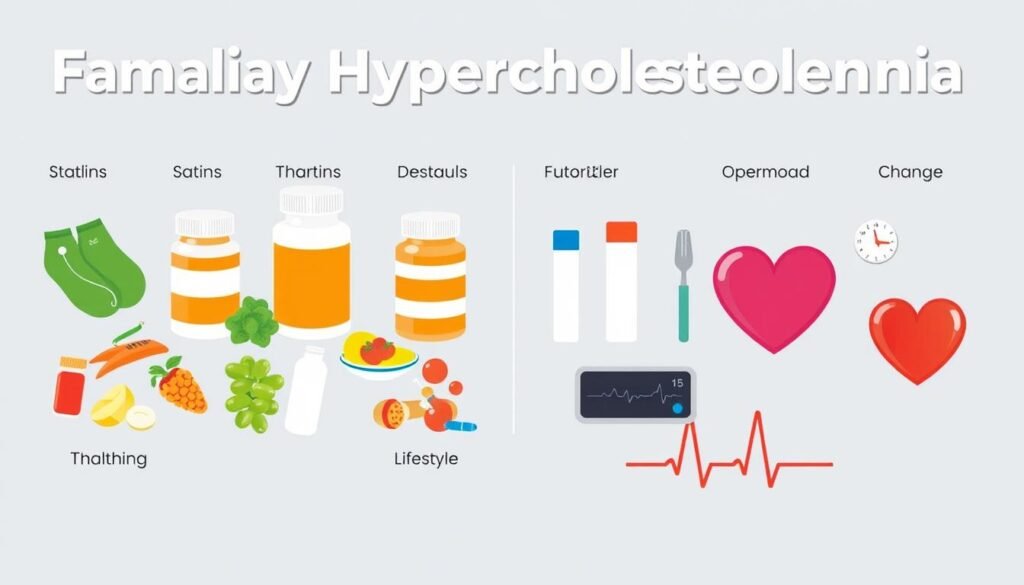
Treating familial hypercholesterolemia focuses on lifestyle changes and medications. The main goal is to lower LDL cholesterol and lessen heart disease risk.
Lifestyle Modifications
Eating well is key in managing this condition. It’s important to:
- Reduce saturated and trans fats.
- Eat more fruits and vegetables for fiber.
- Keep active regularly.
- Watch your weight for better health.
- Stop smoking and drink less alcohol.
These lifestyle changes can really improve your health and manage cholesterol. Regular talks with your doctor help keep you on track.
Cholesterol-Lowering Medications
People with this cholesterol issue often need medication to get their LDL levels right. Common treatments include:
- Statins to cut LDL cholesterol.
- Ezetimibe stops cholesterol from being absorbed.
- PCSK9 inhibitors for serious cases.
- Lomitapide and evinacumab for homozygous FH.
- Lipoprotein apheresis for some patients.
The goal is to keep LDL below 100 mg/dL if you’re at low risk. If you have more risk, aim for under 70 mg/dL for safety.
Cascade Screening for Familial Hypercholesterolemia
Cascade screening is key to quickly finding people at risk for familial hypercholesterolemia. It tests the affected people and their families to protect heart health. Often, relying just on family history misses 30% to 60% of the cases.
The Importance of Early Diagnosis for Family Members
With early diagnosis, we can greatly improve the lives of those with this genetic issue. About half of the close family members are also affected. So, it’s vital to screen these relatives early.
In places like the Netherlands, cascade screening has identified 70% of the cases. Early steps, like diet changes and medicine, can lower the risk of heart disease. This is key because untreated people have a much higher risk of heart problems.
| Statistic | Value |
|---|---|
| Global prevalence of FH | 1 in 500 |
| Estimated number of people with FH in the U.S. | Around 600,000 |
| Sensitivity of DNA testing for LDLR gene mutations | 70-80% |
| Cumulative risk for coronary heart disease in men with FH by age 50 | Greater than 50% |
| Reduction in risk of heart disease with statin treatment | About 80% |
Testing early helps remove the stigma around familial hypercholesterolemia. It leads to better condition management. Making tests easy to get and teaching the public about screening will improve health for many.
Impact of Familial Hypercholesterolemia on Cardiovascular Health
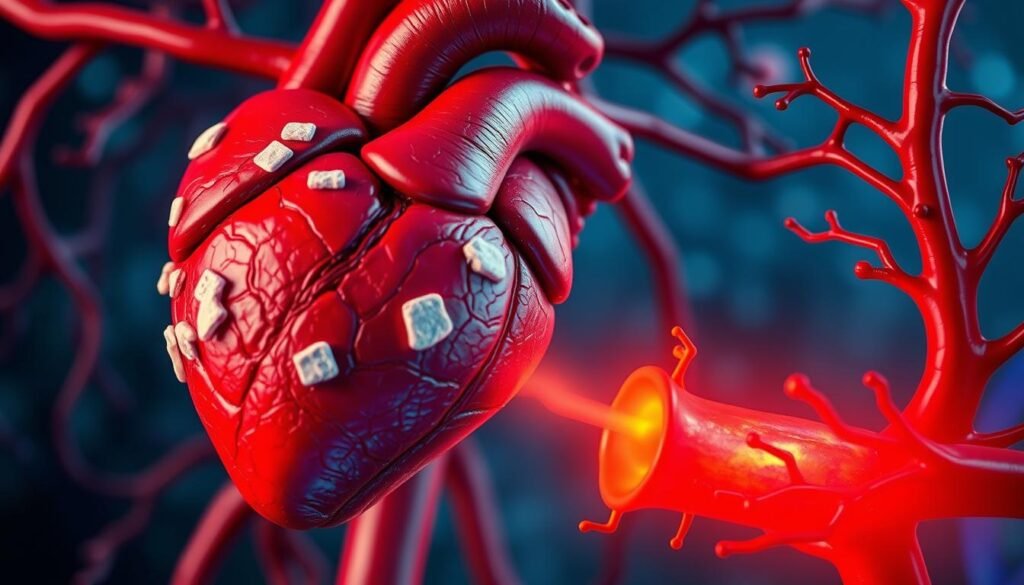
Familial hypercholesterolemia is a big problem for heart health. It makes people much more likely to have serious heart problems. Research shows those with the condition are about 1.87 times more likely to face heart issues.
For those with acute coronary syndrome and this condition, the risk jumps to 1.91 times. These numbers show how serious the impact is on heart health.
Understanding Heart Disease Risk Associated with FH
Having familial hypercholesterolemia makes heart disease more likely. People with a score of 6 or more on the Dutch Lipid Network criteria are at even greater risk. They have a 2.24 times higher chance of heart events than those with lower scores.
This condition also leads to more acute coronary syndrome cases. This is especially concerning for younger people.
In settings focused on preventing heart disease, those with FH-show conditions have higher disease rates. They experience 14.9 events per 1,000 person-years. That’s a lot higher compared to 7.1 for those with normal lipid levels. This difference highlights the importance of watching and acting early to reduce heart risks linked to FH.
Conclusion
Familial hypercholesterolemia is a common hereditary condition. It affects 1 in 300 to 500 people. It is more common in some populations.
Knowing about this condition is crucial. Symptoms like tendon xanthomas and high cholesterol need early spotting. This helps in early treatment.
Good management can hugely improve life. Affected individuals can lower their cholesterol by changing lifestyle and following their medication plan. This reduces heart risks.
Genetic counseling helps find family members at risk. Screening helps in managing this condition within families. It’s a team effort for families.
Understanding this condition is empowering. Being aware of risks and symptoms can lead to early help. It can prevent heart problems, keeping families healthy for long.