Did you know almost 1 in 5 kids in the U.S. has high cholesterol? This key fact shows a health issue we need to tackle for our kids’ future. Cholesterol is not just an adult thing. It’s vital for kids—impacting their growth and heart health later on.
Learning about cholesterol in kids is key for good health down the line. High cholesterol can lead to heart problems as adults. This means teens, especially those who are overweight or have a family heart disease history, need regular checks. Knowing about cholesterol and its risks helps us guide our kids towards healthier choices.
Changes like eating more fruits, vegetables, and whole grains help manage cholesterol. Parents should also push for regular physical activity and keep an eye on cholesterol levels. For more insights, check out understanding cholesterol in children and teens.
As kids get closer to their teen years, it’s crucial for parents to get involved in their cholesterol management. This ensures they grow into healthier adults and lowers heart disease risks.
Key Takeaways
- Nearly 1 in 5 children in the U.S. experiences unhealthy cholesterol levels.
- Regular cholesterol monitoring in teens is crucial for long-term heart health.
- Heart-healthy diets combined with regular physical activity can significantly improve cholesterol levels.
- Understanding pediatric cholesterol levels is essential for parents to promote health in their children.
- Screening for high cholesterol is recommended based on specific risk factors.
What is Cholesterol?
Cholesterol is a waxy, fat-like substance that’s very important in the body. It’s made by the liver and helps form cell membranes, hormones, and vitamin D. It’s essential for many body functions. Knowing about different types of cholesterol is key for good health, especially in kids.
Our bodies get cholesterol from food and make it too. Foods from animals like meat, dairy, and eggs have cholesterol. Plants, like fruits and vegetables, don’t have any. Although cholesterol is crucial, too much of it can lead to heart problems as we get older.
Kids and teens can have high cholesterol, which can come from their diet or family history. Parents need to watch this to keep their kids healthy. Knowing about cholesterol types is the first step in encouraging heart health for kids’ futures.
| Cholesterol Type | Function | Health Implications |
|---|---|---|
| LDL (Low-Density Lipoprotein) | Transfers cholesterol to cells | High levels can lead to plaque buildup in arteries |
| HDL (High-Density Lipoprotein) | Removes cholesterol from the blood | Higher levels are beneficial, reducing risk of heart disease |
| Triglycerides | Stores energy in fat cells | High levels linked to obesity and heart disease |
Understanding Cholesterol in Childhood and Adolescence
Cholesterol is key for kids and teens’ health and development. It is important for brain growth and making hormones. Keeping cholesterol balanced helps maintain childhood heart health and lowers future health risks.
Importance of Cholesterol for Development
Cholesterol helps build cell walls and is needed for growth. Kids and teens need the right level of cholesterol as their bodies change quickly. If not watched, poor cholesterol can slow development and raise later health issues.
How Cholesterol Affects Future Health
Healthy hearts start in youth. Kids with high cholesterol may face adult health problems. High cholesterol is a big cholesterol risk factor in teens. It can lead to heart disease or stroke. Eating right and staying active can help. It’s vital for kids to learn about cholesterol. For tips on understanding cholesterol tests, check out this link.
| Cholesterol Level | Recommended Values | Health Implications |
|---|---|---|
| Total Cholesterol | Below 170 mg/dL | Low risk for heart disease |
| LDL Cholesterol | Less than 130 mg/dL | Healthy level; reduces atherosclerosis risk |
| HDL Cholesterol | Greater than 60 mg/dL | Protective against heart disease |
| Triglycerides | Below 150 mg/dL | Normal level; reduced heart disease risk |
Sources of Cholesterol
It’s important to know where cholesterol comes from to help kids eat right. Our bodies need cholesterol to work well. It comes from two places: made inside us and from the food we eat.
Cholesterol from the Body and Diet
The liver makes all the cholesterol we need and keeps it balanced. But what we eat also affects cholesterol levels. Eating foods with a lot of saturated and trans fats can make our liver make more cholesterol. So, it’s key for parents to watch their kids’ diets.
Foods High in Cholesterol
Here are some foods that have a lot of cholesterol:
- Egg yolks
- Meats and poultry
- Seafood
- Full-fat dairy products
On the other hand, plants like fruits, veggies, and whole grains don’t have cholesterol. They are good for the heart. Making smart food choices and eating less high-cholesterol food is good for kids’ health.
Types of Cholesterol: LDL and HDL
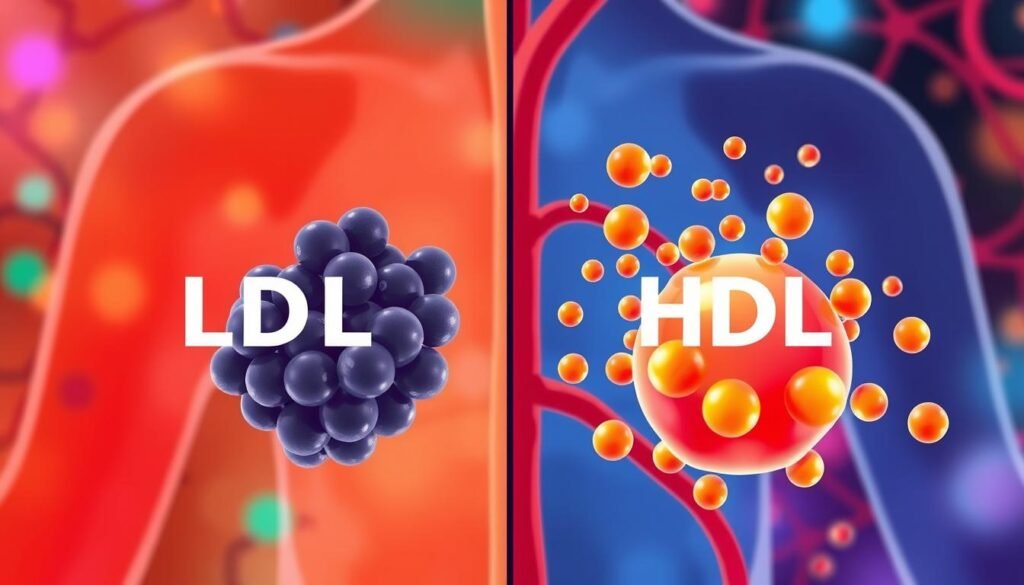
It’s important to know about cholesterol for kids’ heart health. There are two main kinds: LDL and HDL cholesterol. They play different roles in our body, affecting our health a lot.
Low-Density Lipoprotein (LDL): The Bad Cholesterol
LDL is known as the “bad cholesterol.” If LDL levels get too high, they can cause plaques in the arteries. This leads to atherosclerosis. This condition increases the risk of heart disease and heart attacks in kids. It’s key to keep an eye on LDL to lessen its bad cholesterol effects.
- Avoiding foods high in saturated fat and cholesterol can lower LDL levels.
- Staying active helps keep a healthy weight, which controls LDL levels.
- Eating less sugar and refined carbs is key for cholesterol management.
High-Density Lipoprotein (HDL): The Good Cholesterol
Unlike LDL, HDL is known as the “good cholesterol.” It helps keep the heart healthy by moving cholesterol from arteries to the liver to get rid of it. Having more HDL can fight off the harm done by too much LDL.
- Exercising is a great way to raise HDL levels.
- Staying away from saturated fats boosts good cholesterol.
- Keeping a healthy weight also helps increase HDL.
Cholesterol Levels in Kids
It’s crucial for parents to understand optimal cholesterol levels for kids to keep their hearts healthy. Starting cholesterol tests at the right age is key for early detection of issues. This testing can make a real difference, though it’s often missed.
Pediatric Cholesterol Level Guidelines
The National Cholesterol Education Program recommends starting cholesterol screenings between ages 9 to 11, and again from 17 to 21. Here are the acceptable cholesterol levels for children:
| Cholesterol Type | Acceptable Level (mg/dL) |
|---|---|
| Total Cholesterol | Less than 170 |
| Low-Density Lipoprotein (LDL) | Less than 110 |
- About one in five young people have higher than healthy cholesterol levels.
- Only 11% of those aged 9 to 21 get screened for cholesterol.
- Talking to pediatricians about cholesterol tests is very important, especially if heart problems run in the family.
Understanding Lipid Profiles in Youth
Keeping an eye on the lipid profile in young people is super important. It tells us about total cholesterol, LDL, HDL, and triglycerides. Parents can get better at reading these tests by learning about these different factors:
- It’s key to keep the LDL level under 130 mg/dL for health.
- If triglycerides are over 200 mg/dL, it’s time for more checks.
- Knowing how diet affects cholesterol levels is very important for health.
Causes of High Cholesterol in Children
Knowing why kids get high cholesterol is key to preventing health problems. Factors like diet and family history play a big part. How children eat greatly affects their cholesterol and overall health.
Dietary Factors Contributing to High Cholesterol
Eating foods rich in saturated fats, trans fats, and added sugars can raise cholesterol. Kids often eat too much fast food and processed snacks. This not only increases cholesterol but also leads to obesity. Children love sweet drinks and snacks without knowing the health risks. Parents should serve meals that are good for the heart. These meals should have the right nutrients and less bad fats and sugars. For tips on a healthy diet, families can check healthy cholesterol guidelines.
The Role of Heredity and Obesity
Genes can affect cholesterol levels because of family health history. Kids with relatives who have heart disease or high cholesterol are at risk too. Being overweight also leads to high cholesterol. Obese children are more likely to have cholesterol issues as teenagers. Parents need to watch their kids’ weight and motivate them to be active. Both genetics and obesity impact cholesterol, making it important to focus on a healthy lifestyle.

The Importance of Cholesterol Screening in Adolescents
Cholesterol checks are key to spotting health risks in young people. Early tests help find kids at risk for high cholesterol early on. Parents should get their kids checked at important times as they grow.
When Should Parents Schedule Screening?
The American Academy of Pediatrics recommends tests around ages 9 to 11 and then between 17 and 21. This timing helps catch high cholesterol when kids are growing fast. It’s a chance for parents to act early for their child’s health. Studies show testing at these ages finds high cholesterol in about 7.2% of kids.
Who Is at Higher Risk?
Some kids have a bigger chance of high cholesterol due to their genes and lifestyle. Look out for these signs:
- Family history of high cholesterol or heart diseases
- Overweight, especially in teens
- Diabetes or signs of it
- Not exercising much
About 1 in 250 kids has a condition called familial hypercholesterolemia. This makes heart disease more likely later on. That’s why checking cholesterol in teens is important. It helps find and help kids who need it.
Strategies for Managing Cholesterol in Children
Small yet important changes in lifestyle and diet can manage children’s cholesterol. Parents are key in teaching healthy eating and staying active. These steps can greatly better cholesterol levels and health.
Heart-Healthy Diet for Kids
To manage cholesterol, kids need a heart-healthy diet. This diet should have:
- Fruits and vegetables full of vitamins and fiber
- Whole grains packed with nutrients
- Lean proteins from fish, poultry, and beans
- Healthy fats found in avocados and nuts
Teaching kids about good food choices helps build healthy eating habits for life. It’s good to limit fats to 25-30% of daily calories, with less than 10% from saturated fat. Keeping cholesterol below 300 mg daily is also key for cholesterol control.
Encouraging Regular Exercise
Staying active helps manage cholesterol in kids. At least 60 minutes of daily exercise boosts good cholesterol and lowers the bad. Parents can encourage activity by:
- Enjoying family bike rides or hikes
- Encouraging kids to play sports
- Creating fun physical activity challenges
An active lifestyle improves physical, social, and emotional health. Such habits learned in childhood often continue into adulthood, benefiting heart health.

Cholesterol Management and Treatment Options
To keep kids healthy for the long term, managing cholesterol is key. Starting with lifestyle changes is the best first step. Looking at what children eat, their activity levels, and habits can greatly lower their cholesterol.
Lifestyle Changes for Effective Management
Adopting heart-healthy habits can truly make a difference in cholesterol and overall health. Parents and guardians can help a lot by setting good examples. Important changes include:
- Maintaining a heart-healthy diet filled with fruits, veggies, whole grains, and lean meats.
- Getting active for 60 minutes daily to keep weight in check and help the heart.
- Staying away from tobacco and secondhand smoke.
- Teaching kids the value of eating healthy.
When Medication is Necessary
Sometimes, just changing how you live isn’t enough, especially for kids with really high cholesterol. For kids 10 and up, medication might be needed if making these changes doesn’t do enough. This is often the case for kids with:
- LDL cholesterol over 190 mg/dL.
- Other issues like family heart disease history, being overweight, or having diabetes.
Statins are usually the go-to medicine in these situations. If needed, other medicines like ezetimibe and bile acid sequestrants are options too. Keeping an eye on cholesterol is vital, as high levels young can lead to heart disease later.
Conclusion
It’s really important to focus on cholesterol levels early in life. This can prevent heart disease later on. Parents need to keep an eye on their kids’ cholesterol and push for healthy choices.
Getting your cholesterol checked early can make a big difference. Many kids have issues with it. By changing how you live and sometimes using meds, you can improve your health for the future. Details on this topic are available here.
Creating a healthy lifestyle at home is key to avoiding cholesterol problems. When everyone works together, kids can grow up with strong hearts. This makes finding a way to a healthy life easier.