Did you know trans fats can increase “bad” LDL cholesterol by up to 20%? At the same time, they lower “good” HDL cholesterol. This fact shows how important it is to manage trans fats for cholesterol management and heart health. With ongoing research showing the dangers of these fats, knowing their effects is crucial.
Trans fats come from various sources, not just processed foods. They’re in commercial baked goods, fried foods, and some margarines. The U.S. Food and Drug Administration (FDA) is working to remove artificial trans fats from foods. This effort could prevent thousands of heart attacks and deaths every year. Yet, it’s important to stay alert. Foods with added trans fats might still be sold.
Because trans fats are bad for elevating LDL and lowering HDL cholesterol, choosing the right fats is essential. For detailed info on better fat choices for heart health, look at this resource.
Knowing about trans fats’ effects on cholesterol is key to making good food choices. This helps improve heart health.
Key Takeaways
- Trans fats raise LDL cholesterol while lowering HDL cholesterol.
- Dietary trans fats significantly increase the risk of heart disease and stroke.
- FDA regulations aim to reduce the prevalence of artificial trans fats in food products.
- Common sources of trans fats include baked goods, fried foods, and some margarines.
- Individuals are encouraged to limit trans fat intake for better cholesterol management.
- Adopting healthier fats, such as monounsaturated and polyunsaturated fats, can benefit heart health.
What Are Trans Fats?
Trans fats are a type of fat that affect your heart health and cholesterol. They come in two kinds: naturally occurring trans fats and artificial trans fats. You find naturally occurring ones in some animal products like dairy and meat. These fats naturally form in the stomachs of certain animals.
Artificial trans fats are different. They’re made through a process called hydrogenation. This is where hydrogen turns liquid vegetable oils into a solid. This method makes partially hydrogenated oils which are stable and cheap. You can find them in margarine, baked goods, and fried foods.
In the 1990s, Americans ate a lot of trans fats – between 2% to 3% of all the calories they consumed. Some people ate up to three times this amount. It worried health experts. Then, in 2015, the FDA said partially hydrogenated oils were not safe. By June 2018, they were banned in American food production.
It’s important to know the difference between natural and artificial trans fats. Knowing how they affect your health can help you choose what to eat. For more on fats and nutrition, check out the NHS’s detailed guide.
How Trans Fats Impact Cholesterol Levels
Trans fats are bad news for our cholesterol levels. They raise LDL cholesterol, which is the ‘bad’ kind. At the same time, they lower HDL cholesterol, the ‘good’ kind that we need for heart health. So, this messes up the balance between LDL and HDL, leading to health problems.
Research shows trans fats really mess with our cholesterol. Just a small amount from our energy intake can make things worse. By replacing these bad fats with better ones, like monounsaturated fats, we can avoid raising our cholesterol levels. A healthy LDL to HDL ratio is key to prevent artery plaque and heart disease.
Eating too many trans fats is linked to heart problems. Knowing this helps us make smarter food choices. By eating better, we can keep our cholesterol in check and our hearts healthier.
It’s smart to keep an eye on our cholesterol with regular blood tests. If we’re looking to eat healthier, there are guidelines to help out. Choosing foods low in bad fats can better our cholesterol and lower heart disease risks.
Trans Fats and Cholesterol Levels: The Science Explained
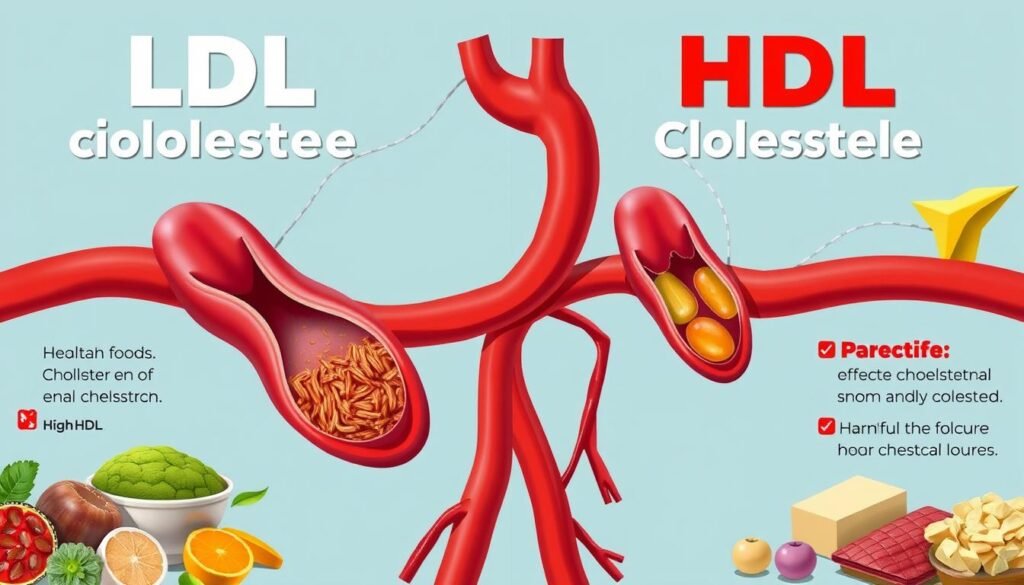
Cholesterol is key for heart health, but it’s complex. It has “bad” LDL and “good” HDL types. Their balance affects health, especially when it comes to trans fats.
Types of Cholesterol: LDL and HDL
LDL cholesterol is the bad kind. It can block arteries and cause heart disease. Meanwhile, HDL cholesterol is the good kind. It helps remove extra cholesterol from the body. It’s important to keep a healthy balance of both.
Maintaining this balance is vital to lower the risk of high cholesterol. By keeping track of LDL and HDL levels, one can make healthier lifestyle choices. This promotes cardiovascular wellness.
The Mechanism of Trans Fats on Cholesterol
Trans fats mess with cholesterol management in our bodies. They raise “bad” LDL levels and lower “good” HDL levels. Such imbalance is harmful to our heart health. Many don’t see how trans fats from their diet affect their cholesterol levels. Increased LDL from trans fats is linked to higher heart disease risk.
Knowing the difference between cholesterol types and trans fats’ effects is crucial. Below is a comparison of cholesterol types and their impacts:
| Type of Cholesterol | Role | Health Implication |
|---|---|---|
| LDL Cholesterol | Deposits fats in arteries | Increases risk of heart disease |
| HDL Cholesterol | Removes excess cholesterol | Protects against heart disease |
| Trans Fats | Increases LDL, decreases HDL | Promotes unhealthy cholesterol balance |
Health Risks Associated with Trans Fats
Trans fats are bad news for our health, research shows. They connect to major issues like heart disease and type 2 diabetes. Knowing this helps us choose what to eat better.
Heart Disease and Stroke
Trans fats increase heart disease and stroke risk. They are found in processed foods and make cholesterol levels spike. Even a small increase in these fats can lead to more heart disease.
In the U.S., trans fats could cause up to 100,000 early heart disease deaths yearly. They badly affect cholesterol ratios, raising stroke risk too. It’s important to eat less trans fats.
Type 2 Diabetes Connection
Trans fats also raise the risk of type 2 diabetes. They make insulin resistance worse and can cause inflammation. This can lead to big health problems for those with diabetes or prediabetes.
Staying away from trans fats helps keep blood sugar stable and maintains health.
Food Sources of Trans Fats
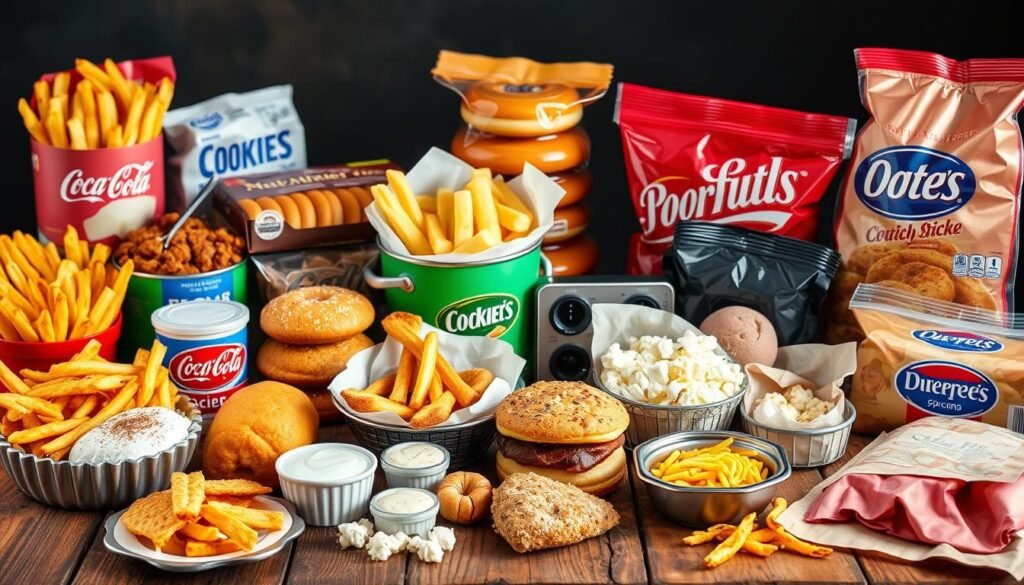
Trans fats are common in many foods we eat every day. They are a major concern for our health. Dietary sources of trans fats include fried foods, like doughnuts and french fries. Baked goods such as cakes, cookies, and pastries are also big contributors.
Shortening and some margarines add to the problem. Processed foods often hide trans fats under different names. This makes them hard to recognize. Foods like microwave popcorn, frozen pizza, and refrigerated dough have a lot of these unhealthy fats.
It’s important to know which foods are high in trans fats. Knowing what to avoid helps us make healthier choices. Here’s a table showing foods that are known for their trans fat content:
| Food Item | Trans Fat Content (per serving) |
|---|---|
| Doughnuts | 1-5 g |
| French Fries | 3-4 g |
| Commercially Baked Cookies | 0.5-1 g |
| Microwave Popcorn | 0.5-1 g |
| Frozen Pizza | 0.5-2 g |
| Non-Dairy Creamers | 0.5-1 g |
Reading Food Labels for Trans Fats
Learning to read food labels is key for controlling trans fats in your diet. In the U.S., food makers must show trans fat amounts on nutrition labels. However, products with less than 0.5 grams of trans fats can say “0 grams trans fat.” This can hide the actual amount and lead to poor food choices.
It’s important to look for “partially hydrogenated oil” in the ingredient list. This shows there might be trans fats. Smart use of food labels helps you make better eating decisions. This is especially true for keeping your heart healthy.
Take frozen lasagna, for example. One serving has 280 calories. Eating two servings brings it to 560 calories. This also doubles the fat, saturated fat, and cholesterol. One serving has 37% Daily Value (%DV) of sodium. Two servings increase it to 74% DV. This shows why knowing about serving sizes and nutrients is crucial.
| Nutrient | 1 Serving | 2 Servings | % Daily Value for 2 Servings |
|---|---|---|---|
| Calories | 280 | 560 | – |
| Sodium | 37% DV | – | 74% DV |
| Total Fat | – | Double amount | – |
| Saturated Fat | – | Double amount | Should be |
| Cholesterol | – | Double amount | As low as possible |
By paying close attention to food labels, you can cut down on trans fats and improve your health. Focusing on nutrition facts helps you make choices for better heart health.
Effective Tips to Reduce Trans Fats in Your Diet
Healthy eating habits can greatly improve heart health. They help manage cholesterol better. Always choose foods made with unhydrogenated oils to avoid bad trans fats. Cooking at home lets you control what you eat. Using fresh ingredients helps make meals healthier.
Eating more fruits, vegetables, whole grains, and lean proteins can lower cholesterol. The Mediterranean Diet focuses on healthy fats. It encourages using healthy oils and reducing bad fats which helps cut down trans fats.
It’s important to read food labels while shopping. Look for partially hydrogenated oils, which are bad. By doing this, you can pick healthier food options. Also, cutting down on fried foods is a smart move. Try baking, steaming, or grilling instead. These cooking methods make meals healthier and reduce trans fats.
For more tips on how to avoid trans fats, check this out: eliminate trans fats from family diets.
Conclusion
Knowing how trans fats affect cholesterol is key to better heart health. The ban on partially-hydrogenated oils by the United States Food and Drug Administration has increased awareness. Still, trans fats can be found in fried and packaged foods, which means we must be careful with what we eat.
Making good food choices can help a lot in controlling cholesterol. Following the 2020-2025 Dietary Guidelines for Americans is a great way to eat healthier. Using olive oil instead of unhealthy fats and eating less fast food can lead to a better lifestyle.
Eating wisely helps protect against the risks of trans fats. Checking what we eat regularly helps keep our hearts healthy and lowers disease risk. So, always being mindful of our diet is important for staying healthy and keeping our hearts strong.