Did you know nearly 95 million adults in the U.S. have high cholesterol? This fact shows we need to know how cholesterol works. Cholesterol isn’t just bad; it’s actually important for our health. It helps make cell walls, hormones, and bile for digestion.
But, having too much of the wrong kind, like LDL cholesterol, is risky. It can clog arteries and lead to heart issues. So, it’s critical to understand cholesterol’s dual role. This knowledge helps us keep our hearts healthy, balancing the benefits and dangers.
Key Takeaways
- Cholesterol is essential for various bodily functions, including cell membrane integrity.
- LDL cholesterol is known as “bad” cholesterol due to its association with heart disease.
- HDL cholesterol, or “good” cholesterol, helps transport LDL back to the liver.
- Regular screenings for cholesterol levels are important for adults over 20.
- Maintaining healthy cholesterol levels can significantly lower the risk of developing cardiovascular diseases.
- Diet and lifestyle choices, such as the Mediterranean diet, can influence cholesterol levels.
What is Cholesterol? A Simple Definition
Cholesterol is a waxy substance that’s needed for the body to work properly. It helps make cell membranes, hormones, and vitamin D. It’s a lipid that doesn’t mix with water and moves through blood in particles called lipoproteins.
The liver makes about 80% of our body’s cholesterol. The rest comes from the food we eat. Knowing where cholesterol comes from is key to keeping healthy. A good diet helps manage cholesterol levels.
High cholesterol can increase heart disease risk. Genetics can also influence cholesterol levels. Some genetic conditions make it hard to get rid of extra cholesterol. This can cause dangerous buildups in our blood.
It’s best to keep LDL cholesterol under 100 mg/dL. An HDL level over 60 mg/dL is good because it lowers heart disease risk.
Lifestyle choices like diet and exercise can affect cholesterol. It’s important to check cholesterol levels regularly. Knowing about cholesterol helps us make smart health choices.
The Importance of Cholesterol in the Human Body
Cholesterol is very important for our health. It helps make the cell membranes in our bodies. This keeps our cells strong and flexible. Cholesterol is also needed to make bile acids which help us digest fats.
It also plays a key role in making hormones. These hormones help control many things in our bodies. Additionally, cholesterol is necessary for making vitamin D. This vitamin is important for strong bones and a healthy immune system.
Understanding cholesterol’s effects means looking at its levels in the body. Too much low-density lipoprotein (LDL) cholesterol is bad. It can build up in our arteries and create plaque. This plaque makes the arteries stiff and can block blood flow. The heart then has to work harder.
On the other hand, high-density lipoprotein (HDL) cholesterol is good for us. It takes extra cholesterol to the liver so the body can get rid of it. This helps keep our hearts healthy. A good balance between HDL and LDL cholesterol lowers the risk of heart disease.
| Cholesterol Type | Function | Optimal Level |
|---|---|---|
| LDL Cholesterol | Transports cholesterol to cells; high levels can cause plaque buildup | Less than 100 mg/dL |
| HDL Cholesterol | Removes excess cholesterol from the bloodstream | 60 mg/dL or higher |
| Total Cholesterol | Overall cholesterol level, including LDL and HDL | Lower than 200 mg/dL |
Keeping cholesterol at the right level is key to our health. If we ignore it, we could face serious health problems. It’s important for the health of many body systems.
Understanding Cholesterol’s Role in the Body
Cholesterol is vital for many cell functions. It’s important to know how it keeps us healthy. High cholesterol levels can be concerning, but cholesterol itself is necessary for good health.
The cholesterol structure is quite complex. It helps stabilize cell membranes, maintaining cell integrity and fluidity. As a precursor for hormones like estrogen and testosterone, it’s essential. Cholesterol also helps produce bile acids for digesting and absorbing fats.
Cholesterol is crucial for brain function. It makes up about 20% of the body’s cholesterol, supporting nerve cell development. It’s important for the myelin sheath, which protects nerve fibers and aids in nervous system communication.
Keeping an eye on cholesterol levels is key to heart health. The American Heart Association recommends regular blood tests for this. These tests check for total cholesterol, LDL (bad cholesterol), HDL (good cholesterol), and triglycerides. Understanding these levels helps identify cardiovascular risks. Learn more about cholesterol’s importance here.
Cholesterol is vital for our bodies. Knowing about cholesterol and keeping its levels healthy can lower heart disease risks.
| Cholesterol Type | Function | Health Impact |
|---|---|---|
| LDL | Transports cholesterol to cells | High levels contribute to plaque formation in arteries |
| HDL | Removes excess cholesterol from arteries | Higher levels reduce risk of heart disease |
| Triglycerides | Stores unused energy | High levels can increase risk of heart disease |
Types of Cholesterol: Good vs. Bad
It’s key to know the different types of cholesterol for a healthy heart. They are split into categories, impacting the body in their ways. We focus on two main kinds: LDL and HDL cholesterol. VLDL and triglycerides are also crucial.
LDL Cholesterol: The “Bad” Cholesterol
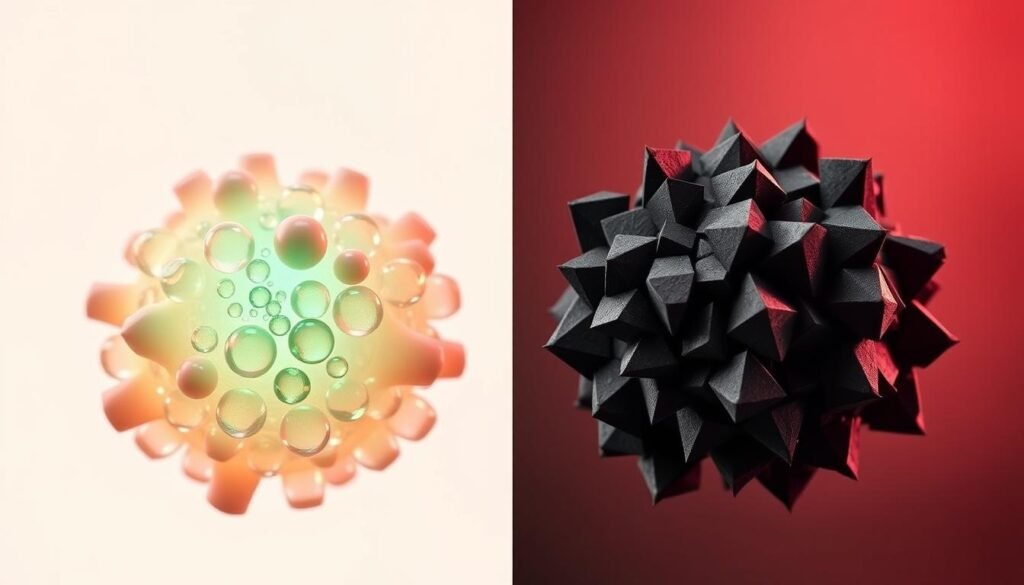
Low-Density Lipoprotein, or LDL, is the “bad” cholesterol. High LDL levels lead to artery plaque and raise heart disease and stroke risks. It’s important to keep LDL under 100 mg/dL to avoid heart issues. Foods rich in saturated and trans fats typically increase LDL levels.
HDL Cholesterol: The “Good” Cholesterol
High-Density Lipoprotein, known as HDL, is the “good” cholesterol. It removes excess cholesterol, taking it back to the liver for processing and removal. High HDL levels mean a lower risk of heart disease. Men should aim for HDL of at least 40 mg/dL and women 50 mg/dL.
VLDL and Triglycerides
Very Low-Density Lipoproteins, or VLDL, carry blood triglycerides, a type of fat. Like LDL, high VLDL levels promote plaque buildup in arteries. It’s vital to keep triglycerides below 150 mg/dL. High triglyceride levels can risk your heart health. Blood tests help manage these cholesterol types.
The Functions of Cholesterol in the Body
Cholesterol is key in our bodies, supporting many vital functions to keep us healthy. It plays a big part in our cells and metabolism. Knowing what cholesterol does helps us see its value and benefits.
Role in Cell Membrane Structure
Cholesterol keeps cell membranes working right. It maintains their structure and makes sure they can control what gets in and out. This is crucial for healthy cells.
It makes the cell membrane just permeable enough for nutrients and ions. This helps our cells stay active and healthy.
Production of Bile and Digestive Aids
Cholesterol is also key for making bile, which helps us digest fats and absorb vitamins. Bile acids break down fats, so our bodies can use them. This shows how cholesterol aids our digestion and nutrient use.
Hormone Production and Vitamin D Synthesis
Cholesterol is also involved in making important hormones like cortisol, estrogen, and testosterone. These hormones play roles in stress, reproduction, and more. Plus, cholesterol helps our skin make vitamin D from sunlight. This shows its wide role in keeping us healthy.
| Function | Description | Cholesterol Benefits |
|---|---|---|
| Cell Membrane Structure | Maintains membrane integrity and fluidity | Promotes optimal cellular function |
| Bile Production | Aids in digestion and fat absorption | Enhances nutrient utilization |
| Hormone Production | Synthesizes essential hormones | Supports various bodily functions |
| Vitamin D Synthesis | Produced from cholesterol via sunlight exposure | Contributes to bone health |
How Cholesterol is Transported in the Blood
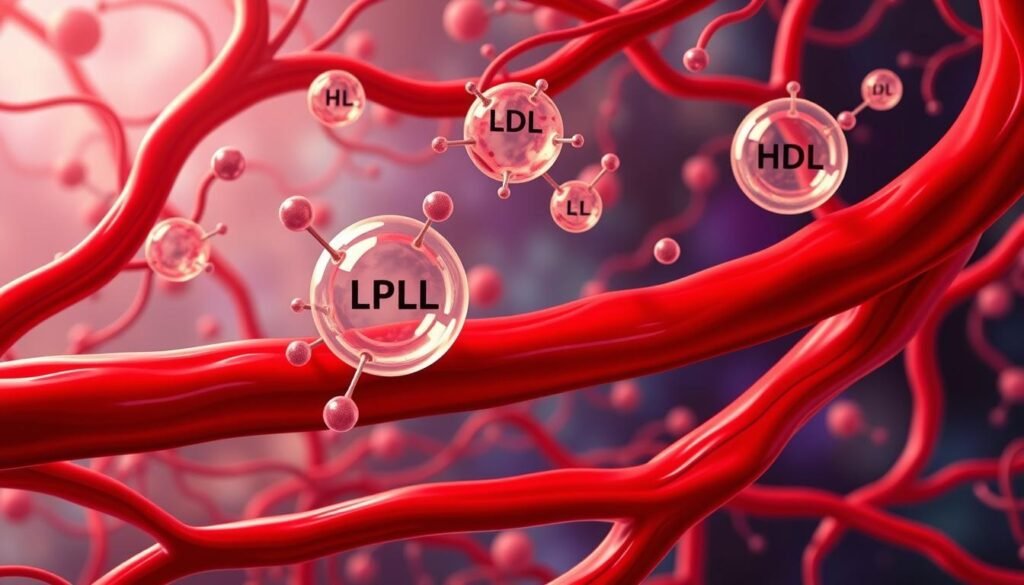
Cholesterol doesn’t move by itself in our blood. Instead, it needs special carriers called lipoproteins. These lipoproteins include Low-Density Lipoprotein (LDL) and High-Density Lipoprotein (HDL), which are key in handling cholesterol.
LDL carries cholesterol to the cells. HDL helps by taking cholesterol away from the arteries. It then moves it back to the liver. There, it’s either thrown out or used again.
The liver is pretty important for making cholesterol. Every day, it makes about 1 g (1,000 mg), adding to our total body cholesterol of about 35 g. Normally, the liver makes 20-25% of our daily cholesterol. When we eat foods high in cholesterol, like cheese, egg yolks, and meats, our liver makes less. This helps keep our cholesterol levels balanced.
There are two main ways our body deals with cholesterol. The exogenous pathway manages dietary fats. The endogenous pathway handles our body’s lipoproteins, like LDL, HDL, and Very Low-Density Lipoprotein (VLDL). About half of the cholesterol the liver gets rid of is taken back in by the small intestine. This means it goes back into our blood.
About how much cholesterol we get and make. An average American eats 200-300 mg of cholesterol each day. Together with what our bodies make, this affects our cholesterol levels. The main way to get rid of extra cholesterol is through reverse cholesterol transport. This processes and removes unnecessary cholesterol.
Keeping our cholesterol healthy is super important for staying well. Unhealthy levels can lead to big health problems. Knowing how cholesterol moves and is used in our body helps us keep healthy. For more info on managing cholesterol, check out this resource.
| Lipoprotein Type | Function | Cholesterol Content |
|---|---|---|
| LDL | Delivers cholesterol to cells | High |
| HDL | Removes cholesterol from arteries | Low |
| VLDL | Transports triglycerides | Moderate |
Factors Influencing Cholesterol Levels
It’s crucial to know what affects cholesterol levels for heart health. This knowledge lets us make choices that can change our cholesterol. This can help keep our hearts healthy.
Diet and Nutritional Impact
Eating habits play a big role in cholesterol levels. Eating lots of saturated and trans fats can make your “bad” cholesterol go up. However, eating foods with omega-3 fats and fiber can make your “good” cholesterol better. Experts say we should only get 7% to 10% of our daily calories from saturated fats. That means if you eat 1,800 calories a day, only 14 to 20 grams should be saturated fats. Also, try to eat less than 200-300 mg of cholesterol a day to keep your cholesterol levels healthy.
Genetics and Family History
Genes matter a lot when it comes to cholesterol. Some people have conditions that make it hard for their bodies to manage cholesterol, leading to high levels. If high cholesterol runs in your family, it’s important to check your cholesterol levels often. You might need special plans to keep your cholesterol okay.
Age and Hormonal Changes
Getting older can make cholesterol levels go up. Changes in hormones, especially during menopause, can increase “bad” cholesterol and decrease “good” cholesterol. That’s why it’s key to test your cholesterol regularly as you get older or go through menopause. This helps you take care of your heart better.
| Factor | Impact on Cholesterol Levels |
|---|---|
| Diet | High intake of saturated and trans fats raises LDL; fiber and omega-3s boost HDL. |
| Genetics | Inherited conditions can lead to higher cholesterol, requiring careful monitoring. |
| Age and Hormones | Increased age and hormonal changes can elevate LDL and lower HDL levels. |
Why Cholesterol Levels Matter
Knowing about cholesterol is key for a healthy heart. Tests for it give insights into the risk of heart disease. These tests, called lipid panels, look at different cholesterol types. They help us understand our health better. By finding issues early, we can make changes or get treatment to lower high cholesterol risks.
Understanding Cholesterol Tests
Cholesterol tests check total cholesterol, LDL, HDL, and triglycerides. The total includes HDL, LDL, and 20% of triglycerides. It’s important to get tested regularly. Experts say adults should get tested every four to six years if they’re at low risk. High cholesterol can cause serious problems, so keeping an eye on it is vital.
Normal Ranges for LDL and HDL Cholesterol
Normal cholesterol levels tell us about heart risk. Most adults should have LDL under 100 mg/dL. HDL should be over 40 mg/dL for men and 50 mg/dL for women. The American Heart Association says total cholesterol should be around 150 mg/dL. LDL should be 100 mg/dL or less. For those with heart issues, LDL should be under 70 mg/dL.
| Cholesterol Type | Optimal Level (mg/dL) | Recommended Frequency of Testing |
|---|---|---|
| Total Cholesterol | 150 | Every 4-6 years |
| LDL Cholesterol | Less than 100 | Every 4-6 years |
| HDL Cholesterol | Above 40 (men) / 50 (women) | Every 4-6 years |
How to Maintain Healthy Cholesterol Levels
To keep your cholesterol healthy, you need a plan that involves several steps. You can change your diet, exercise regularly, and manage stress well. This mix helps lower bad cholesterol and boost good cholesterol.
Dietary Modifications
What you eat greatly affects your cholesterol. Cutting back on unhealthy fats is key. Try to eat more fruits, veggies, whole grains, and foods rich in healthy fats, like nuts and fish. The American Heart Association says to keep saturated fat under 6% of your daily calories and skip trans fats.
Importance of Regular Exercise
Being active is important for cholesterol health. Aim for at least 150 minutes a week of exercises like walking or cycling. This routine not only cuts down bad cholesterol but can also increase the good type. Regular workouts help keep your heart strong and lower the risk of cholesterol problems.
Monitoring and Managing Stress
Stress can make cholesterol worse, so keeping it in check is vital. Use methods like mindfulness and deep breathing to stay calm. Make sure to sleep enough, about 7 to 9 hours a night, to help keep LDL cholesterol low.
| Strategy | Description | Benefits |
|---|---|---|
| Dietary Changes | Reduce saturated/trans fats; increase fruits and healthy fats. | Improves cholesterol metrics; reduces heart disease risk. |
| Exercise | At least 150 minutes of moderate-intensity activity weekly. | Lowers LDL; raises HDL; supports overall heart health. |
| Stress Management | Mindfulness and relaxation techniques. | Lowers stress-related effects on cholesterol; supports general well-being. |
When to Check Your Cholesterol Levels
Keeping your heart healthy means checking your cholesterol regularly. Men 35 and older should get tested every 1 to 2 years. Women 45 and up, especially those at greater risk of heart issues, should do the same. Young people can wait longer, about every 5 years for a test.
The National Institutes of Health outlines what your cholesterol levels should be if you’re 20 or older. Here are the targets:
| Cholesterol Type | Recommended Levels |
|---|---|
| LDL | Less than 100 mg/dL |
| HDL | 40 mg/dL or higher for men; 50 mg/dL or higher for women |
| Triglycerides | Less than 150 mg/dL |
| Total Cholesterol | 125 to 200 mg/dL |
If you’re younger than 20, aim for a total cholesterol level under 170 mg/dL. Keeping cholesterol in the right range is crucial. For many, lifestyle changes can help reach these goals.
September is National Cholesterol Prevention Month. It’s a time to learn about healthy levels. If your LDL is over 190 mg/dL, you might need strong statin drugs. People with type 2 diabetes, aged 40 to 75, should start moderate-intensity statin therapy for LDL 70 mg/dL or higher.
Staying active is key to good cholesterol. Aim for 30 minutes of exercise like walking or yoga daily. Also, quit smoking to boost your health and improve cholesterol. Avoiding trans fats and high-fat dairy also helps keep your levels on track.
Learn how to maintain healthy cholesterol with more details from this in-depth guide.
Conclusion
Cholesterol is very important for our health. It helps not just with heart health but also plays a role in other diseases. These include cancers and brain disorders. Knowing about good HDL and bad LDL cholesterol is key. This knowledge helps us make better health choices.
Getting regular checks on cholesterol levels is wise. It helps avoid heart diseases related to high cholesterol. Changes in how we live and eat can control cholesterol too. Eating foods with good fats, like polyunsaturated and monounsaturated fats, helps a lot. These changes can decrease bad LDL and increase good HDL.
Exercise also plays a big role in heart health. It boosts how well our body manages cholesterol. On top of lifestyle changes, medicines such as statins are important. They help keep cholesterol in check. By staying active and possibly using medications, we can lower heart disease risks.
For more details on managing cholesterol well, check out this guide. It covers everything you need to know about cholesterol. You can find it here.