Nearly 95 million adults in the U.S. are dealing with high cholesterol. That’s about a third of the adult population. High cholesterol leads to big health risks like heart disease and stroke. Knowing which foods make cholesterol levels rise is key to a healthier diet. We will look at the top ten worst foods for high cholesterol to help you choose better for your heart’s health.
Key Takeaways
- High-cholesterol foods can significantly affect heart health.
- Unhealthy fats like saturated and trans fats are detrimental to cholesterol levels.
- Regular consumption of processed and fried foods can elevate cholesterol levels.
- Understanding dietary cholesterol is crucial for maintaining a healthy lifestyle.
- Making informed food choices can lead to improved heart health.
Understanding Cholesterol and Its Importance
Cholesterol is a fatty substance made by the liver. It’s crucial for cell walls, making hormones, and creating vitamin D. The best cholesterol level is under 200 mg/dL. Cholesterol is necessary, but too much or too little can cause health problems.
Eating right is key to keeping cholesterol levels healthy. Eating too much high-cholesterol food can increase “bad” cholesterol, known as LDL. This can lead to heart disease and other heart issues. For instance, eating more processed meat can greatly raise heart disease risk.
Some foods, like whole eggs, may not raise cholesterol as believed. They could even boost “good” cholesterol, or HDL. Eating unprocessed and organ meats might help protect against heart disease.
Dairy and seafood can be good for cholesterol levels too. Full-fat fermented dairy products may lower bad cholesterol and blood pressure. Eating seafood can help with brain and heart health.
But, fried and fast foods can raise cholesterol levels dangerously. Foods deep-fried in trans fats increase the risk of heart disease. Eating too much fast food is linked to higher cholesterol and health issues.
To keep cholesterol in check, make smart food choices and stay active. Drink plenty of water and eat a balanced diet with lots of fruits and veggies. Foods high in fiber, like bananas, help manage bad cholesterol. This shows how important cholesterol is in our diet.
Why High Cholesterol is Dangerous
High cholesterol raises the chance of heart disease. It collects on artery walls when levels get too high. This causes atherosclerosis, narrowing vessels and limiting blood flow.
The risk for heart attacks and strokes goes up. Around 94 million American adults suffer from high cholesterol. This highlights the need to understand its dangers.
Those with high LDL cholesterol face serious health risks. The American Heart Association advises eating less than 300 milligrams of cholesterol daily. This helps lower the danger.
High cholesterol comes mainly from eating a lot of fat. For example, shrimp has about 190 milligrams of cholesterol per serving. Just one tablespoon of ghee adds 33 milligrams.
Duck and goose have more cholesterol than chicken and turkey. A cup of duck or goose has about 128 milligrams. Meanwhile, chicken has 113 milligrams and turkey has 93 milligrams per cup.
Processed foods make the problem worse. Items like bacon, hot dogs, and salami have lots of cholesterol. The World Health Organization says they are also carcinogenic. Plus, saturated fats and sugars in baked goods raise cholesterol and heart disease risks.
Common Symptoms of High Cholesterol
High cholesterol often does not show early signs. This can lead to heart disease, showing symptoms like chest pain. Knowing your cholesterol early can prevent heart attacks or strokes.
Erectile dysfunction can be a subtle sign. It hints at blood flow problems from cholesterol in arteries. It’s crucial to have regular health checks. Adults over 20 should check their cholesterol every 4 to 6 years, as the American Heart Association suggests.
Some might have familial hypercholesterolemia, with cholesterol over 300 mg/dL. Knowing these indicators helps with awareness of cholesterol levels. This is key because a heart attack happens about every 39 seconds in the U.S.
Top Ten Worst Foods for High Cholesterol
It’s key to keep your cholesterol at a good level for your health. A huge number of 94 million American adults face the challenge of high cholesterol. This makes it more important to know which foods are bad for cholesterol. Here are those foods that really affect your cholesterol in a negative way.
- Foods High in Saturated Fats: Items like butter, lard, and tropical oils, like coconut and palm oil, really push up your LDL. It’s best to cut them out of what you eat.
- Trans Fat-Rich Foods: Many baked goodies, frozen stuff, margarine, and snack foods contain trans fats. These fats seriously bump up your cholesterol, posing a threat to your heart.
- Processed Meats: Eats like sausages, salami, and bacon have lots of saturated fats and cholesterol. Eating too much of them is dangerous.
- Full-Fat Dairy Products: Whole milk, cream, and full-fat cheese add to higher cholesterol. This raises health risks.
- Organ Meats: These are high in cholesterol and should be eaten in moderation for heart health.
- Red Meat: Eating a lot of red meat, which has a lot of saturated fats, can up your cholesterol.
- Fried Foods: Foods fried deep in oil are full of bad fats. They’re bad for your cholesterol levels.
- Fast Food: Often loaded with trans and saturated fats, fast food meals can badly affect your cholesterol.
- Sugary Foods and Beverages: High sugar foods can lead to weight gain, heart issues, and diabetes. This can raise your cholesterol.
- Certain Baked Goods: Treats like pastries and cookies have trans fats and sugars. They’re not good for your cholesterol.
Effects of Unhealthy Fats on Cholesterol Levels
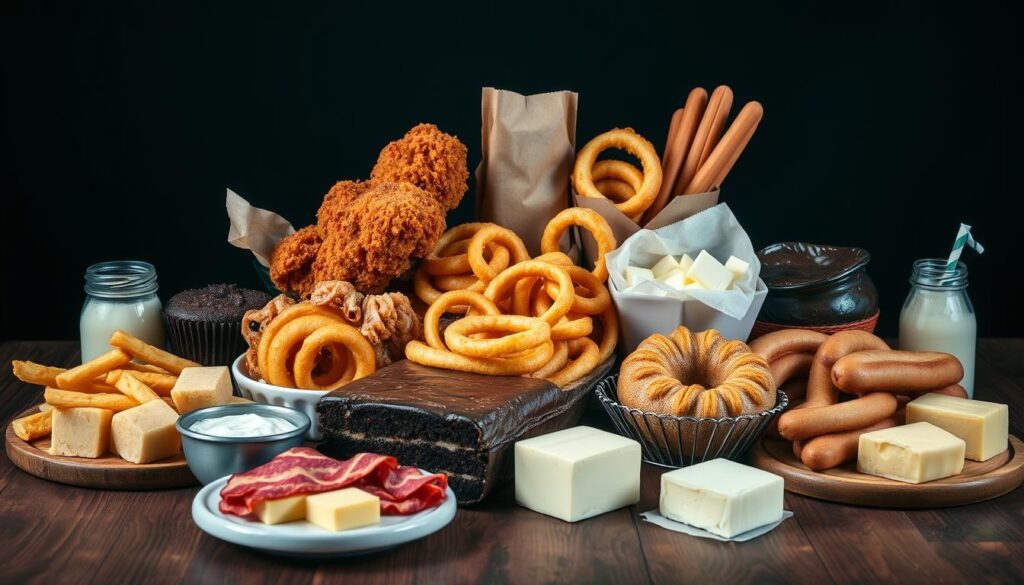
Unhealthy fats significantly impact our cholesterol levels. Saturated fats and trans fats make cholesterol worse. This leads to a higher chance of heart problems. Saturated fats mainly increase LDL cholesterol, known as the “bad” kind. The American Heart Association advises cutting down on saturated fats. They suggest it should be less than 6% of daily calories.
For a 2,000-calorie diet, this means only 11 to 13 grams of saturated fat daily. Watching the fats we eat is key because they can really affect our cholesterol. It’s vital for our health.
Trans fats are in foods like doughnuts, cookies, and pastries. They harm our “good” cholesterol, HDL. Since 2006, the FDA requires trans fats to be listed on food labels. Foods must show if they have 0.5 grams of trans fats per serving. Cutting out trans fats from our meals is good for our cholesterol levels.
Instead of unhealthy fats, we should eat more unsaturated fats. Foods like salmon, avocados, olives, and certain oils are better for us. They have good fats that can improve our cholesterol. It’s a healthier choice for our bodies.
Healthier Alternatives to High-Cholesterol Foods
Moving to healthier foods is key in managing cholesterol. By choosing low-cholesterol foods, people can boost their health and enjoy tasty options. Adding fruits and vegetables is important. They’re low in fats and calories, full of good nutrients and fiber to help lower cholesterol.
Whole grains are great for your diet. Oats, brown rice, and quinoa have lots of fiber, aiding in cholesterol control. They can take the place of refined grains. Oatmeal and oat bran’s fiber reduces cholesterol absorption in your blood.
Focusing on foods with healthy fats is crucial. Extra-virgin olive oil, for example, cuts down bad LDL cholesterol while keeping good HDL levels. Adding nuts like almonds, walnuts, and pistachios to meals can greatly lessen heart disease risk.
Adding omega-3 rich fish, like salmon and mackerel, is key. Eating fish twice a week lowers blood pressure and clot risks. Knowing how foods affect cholesterol helps us make better choices.
Being aware of eating habits and slowly adding healthier foods leads to a balanced diet. This improves heart health and overall wellness.
Best Dietary Practices for Maintaining Healthy Cholesterol
How you eat matters a lot when keeping cholesterol in check. Eating too much saturated fat and sugar is bad. These can raise your cholesterol, creating big health problems. It’s important to eat less saturated fat from fatty meats, full-fat dairy, and processed food. Plus, staying active with regular exercise helps keep your heart healthy.
For better cholesterol, eat more unsaturated fats. Vegetable oils, nuts, seeds, avocados, and oily fish are good for you. They help improve your cholesterol levels. Try to use these instead of bad fats. Eating plenty of fiber from fruits, veggies, and whole grains is another smart move. Soluble fiber, found in some of these foods, is especially good at lowering bad cholesterol.
Meeting with healthcare providers is key to watch your cholesterol. Along with exercising, which moves harmful cholesterol out of your body. Also, quitting smoking and drinking less alcohol helps manage cholesterol and boosts overall health.
To keep cholesterol in line, here are some great tips:
| Practice | Description |
|---|---|
| Limit Saturated Fat | Avoid processed foods and high-fat dairy to lower cholesterol intake. |
| Increase Unsaturated Fat | Include foods like nuts and fish that help maintain heart health. |
| Add Fiber | Consume fruits, vegetables, and whole grains to reduce cholesterol absorption. |
| Exercise Regularly | Physical activity improves overall cardiovascular health and manages weight. |
| Regular Check-ups | Healthcare visits help track cholesterol levels and adjust dietary practices. |
Following these eating tips and getting regular exercise can really boost your cholesterol health. For more on a heart-healthy diet, check out heart health resources.
Conclusion
Making smart choices in what you eat is key to preventing high cholesterol. Avoid foods full of trans and saturated fats to lower heart disease risk. It’s important for people to know about their food choices and pick heart-healthy options.
Eating foods like oats, fatty fish, and nuts helps manage cholesterol levels and improves health. Balancing your diet with exercise is crucial for a healthy life. For detailed advice on managing high cholesterol, check this guide: foods to avoid for better heart.
Taking steps to control cholesterol can pave the way for a healthy future. Making these changes not only helps with cholesterol but makes life healthier and more joyful.