About 20% to 30% of the cholesterol in our blood comes from what we eat. It’s important to know which foods are high in cholesterol to keep your heart healthy. By knowing about foods rich in cholesterol, you can make better choices.
We’ll look closely at foods that can increase cholesterol levels. These include everyday items like red meats and whipped cream. Understanding this helps us pick better foods for our heart. We’ll learn about which foods to avoid and which help improve heart health.
Key Takeaways
- Cholesterol from diet affects only a small portion of blood cholesterol.
- Knowing which foods are high in cholesterol is key for heart health.
- High cholesterol foods include red meat and whipped cream.
- Choosing healthy alternatives can make a big difference in cholesterol levels.
- Making informed dietary choices betters your overall health.
Understanding Cholesterol and Its Importance
Cholesterol is key in keeping our bodies working well. It helps make hormones, lets us absorb vitamin D, and creates bile to break down fats. We need to balance “bad” cholesterol (LDL) and “good” cholesterol (HDL). Balancing them is crucial for our health.
Our bodies make cholesterol, but it also comes from food like meat and dairy. Too much LDL can clog arteries and raise the risk of heart problems. On the other hand, enough HDL takes extra cholesterol away, which is good for the heart.
Eating different kinds of food helps manage cholesterol. Understanding how food affects cholesterol is important for a healthy life. If we change our diet, cholesterol levels can improve in 3-6 months.
| Cholesterol Type | Source | Cholesterol Content (mg) |
|---|---|---|
| LDL (bad) | Egg (50g) | 207 |
| LDL (bad) | Swiss Cheese (22g) | 20 |
| LDL (bad) | Canned Shrimp (85g) | 214 |
| LDL (bad) | Pasture-Raised Steak (113g) | 62 |
| LDL (bad) | Chicken Heart (145g) | 351 |
| LDL (bad) | Sardines (92g) | 131 |
| LDL (bad) | Full-Fat Yogurt (245g) | 31.8 |
Why High Cholesterol Is Dangerous
High cholesterol levels pose a big health risk, mainly because they increase the chance of heart disease. A diet high in cholesterol can cause cholesterol to build up in arteries. This buildup is known as atherosclerosis. It creates deposits called plaque, which can narrow or block arteries. This affects blood flow badly.
Serious problems like chest pain, heart attacks, or strokes can happen because of this. Regular checks of cholesterol levels are key. Guidelines suggest that kids start getting checked by age nine, then every five years after that. Adults should also get tested regularly. Men should get checked every five years until 45, and women until 55. After these ages, testing should happen more often. This is very important for those with high blood pressure since it often goes hand-in-hand with high cholesterol.
Having kidney disease makes things worse, increasing plaque buildup and bad triglyceride levels. Bad eating habits, like too much saturated and trans fat, make cholesterol levels worse. Likewise, being overweight, smoking, or drinking too much alcohol can all raise cholesterol levels. So, it’s crucial to manage these lifestyle factors.
To avoid high cholesterol, living a heart-healthy lifestyle is essential. Eat less salt, reduce animal fats, and get regular exercise. These steps can prevent high cholesterol and lower the risk of heart disease.
Foods to Avoid for High Cholesterol
Keeping cholesterol levels healthy is key to good health. The Centers for Disease Control and Prevention (CDC) reports that 94 million American adults have high cholesterol. Making changes to what you eat can greatly reduce this number. It’s vital to know which foods to avoid for high cholesterol for better heart health.
Processed meats like bacon, sausages, and hot dogs are high in cholesterol. They have a lot of saturated fat, which increases LDL cholesterol. Foods fried in trans fats also pose a risk. These are found in snacks such as pastries, pizza, and microwave popcorn. Trans fats lead to plaque buildup in arteries, causing heart attacks and strokes.
Sugary snacks and drinks, like sodas and candies, can cause weight gain. This affects your cholesterol negatively. When shopping, check labels for hidden sugars and bad fats. Try eating more fruits, veggies, and whole grains instead. These foods help lower LDL cholesterol.
Dairy products high in saturated fat should also be avoided. This includes full-fat milk and some cheeses. Choose low-fat options to keep your heart healthy while still enjoying dairy. Adding plant sterols and stanols to your diet is another smart choice. These are found in some margarines and yogurts and help block cholesterol from being absorbed.
In conclusion, knowing which foods to avoid for high cholesterol is crucial. Regular health check-ups and smart eating can greatly improve your health. For more advice, check out this simple guide on managing cholesterol.
What Food Have High Cholesterol
Many foods have high cholesterol but are still good for you. It’s important to know their cholesterol levels and health effects. This helps make wise food choices.
Eggs and Their Nutritional Benefits
Eggs are a key part of many meals. They have about 212 milligrams of cholesterol each. This is more than half the daily amount recommended for people without heart issues. Even with their cholesterol, eggs are beneficial because they boost good HDL cholesterol if eaten in moderation.
The egg white has no cholesterol. This makes it great for those who want to cook without fat.
Cheese: The Dairy Dilemma
Cheese like Monterey Jack and Cheddar has a fair amount of cholesterol. There’s about 18.7 milligrams in a slice of Monterey Jack and 30 milligrams per ounce in Cheddar. But, research shows eating full-fat cheese doesn’t really increase bad LDL cholesterol much. Cheese can be part of a heart-healthy diet when eaten wisely.
Shrimp and Shellfish Considerations
Shrimp’s cholesterol level, 170 milligrams in a four-ounce serving, often concerns people. Yet, shrimp offers important nutrients that boost immune health. Shellfish like mussels and clams have less cholesterol. They can be a better choice for those watching their cholesterol intake.
Processed Foods and Their Impact on Cholesterol
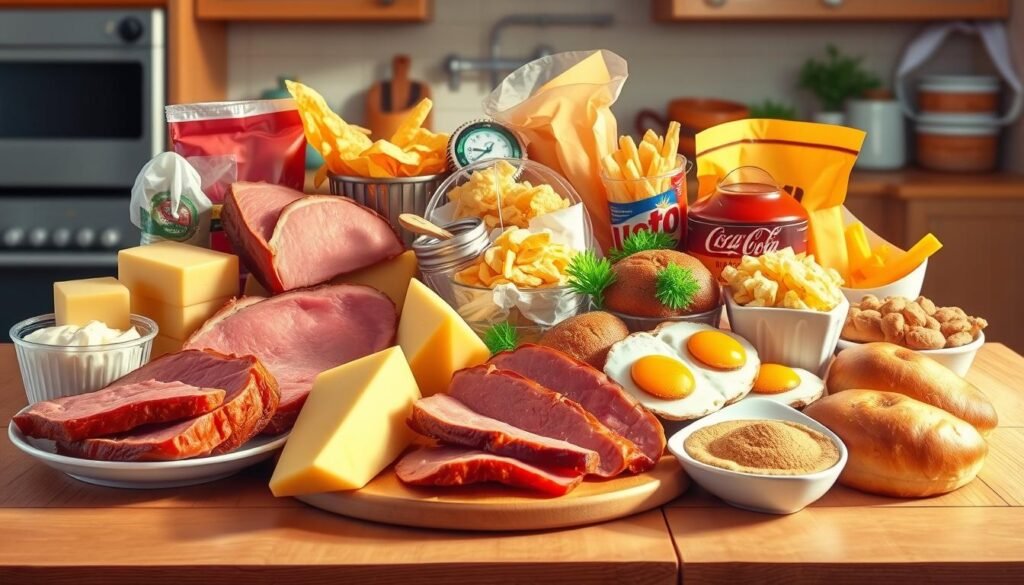
The typical American diet is filled with processed foods. This can lead to higher cholesterol levels. These foods are full of trans fats and sugars, which hurt our heart health. They are found in frozen pizzas, microwave popcorn, and many baked items.
Processed foods like sugary drinks and fast food have lots of unhealthy stuff in them. Eating these often can make your body resist insulin. This makes high cholesterol problems even worse. Even if the label says “0 grams of trans fats,” these fats still harm your heart.
- Fast food: Often high in trans fats and sugars, leading to increased cholesterol levels.
- Frozen meals: Typically contain unhealthy fats that can raise LDL cholesterol.
- Commercial baked goods: Loaded with trans fats and added sugars, making them detrimental to heart health.
To get healthier, cut down on processed foods. Focus on eating whole, unprocessed foods instead. A diet full of plants and healthy fats gives you all the nutrients you need. It avoids the bad effects of processed food. Michael Pollan said, “Eat food, not too much, mostly plants.” This advice helps us choose better foods to lower cholesterol.
| Processed Food | Common Ingredients | Impact on Cholesterol |
|---|---|---|
| Frozen Pizza | Trans fats, added sugars | Raises LDL cholesterol |
| Microwave Popcorn | Artificial trans fats | Increases heart disease risk |
| Commercial Baked Goods | Hydrogenated oils, sugars | Detrimental to cholesterol levels |
| Sugar-Sweetened Beverages | Added sugars | Contributes to high cholesterol |
| Fast Food | Saturated fats, trans fats | Elevates LDL cholesterol |
Eating more whole foods fights the cholesterol raised by processed foods. A varied diet with lots of nutrients is key. It makes you healthier and improves your well-being overall.
Impact of Fried Foods on Cholesterol Levels
Fried foods are a major concern for those watching their health. They often lead to worries about high cholesterol from eating too much fried stuff. These items are calorie-rich and may have trans fats. Trans fats bump up “bad” LDL cholesterol and lower “good” HDL cholesterol. Knowing about fried foods helps people choose better.
Details on Fast Food Risks
Fast food is bad for heart health. Studies show a link between eating a lot of fried foods and heart problems. For instance, 606 cases of heart disease were tracked over time. The findings show eating more fried food increases health risks considerably.
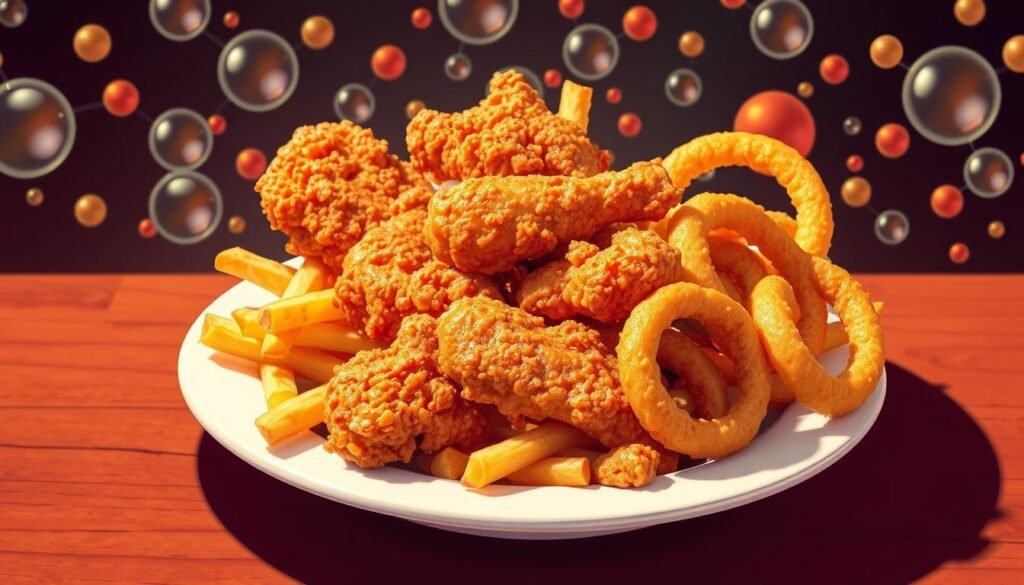
A medium portion of french fries has 2.7 grams of saturated fats. This counts against the daily limit set by health experts. The American Heart Association says to stay under 13 grams of saturated fat per day, based on a 2,000 calorie diet. Knowing about the dangers of high cholesterol, over 200 milligrams per deciliter, is key for heart health.
Looking at the big picture shows the need for a balanced diet, especially with high cholesterol risks. Trans fats in fried foods are a big worry. They can clog arteries and hike the risk of heart issues like attacks and strokes. Choosing to bake or use healthy oils instead of frying can help manage cholesterol levels.
| Fried Food Item | Saturated Fat (g) | Hazard Ratio for Heart Disease |
|---|---|---|
| Medium French Fries (117g) | 2.7 | 1.15 (2nd Quarter Consumption) |
| Onion Rings | Varies | 1.08 (4th Quarter Consumption) |
| Fried Chicken | Varies | 1.07 (3rd Quarter Consumption) |
Paying attention to what we eat helps us form better habits and reduce cholesterol levels. It’s vital to understand the advantages of eating less and choosing healthier ways to prepare food. This is crucial for controlling health issues linked to fried and fast foods.
Organ Meats: Nutritional Powerhouses or Cholesterol Risks?
Organ meats are full of essential vitamins and minerals. They include liver, heart, and kidneys, which are packed with protein and nutrients. For example, beef liver has more than 9,000 micrograms of vitamin A. It also has a high protein level, placing it among foods high in cholesterol. Chicken liver offers 10.2 milligrams of iron per 4 ounces. This is much more than beef tenderloin’s 2.664 milligrams.
Organ meats are also loaded with beneficial compounds. They provide Coenzyme Q10, crucial for making energy. They are a good source of alpha-lipoic acid too, which boosts health. You can also find zinc, magnesium, and selenium in them. These support the immune system, help nerve function, and keep the thyroid healthy.
Yet, eating organ meats comes with risks. Their high levels of cholesterol and saturated fat can be problematic. This is especially true for people with heart disease, gout, or iron overload disorders. Health experts suggest eating organ meats in moderation. Those with certain health issues should talk to doctors. A balanced diet including organ meats in small amounts can be beneficial.
Adding organ meats to your diet requires thoughtful consideration. This is important for those watching their cholesterol. Eating these meats in moderation and focusing on a balanced diet can help. It keeps cholesterol in check and promotes good health. For more on organ meats and their effects, check out this resource on organ meats.
Healthy High Cholesterol Foods: Can They Be Good for You?
Some foods are high in cholesterol but are still healthy in a balanced diet. Foods like eggs, cheese, and specific shellfish offer important nutrients. They can help maintain good cholesterol levels if you eat them wisely.
Eggs are great because they provide protein and vitamins, despite their cholesterol. For many, eggs don’t badly affect blood cholesterol. They can be part of a healthy diet, giving vital nutrients without harming the heart. Also, cheese has calcium and protein, which are good for you in correct amounts.
Shrimp and other seafoods are beneficial too. Even with cholesterol, shrimp have omega-3 fatty acids which are great for the heart. Eating fish rich in omega-3s can cut down triglycerides and lessen heart disease risk. The American Heart Association suggests eating fish twice a week for a healthy heart.
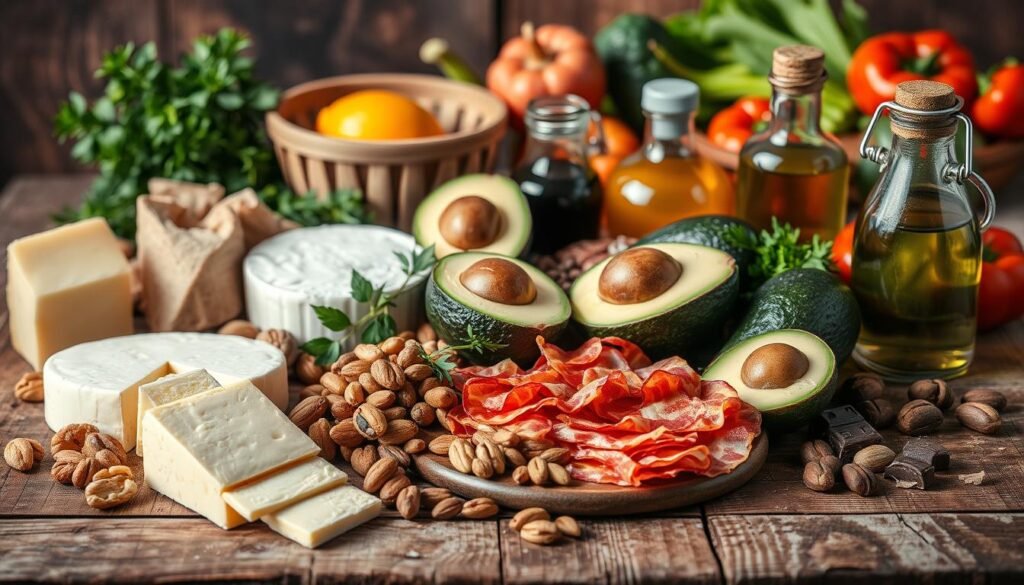
Choosing the right foods is key for cholesterol management. Mixing cholesterol rich foods with items like fruits and whole grains is smart. Foods like oatmeal and beans, which have a lot of soluble fiber, help reduce cholesterol absorption.
Making smart food choices can lead to healthy cholesterol levels. With moderate eating and a diverse diet, you can enjoy tasty, nutritious foods without risking heart health. To learn more about beneficial high-cholesterol foods, click here.
How to Balance Your Cholesterol Diet
Understanding how to manage your cholesterol is crucial for good health. A balanced diet should include various foods that benefit overall health and keep cholesterol levels under control. Such a diet consists of fruits, vegetables, whole grains, and healthy fats to help balance cholesterol. Here are some important strategies to remember:
- Limit saturated fat to less than 7% of daily calories.
- Keep cholesterol intake below 200 mg per day to aid in lowering cholesterol levels.
- Ensure soluble fiber intake ranges from 10 to 25 grams daily for better heart health.
- Consume 2 grams of plant stanols and sterols daily to help prevent cholesterol absorption.
- Incorporate fish rich in omega-3 fatty acids, such as salmon and tuna, at least twice a week.
- Limit sodium intake to no more than 2,300 mg per day, equivalent to about 1 teaspoon of salt.
- Alcohol consumption should be moderated, with men limited to 2 drinks and women to 1 drink per day.
The FDA has banned partially hydrogenated vegetable oils because they contain harmful trans fats. Adding whey protein from dairy to your diet can lower LDL and total cholesterol. Also, exercising regularly raises “good” cholesterol, known as HDL.
Making lifestyle changes is vital, but sometimes they’re not enough on their own. Quitting smoking quickly improves your HDL cholesterol levels, showing results in as little as 20 minutes. Excess weight can make balancing cholesterol harder, highlighting the importance of a healthy weight.
Adopting these healthy habits is key to controlling cholesterol and boosting overall health. Make sure to get regular check-ups to track your progress and adjust your diet for the best high cholesterol diet results.
| Key Recommendation | Guideline |
|---|---|
| Saturated Fat | Less than 7% of daily calories |
| Cholesterol Intake | Less than 200 mg/day |
| Soluble Fiber | 10 to 25 grams/day |
| Plant Stanols/Sterols | 2 grams/day |
| Omega-3 Fatty Acids (Fish) | Twice a week |
| Sodium | No more than 2,300 mg/day |
| Alcohol Intake | Men: ≤ 2 drinks, Women: ≤ 1 drink/day |
Conclusion
Understanding the effect of foods high in cholesterol on our health is vital. This helps us manage our cholesterol levels well. Recent studies show that dietary cholesterol might not be as bad as thought if eaten wisely. Foods like eggs and shrimp are rich in cholesterol but are also filled with important nutrients. They can help in maintaining a heart-healthy diet.
The 2020-2025 Dietary Guidelines for Americans suggest we cut down on dietary fats. It highlights the need for careful eating choices. Also, getting regular checks on cholesterol through lipid profile tests is key. This allows people with high cholesterol to choose healthier food options wisely.
Talking to a healthcare provider is a smart move for tailored diet advice. This ensures that diet plans meet personal health needs. A balanced diet and regular health checks can lead to better cholesterol management and improve life quality. For more insights on how cholesterol consumption affects health, read this detailed article.