Did you know that most healthy folks can eat up to seven eggs a week? This doesn’t really up their heart disease risk. This fact shows how complex the eggs and cholesterol debate is. It’s a topic filled with *cholesterol myths* and has been in medical talks for years. As our understanding grows, figuring out the real story becomes key.
Eggs were wrongly tagged as bad because they have cholesterol. This made people wonder if they should eat them often. A big egg has about 186 milligrams of cholesterol, found in the yolk. Health experts once said to keep cholesterol under 300 milligrams daily. Yet, the link between eating eggs and heart health isn’t simple.
This article wants to clear up what’s true about eggs and cholesterol. Recent *cholesterol research* shows that eating them in moderation might be okay for many. To get this, we need to look at what people believe, what doctors say, and what the studies show. We’re diving deep into this discussion.
Key Takeaways
- Healthy people can have up to seven eggs a week.
- A large egg yolk has about 186 milligrams of cholesterol.
- Egg whites don’t have cholesterol and are a great protein source.
- Research shows egg effects vary for people with diabetes.
- It’s vital to understand dietary cholesterol when thinking about heart disease risk.
- About 75% of people don’t see big cholesterol changes from eating eggs.
Understanding Cholesterol: What Is It?
Cholesterol is essential and found in every cell of our bodies. It helps make cell membranes, hormones, and vitamin D. It travels in our blood, carried by lipoproteins.
Two main types are LDL and HDL. LDL is the “bad” cholesterol because it can clog arteries. This raises the chance of heart problems. HDL is “good” because it cleans up LDL, keeping the heart safe.
It’s crucial to keep these cholesterol types in balance. Diet and how you live can change cholesterol levels. For instance, eggs have dietary cholesterol but don’t badly affect most people’s blood cholesterol.
The liver makes most of our body’s cholesterol, not just what we eat. So, eating eggs doesn’t necessarily raise cholesterol levels in most.
The guidelines now say adults can be more flexible with cholesterol. The American Heart Association says eating one egg daily is okay for healthy people. Balanced diets that include high-cholesterol foods like eggs are good.
Focus on overall eating patterns since saturated fats raise cholesterol. This is more important than the cholesterol in food.
| Type of Cholesterol | Effect on Heart Health | Sources |
|---|---|---|
| LDL (Low-Density Lipoprotein) | Increased risk of heart disease | Processed foods, red meats, full-fat dairy |
| HDL (High-Density Lipoprotein) | Protective against heart disease | Healthy fats, fish, nuts, olive oil |
Our understanding of cholesterol is changing. Knowing more helps us make better choices for our hearts. Eggs, once seen as bad, are now valued as part of a healthy diet.
The Nutritional Value of Eggs
Eggs are seen as a heart-healthy food with lots of nutrients. They pack high-quality protein, essential vitamins like B12 and D. They also have minerals such as selenium and choline.
The yolk has most of the good stuff, including antioxidants. These can help keep your eyes healthy as you get older. Despite the cholesterol in eggs, eating them doesn’t raise heart disease risk for most people. This is what research says.
Egg nutrition facts show us that white and brown eggs are pretty much the same nutritionally. Cooking eggs with heart-healthy fats like olive oil is a good move. It keeps egg dishes healthy. Up to three eggs a day is okay for most folks.
Want to bust some egg myths? Check out these benefits and facts. You can learn more at common egg myths. Also, explore how egg cholesterol affects heart health here: detailed studies.
The Relationship Between Eggs and Cholesterol
The link between eggs and cholesterol has long been studied. Eggs, especially their yolks, have a lot of dietary cholesterol. This makes people wonder how they affect cholesterol levels in our bodies. An average egg has about 186 milligrams of cholesterol. This fact keeps the debate on their health effects alive.
Many studies have looked at how egg cholesterol affects us. One study had 140 people over 50 years old with heart disease risks. Those who ate 12 fortified eggs each week had cholesterol levels like those who ate less than two. The group eating more eggs even saw drops in cholesterol and better insulin resistance scores. They also had higher vitamin B levels.
However, some studies show that eating a lot of saturated fats and processed carbs is worse for cholesterol levels and heart disease. An egg has around 1.6 grams of saturated fat. The American Heart Association says one egg a day is okay for most people.
While some research points to heart risks from eating more eggs, other studies say one egg a day doesn’t raise heart disease risk. It might even lower it for some people. This shows that the issue of dietary cholesterol is complex. It means nutritional advice should be tailored, especially for those with diabetes or heart disease.
| Key Findings | Details |
|---|---|
| Average Calories per Egg | 78 calories |
| Protein Content | 7 grams per egg |
| Saturated Fat per Egg | 1.6 grams |
| Recommended Egg Intake | One egg per day for most people |
| Study Group Profile | 50+ years old with cardiovascular disease or risk factors |
| Study Duration | Four months |
| Total Cholesterol Levels | Similar for high egg consumption and low consumption |
| Potential Benefits of Fortified Eggs | Increased HDL cholesterol, decreased LDL cholesterol |
| Previous Guidelines | No more than 300 milligrams of cholesterol per day |
Egg Yolk Cholesterol: A Closer Look
Egg yolks are well-known for their nutrients but are high in cholesterol. One large egg yolk has about 215 to 275 mg of cholesterol. This is a concern for people watching their cholesterol levels. The National Cholesterol Education Program (NCEP) suggests staying under 200 mg a day if at risk of heart problems. For others, the limit is under 300 mg daily.
Eating a lot of cholesterol-rich foods can make LDL cholesterol levels go up. LDL cholesterol is the bad type. Studies have found that eating an egg every day might double the diabetes risk compared to eating less than one egg per week. Even though recent research didn’t link egg eating with more heart disease risk in most people, those with health issues like diabetes or high cholesterol need to be careful with eggs.
It’s important for everyone to think about their health and lifestyle when choosing how many eggs to eat. Getting your cholesterol checked every three years helps keep track of your health. If you like eating eggs often, just remember to do it in moderation. Pairing eggs with a healthy lifestyle and medical advice can help control the effects of dietary cholesterol on your heart.

Genetics, diet, and lifestyle choices all affect how your body deals with dietary cholesterol. Finding the right balance in egg consumption is key for heart health.
For deeper insights into egg yolk and its effects, here’s a resource for more information.
The Impact of Diet on Cholesterol Levels
Diet is key in managing cholesterol and keeping your heart healthy. The topic of eggs and cholesterol has sparked many debates. But, broad dietary habits matter more than specific foods. A 1999 study from Harvard found that eating an egg a day is safe for healthy people. This was supported by a 2006 study from the University of Connecticut. It saw no negative effects from higher cholesterol in healthy groups.
Newer studies agree with these findings. A review in 2018 showed that dietary cholesterol doesn’t harm blood cholesterol levels. It might even improve HDL, or “good” cholesterol. Eggs in the diet seem to slightly affect cholesterol levels. In fact, eating up to seven or twelve eggs weekly doesn’t risk heart health for most folks.
It’s important to understand dietary cholesterol. Eggs have about 391 mg of cholesterol per 100 g but are also rich in protein. How our bodies react to cholesterol can vary a lot. This depends on genes and what else we eat. The American Heart Association suggests eating less saturated fat. Instead, eating more fruits, vegetables, and whole grains can help with cholesterol levels.
Making smart dietary choices, along with lifestyle changes, improves heart health. It’s crucial to look at your entire diet rather than focusing on single foods. This holistic approach to eating can lead to better cholesterol levels and a healthier heart.
Egg Consumption and Heart Health
Research shows eggs’ effects on heart health are varied. Health groups say people can enjoy eggs weekly without more heart disease risks. A study with 140 older adults, with or at high risk for heart disease, found no major cholesterol difference after four months between those eating lots of eggs and those eating few.
The study’s participants averaged 66 years old, nearly half were women. Those eating fortified eggs saw lower total cholesterol and better insulin scores. This suggests possible increases in “good” cholesterol and decreases in “bad” cholesterol, aiding older adults and diabetics.
Diet tips usually say to keep cholesterol intake low for health. Before, the advice was to limit cholesterol to under 300 mg daily—around two eggs. Now, it’s about making personal diet choices. Consult healthcare providers for advice, especially with heart disease or diabetes concerns.
Eggs should be part of an overall diet and lifestyle plan. Some studies show that eating more eggs might raise heart risk for some people. But, other reviews find that one egg a day does not likely increase heart disease risk. Knowing these details helps people make smarter diet choices, following the latest guidelines.
Eggs and Cholesterol: Myth vs. Fact
There are many myths about eggs and cholesterol that have caused confusion. In 2015, the FDA stopped recommending daily limits for dietary cholesterol. This was because there wasn’t enough proof that it harmed health. A study in the American Journal of Clinical Nutrition showed eating up to 12 eggs a day for three months didn’t raise heart disease risks.
Eggs are good for most diets. The American Heart Association suggests eating one egg a day as part of a healthy diet. Eggs, low in saturated fat, are full of nutrients like vitamin D, B12, and carotenoids. They support overall health. A large egg has about 70 calories and 6 grams of protein.
Studies don’t link egg eating with higher heart disease risk. Our bodies usually keep cholesterol levels in check. Good (HDL) and bad (LDL) cholesterol are balanced. Some might see a small LDL increase, but the overall cholesterol to HDL ratio stays healthy. Even those who react more to dietary cholesterol see this balance.
Eating eggs can be good for you. Choosing eggs or fish over red and processed meats could lower heart disease risks by 20%. The 2015-2020 Dietary Guidelines for Americans don’t limit egg consumption. They say eggs, eaten in moderation, aren’t a heart health risk.
| Item | Nutritional Content |
|---|---|
| Calories (Large Egg) | 70 |
| Protein (Large Egg) | 6 grams |
| Cholesterol (Per Egg) | 186 mg (141-234 mg based on size) |
| Choline | Essential for brain development |
| Storage Life (Refrigerated) | 3-5 weeks past sell-by date |
| Egg Whites | No cholesterol |
The Role of Dietary Cholesterol in Heart Disease
Dietary cholesterol is often talked about when discussing heart disease. A single large egg has about 200 mg of cholesterol. This makes eggs a common source of this nutrient. How dietary cholesterol affects heart health depends on diet and lifestyle.
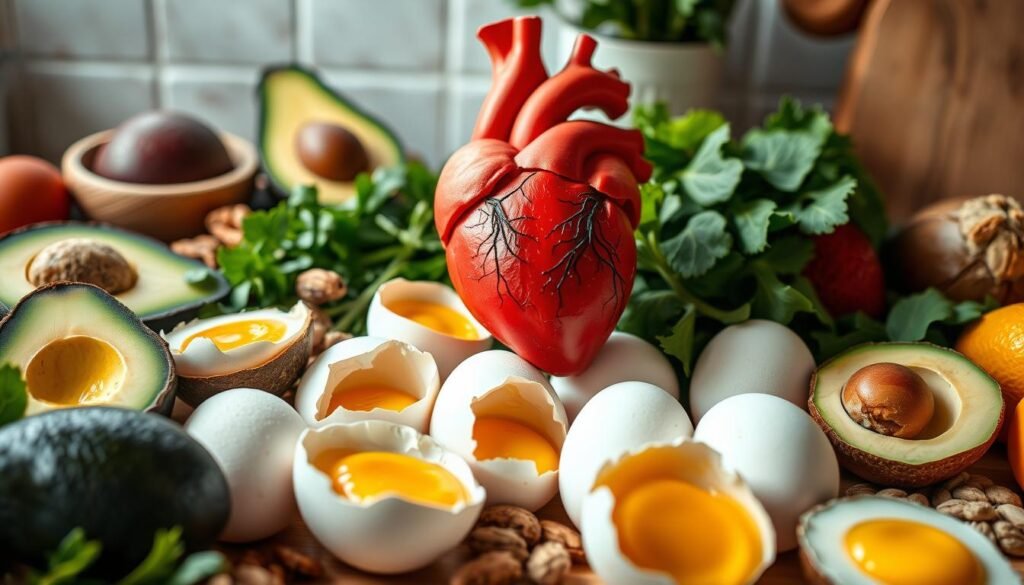
Studies say eating eggs is okay in moderation for healthy people. The 2019 American Heart Association suggests up to one egg a day is fine. For older people with good cholesterol levels, two eggs may be okay. Before, experts said to limit cholesterol to 300 mg a day. Now, the advice is to keep it as low as you can without losing nutritional value.
It’s important to know that eating high-fat foods like bacon and butter with cholesterol can be bad. Such diets increase bad cholesterol and the risk of heart disease. Foods like eggs, full-fat dairy, and processed meats are high in cholesterol.
Research on cholesterol shows many studies don’t find a direct link to heart disease risk. Still, people with high cholesterol, especially if overweight, should cut down on cholesterol and saturated fat. This helps lower the risk of clogged arteries.
Keeping an eye on cholesterol is key. High cholesterol is over 200 mg/dL. Aiming for 150 mg/dL total and 100 mg/dL for bad cholesterol is good. Diet, exercise, and lifestyle choices affect cholesterol levels and heart health greatly.
Knowing risks like high cholesterol, type 2 diabetes, and your family’s health history helps make better food choices. As we learn more, the link between dietary cholesterol and heart disease gets clearer.
Research Findings on Eggs, Cholesterol, and Health
The ongoing cholesterol research about eggs and heart health is quite in-depth. Recent studies show that most people can eat up to seven eggs a week. This doesn’t greatly increase heart disease risk. Some research even says eating an egg a day in a low-cholesterol diet is okay.
Health pros say to keep daily cholesterol under 300 milligrams. One large egg has about 186 mg. Despite worries over eggs and cholesterol, eggs might lower the risk of certain strokes and age-related eye problems. Yet, for those with diabetes, eating up to seven eggs a week may up heart disease risk.
This highlights how personal factors and overall diet matter in how we handle dietary cholesterol. Cholesterol research also notes eggs’ cholesterol doesn’t harm blood cholesterol like bad fats do. But, how you cook eggs (like frying with butter) could pose more of a heart risk.
Research funded by the egg industry from 2010 to 2019 has stirred debate. About 60% of these studies suggest eggs raise blood cholesterol. Yet, nearly half of these studies underplayed their findings. This is far less than the 13% seen in studies not supported by the industry. This shows the egg-cholesterol link is complicated.
| Study Findings | Total Cholesterol Increase (mg/dl) | LDL Cholesterol Increase (mg/dl) | Impact on Blood Lipids |
|---|---|---|---|
| College Study (2 eggs for 14 weeks) | 15 | Not statistically significant | No negative impact |
| Analysis of 28 studies | Significant increase | Significant increase | Indicates rising cholesterol concerns |
These findings stress the need for more talk about eggs and cholesterol. Knowing how diet, health, and cooking methods mix can help us understand more about heart health and cholesterol in our diet.
For more on cholesterol research, check out these important studies on eggs and health.
Recommendations for Egg Consumption
Eggs are known to be full of nutrients, making them a staple in health guidelines. They have lots of vitamins and minerals. Research gives us recommendations for egg consumption to keep our hearts healthy.
Most people can eat 1-2 eggs daily without worry. Eating 6-12 eggs a week can keep cholesterol in check. It may even boost good cholesterol for the heart. Eating 2-7 eggs a week can also keep cholesterol normal and lower the risk of metabolic syndrome.
If you have health issues, like diabetes or heart disease, be careful. You might want to limit yourself to three egg yolks a week. This helps keep cholesterol down while still getting egg benefits.

How you cook eggs affects their healthiness. Poach, boil, or scramble them without using a lot of fat to stay healthy. Eat eggs with foods that have a lot of fiber. Think whole grains, veggies, or fruits. This makes your meal better for your heart. Try to stay away from eggs with foods high in cholesterol, like bacon or fried stuff.
If you’re worried about cholesterol, focus on egg whites instead of whole eggs. The yolk has about 200 mg of cholesterol. But, if your cholesterol is okay, following the guidelines for eggs is still a good idea.
| Egg Consumption | Recommended for Healthy Adults | Advice for Specific Conditions |
|---|---|---|
| 1-2 eggs/day | Safe and beneficial | Limit to 3 yolks/week for diabetes/heart disease |
| 6-12 eggs/week | May increase HDL | Consult with a healthcare provider |
| 2-7 eggs/week | Maintains cholesterol levels | Monitor total and LDL cholesterol closely |
Eggs can be good for the heart when eaten as part of a balanced diet. Stick to the guidelines and pick healthy foods to eat with eggs. This helps you get the most from their nutritional value without risk.
Conclusion
The way eggs and cholesterol relate is quite detailed. Eggs are full of good stuff. They have protein and important vitamins. Eating up to three eggs a week is okay for most people, even if they worry about heart health or diabetes.
Eating eggs doesn’t harm healthy people much in terms of cholesterol. Mixing eggs with foods like avocados and whole grains is great for your heart. You can learn more about eggs and cholesterol here: Eggs and cholesterol considerations.
Understanding cholesterol’s role helps us choose better. A diet high in fiber and natural foods helps manage heart health. This balanced approach is key to a healthy life and long-term health.