Many people in the U.S. eat much more cholesterol than they need. This fact calls for urgent diet changes. Adding high-fiber foods to your diet is key for lower cholesterol and better heart health.
High-fiber foods help block cholesterol from being absorbed by the body. They are important in any diet for reducing cholesterol. These foods also make you feel full, helping you eat less and manage your weight better.
We will look at the best high-fiber foods for keeping cholesterol in check. We’ll talk about soluble fiber and how to eat more fiber every day. There are many tasty options from grains to fruits and vegetables!
Key Takeaways
- The average American ingests excess cholesterol, necessitating dietary changes.
- High-fiber foods can significantly lower cholesterol levels and promote heart health.
- Fiber creates feelings of fullness, aiding in weight management.
- Incorporating various fiber-rich foods can provide diverse health benefits.
- Making dietary adjustments is essential for effective cholesterol management.
Understanding Cholesterol and Its Impact on Health
Cholesterol is a waxy substance essential for building cells and making hormones. But, if levels get too high, it can harm health. Experts say it’s vital to keep cholesterol at healthy levels to avoid cholesterol and heart disease.
The CDC states ideal LDL levels are below 100 mg/dL. HDL should be over 60 mg/dL, and total cholesterol below 200 mg/dL. Yet, Americans often have higher levels than suggested. This increases high cholesterol risks for heart problems and stroke.
Studies show dietary fiber can significantly improve cholesterol control. Eating soluble fiber can lower total and LDL cholesterol by 5–10%. Foods like oats and beans, which are high in soluble fiber, are excellent for the heart.
Health experts advise more fiber intake to help balance cholesterol. This step helps manage cholesterol and reduce health risks.
Why Fiber Matters in Cholesterol Management
Adding fiber to your diet can really help manage cholesterol. This includes eating more fiber-rich foods instead of lean meats. Fiber in cholesterol management shows a drop in cholesterol by 30 points on average. Besides lowering cholesterol, a fiber-rich diet lowers the risk of chronic diseases.
Eating foods high in fiber like oats, beans, and fruits reduces cholesterol. High-fiber foods contain soluble fiber which turns to gel in water. This gel helps reduce how much cholesterol gets into your blood. With just 5 to 10 grams of soluble fiber a day, you can lower harmful LDL cholesterol. This shows why fiber is key for a healthy heart.
Unfortunately, only 10% of Americans eat enough fruits and veggies, which are great fiber sources. Right now, the average American eats about 15 grams of fiber each day. However, women should aim for 25 grams and men should go for 38 grams. About 36% of Americans battle with high cholesterol. Eating more fiber can help, and it also keeps you full to prevent overeating.
A diet rich in fiber doesn’t just help with cholesterol. It can also lower the chances of early death. A study with nearly 300,000 people over nine years found that those who ate more fiber had a lower risk. Swapping out refined grains for whole ones can lessen the risk of stroke by 36% and diabetes by 30%. Including a variety of fiber-rich foods like oats, berries, and veggies in your diet is a good step towards these benefits.
| Food Type | Fiber Content (per serving) | Cholesterol Benefit |
|---|---|---|
| Oats (1 cup cooked) | 4 grams | Reduces LDL cholesterol |
| Black beans (1 cup) | 15 grams | Supports heart health |
| Avocado (1 medium) | 10 grams | Lowers heart disease risk |
| Barley (1 cup cooked) | 6 grams | Effective in lowering cholesterol |
| Berries (1 cup) | 8 grams | High in antioxidants |
Meeting the daily fiber recommendations helps greatly in lowering cholesterol with high-fiber foods. It plays a crucial part in heart health. By eating more fiber, people can manage their cholesterol better and boost their overall health.
The Role of Soluble Fiber in Lowering LDL Cholesterol
Soluble fiber is key for reducing LDL cholesterol. It helps lower the “bad” cholesterol in our blood. Eating foods rich in soluble fiber stops cholesterol from being absorbed in our guts. This helps make our cholesterol levels better.
To lower cholesterol, eat 5 to 10 grams of soluble fiber a day. Foods like oats, beans, and certain fruits are great soluble fiber sources. For instance:
- Cooked oatmeal with berries has about 3 grams.
- Beans chili with a pear gives around 4 grams.
- Raw carrots and hummus have about 2 grams.
- Steamed veggies like cabbage or broccoli add 2 grams.
Aiming for 10 grams of soluble fiber daily is doable with various foods. Here’s a list of foods and their soluble fiber content:
| Food | Serving Size | Soluble Fiber (g) |
|---|---|---|
| Cooked Oatmeal | 1 cup | 3-4 |
| Beans (various types) | 1/2 cup | 1-3 |
| Medium Apple | 1 | 1-2 |
| Chia Seeds | 2 tablespoons | 5 |
| Quinoa | 1/2 cup (cooked) | 1-2 |
| Peas | 1/2 cup | 1 |
Eating these foods supports soluble fiber benefits. It also promotes a diet full of vital nutrients. Focusing on soluble fiber sources aids in controlling cholesterol. Plus, it boosts overall heart health.
High-Fiber Foods for Cholesterol: Top Choices
Eating more high-fiber foods is key to controlling cholesterol. Picking the best fiber for heart health can greatly improve life quality. Here’s a list of the top foods that help lower cholesterol.
Oats and Whole Grains
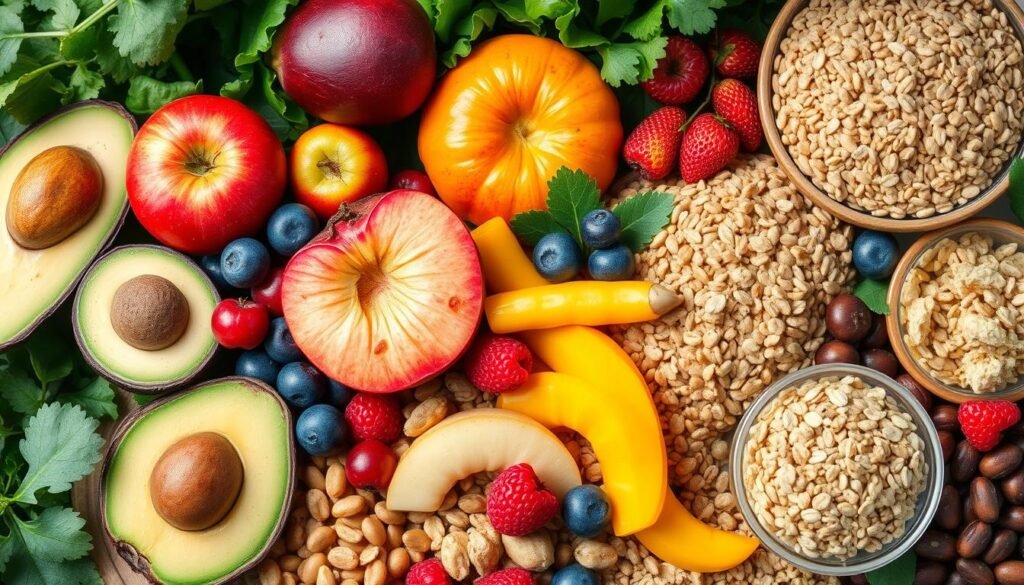
Oats and other whole grains such as barley and brown rice are top for cholesterol. They have lots of soluble fiber, cutting down LDL cholesterol. Adding oatmeal daily is an easy way to enhance meals or snacks.
Beans and Legumes
Beans and legumes like kidney beans, lentils, and chickpeas are full of fiber and proteins. Eating these regularly helps with cholesterol and boosts heart health. Try mixing beans into salads or making a lentil stew for extra fiber.
Fruits High in Fiber
Fruits such as apples, pears, raspberries, and strawberries add fiber without cholesterol. They’re crucial for lowering cholesterol and promoting a healthy heart. Enjoy these fruits as snacks, in smoothies, or with breakfast.
| Food Item | Fiber Content (grams per serving) |
|---|---|
| Oatmeal | 4 |
| Barley (cooked) | 6 |
| Brown rice (cooked) | 3.5 |
| Kidney beans (cooked) | 6.5 |
| Chickpeas (cooked) | 6 |
| Apples (with skin) | 4 |
| Pears (with skin) | 5.5 |
| Raspberries | 8 |
| Strawberries | 3 |
Healthy Fats and Their Benefits for Cholesterol
Choosing the right fats in your diet can really impact cholesterol. Healthy fats can boost heart health and lower heart disease risks. It’s key to know how unsaturated fats work as good food for cholesterol management.
The Importance of Unsaturated Fats
Unsaturated fats, like monounsaturated and polyunsaturated, raise “good” cholesterol or HDL. These beneficial fats are in foods such as nuts, seeds, and olive oil. By eating unsaturated fats, you improve heart health and push out bad fats.
Studies, like the Nurses’ Health Study, show fat intake doesn’t directly link to heart disease. While it’s better to cut down on saturated fats, they’re not as damaging as trans fats. The American Heart Association advises keeping saturated fat under 6% of daily calories to help cholesterol levels.
Here’s how different fats affect cholesterol:
| Type of Fat | Sources | Effects on Cholesterol |
|---|---|---|
| Unsaturated Fats | Olive oil, avocados, nuts, fatty fish | Increases HDL cholesterol |
| Saturated Fats | Red meat, butter, cheese, coconut oil | May raise LDL cholesterol |
| Trans Fats | Processed foods, baked goods, margarine | Increases LDL cholesterol and lowers HDL cholesterol |
Improving cholesterol through a diet rich in healthy fats is wise. It means eating less trans fats from processed foods. Knowing these guidelines helps us choose better foods.
Learning how to manage cholesterol with the right foods is crucial. Adding healthy fats isn’t just about diet but enhancing well-being too. Explore more about cholesterol management foods for in-depth understanding.
Incorporating More Vegetables into Your Diet
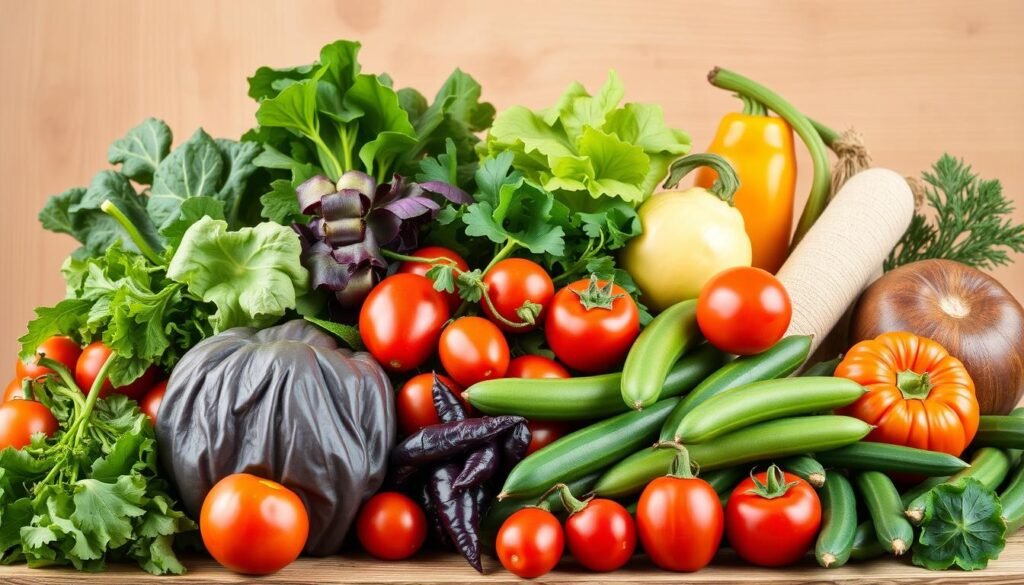
Eating a variety of vegetables is key for a healthy heart. Many Americans don’t get enough dietary fiber. They only consume half of what is recommended. By choosing high-fiber vegetable choices, meeting the fiber needs becomes easier. Men under 50 need 30-38 grams of fiber daily. Women should aim for 21-25 grams. After 50, these numbers drop slightly.
For lowering cholesterol, spinach, kale, and Brussels sprouts are top picks. These vegetables for heart health are packed with soluble fiber. This fiber is good for controlling cholesterol and blood sugar. Plus, they are full of nutrients and antioxidants. For example, a cup of kale has about 4.7 grams of fiber. This helps lower total and LDL cholesterol.
Here are some key high-fiber vegetable choices along with their fiber content:
| Vegetable | Fiber Content (grams per cup) |
|---|---|
| Kale | 4.7 |
| Cauliflower | 2.0 |
| Green Beans | 4.0 |
| Eggplant | 2.4 |
Adding these vegetables to your diet can boost your heart health through fiber. Eating them regularly might help lower cholesterol. This can lead to better heart health. By eating these fiber-rich foods, you’re also building healthy habits. And this helps keep your cholesterol under control. This lifestyle supports reducing cholesterol with vegetables and improving cardiovascular health.
Snack Wisely with High-Fiber Options
Choosing high-fiber snacks improves health and helps manage cholesterol. These snacks are not just tasty but also good for your heart. This way, you can get enough fiber each day easily.
Some excellent healthy snack options include:
- Black beans: With 15 grams of fiber per one cup serving, they serve as a filling snack or can be added to salads.
- Raspberries: Offering 8 grams of fiber in a one-cup serving, they make a delicious addition to smoothies or yogurt.
- Chia seeds: Just two tablespoons provide 8 grams of fiber, perfect for sprinkling on salads or mixing into oatmeal.
- Lentils: Having 15 grams of fiber per one cup cooked, they can be enjoyed in soups or as a side dish.
- Blackberries: Offering 7.6 grams of fiber per one cup, these berries make for a refreshing and healthy snack.
High-fiber snacks can stabilize blood sugar and help with weight control. Both are key for a healthy heart. These snacks also make you feel full. This helps you avoid unhealthy snacks between meals.
Try adding split peas, artichokes, and whole wheat bread to your snacks for more variety. It’s a great way to eat a diet high in fiber. Soluble and insoluble fibers are both important. They help with digestion and cholesterol control. By choosing wisely, you take a big step towards better health.
Maintaining a Fiber-Rich Diet for Heart Health
Eating plenty of fiber is key to keeping your heart healthy. You should eat both soluble and insoluble fibers every day. Soluble fibers can lower bad cholesterol levels. At the same time, insoluble fibers help with digestion. Sadly, most Americans get only half the fiber they need, which isn’t good for heart health.
The Academy of Nutrition and Dietetics recommends eating about 14 grams of fiber for every 1,000 calories. The right fiber amount depends on your age and sex. This is crucial for a good diet plan:
| Age Group | Recommended Fiber Intake (grams) |
|---|---|
| 1–3 years | 14 |
| 4–8 years | 19.6 (males), 16.8 (females) |
| 9–13 years | 25.2 (males), 22.4 (females) |
| 14–18 years | 30.8 (males), 25.2 (females) |
| 19–50 years | 38 (males), 25 (females) |
| 51 years and over | 30 (males), 21 (females) |
To get more fiber, eat lots of fruits, vegetables, and legumes. For example, a cup of kidney beans gives you 7.4 grams of fiber. Raspberries have about 8 grams per cup. Quinoa adds 2.8 grams per 100 grams. These foods are great for managing cholesterol and improving heart health.
Natural Ways to Reduce Cholesterol with Fiber
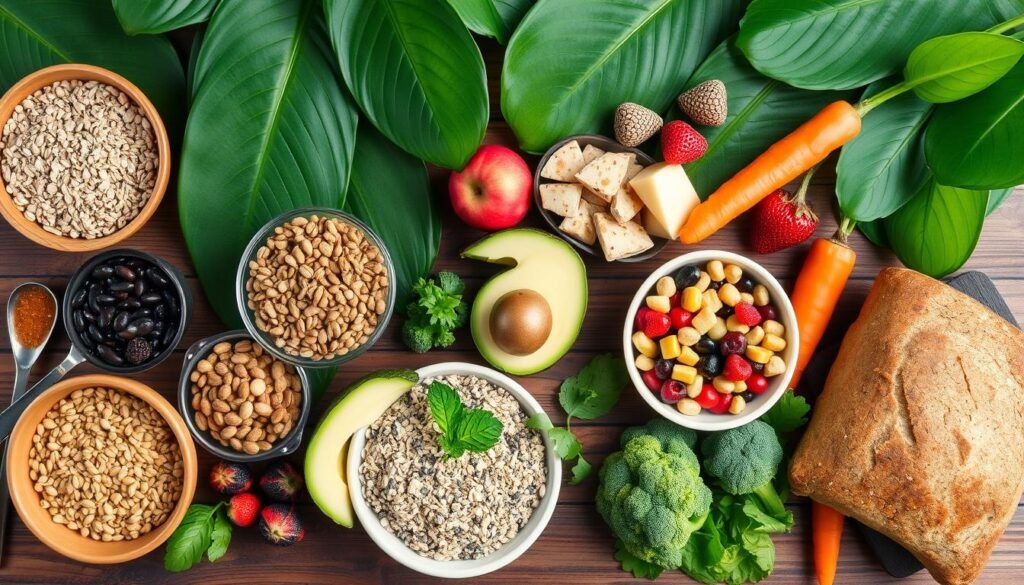
Eating foods full of fiber is key to natural cholesterol reduction. Foods like oatmeal, apples, and beans are great. They help stop cholesterol from getting into the bloodstream. The dietary fiber impact shows it can lower bad LDL cholesterol. Choosing these foods is a smart move for lowering cholesterol naturally.
Having foods such as kidney beans, barley, and pears is smart. They keep the body from soaking up too much cholesterol from foods high in saturated fats. Since 25% of cholesterol comes from what we eat, making good food choices is important. The rest is made by our bodies, showing that what we do matters a lot for cholesterol.
Eating lots of fiber works even better with lean proteins and good fats. Adding fish like salmon, rich in omega-3s, to your diet helps with cholesterol. The American Heart Association recommends eating fatty fish twice a week for the best effects.
It helps to eat mindfully, stay active, and drink plenty of water, too. Aiming for 150 minutes of exercise like walking each week is good for the heart. Keeping a healthy weight also plays a big role in managing cholesterol levels.
| Food Type | Fiber Content (grams per serving) | Cholesterol Effect |
|---|---|---|
| Oatmeal | 4 | Lowers LDL |
| Kidney Beans | 5 | Lowers LDL |
| Apples | 4 | Lowers LDL |
| Almonds | 3 | Reduces heart disease risk |
| Fatty Fish | Varies | Supports HDL |
| Plums | 3 | Lowers LDL |
Keeping up with these good habits most of the time is great for the heart. By doing so, combined with focusing on lowering cholesterol naturally, you can take good care of your heart. Always talk to a doctor to get a plan that fits you best.
Conclusion
Keeping cholesterol levels in check is key for heart health. Cardiovascular disease causes 31% of all global deaths. Eating more fiber is a big step towards managing cholesterol effectively.
Studies have found that high-fiber foods can cut cholesterol by 15-19%. It’s not just about less bad cholesterol. It’s about changing what we eat for better health and energy.
Eating oats, beans, and lots of fruits and veggies is easy and good for you. Everyone should try to get 25 to 35 grams of fiber per day. This can lower the chance of high cholesterol by more than two times. For tips on what foods to skip for better cholesterol, check this helpful guide.
Switching to a diet high in fiber helps us make smarter food choices. This is a big part of improving our health. By adding healthy fats and lots of fiber, we can all help our hearts and lower disease risk.