Did you know that just 30 minutes of aerobic exercise five days a week is key? Experts tell us to aim for at least 150 minutes of moderate workouts each week. This helps our hearts work better. Seeing exercise as more than just a routine is important. It’s key for a heart-healthy life. Knowing the best exercises for your heart is crucial as you start on this path.
This article explores the top exercises that keep your heart happy and healthy. We’ll talk about why aerobic exercises, strength training, and flexibility moves matter. Plus, we give tips on setting up a workout plan that’s good for your heart. To learn more about managing cholesterol and finding the right exercises, check out best workouts for heart health.
Key Takeaways
- Engaging in 30 minutes of aerobic exercise daily can greatly enhance heart health.
- Combining aerobic activities and resistance training positively affects cholesterol levels.
- Flexibility exercises like stretching should be incorporated daily to support musculoskeletal health.
- Resistance training is recommended at least two to three days per week.
- Balance exercises reduce the risk of falls and enhance stability.
- Older adults particularly benefit from strength training to counteract muscle loss.
Why Exercise is Crucial for Heart Health
Regular exercise is key to strong heart health. It helps keep your heart muscle strong and your blood levels healthy. Being active also helps manage your blood pressure, cholesterol, and sugar levels.
Understanding Cardiovascular Health
About one in five adults and teens exercise enough for good health. Adults need 150 minutes of moderate exercise or 75 minutes of high-intensity exercise weekly. Kids aged 6 to 17 should be active for 60 minutes every day. Activities like walking, dancing, and gardening boost heart health.
The Role of Exercise in Strengthening the Heart
Not exercising can double your risk of heart disease. Active people are less likely to face this risk. Doing regular heart exercises helps with weight control, builds endurance, and makes muscles strong. For the best heart health, mix aerobic and resistance training in your workouts. Strength training twice a week works all major muscles, helping your heart.
The Benefits of Aerobic Exercise
Aerobic exercises are great for your heart. They improve how well your heart works overall. Doing these activities helps your blood move better, lowers your blood pressure, and helps you live longer. Doctors, like those at the American Heart Association, say you should get at least 150 minutes of exercise each week. You can do this by mixing different kinds of cardio workouts to keep your heart healthy.
How Aerobic Exercises Improve Circulation
Aerobic exercises make your heart stronger by making it beat faster and improving your blood flow. If you keep up with these exercises, your heart will get better at sending blood around your body. This means it will work more efficiently. These activities also help you control your blood sugar and manage how much you weigh. Both are key for a healthy heart. Over time, you’ll feel less tired and have more energy, showing your heart is getting healthier.
Recommended Aerobic Activities for a Healthy Heart
There are many good exercises for your heart, such as:
- Brisk Walking: An easy start for newcomers to exercise.
- Swimming: Easy on your joints while still being a great workout.
- Cycling: Works out your big muscle groups, which is good for your heart.
- Jogging: Helps raise your heartbeat and improve how long you can keep going.
- Dancing: A fun mix of movement and music to work out to.
To help avoid serious health issues like heart disease, high blood pressure, and diabetes, add these exercises to your week. Start gently, increase intensity, and then cool down to avoid hurting yourself. Always talk to a doctor before starting new exercises to make sure they’re safe for you.
Resistance Training for a Healthy Heart
Resistance training is key for heart health. It makes muscles stronger, improves how your body is made up, and can help your cholesterol. Doing resistance exercises often is great for your heart. These workouts help you feel better overall.
Impact on Body Composition and Cholesterol Levels
This training changes your body by lessening fat and adding muscle. People who do it often see their good cholesterol go up and bad cholesterol go down. The American Heart Association says to do strength workouts twice a week. They suggest working each muscle group two times a week for the heart’s best health.
Resistance exercises also make your resting blood pressure lower. Strength training can cut the risk of dying by 15% and heart disease by 17%. It’s also good for older folks with diabetes because it betters blood sugar levels.
Examples of Effective Strength Workouts
Try adding different resistance exercises to improve heart health and strength. Here are some good workouts:
- Free weights: Use dumbbells and barbells for bicep curls and squats.
- Resistance bands: These are great for working out all the big muscle groups.
- Bodyweight exercises: Push-ups, lunges, and squats make for flexible workouts.
For strength training, aim for one set of eight to twelve repetitions per muscle area. Work until you’re really tired. When lifting, lift for 2 seconds, then release slowly over 4 seconds. This helps avoid injuries. Always talk to a fitness pro before starting to make sure you’re doing it right.
For the best results, train with resistance three times a week. Take a day off between to rest. Start with big muscle groups like legs, chest, and back. Then move to smaller ones like the arms and belly. This method prevents injuries and gets the most benefits. Learn more about top heart-helping exercises by looking at detailed guides here.
Best Workouts for Heart Health
Finding the right workout for heart health means mixing it up. You need both aerobic and resistance training. This makes your heart and muscles stronger. Plus, it keeps things fun and helps you stick with your routine.
Combining Aerobic and Resistance Training for Maximum Benefits
For the best heart workouts, aim for 150–300 minutes of moderate exercise weekly, as suggested by the American College of Sports Medicine. Start with easy exercises like walking and air squats. No experience needed. Move to tougher ones like Burpees and high knees as you get better. These work your heart and muscles hard.
To up your workout intensity, try:
- Jumping higher or faster
- Increasing squat depth
- Performing movements at a faster rate or with more repetitions
- Taking stairs two at a time or shifting to a running pace
Creating a Balanced Fitness Routine
A good fitness plan targets different muscles and helps your heart. Add balance exercises like single-leg stands and stretch with yoga to improve stability and breathing.
Start simple with jogging in place or butt kicks to keep your heart rate up. Then, add tough exercises that work many muscles together. This mix stops boredom and keeps you focused on your heart health goals.

The Importance of Flexibility and Balance Training
Flexibility and balance training are key for complete fitness. They impact health in many ways. While not directly boosting heart function like aerobics, they help by lowering injury risks. They also enhance performance in heart-healthy exercises.
How Flexibility Supports Heart Health
Flexibility workouts boost circulation, promote relaxation, and ease muscle tension. The American Heart Association notes flexibility routines help with heart-healthy exercises. For older people, these workouts may lower fall risks, protecting heart health.
Incorporating Stretching into Your Routine
Varying your stretches gets the best outcomes. The American Heart Association advises a 10-30 second hold for each stretch, three to five times. Here are stretches to try:
- Hamstring Stretch
- Quadriceps Stretch
- Shoulder Stretch
- Chest Stretch
- Side Bend Stretch
Yoga and Tai Chi boost flexibility, balance, and strength. They’re great for your heart. Regularly doing these exercises improves heart health.
| Type of Stretch | Benefits | Recommended Duration |
|---|---|---|
| Hamstring Stretch | Improves leg flexibility | 10-30 seconds |
| Quadriceps Stretch | Enhances knee mobility | 10-30 seconds |
| Shoulder Stretch | Relieves shoulder tension | 10-30 seconds |
| Chest Stretch | Promotes better posture | 10-30 seconds |
| Side Bend Stretch | Increases lateral flexibility | 10-30 seconds |
High-Intensity Interval Training (HIIT)
High-Intensity Interval Training, or HIIT, is great for your heart health. It mixes short, intense exercise moments with short rests. This method is shown to make your heart and metabolism better. Including HIIT in your workouts brings many benefits for all fitness levels.
Benefits of HIIT for Heart Function
HIIT is effective for making your heart work better. Doing HIIT often can boost your endurance, strength, and overall heart fitness. Studies prove HIIT is better than moderate workouts for improving heart markers. It meets weekly activity goals in less time, making it perfect for busy schedules.
Different HIIT Workouts to Try
There are many HIIT workouts for different fitness stages. Here’s how you can start:
- Beginner: Try 2-3 weekly sessions of 20-30 minutes. Do simple exercises like bodyweight squats. Aim for 8-20 reps.
- Intermediate: Go for 2-4 weekly sessions lasting 25-45 minutes. Include exercises like mountain climbers with specific time ratios.
- Advanced: Take on sessions of 45-60 minutes with moves like clapping push-ups.
Some popular HIIT styles are Tabata, 30-20-10, Sprint Interval Training (SIT), and the Pyramid Method. Each one offers unique challenges and keeps things fun. Adding HIIT to your cardio can majorly boost your health and fits well with a busy life.

Tips for Starting a Heart-Healthy Routine
Starting a journey to better heart health takes planning and commitment. It helps to set goals you can achieve and pick activities that make you happy. This way, you can make a fitness routine for heart health that sticks.
Everyone can work on better heart health. This is done by choosing the right kind of exercises.
Setting Realistic Fitness Goals
It’s important to start with goals that are realistic. The American Heart Association recommends 150 minutes of medium-intensity aerobic activity each week. Or you could do 75 minutes of high-intensity exercise. Making these suggestions fit your own needs and timetable helps you stick with it.
Adding new exercises or an extra challenge keeps things interesting. This helps you keep going with your exercise plan.
Finding Activities You Enjoy
Finding fun activities is key for a heart-healthy life. Try out different workouts like dancing, cycling, swimming, or group classes to find what suits you. Adding strength training and exercises that improve flexibility is also good for heart health.
Choosing exercises that you look forward to boosts your drive. It makes you more likely to keep up a healthy routine and enjoy life more.
| Activity | Type | Duration |
|---|---|---|
| Brisk Walking | Aerobic | 150 minutes/week |
| Cycling | Aerobic | 75 minutes/week |
| Weight Training | Resistance | 2-3 times/week |
| Yoga | Flexibility | 2-3 times/week |
For tips on preventing heart disease and setting routines, check out this useful resource. With commitment, excitement, and a good plan, you can start on the path to a heart-healthy life. Being consistent and enjoying your fitness journey are key to achieving your goals.
Weekly Workout Schedule for Heart Health
A well-planned weekly workout schedule is key for a healthy heart. It should mix cardio, resistance training, and stretching. This mix keeps the heart strong, prevents injuries, and boosts overall well-being.
Balancing Intensity and Duration
Matching the workout’s intensity with how long it lasts is crucial. The CDC says adults need at least 150 minutes a week of medium effort exercise. That’s about 30 minutes a day, five days a week. It’s also important to add two days of muscle-strengthening activities. These activities should work all major muscle groups, challenging enough to improve strength.
Sample Weekly Workout Plan
| Day | Workout Type | Details |
|---|---|---|
| Monday | Cardio | 30 minutes of moderate-intensity walking or cycling. |
| Tuesday | Upper Body Strength | Exercises include bicep curls, tricep dips, and a core circuit. |
| Wednesday | Lower Body Strength | Focus on deadlifts, lunges, and squats, performing three sets of 10 reps. |
| Thursday | Rest/Active Recovery | Gentle stretching or yoga for flexibility. |
| Friday | Cardio | 30 minutes of vigorous exercise, aiming for elevated heart rate. |
| Saturday | Upper Body & Core | Incorporate additional upper body exercises along with core routines. |
| Sunday | Lower Body Strength | Repeat lower body exercises, ensuring proper technique and gradual weight increase. |
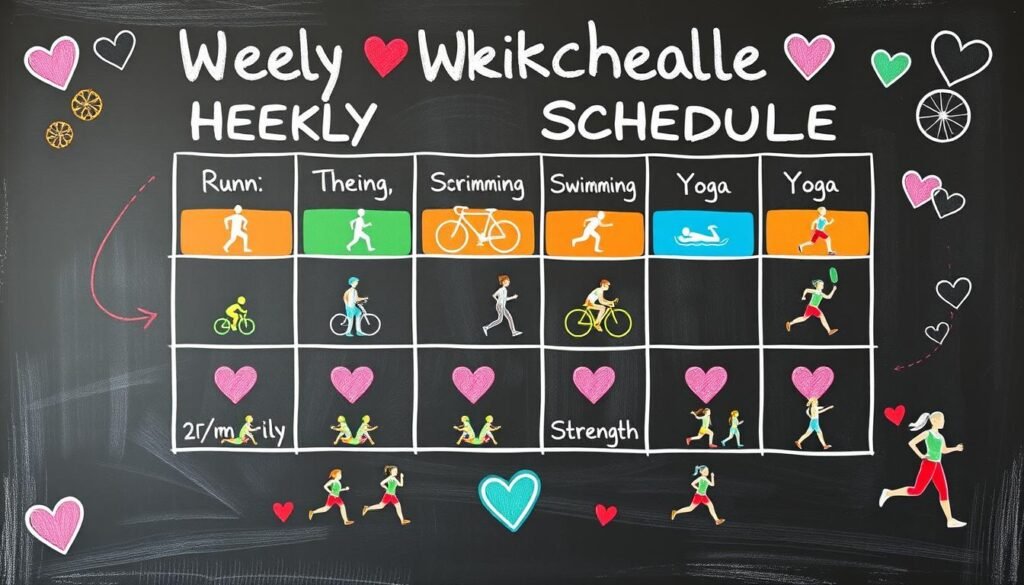
This plan is great for your heart because it mixes different workouts. Doing a variety helps your heart and keeps you fit. Also, it makes sticking to your health goals fun and achievable.
Real-Life Success Stories
Real-life success stories show the huge impact of exercise on heart health. Many people have changed their lives by adding heart-healthy exercises into their daily lives. This has greatly improved their health and happiness.
How Exercise Changed Lives
Steven Yates once weighed 321 pounds but lost 80 pounds. His heart now beats more slowly and healthily, thanks to exercise. John Obrien also saw great results, losing 27 pounds by swimming and walking. These stories show that exercise is not just about losing weight. It’s also about overall health.
Lessons Learned from Heart Health Transformations
Tami Flaherty worked with a personal trainer and changed her diet to lose 40 pounds. She’s not stopping there and plans to lose even more. Kevin Vig lost 65 pounds by living healthier. His hard work made him feel a lot better.
Brian Somerville loved the social side of getting fit. Joining group fitness classes in 2012 made him more energetic and happy. He also improved his diet and now teaches fitness classes. These stories show how important exercise is for heart health.
For more insights into the benefits of exercise, visit how exercise can save your life.
Conclusion
To improve your heart health, it’s key to adopt a comprehensive fitness routine. This means doing a variety of workouts such as aerobic and resistance training. Adding flexibility exercises and high-intensity interval training (HIIT) also brings great benefits.
A mix of moderate exercise and a healthy diet boosts your well-being. It also lowers your risk of heart disease. Almost half of all U.S. adults face these heart issues.
For a better heart, focus on consistent and diverse workouts. Regular exercise improves cholesterol, blood pressure, and overall fitness. It can also reduce inflammation and boost metabolic health, lowering the risk of heart disease and stroke.
Choosing enjoyable and lasting fitness activities helps in keeping a healthy heart. This approach improves life quality over time. To further support heart health, consider eating less high-cholesterol food. For guidance, see helpful guides.