Did you know that humans are about 60% water? This fact shows how important water is for our health. Yet, many people forget to drink enough water every day. Being well-hydrated is key for our bodies to work well.
It also helps us think clearly, stay in a good mood, and perform better physically.
Even losing a little as 2% of body water can affect us. It can make it hard to focus, remember things, and feel energetic. That shows staying hydrated is key for our health. We’ll look into the benefits of being hydrated, where we can get water, and tips for drinking enough.
Key Takeaways
- Hydration comprises about 60% of the human body, underscoring its importance.
- Consuming adequate water is linked to improved cognitive functioning and mood stability.
- Mild dehydration can impair various brain functions, affecting mood and concentration.
- Regular hydration can prevent headaches and decrease the risk of kidney stone formation.
- Both adults and children have specific daily hydration recommendations to follow.
- For athletes, maintaining hydration is vital for performance and recovery during physical activities.
- Fruits and vegetables can contribute significantly to daily fluid intake.
Understanding the Basics of Hydration
Hydration means keeping enough water in your body. It’s crucial for your health. Every cell in the body needs water to work right. Knowing why hydration is essential helps us see how it affects our health.
How much water you need depends on if you’re a man or woman. Men should drink about 15.5 cups each day. Women need about 11.5 cups. Food gives us around 20% of this water. This shows eating right is key for staying hydrated. Drinking enough water helps our bodies absorb nutrients better.
Drinking enough water also keeps your mind sharp. It improves attention and memory. This is vital when you’re exercising. Athletes can lose a lot of water through sweat. They might lose 6% to 10% of their body weight. That’s why it’s important to drink water all day, especially during workouts. If you don’t, you could face major health problems.
It’s important to know when you’re dehydrated. Signs include being very thirsty, dark urine, headaches, and feeling tired. It’s not just about drinking water. You also need to think about what you drink. Tea and milk are good, but try to avoid too much sugar in drinks.
Why Hydration is Essential for Your Body
Water is crucial for our bodies. It affects many functions that keep us healthy. Hydration is key because two-thirds of our body is water. This shows how vital water is. It helps control our temperature, moves nutrients, and keeps joints working smoothly. By staying hydrated, our digestion and blood flow work better. This proves drinking water is good for you.
Key Functions of Water in the Body
Water does many important things:
- Temperature regulation: It keeps our body temperature stable through sweat and breathing.
- Nutrient transport: Water moves nutrients and oxygen to cells everywhere in our body.
- Joint lubrication: It makes sure our joints are protected and work well during activities.
- Fluid balance: Keeps important bodily fluids like saliva, blood, and pee balanced.
Women should drink about 9 cups of fluids a day, and men should drink about 13 cups. This helps everyone stay properly hydrated. But, many people, especially in the United States, don’t drink enough water. In fact, 75% of Americans are not drinking enough water all the time.
Signs of Dehydration
It’s important to know when you’re dehydrated. Here are some signs:
- Thirst: This is the first sign you need more water.
- Headaches: Not drinking enough water can cause headaches or migraines for some.
- Dry skin: Your skin can suffer if you’re not drinking enough.
- Serious symptoms: Not drinking enough water can also lead to confusion, passing out, not being able to pee, and a fast heartbeat. These are serious and show why it’s critical to drink enough water.
Some people might need to drink more water because of their health or medicine. Drinking enough water can prevent diseases like heart failure and diabetes. It’s very important for athletes to stay hydrated too. You can find tips on how to do this during sports here.
The Importance of Hydration for Health
Being well-hydrated is key to our health. It boosts our physical energy and mental health. It’s important for our body and mind.
Physical Benefits of Staying Hydrated
Drinking enough water has many benefits. It helps your body work well by:
- Improved organ function – Enough water keeps organs like the kidneys working well.
- Joint health – Water makes joints move easily by reducing friction.
- Metabolic efficiency – Staying hydrated helps with digestion and using nutrients.
Water is crucial for our bodies to function well. It prevents dehydration problems and keeps us healthy.
Mental Clarity and Mood Enhancement
Hydration also helps our brains. Drinking enough boosts how well we think and feel. Mild dehydration can cause:
- Less focus
- More tiredness
- Worse mood
Keeping an eye on how much you drink can make you more focused and stable. Check your urine color to know if you’re hydrated.
| Indicator | Hydration Status | Recommended Actions |
|---|---|---|
| Clear and light yellow urine | Well-hydrated | Maintain fluid intake |
| Darker urine | Signs of dehydration | Increase water consumption |
| Dry mouth and fatigue | Dehydrated | Rehydrate immediately |
Balancing physical health and mental clarity shows how important water is. Responding to what your body needs keeps you physically strong and mentally sharp.
Daily Water Intake Recommendations
Staying hydrated is key to good health, but it’s tricky figuring out how much water you need. The National Academy of Medicine says most men need about 13 cups of fluids a day. Women should aim for 9 cups. But, these are just starting points. Person to person, our water needs can change a lot because of different factors.
How Much Water Do You Really Need?
The Eatwell Guide says we should get 6 to 8 cups of fluids daily. This counts drinks and food with high water content. For kids, the amount changes with age:
| Age Group | Recommended Daily Fluid Intake |
|---|---|
| 1-3 years | 4 cups (32 ounces) |
| 4-8 years | 5 cups (40 ounces) |
| 9-13 years | 7-8 cups (56-64 ounces) |
| 14-18 years | 8-11 cups (64-88 ounces) |
| Men 19+ | 13 cups (104 ounces) |
| Women 19+ | 9 cups (72 ounces) |
| Pregnant Women | 10 cups (80 ounces) |
| Breastfeeding Women | 13 cups (104 ounces) |
Water makes up 60% of an adult’s body weight. Make sure to drink more if you’re more active or it’s hot. Sweating increases how much water you need. It’s crucial to know how much water you need to stay healthy.
Factors Influencing Water Needs
Many things change how much water we need. Your age, weight, and how active you are all matter. For example:
- Kids should steer clear of sugary drinks to stay at a healthy weight.
- Limiting fruit juice and smoothies to one small glass per day cuts down on extra sugar.
- Pregnant women should drink more fluids. But, they need to watch their caffeine.
If you’re sick or have been working out a lot, you might need extra water. Watch for body cues like the color of your pee to see if you’re hydrated. Dehydration can make you tired or even raise your health risks. Drinking too much water has its dangers, too, like hyponatremia. It’s all about finding the right balance for you.
The Role of Hydration in Well-Being
Staying hydrated is key to our health. It boosts our physical and mental performance. This improves our life quality.
Drinking enough water stops us from getting tired and losing focus. It’s especially key for athletes and people who do heavy tasks. Adults are advised to drink 8 to 10 cups of water daily. It’s important to know how much your body needs.
Kids and teens need to drink water during sports to help their bodies grow. Older people might not feel thirsty but still need to drink plenty. Drinking enough water keeps our energy up and stops health problems.
The European Hydration Institute says drinks without alcohol can hydrate us well. Staying hydrated boosts our brain, lifts our mood, and keeps us at our best physically. Check the table below for how much water different ages should drink.
| Age Group | Recommended Daily Intake |
|---|---|
| Babies (7-12 months) | 0.6 liters |
| Children (1-3 years) | 1.3 liters |
| Teens (14-18 years) | 2.1 – 3.5 liters |
| Adult Females | 2.7 liters |
| Adult Males | 3.7 liters |
Drinking enough water is more than just about not being thirsty. It makes our body and mind work better. It’s vital to drink regularly to avoid sickness. For more info, check out the importance of hydration in daily life.
Health Benefits of Drinking Water
Understanding the health benefits of drinking water is key to staying well. It supports our bodies in many ways, leading to a healthier life. It helps with urinary health, managing weight, and keeping skin looking good.
Urinary Health
Drinking enough water is essential for urinary health. It makes your urine less concentrated, lowering the risk of infections. It helps the kidneys work better, removing toxins from our bodies. This keeps the urinary system healthy, avoiding serious problems.
Weight Management
Water is also great for managing weight. Studies show drinking water before eating can make you eat less. Plus, water has zero calories, much better than sweet drinks. By drinking more water, you can manage your weight and enjoy its health benefits.
Skin Health
Staying hydrated improves your skin’s health. It helps keep your skin elastic and less wrinkled. Drinking plenty of water also helps clear your skin by removing toxins. This means your skin stays moisturized, looking both healthy and vibrant.
| Benefit | Description |
|---|---|
| Urinary Health | Reduces the risk of UTIs and promotes efficient kidney function. |
| Weight Management | Helps control appetite and reduces calorie intake when consumed before meals. |
| Skin Health | Maintains skin elasticity and flushes out toxins for a clearer complexion. |
Hydration During Physical Activity
It’s crucial to stay hydrated during sports or any exercise. The importance of hydration for health is huge, especially with the strain from intense activity. In a workout, you might lose up to 2.5 liters of sweat. So, replacing that fluid is key. Knowing how and when to drink water can really make a difference in your performance and health.
Importance for Athletes
Athletes need to be extra careful about dehydration. Research shows that 66% of NCAA Division I athletes start their training already needing more water. Losing more than 2% of your body weight in fluid can drop your performance. This can mean less strength and stamina. Keeping fluids up helps your muscles work, keeps your energy high, and helps you think clearly. You can tell if you’re hydrated by checking if your pee is clear or dark – clear is good, dark means you need more water.
Hydrating Before, During, and After Exercise
To do your best, follow a hydration plan:
- Drink up to 2 liters of water before your workout.
- During exercise, try a glass of water every 15-20 minutes. This helps replace the sweat, especially in hot or tough conditions.
- Keep drinking after you’re done, aiming for 2 liters over three hours. This helps you recover and balances your fluids.
Smart drinking stops heat exhaustion and improves how well you do in your sport. Learning how to hydrate can lead to better habits. There’s evidence that knowing more means doing better. Staying up to date on the importance of hydration for health lets athletes make smart choices. These can boost how you train.
| Hydration Recommendation | Before Exercise | During Exercise | After Exercise |
|---|---|---|---|
| Amount of Water | Up to 2 liters | 1 glass every 15-20 minutes | About 2 liters over 3 hours |
| Signs of Dehydration | Dry mouth, fatigue | Increased heart rate, weakness | Extreme thirst, dark urine |
Natural Sources of Hydration
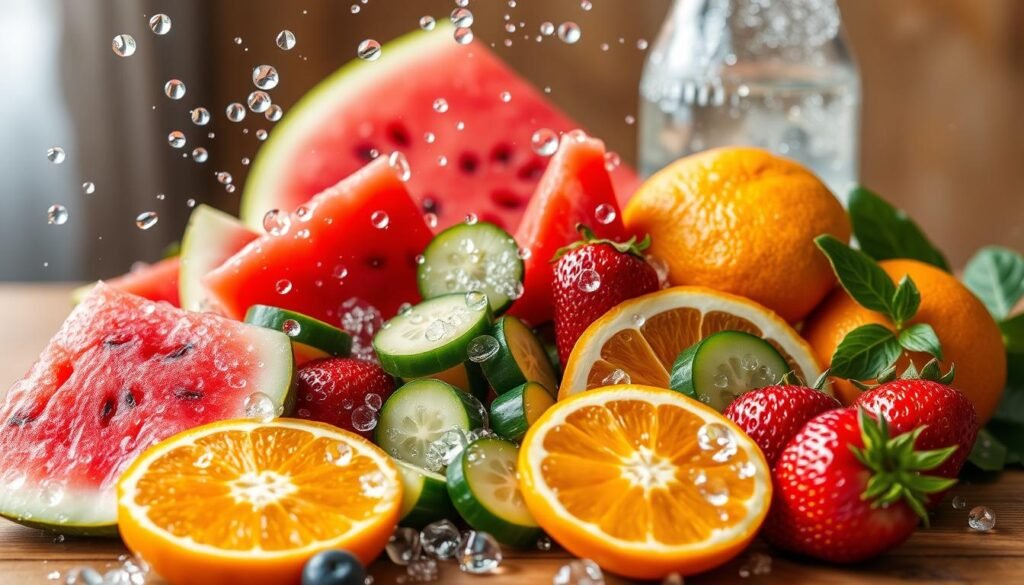
Staying hydrated is key for good health. Drinking water is simplest. But, adding foods that hydrate to your meals boosts your fluid intake. Many fruits and veggies are loaded with water, making them great for hydration.
Foods that Hydrate
Plenty of fruits and vegetables are not only healthy but are also packed with water. Top hydrating foods include:
| Food | Water Content (% water) |
|---|---|
| Cucumber | 96% |
| Iceberg Lettuce | 96% |
| Celery | 95% |
| Radishes | 95% |
| Romaine Lettuce | 95% |
| Tomatoes | 94% |
| Watermelon | 92% |
| Spinach | 92% |
| Strawberries | 91% |
| Skim Milk | 91% |
Foods that hydrate are crucial for hydration. As Sarah Adler, MS, RD, says, food provides about 20% of our needed water. Eating a mix of these can help with our fluid needs.
Choosing Healthy Beverages
It’s important to choose the right drinks too. Go for water, herbal tea, and low-calorie drinks. It helps in choosing healthy beverages for staying hydrated. Limit sugary and high-calorie drinks which add calories but not hydration. Carry a refillable water bottle and remind yourself to drink water to stay hydrated.
For more info, check the list of top hydrating foods for ways to improve hydration through your diet.
The Dangers of Dehydration
Dehydration can be harmful to people of all ages. It starts as a small problem but can become serious quickly. Knowing the risks is very important, especially for those who are active or live where it’s hot.
Short-Term Consequences
Dehydration first shows through signs like thirst, headaches, feeling tired, and dizziness. For little kids, things like heavy diarrhea and throwing up can cause them to lose fluids fast. They can also get dehydrated from lung or bladder infections. People who exercise a lot might not drink enough water, which is risky in hot weather or during hard workouts. It’s advised to drink 16 to 20 ounces of water one to two hours before going outside and keep drinking while you’re active.
Long-Term Health Risks
Not drinking enough water over time can lead to serious health problems. Older folks, who might already have health issues or take certain medicines, are especially at risk. Dehydration can cause heat injuries, bladder infections, and kidney stones. Staying hydrated is a key part of avoiding these long-term issues. Learning about the health perks of water and practicing good hydration habits is very important.
To stop dehydration, it’s vital to drink plenty of fluids, especially when you’re sick, working out, or it’s very hot. People who are very active should keep an eye on how much they’re drinking. They should aim for six to twelve ounces of water every 10 to 15 minutes when they’re exercising. For short activities, water is enough. For longer ones, you might need drinks that bring back electrolytes.
| Risk Group | Dehydration Factors |
|---|---|
| Young Children | Severe diarrhea, vomiting, infections |
| Older Adults | Lower water volume, chronic illnesses, medications |
| Active Individuals | Hot weather, vigorous exercise |
By understanding dehydration and its risks, we can live healthier. Managing how much we drink and knowing the risks helps us stay safe.
Common Myths about Hydration
In the realm of hydration, several myths often distort our understanding. Clearing misconceptions about hydration is crucial. One big myth is that if you’re thirsty, you’re well-hydrated. But thirst is a warning sign you’re already a bit dehydrated. It’s smarter to sip fluids all day, instead of waiting to feel thirsty.
Clearing Up Misconceptions
Another widespread myth is about caffeine and hydration. Some think caffeine causes dehydration because it’s a diuretic. However, if you drink caffeine in moderation—like up to four cups of coffee a day—it doesn’t really dehydrate you. Since coffee is mostly water, it can actually help you stay hydrated.
Understanding Caffeine and Diuretics
Understanding caffeine’s role helps us know our fluid needs better. You can enjoy caffeinated drinks and still stay well-hydrated. Also, our food contributes to hydration. Fruits and veggies, which are full of water, make up about 20% of our fluid intake each day. This shows eating a balanced diet plays a big part in staying hydrated.
Staying Hydrated for Optimal Health
It’s vital to stay hydrated for good health. Strategies that ensure we drink enough water daily are key. Using tips for increasing water intake helps us maintain optimal hydration levels.
Tips for Increasing Water Intake
Follow these easy tips to drink more water every day:
- Carry a reusable water bottle. It reminds us to sip more often.
- Set reminders on your phone or use hydration apps to keep drinking.
- Add lemon, lime, or berries to your water for extra flavor.
- Eat foods like cucumbers, watermelon, and oranges that have a lot of water.
- Have a glass of water before meals to help with hydration.
Creating a Hydration Strategy
Creating a personal hydration plan is smart. It lets us adjust our water intake based on our lifestyle, the weather, and how active we are. Here’s how to adjust it:
- Check urine color to monitor hydration. Pale or light yellow is best.
- Consider the weather. Hot days and workouts mean we should drink more.
- Change how much you drink if you have health issues like diabetes.
- Spread your water intake throughout the day, rather than all at once.
By sticking to these habits, we can meet our hydration goals daily. This supports many body functions and improves our overall health.
Hydration in Different Life Stages
Understanding how much water we need changes at different times in our lives. Kids and teenagers need enough water for their bodies and minds to grow right. As we get older, our bodies need water differently to stay healthy.
Hydration Needs for Children and Teens
It’s very important for kids and teenagers to drink enough water. Very young kids, between 1-3 years, need around 4 cups a day. For those aged 4-8 years, about 5 cups is right.
As kids hit 9-12 years, they should get 7-8 cups daily. Teenagers who are active may need more, especially if they’re working out hard. They might need 34-50 ounces for each hour of exercise. Water and milk are the best options because they don’t have added sugar, which isn’t good for you.
Hydration and Aging
As we age, keeping hydrated can get a bit trickier. Older adults might not feel thirsty even when their body needs water. It’s important for them to drink regularly, even if they’re not hungry. This can help avoid problems like getting constipated or falling over.
Knowing about these changes can help older adults stay healthier as they age. It’s all about adapting to what our bodies need at different times.
| Age Group | Recommended Daily Fluid Intake | Key Hydration Sources |
|---|---|---|
| 1-3 years | 4 cups | Water, Milk |
| 4-8 years | 5 cups | Water, Milk, Fruit Juice |
| 9-12 years | 7-8 cups | Water, Milk |
| Teens | 34-50 ounces/hour during exercise | Water, Electrolyte Drinks |
| Older Adults | 6-8 cups or more depending on activity | Water, Herbal Tea |
Conclusion
Keeping hydrated is key for your health and happiness. It’s more than just not feeling thirsty. It helps your body and mind work better. Since 60% of our bodies are water, drinking enough is crucial for things like controlling temperature and thinking clearly.
People of all ages need to drink enough water to stay healthy. This is true for kids and adults alike. Not drinking enough can lead to problems like forgetting things, getting kidney stones, or feeling very tired. As people get older, drinking enough water is even more important. This is because older people might not feel as thirsty, even when their body needs water. Drinking water can make you feel happier, more focused, and full of energy.
Making sure you drink enough water every day is important. By following how much water you should drink and knowing what your body needs, you can feel your best. Start drinking more water now to have a healthy and energetic future.