Did you know almost half of all adults will have pattern hair loss by 50? This might be more than genes at play; it could also be about high cholesterol. Studies have found those with hair loss often have high LDL cholesterol. This bad cholesterol can hurt your heart and might make your hair thin.
So, could high cholesterol be behind hair loss? The evidence seems to say yes. Keeping your cholesterol in check could be key to fighting hair loss. This is especially true for conditions like androgenetic alopecia.
Research links baldness severity with higher heart disease risks from cholesterol. There’s a clear link between cholesterol levels and the health of your hair. Knowing this makes it urgent to act for our health. For more on how cholesterol affects hair loss, check out this great resource.
Key Takeaways
- Almost half of individuals by age 50 will face pattern hair loss.
- High LDL cholesterol has been linked to increased risks of hair thinning.
- Managing cholesterol levels could be crucial for preventing androgenetic alopecia.
- Research shows elevated cholesterol may worsen cardiovascular health.
- Understanding the relationship between cholesterol and hair loss is essential.
The Role of Cholesterol in the Body
Cholesterol is a key player in our bodies, taking on several important jobs. It’s a waxy substance that keeps cell membranes strong and whole. It helps make hormones, vitamin D, and bile acids which we need for digesting food. Cholesterol is indeed vital; our bodies wouldn’t work right without it.
Our liver makes most of the cholesterol we need. Some also comes from food. There are two main types: LDL, which is “bad,” and HDL, the “good” kind. Too much LDL can clog arteries, raising the risk of heart disease and strokes. But HDL is helpful because it takes extra cholesterol to the liver to be gotten rid of. This shows how complicated cholesterol’s role is.
Different things can affect cholesterol levels, like your age, your genes, and how you live. For example, having less thyroid hormones can push up your cholesterol. For women, changes in estrogen levels can impact it too, especially during their menstrual cycle. This is why staying on top of your health through diet and exercise is key.
Too much cholesterol isn’t good. It can cause health issues like gallstones and harm vital organs. It’s crucial for keeping our hearts healthy. Knowing your cholesterol levels and living a healthy lifestyle can make a huge difference. It’s important to understand how different kinds of cholesterol affect our health.
If you’re keen to know how to manage your cholesterol, learning its importance is a great first step.
Understanding High Cholesterol Levels
High cholesterol affects nearly 86 million U.S. adults over 20 years old. It’s when total cholesterol levels are over 200 mg/dL. High levels, especially of LDL, pose big health risks.
High cholesterol is defined as anything above 240 mg/dL. This condition can lead to atherosclerosis. It restricts blood flow and can harm various bodily systems, including hair health.
Many factors cause high cholesterol, including diet, inactivity, and genetics. Keeping cholesterol at healthy levels is crucial for your heart and hair health. The CDC suggests checking cholesterol levels every 4 to 6 years.
For most adults, optimal levels are around 150 mg/dL for total cholesterol. For LDL, it’s about 100 mg/dL. Keeping these levels can promote better health.
However, stress can raise LDL levels. Bad habits, like long hours sitting or too much drinking, can harm cholesterol.
Dietary changes and exercise can greatly help control cholesterol. Knowing how lifestyle and genetics affect cholesterol can empower us to improve our heart health.
For more info on managing high cholesterol, visit cholesterol levels explained.
Can High Cholesterol Cause Hair Loss?
Studies are showing a link between high cholesterol and hair loss. They explore how high cholesterol might not just affect our health but also lead to hair thinning.
Scientific Studies Supporting the Link
Research is shedding light on how high cholesterol affects hair. Studies show that people with high cholesterol tend to lose hair. For instance, the Physicians’ Health Study from Harvard found a link between baldness in men and high cholesterol. These findings hint at a deep connection worth further study.
How Cholesterol Impacts Hair Health
High cholesterol can make it hard for blood to reach hair follicles. Hair follicles need nutrients and oxygen from blood to grow well. Higher cholesterol levels can block this crucial blood flow. So, reducing cholesterol might help improve hair health.
It’s important to keep cholesterol levels in check for your overall health. This might also help your hair grow better. Knowing about this possible effect on hair encourages people to watch their cholesterol and get help if needed.
Connection Between High Cholesterol and Hair Thinning
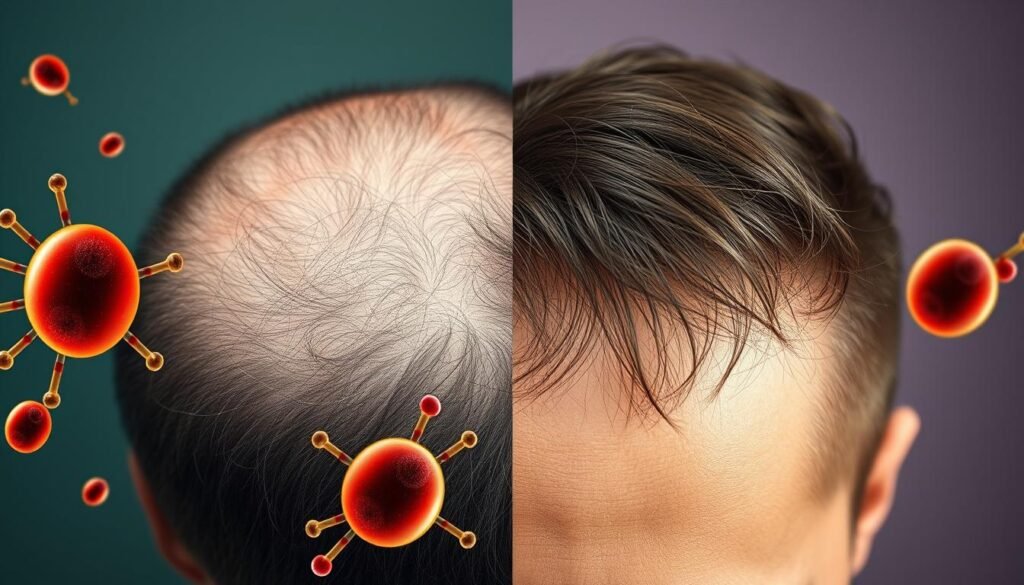
High cholesterol might play a big part in hair thinning, especially for those with androgenetic alopecia. Studies suggest that high cholesterol might make hair loss worse. This is crucial information for anyone losing their hair.
Androgenetic Alopecia and Cholesterol Levels
Research shows that people with androgenetic alopecia usually have higher cholesterol. For instance, those with fronto-occipital baldness had an average cholesterol level of 213.5 mg/dl. This is higher than those without hair loss, who had an average of 207.6 mg/dl. It hints at a link between high cholesterol and hair thinning, needing more study.
The Role of DHT in Hair Loss
DHT, or dihydrotestosterone, is a key factor in hair loss, particularly for those with androgenetic alopecia. Higher cholesterol might lead to more DHT production. DHT can cause hair follicles to shrink, which results in hair thinning. Recognizing how cholesterol affects hair through hormones is vital for doctors.
| Condition | Average Serum Cholesterol (mg/dl) | Diastolic Blood Pressure (mmHg) |
|---|---|---|
| No Hair Loss | 207.6 | 87.4 |
| Receding Hairline | 208.3 | 86.5 |
| Fronto-Occipital Baldness | 213.5 | 89.1 |
Effects of High Cholesterol on Hair Health
High cholesterol and hair health are closely linked. Poor circulation caused by high cholesterol stops essential nutrients from reaching hair follicles. This affects hair growth.
How Cholesterol Affects Hair Follicle Circulation
High cholesterol can make blood vessels narrow. This means less blood gets to the scalp. Studies link high cholesterol to poor hair health because it causes inflammation.
Research in 2007 by Wan et al. found genetics and oxidized lipids can lead to hair loss.
Impact on Hair Growth and Renewal
High cholesterol can slow hair growth. It messes with hair structure and causes problems with follicles. For instance, Evers et al.’s 2010 study showed cholesterol affects hair health.
Cholesterol is key for hair’s strength and healing. It helps keep hair protected and healthy.
To keep hair healthy, control your cholesterol. Knowing its effect on hair and growth helps people care for their hair better. A healthy lifestyle helps improve hair health.
| Study | Findings |
|---|---|
| Wan et al. (2007) | Evidence of hair loss due to oxidized lipids in a genetic study. |
| Karnik et al. (2009) | Downregulation of PPARγ linked to cholesterol metabolism in hair health. |
| Evers et al. (2010) | Alterations in hair shaft and follicle distortion due to cholesterol pathway changes. |
| 2019 Study | Emphasized cholesterol’s role for healthy tissues in skin and hair. |
Cholesterol Levels and Hair Loss Variations Between Men and Women
Studies show that men and women face different challenges with high cholesterol and hair loss. Knowing these differences helps us find better treatments for hair loss.
Differences in Hair Loss Patterns
Men and women lose hair differently due to hormones and genes. Men often start losing hair younger and more severely due to high cholesterol. Women may see hair loss later, around menopause, when their estrogen drops. This drop makes them more prone to hair loss from high cholesterol.
Potential Genetic Factors Involved
Genes play a big role in hair loss. Research shows 64% of men with major hair loss have a family history of it, compared to 41% of others. As we learn more about cholesterol and hair loss, understanding these genetic links is key. It helps create treatments that are right for each person.
| Factor | Men | Women |
|---|---|---|
| Onset Age | Earlier | Later |
| Severity | Higher | Lower |
| Hormonal Influence | Testosterone | Estrogen |
| Family History of AGA | 64% | 41% |
Managing Cholesterol-Related Hair Loss
Managing hair loss due to cholesterol involves many steps. Changing your diet is a key part. It can help improve your health and might reduce hair loss. Eating foods high in healthy fats, fiber, and protein helps maintain cholesterol and promotes hair health.
Dietary Changes and Lifestyle Modifications
Changing what you eat can greatly impact your cholesterol. It’s important to eat more:
- Nuts and seeds
- Whole grains
- Legumes, such as beans and pulses
- Fruits and vegetables
These foods help lower bad cholesterol, aiding in the fight against hair loss due to cholesterol. Cutting down on saturated fats and avoiding trans fats is also crucial.
Medical Interventions and Treatments
At times, you might need medical treatments. Doctors can prescribe medications like statins to lower cholesterol. But, always talk to a dermatologist for a plan that addresses hair loss. They can make sure your medications don’t increase hair loss. If you’re losing hair because of your medicine, it’s wise to look into drugs that cause hair loss.
Association Between High Cholesterol and Hair Shedding
More people are linking high cholesterol with losing hair. Knowing this link helps us manage our health better. High cholesterol can cause many problems, including thinning and losing hair.
How Elevated Cholesterol Affects Overall Health
High cholesterol harms heart health. It plays a role in conditions like metabolic syndrome. People with androgenetic alopecia often have metabolic syndrome, showing the need to be aware.
Lipid profile changes can worsen hair health problems. These changes affect hair growth and general well-being.
Possible Significance of Early Symptoms
Noticing hair loss early could warn of high cholesterol. Those with this kind of hair loss should get checked by a doctor. This includes checking cholesterol levels.
Spotting these signs early helps in dealing with health risks from high cholesterol. It also helps improve hair health.

Cholesterol Impact on Hair Growth Mechanisms
Cholesterol and hair growth have an interesting link. It is crucial for our body and helps create hormones that affect hair growth. If cholesterol levels change, it can affect how hair follicles work and their health.
Cholesterol’s Role as a Precursor for Hormones
Cholesterol is key in making steroid hormones, which are important for hair growth. If something goes wrong with cholesterol, it could lead to hair problems. Knowing more about this can help deal with hair issues.
Fibrosis and Damage to Hair Follicles
High cholesterol might cause fibrosis, harming hair growth. Studies show a link between cholesterol problems and hair loss conditions like androgenic alopecia. It’s crucial to keep cholesterol in check to protect hair health, say experts. They recommend treatments to counteract high cholesterol’s bad effects on hair.
| Factor | Impact on Hair Growth | Associated Conditions |
|---|---|---|
| Cholesterol Levels | Regulate hormone synthesis, influencing growth cycles | Dyslipidaemia, androgenic alopecia |
| Fibrosis | Leads to hair follicle damage and reduced hair density | Primary cicatricial alopecia |
| Cholesterol Transport Mutations | Linked to congenital hypertrichosis | Hair growth disorders |
| Molecular Mechanisms | Unknown but critical for cell proliferation and differentiation | Hair follicle biology |
Identifying Signs of High Cholesterol and Hair Loss
Spotting signs of high cholesterol early is key to staying healthy. Some people might see their hair getting thin or fall out sooner than usual. They may also find yellowish deposits on their skin or have heart-related issues. Paying attention to these signs can lead to an early diagnosis. This helps to manage cholesterol levels better.
Recognizing Key Symptoms
Here are a few common signs of high cholesterol:
- Unexpected hair loss could be due to cholesterol changes.
- Yellowish deposits, known as xanthomas, might show up on the skin.
- Experiencing bad headaches or leg pain after exercising could also be a clue.
When to Seek Medical Advice
Anyone losing hair should think about when to seek medical advice for hair loss. It’s wise to get a blood test to check lipid levels from a doctor. The American Heart Association suggests checking cholesterol every 4 to 6 years. People at risk might need checks more often. Finding problems early can help avoid issues with both high cholesterol and hair loss.
Exploring Myths and Misconceptions
Many people get confused about cholesterol and its effects on health, including hair loss. Some believe all cholesterol is bad, which is wrong. It’s crucial to know the difference between HDL and LDL cholesterol. HDL is the good kind that helps remove toxins. LDL, on the other hand, can cause health problems, like hair thinning.
Addressing Common Misconceptions
It’s a common belief that eating cholesterol-rich foods affects your blood cholesterol a lot. But, studies point to saturated and trans fats as the bigger culprits. Even eggs, once thought harmful, are now seen in a better light. Research shows they don’t increase heart disease risk. This clarifies some myths, suggesting a well-rounded diet can be good for your hair.
Clarifying Relationships Between Diet and Hair Health
Eating well is key for keeping your hair healthy. Bad dietary choices raising LDL cholesterol are often linked to hair loss. Surprisingly, over 70% of people looking for hair loss help have high cholesterol. By choosing foods that boost good cholesterol and cutting out bad fats, you can improve your hair’s health. For more about how nutrition affects hair loss and health, check out this informative article.
| Cholesterol Type | Effect on Health | Relation to Hair Health |
|---|---|---|
| HDL (Good) | Helps transport excess cholesterol to the liver | Supports overall hair vitality |
| LDL (Bad) | Can lead to plaque formation and cardiovascular issues | Associated with hair thinning and loss |
Conclusion
More and more studies and clinical observations support the link between high cholesterol and losing hair. High cholesterol can lead to skin problems and hair issues. This was shown in studies where 75% of mice on a bad diet lost hair in 36 weeks. Understanding this connection is key for those seeing their hair thin or fall out.
Making changes in your lifestyle can improve not just your health, but also your hair. Eating healthy foods and staying active can lower cholesterol levels. This helps stop more hair from falling out. It’s also important to look after your overall health by managing stress, getting enough sleep, and avoiding bad habits.
There isn’t a sure way to get back lost hair due to high cholesterol yet. But, making better lifestyle choices can prevent more damage. For those who have lost hair, Lordhair’s hair systems offer a good solution. This issue points out how heart health and hair health are connected. It encourages further study and awareness for a healthier tomorrow.