Did you know smoking is behind 1 in 4 deaths from heart disease in the U.S.? This fact highlights the need to explore how smoking and cholesterol are linked. Smoking greatly increases the risk of high cholesterol. This, in turn, boosts the chance of heart disease and strokes. The many harmful chemicals in tobacco smoke directly raise cholesterol levels. So, it’s crucial to understand smoking’s effect on heart health.
In this article, we’ll cover how smoking affects cholesterol. We’ll see how it increases LDL (bad cholesterol) and decreases HDL (good cholesterol). You’ll learn about the dangers smoking poses to heart health. Plus, we’ll share tips on managing cholesterol. Knowing this can help you make healthier choices for your life.
Key Takeaways
- Smoking significantly raises LDL cholesterol levels, increasing the risk of heart disease.
- High cholesterol, combined with smoking, can drastically elevate the chances of coronary heart disease.
- Quitting smoking can improve HDL cholesterol levels and reduce overall cardiovascular risks.
- Secondhand smoke exposure poses cardiovascular threats, affecting both smokers and non-smokers.
- Regular health check-ups are vital for smokers to manage cholesterol levels effectively.
The Importance of Understanding Cholesterol
Cholesterol is vital for our body’s functions. It’s a waxy substance made in the liver and from food. Knowing about cholesterol is key to keeping a healthy heart. This is even more important for smokers.
What is Cholesterol?
Cholesterol has many important roles. It helps make hormones, builds cell walls, and helps us digest food. But, too much of it can be bad, especially for our hearts. It’s good to check cholesterol to know the risk of heart disease.
Types of Cholesterol: LDL vs. HDL
There are two kinds of cholesterol: LDL and HDL. LDL is called “bad” cholesterol. If we have too much LDL, it can clog arteries and increase heart disease risk. HDL is the “good” one. It takes extra cholesterol back to the liver to get rid of it. More HDL means a lower risk of heart problems.
Why Cholesterol Matters for Heart Health
Keeping cholesterol at the right level keeps the heart healthy. Doing exercise, like 150 minutes of walking or biking a week, helps. It lowers bad LDL and raises good HDL. Smokers need to be extra careful with cholesterol. Lifestyle changes, such as eating well, can make a big difference for the heart.
Smoking and its Effect on Cholesterol
It’s key to know how smoking impacts cholesterol for heart health. Smoking plays a big role in boosting bad LDL cholesterol. At the same time, it lowers good HDL cholesterol. This creates a risky imbalance, making smokers more prone to heart problems and strokes.
How Smoking Raises LDL Cholesterol Levels
Smoking brings harmful stuff like acrolein into the body. This messes up how the body handles cholesterol, raising LDL levels. Studies show that high LDL and total cholesterol increase the risk of heart issues. It leads to arterial damage and heart diseases.
The Role of Smoking in Decreasing HDL Cholesterol
Smoking’s reduction of HDL cholesterol is worrisome. HDL is supposed to move LDL cholesterol to the liver for removal. Smoking messes with this process, worsening cholesterol issues. Stopping smoking helps bump up HDL levels. This decreases chances of heart attacks. It’s crucial to keep both LDL and HDL cholesterol in check for a healthy heart, as the American Heart Association advises.
The Link Between Smoking and Cardiovascular Health
Smoking badly affects your heart and blood vessels. It’s harmful not just for smokers but for those around them too. Researchers have found that people who smoke are more likely to get heart disease. This is because of changes in their body caused by smoking. Smoking’s effect on cholesterol levels is particularly bad, leading to many heart problems.
Increased Risk of Heart Disease
Smokers have a much higher risk of heart disease. They are two to four times more likely to suffer from it than non-smokers. In the U.S., smoking causes nearly 440,000 deaths every year. Heart disease is the reason for one in every five of these deaths. Smoking also doubles your chance of having a stroke, showing just how bad it is for your heart.
Impact on Blood Vessels and Circulation
Smoking damages your blood vessels, making them thicker and more likely to get blocked. This can lead to poor blood flow. Each year, about 34,000 people who don’t even smoke die from heart disease because they’ve been around secondhand smoke. But, there’s good news. If you quit smoking, you can cut your heart disease risk in half and make your blood healthier.
Statistics on Smoking and Cholesterol Levels
Smoking and cholesterol levels are closely linked, affecting our health a lot. Many studies have found smokers often have high cholesterol. This situation adds to their risk of heart problems. Quitting smoking is vital to lower these health risks.
Prevalence of High Cholesterol in Smokers
Data comes from 45 studies around the world, including America, Europe, Asia, and Australia. Thirteen of these studies watched over 1000 people each for more than a year. They found smokers have more bad cholesterol than non-smokers. The American Heart Association says it’s best to keep this bad cholesterol under 100 mg/dL.
Smoking ups the risk of heart disease a lot.
Comparison of Cholesterol Levels in Smokers vs. Non-Smokers
Smokers and non-smokers have different cholesterol levels. Smokers often have higher bad cholesterol. But non-smokers usually have healthier levels. Quitting smoking can raise the good cholesterol in your blood.
This increase in good cholesterol happens in many types of people. But those with a certain genetic issue face more risk. This issue makes smokers likely to have heart attacks 12 years earlier than non-smokers. To learn more about smoking and cholesterol, click here.

How Smoking Tar Affects Cholesterol
Smoking can lead to cholesterol issues because of harmful substances in cigarette smoke, especially tar. Two chemicals in tar, acrolein and carbon monoxide, greatly affect cholesterol and heart health.
Understanding Acrolein and Its Impact
Acrolein is a harmful compound. It stops HDL cholesterol from removing LDL cholesterol from our blood. This causes a bad balance in cholesterol levels, harming heart health.
The effects include more LDL and less HDL cholesterol. This raises the risk of plaque in arteries, which can lead to heart disease.
Effects of Carbon Monoxide on Cholesterol Buildup
Carbon monoxide messes with how oxygen is carried in the body. Less oxygen means more cholesterol sticks to artery walls, leading to atherosclerosis. This shows how bad smoking tar is for cholesterol, underlining the need for more awareness.
Cholesterol Management for Smokers
Smokers have a tough time managing cholesterol levels because smoking badly affects lipid levels. It is crucial to have regular medical check-ups. This way, healthcare providers can keep an eye on cholesterol levels and handle any problems early.
These check-ups are key in spotting risks from high LDL cholesterol. They make sure timely help is given to protect heart health.
Why Regular Check-Ups are Essential
For smokers, regular check-ups are super important. They help find out if LDL cholesterol levels are too high, which is risky for the heart. The goal is to keep it under 100 mg/dL.
By checking regularly, healthcare providers can give the right advice to make hearts healthier.
Diet Changes to Improve Cholesterol Levels
Changing your diet is a big step in controlling cholesterol for smokers. Here are some ways to see improvement:
- Reduce intake of saturated fats to less than 6% of daily calories, as recommended by the American Heart Association.
- Increase consumption of omega-3 fatty acids found in fatty fish such as salmon and walnuts.
- Adopt a Mediterranean diet, which emphasizes fruits, vegetables, whole grains, and healthy fats.
- Maintain a caloric intake reduction of 20-25% to support weight loss efforts, which can further enhance cholesterol levels.
Following these steps not only helps with cholesterol levels for smokers but also cuts down the risk of heart diseases. Working together with healthcare experts will make sure these changes fit well with your health plan.

| Dietary Changes | Effects on LDL Levels | Recommended Intake |
|---|---|---|
| Saturated Fat Reduction | Lower LDL cholesterol | Less than 6% of daily calories |
| Omega-3 Fatty Acids | Improved heart health | Two servings of fatty fish/week |
| Mediterranean Diet | Enhanced overall cholesterol levels | Daily fruits, vegetables, whole grains |
| Caloric Intake Reduction | Weight loss & improved cholesterol | Reduction by 20-25% |
Impact of Smoking Cessation on Cholesterol Levels
Stopping smoking for your health has many benefits, especially for the heart. Quitting quickly shows good changes in cholesterol. This is because the body starts to repair itself soon after stopping.
Immediate Benefits of Quitting Smoking
Studies show that within a year of quitting, smokers see a good jump in good cholesterol (HDL). They might see an increase of about 2.4 mg/dL in HDL-C. This helps lower heart disease risk.
Also, it becomes more likely for HDL levels to match those who never smoked after stopping.
- 36.2% of current smokers had quit by the one-year mark.
- The average HDL increase in abstainers was 1.0 mcmol/L.
- Higher levels of large HDL particles were noted as fellow smokers quit.
Long-Term Improvements in Cholesterol Levels
Quitting smoking brings even bigger benefits over time. Fifteen years after quitting, the risk of heart disease is like that of people who never smoked. Studies show former smokers have better HDL levels and overall healthier blood fats. This highlights why quitting is vital for your cholesterol.
In summary, quitting smoking means quick wins and big long-term health perks. Those who quit smoking move towards a healthier heart.
Smoking Risks Beyond Cholesterol
Smoking poses significant dangers beyond its well-known effects on cholesterol levels. Those who smoke face a wide array of cardiovascular risks. These risks can lead to serious health issues. Knowing about these dangers can help smokers decide to quit for better health.
Other Cardiovascular Risks Associated with Smoking
Smoking greatly increases the risk of cardiovascular diseases. The longer and more you smoke, the higher the risks. Serious conditions linked to smoking include coronary heart disease and heart attacks. Others are peripheral arterial disease, aortic aneurysms, and peripheral vascular disease.
- Coronary heart disease
- Heart attacks
- Peripheral arterial disease
- Aortic aneurysms
- Peripheral vascular disease
Smoking’s damage is widespread and indirect. It causes increased inflammation and oxidative stress. These can lead to cardiovascular damage.
Connection Between Smoking and Stroke
The link between smoking and stroke is particularly concerning. Smokers have twice the risk of stroke than non-smokers. The increased risk comes from the harm smoking does to blood vessels and circulation. Smoking also leads to hypertension and arterial stiffness. These conditions can cause stroke.
In the United States, cardiovascular disease affects millions, with smoking playing a major role. Stopping smoking can lead to significant health benefits. It greatly reduces the risk of strokes and other cardiovascular conditions.
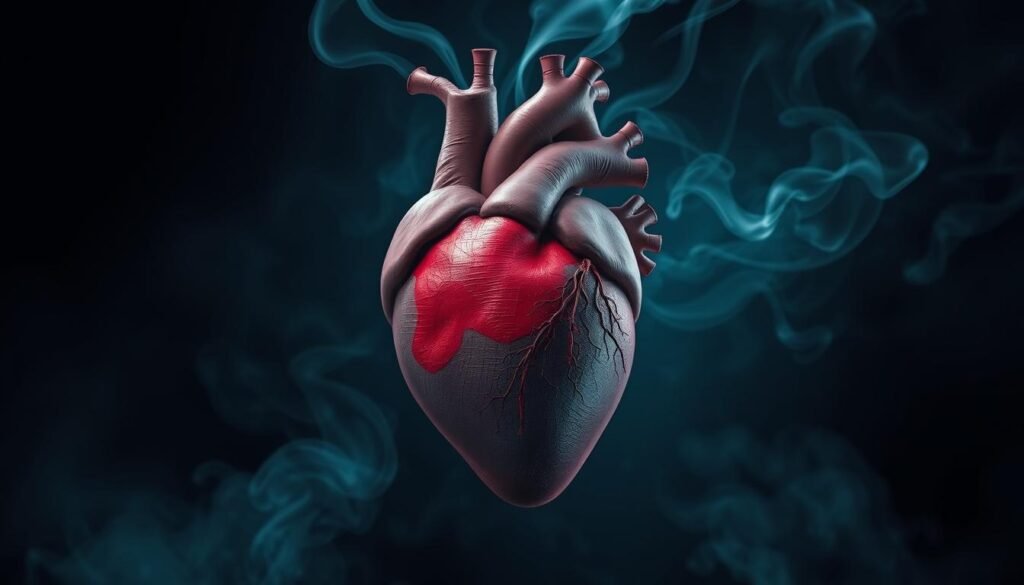
| Cardiovascular Condition | Impact of Smoking |
|---|---|
| Coronary Heart Disease | Increases risk; damages heart and vessels |
| Stroke | Doubles risk; affects blood flow |
| Peripheral Arterial Disease | Reduces circulation; causes pain |
| Aortic Aneurysms | Weakens blood vessel walls |
Understanding these risks beyond cholesterol can lead to better health decisions. It can also inspire many to stop smoking and potentially save lives.
Smoking Cessation Tips for Better Cholesterol
Quitting smoking boosts cholesterol levels and heart health. It helps to use support and aids when quitting. These steps make it easier to improve cholesterol.
Support Systems for Quitting Smoking
Support is key to quitting smoking. Working with healthcare pros creates custom plans. Support groups offer encouragement. Effective supports include:
- Health counseling sessions with trained professionals
- Support groups, both in-person and online
- Hotlines and apps for quitting
- Help from family and friends
Medications and Aids to Assist in Cessation
Many aids are available for quitting. They help deal with withdrawal symptoms. Common options are:
- Nicotine Replacement Therapy (NRT) – Comes as patches, gum, or lozenges to help with cravings.
- Prescription medications – Varenicline (Chantix) and bupropion (Zyban) reduce cravings and symptoms.
Using these aids can boost cholesterol levels. Quitting smoking can raise good HDL cholesterol fast. It’s great for the heart.
| Aids to Assist in Cessation | Effectiveness |
|---|---|
| Nicotine Replacement Therapy (NRT) | Helps reduce cravings and withdrawal symptoms |
| Varenicline (Chantix) | Reduces cravings and withdrawal symptoms |
| Bupropion (Zyban) | Decreases withdrawal symptoms and cravings |
Understanding the Pathological Mechanisms
Smoking has many bad effects on how our bodies handle fats, which harms our heart health. It causes changes that lead to higher cholesterol and more risk of atherosclerosis. Smokers face even more problems, making these issues worse when paired with other health issues.
How Smoking Affects Lipid Metabolism
Smoking changes the way our body deals with fats. It introduces harmful chemicals that speed up plaque buildup in our arteries. Nicotine, for example, helps atherosclerosis happen, changing how our blood vessels work. This problem makes our body produce less nitric oxide, which can cause more heart problems.
Interaction Between Smoking and Other Risk Factors
Combining smoking with other health issues is dangerous for heart disease. It raises the risk by itself and makes problems like obesity and diabetes worse. Particularly, smoking and insulin resistance together can harm our cholesterol levels badly. To learn more on insulin resistance and cholesterol, check out this link.
This mix of risks shows that dealing with just one problem isn’t enough for better heart health. A full plan that looks at lifestyle, actions, and other health problems is key for smokers.
Resources for Smokers Seeking Help
Quitting smoking is hard, but help is out there. Resources for smokers offer support from national programs, hotlines, to community groups. They guide people to a healthier life. Getting help from these services is a key step in beating nicotine addiction.
National Cessation Programs and Hotlines
For those looking for help to quit smoking, many national hotlines are ready:
- 1-800-QUIT-NOW (1-800-784-8669) – For English speakers in the U.S.
- 1-855-DEJELO-YA (1-855-335-3569) – For Spanish-speaking residents.
- 1-800-838-8917 – For Chinese speakers.
- 1-800-556-5564 – Helps Korean speakers quit.
- 1-800-778-8440 – For Vietnamese speakers.
- 1-855-QUIT VET (1-855-784-8838) – Aimed at veterans seeking support.
- 1-866-366-3667 – The quitline for Canadians in English.
- 1-866 JARRETE (1-866-527-7383) – Serves French-speaking Canadians.
Groups like the American Heart Association (1-800-AHA-USA1), the American Cancer Society (1-800-ACS-2345), and the American Lung Association (1-800-LUNGUSA) also provide help. The National Cancer Institute can be reached at 1-877-44U-QUIT.
Community Support Groups and Initiatives
Local communities play a big role in quitting smoking. Many areas have groups for people to share quitting tips and support each other. This creates a support network, making quitting easier.
It’s also important for healthcare professionals to help. In 2015, only 57% of smokers got advice to quit from a healthcare provider. This shows how more support from doctors could really make a difference.
Conclusion
Smoking greatly affects cholesterol, changing LDL, HDL, and triglyceride levels. It shows that smokers have higher LDL and triglycerides. They also have lower HDL levels. This increases the risk of heart diseases.
Quitting smoking has many benefits. It can improve cholesterol levels and lower heart disease risk. It shows why it’s important for smokers to quit and live healthier.
There are resources and support to help quit smoking. They also teach how to live healthier. Making these changes can improve heart health and cholesterol management.