The American Heart Association (AHA) suggests eating two fish servings weekly. This is about eight ounces of seafood, which helps keep cholesterol levels healthy. Despite worries about shellfish and cholesterol, recent studies show dietary cholesterol doesn’t greatly change blood cholesterol for most. This piece will clarify seafood’s effects on cholesterol, correct misunderstandings, and spotlight seafood’s heart benefits. As our knowledge of nutrition grows, understanding seafood’s place in a heart-healthy diet becomes key.
Key Takeaways
- The AHA recommends at least two servings of fish weekly for heart health.
- Shellfish contain varying cholesterol levels, with shrimp having the highest.
- For most individuals, dietary cholesterol has a minimal impact on blood cholesterol.
- Fatty fish are particularly encouraged for their heart-healthy properties.
- Understanding seafood’s role in a cholesterol-friendly diet can be beneficial for overall health.
- Consuming low-mercury seafood is advisable for pregnant and breastfeeding women.
- Children should have fish frequently but in limited amounts depending on their age.
Understanding Cholesterol: Types and Functions
Cholesterol is important for our health. It’s a fat made by the liver. It helps produce hormones and vitamin D. Knowing what definition of cholesterol means is important for a healthy life.
Definition of Cholesterol
Cholesterol is a waxy stuff found in animal foods. About 20% to 30% of our blood cholesterol comes from food. High levels can lead to heart issues and stroke. So, it’s important to know your cholesterol numbers.
Good vs. Bad Cholesterol: HDL and LDL
There are two kinds of cholesterol: HDL and LDL. LDL is the bad cholesterol because it can cause heart disease. HDL is the good cholesterol because it cleans LDL from your blood. Keeping both types in good amounts is key.
| Cholesterol Type | Optimal Level (mg/dL) | High Level (mg/dL) |
|---|---|---|
| Total Cholesterol | Less than 200 | Above 200 |
| LDL (“bad”) Cholesterol | Less than 100 | Above 130 |
| HDL (“good”) Cholesterol | At least 40 (men), 50 (women) | Below 40 (men), 50 (women) |
| Triglycerides | Less than 150 | Above 200 |
Keeping these levels right helps your heart stay healthy. Choosing the right foods makes a big difference. Knowing about good vs. bad cholesterol is key for good health.
Seafood and Cholesterol: The Facts
Thinking about health and diet means looking at cholesterol in seafood. People often wonder how seafood compares to meats in cholesterol and health benefits. Knowing the differences helps make better diet choices.
Cholesterol Content in Different Seafood
Seafood’s cholesterol varies. Shrimp and lobster, for example, have more cholesterol than other seafood. Yet, most fish or shellfish servings have less than 100 milligrams of cholesterol. This makes them good for following dietary guidelines.
The U.S. advises keeping cholesterol under 300 milligrams daily. Seafood, often lower than common meats in cholesterol, is healthier. Plus, many seafood types are low in cholesterol, adding to a balanced diet.
How Seafood Compares to Other Protein Sources
Seafood stands out against meat in many ways. Most lean fish meals have less than 100 calories per 3-ounce cooked serving. They are also low in fat and saturated fat.
The American Heart Association recommends eating 8 ounces of fish weekly to lower cholesterol. While high-fat meats have lots of cholesterol, seafood has little saturated fat. Seafood meets a third of your daily protein and supports a heart-healthy diet.
Eating more seafood is advised by federal dietary guidelines. They suggest having seafood twice a week for the best health benefits. For more info, visit this resource.
The Role of Seafood in a Heart-Healthy Diet
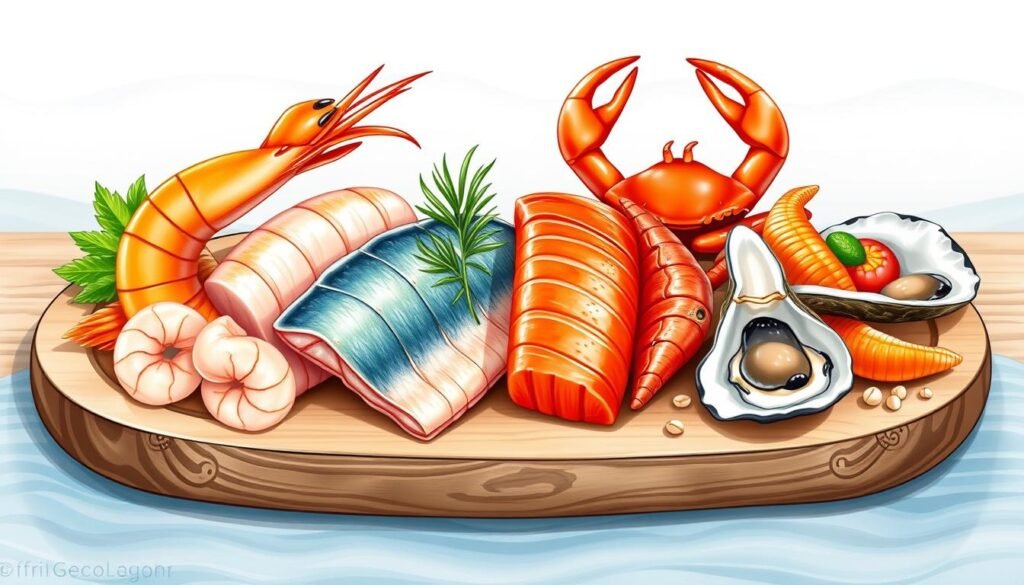
Seafood is key for a heart-healthy diet. Omega-3 fatty acids in seafood benefit heart and overall health. Eating seafood regularly lowers triglycerides and improves lipid profiles.
Benefits of Omega-3 Fatty Acids
Seafood like salmon, mackerel, and sardines are rich in omega-3 fatty acids. These acids help the heart by reducing inflammation and improving blood flow. Studies show that omega-3s lower heart disease risk. Eating seafood twice a week is recommended.
Impact of Seafood on Lipid Levels
Seafood is great for managing cholesterol levels. Fatty fish lowers bad cholesterol (LDL) and raises good cholesterol (HDL). This balance helps keep the heart healthy. Less seafood means higher heart disease risk, especially in women.
| Seafood Type | Cholesterol (mg per 100g) | Omega-3 Content | Additional Benefits |
|---|---|---|---|
| Shrimp | 189 | Yes | High in protein, low in saturated fat |
| Crab | Lower than shrimp | Yes | Rich in vitamins and higher protein |
| Lobster | Higher than shrimp | Yes | Low in calories, high in selenium |
| Salmon | Lower than shrimp | Very high | Protein and B vitamins |
| Oysters | Varies | Yes | Rich in iron, zinc, and B-12 |
The American Heart Association promotes seafood in diets for better seafood and lipid levels. These diets help prevent heart attacks and boost heart health. To learn more about seafood and heart health, visit this detailed study.
Healthy Seafood Options for Cholesterol Management
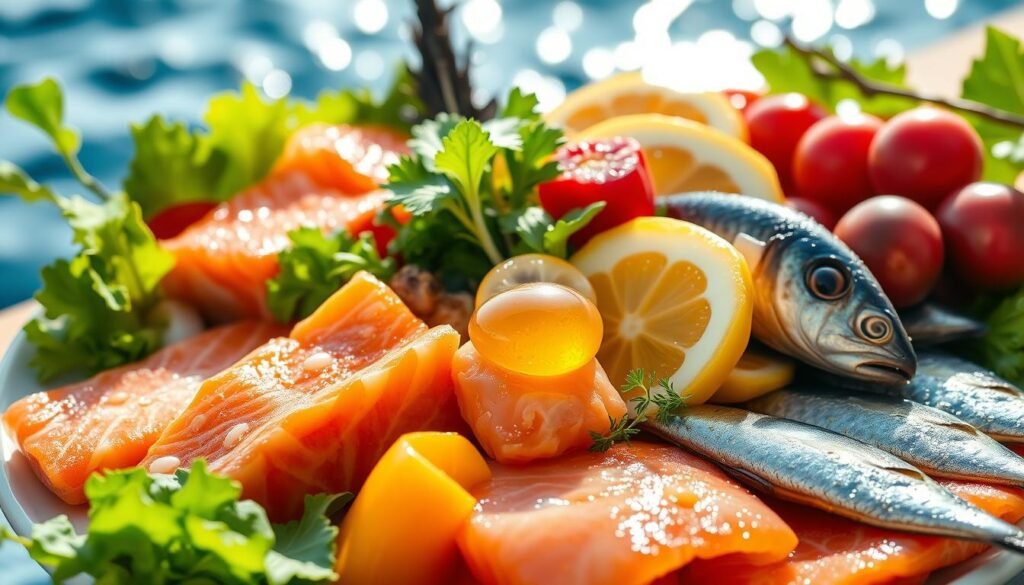
Adding healthy seafood to your diet is great for managing cholesterol. Seafood is packed with omega-3 fatty acids. These fats can lower triglyceride levels by 25%-30%. Choosing seafood that’s low in cholesterol is key for heart health and tasty meals.
Low Cholesterol Seafood Choices
Some seafood is better for your heart than others:
- Salmon: A small serving has about 1 gram of omega-3s, which are good for your heart.
- Sardines: Even though canned sardines have some cholesterol, they’re rich in omega-3s.
- Trout: This fish is high in omega-3s and low in cholesterol.
- Shrimp: A dozen large shrimp have some cholesterol but are also low-fat protein sources for a balanced diet.
Best Cooking Methods for Healthy Seafood
The way you cook seafood can keep it healthy. Here are the best methods:
- Grilling: This method lets fat drip off and boosts flavor.
- Steaming: Keeps nutrients in and doesn’t add extra fat.
- Baking: You can cook without unhealthy oils, making it good for the heart.
Avoid deep-frying in vegetable oil to keep seafood healthy. Try cooking with heart-healthy oils like olive oil instead. This boosts flavor while managing cholesterol.
How to Incorporate Seafood into Your Diet
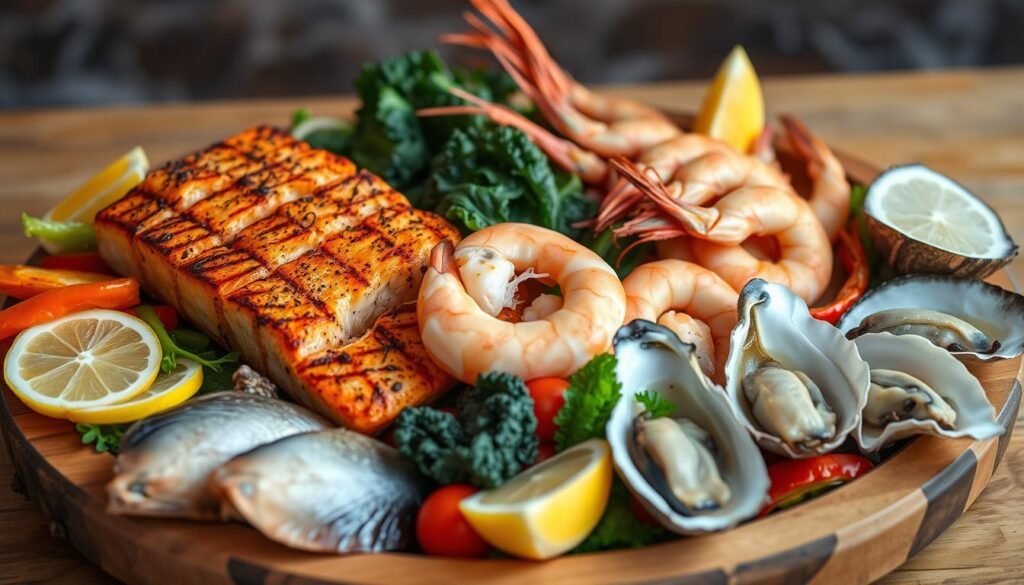
Adding seafood to your diet boosts health. It’s essential to know how much to eat and try different recipes. The American Heart Association suggests eating fish rich in omega-3s twice a week. This helps keep your heart healthy while enjoying tasty seafood meals.
Recommended Serving Sizes
Adults need two servings of seafood each week. One serving is about 4 ounces. That’s roughly 8 ounces of fish per week. Serving sizes for kids and pregnant women should be smaller. They need to pick seafood with less mercury. It’s best to avoid fish like shark and swordfish. Choose fish rich in omega-3s to boost heart health.
Meal Ideas Featuring Healthy Seafood
Try these delicious seafood meals:
- Grilled Salmon with Roasted Vegetables: A classic, flavor-rich dish good for the heart.
- Shrimp Stir Fry: A quick meal with colorful veggies and shrimp.
- Seafood Salad: A fresh mix of greens, seafood, and a tangy dressing.
- Baked Cod with Herbs: Simply seasoned with herbs for enhanced taste.
- Fish Tacos: Grilled fish with salsa and avocado for a hearty meal.
Seafood makes meals flavorful and supports a healthy heart. With proper portions and variety, it’s easy to enjoy this nutritious group.
Cholesterol-Conscious Seafood Choices
Adding seafood to your diet is very beneficial, especially for heart health. But, it’s important to know about high mercury seafood. This is because some people, like kids and pregnant women, should be careful. Some fish are healthy but have a lot of mercury. This can be harmful. Knowing which seafood is better can keep your heart healthy.
High Mercury Seafood to Avoid
Certain seafood with high mercury should be eaten less. This is especially true for pregnant women since mercury can harm unborn babies. Here’s a list of seafood to stay away from:
| Seafood | Reason to Avoid |
|---|---|
| Swordfish | High mercury levels |
| Shark | High mercury levels |
| Orange Roughy | High mercury levels |
| Mahi-Mahi (Imported Longline) | Concerns over bycatch and sustainability |
| Atlantic Halibut | Depleted populations |
Safe Seafood Options for Pregnant Women
If you’re pregnant and want safe seafood, pick ones with good fats and less mercury. Wild-caught Alaska salmon and Pacific chub mackerel are great choices. They’re not just nutritious but also sustainable. For example, Pacific chub mackerel has about 16 grams of protein in a 3-ounce serving. It also gives you lots of omega-3 fatty acids.
Pacific sardines, with nearly 300 mg of omega-3 fats per 3 ounces, are also good. They help with a cholesterol-conscious seafood diet. Plus, they’re great for getting more vitamin D and calcium.
Choosing safe seafood for pregnancy keeps both mother and child healthy. To learn more about managing cholesterol with seafood, check the Dietary Guidelines for Americans. They recommend eating 8 ounces of seafood each week for a balanced diet.
Cooking Techniques that Preserve Seafood Benefits
Cooking seafood using heart-smart methods keeps its nutritional value. It also improves its natural tastes. Using healthy methods is key to get the most from omega-3 fatty acids and other nutrients in fish. Grilling, poaching, and steaming are top choices to keep the seafood’s benefits.
Heart-Smart Cooking Methods
Choosing the right ways to prepare seafood is important for its health perks. Here are some top heart-smart cooking methods:
- Grilling: Adds great taste but can create harmful compounds. Cook seafood at low temperatures to minimize these risks.
- Poaching: This gentle method keeps omega-3 fatty acids, making it great for the heart.
- Steaming: Like poaching, it keeps the seafood’s texture and nutrients.
- Baking: Loses less omega-3s than frying or microwaving. It’s a good choice for fish.
- Microwaving: Cooks seafood well without losing healthy omega-3s.
Flavoring Suggestions without Adding Cholesterol
You can make seafood tasty without adding cholesterol. Here are some ideas:
- Herbs and Spices: Fresh herbs like dill, basil, or cilantro work well. Spices such as paprika or black pepper make seafood delicious without bad additives.
- Citrus Juices: Lemon, lime, or orange juice make seafood more appealing. They add great flavor.
- Garlic and Onion: These add richness and depth. They boost flavor without upping cholesterol.
- Vinegars: Use varieties like balsamic or apple cider to marinate. They give seafood a tangy taste.
| Cooking Method | Effect on Omega-3 Fatty Acids | Impact on Nutritional Value |
|---|---|---|
| Frying | Reduces omega-3 by up to 70-85% | High calorie content, less nutritional integrity |
| Baking | Retains most omega-3 fatty acids | Maintains vitamin D content, lower fat |
| Steaming/Poaching | Preserves omega-3 fatty acids excellently | Low in calorie, high nutritional value |
| Grilling | Moderate retention, risk of harmful compounds | Enhances taste, but needs careful temperature control |
Using these healthy cooking methods and flavor ideas keeps seafood dishes nutritious and tasty. It supports heart-smart cooking for better health.
Potential Risks of Seafood Consumption
Seafood is well-known for being healthy. But it’s important to think about the potential risks too. Understanding these risks helps people make better choices about seafood in their diet.
Understanding Allergies to Shellfish
A lot of people are allergic to shellfish. Their reactions can be mild like hives or very serious like anaphylaxis. Those allergic should avoid crustaceans and mollusks. Knowing about shellfish allergies keeps you safe at mealtime.
Addressing Concerns Over Dietary Cholesterol
Some worry about dietary cholesterol in seafood. Though some seafood has high cholesterol, overall diet fats matter more for blood cholesterol levels. Including omega-3 fatty acids from seafood can actually help your heart. A well-balanced diet addresses these concerns, promoting health.
| Risk Factors | Description |
|---|---|
| Shellfish Allergies | Adverse reactions can range from hives to anaphylaxis, necessitating avoidance for those affected. |
| Mercury Exposure | Certain seafood may contain high levels of mercury, which can have detrimental health effects. |
| Microplastic Contamination | Seafood can accumulate microplastics, potentially posing risks to human health. |
| Environmental Concerns | Overfishing and bycatch can disrupt marine ecosystems. |
When choosing their diet, people should be aware of seafood’s potential risks. This way, they can stay healthy and safe.
Conclusion
Seafood like shrimp and fish is really good for your heart. It can be part of a diet that’s good for heart health. It doesn’t really make your blood cholesterol level go up a lot. The benefits of seafood include healthy fats, like omega-3 fatty acids. These fats can help reduce bad fats in your blood, make your blood vessels work better, and lower inflammation.
Research shows seafood might up your HDL (good) cholesterol but doesn’t mess much with LDL (bad) cholesterol levels. This means seafood might be good for managing cholesterol. It’s good to pick seafood with less mercury. Also, cooking it by grilling or steaming is great. This keeps the good stuff in the food while avoiding extra calories and bad fats. This is key for a healthy heart.
Choosing seafood wisely can really help you keep a balanced diet. This is super important with all the changing food advice we get. By knowing about the good things seafood does for cholesterol and heart health, you can make meals that are good for your heart. If you want to know more about seafood and cholesterol, look at important studies. Thinking about what you eat in a bigger picture is also a smart move, as new research shows.