About 38% of U.S. adults have high cholesterol, boosting their heart disease and stroke risk. This fact shows we need to make healthier lifestyle choices. Cutting down on salt is crucial for controlling cholesterol. Too much salt can raise blood pressure and hurt heart health.
Adopting a low salt diet for heart health helps manage cholesterol better. Lowering your daily salt intake can reduce cardiovascular risks and improve your diet. It’s important to make smart food choices and get regular cholesterol checks for good heart health. For more on how food affects cholesterol, see this guide.
Key Takeaways
- High cholesterol affects about 38% of U.S. adults, increasing heart disease risk.
- Reducing sodium intake helps lower blood pressure and cholesterol levels.
- A recommended salt limit is 2,300 mg/day, but most people consume much more.
- Dietary changes can have a significant impact on heart health and longevity.
- Regular cholesterol check-ups are essential for managing heart-related risks.
Understanding Cholesterol and Its Importance
Cholesterol is a waxy substance in every cell of the body. It helps make hormones, vitamin D, and aids digestion. It’s needed, but too much can be risky. Our bodies make all the cholesterol we need. However, excess cholesterol can lead to heart disease.
What is Cholesterol?
Cholesterol’s function is complex. It moves in the blood, attached to proteins called lipoproteins. There are two main types: LDL (bad) and HDL (good). LDL cholesterol can cause artery plaque, risking heart issues. HDL helps remove excess cholesterol, protecting the heart.
The Role of LDL and HDL Cholesterol
It’s essential to understand LDL and HDL cholesterol’s effects. What we eat greatly impacts these types. Saturated fats and trans fats raise LDL cholesterol. Items like high-fat meats and full-fat dairy are high in dietary cholesterol. One egg yolk has about 200 milligrams. Past advice was to limit cholesterol to 300 milligrams a day. Now, the focus is on balance without excess cholesterol.
Adding healthier fats, from nuts and some oils, improves cholesterol levels. Keeping an eye on cholesterol is vital, especially with a family history of heart disease. Current research, like the Nutrition for Precision Health study by the National Institutes of Health, is working on personalized dietary advice. Knowing about cholesterol types helps us make heart-healthy choices.
To learn more about managing cholesterol through diet, here’s a comprehensive guide.
Why Reducing Salt Intake is Essential for Heart Health
Eating too much salt is bad for our health, especially our hearts and blood pressure. High salt levels play a big part in getting high blood pressure. This condition can lead to heart disease and stroke. Knowing how salt affects blood pressure can help us choose better foods.
Impact of High Salt Consumption on Blood Pressure
Eating a lot of salt can raise blood pressure. This increases our chances of having heart problems. Studies have found that for every extra gram of sodium eaten each day, blood pressure can go up by 2 to 3 mmHg. The DASH-sodium study showed that cutting back on salt, even a little, can lower blood pressure. This is key since high salt intake was linked to three million deaths in 2017.
Connection Between Sodium and Heart Disease
The link between too much sodium and heart disease is clear. Studies show that eating less salt can lower blood pressure without hurting our kidneys or changing other health markers. Lower sodium can also reduce cholesterol levels. These benefits show why it’s important to eat less salt. We can find tips for cutting back on sodium without losing flavor in our meals from the American Heart Association.
| Study | Findings |
|---|---|
| DASH-sodium study | Systolic blood pressure reduced by 2.1 mmHg when sodium intake decreased from 3.3 g/day to 2.4 g/day. |
| TOHP-II study | Mean sodium intake was 3.1 g/day at 18 months, showcasing targets of 1.8 g/day. |
| TONE trial | Achieved a decrease of 3.4 mmHg in systolic blood pressure after lowering sodium to 1.8 g/day. |
| Meta-analysis | Reduced sodium intake linked to decreased blood pressure by 3.39/1.54 mmHg. |
| Children’s study | Sodium reduction resulted in a 0.84 mmHg decrease in systolic blood pressure. |
Reducing Salt Intake for Cholesterol Control
Cutting back on salt helps manage cholesterol levels. Though salt doesn’t directly affect cholesterol, eating less can improve heart health. By choosing foods with less sodium, people can better handle their cholesterol.
How Sodium Affects Cholesterol Levels
Eating too much salt can raise blood pressure, a risk for heart disease. Lowering salt can lead to healthier eating habits. People then choose foods low in salt but rich in nutrients. This helps manage cholesterol and boosts overall health.
Benefits of a Reduced Salt Diet on Cholesterol Management
Less salt means better heart health. Diets with less sodium can improve cholesterol when they include fiber and healthy fats. The DASH diet, for example, promotes fruits, vegetables, and whole grains.
The DASH diet suggests eating less than 2,300 mg of salt daily, better if it’s 1,500 mg. This limits sodium and helps control cholesterol. Eating foods high in potassium, like sweet potatoes, helps against sodium’s effects.
In short, less salt is a key in cholesterol control. It leads to healthier eating and supports heart health goals.
For tips on a cholesterol-lowering diet, visit this resource.
Guidelines for Lowering Salt Intake
It’s key to know how to cut down on salt for heart health. Following guidelines helps boost overall well-being. We’ll cover daily sodium limits and how to choose healthier foods by reading labels.
Recommended Daily Sodium Limits
Most Americans eat much more salt than they need. The American Heart Association recommends no more than 2,300 mg of sodium daily. Ideally, aiming for 1,500 mg is best for your heart. Sticking to these limits can improve blood pressure and lower heart disease risk.
Reading Nutrition Labels and Ingredients
Learning to read nutrition labels is crucial for controlling salt intake. Since processed foods often have added sodium, it’s important to look at labels closely. Here’s what to keep in mind:
- Foods with 400 mg or more of sodium per serving are high in sodium.
- Low sodium means 140 mg of sodium per serving.
- Watch out for high-sodium foods like bacon, cold cuts, and canned soups.
- Choose fresh meats, low-sodium cheese, and homemade soups to keep salt low.
By knowing these tips and checking labels, you can meet your salt goals. This improves your heart health and life quality.
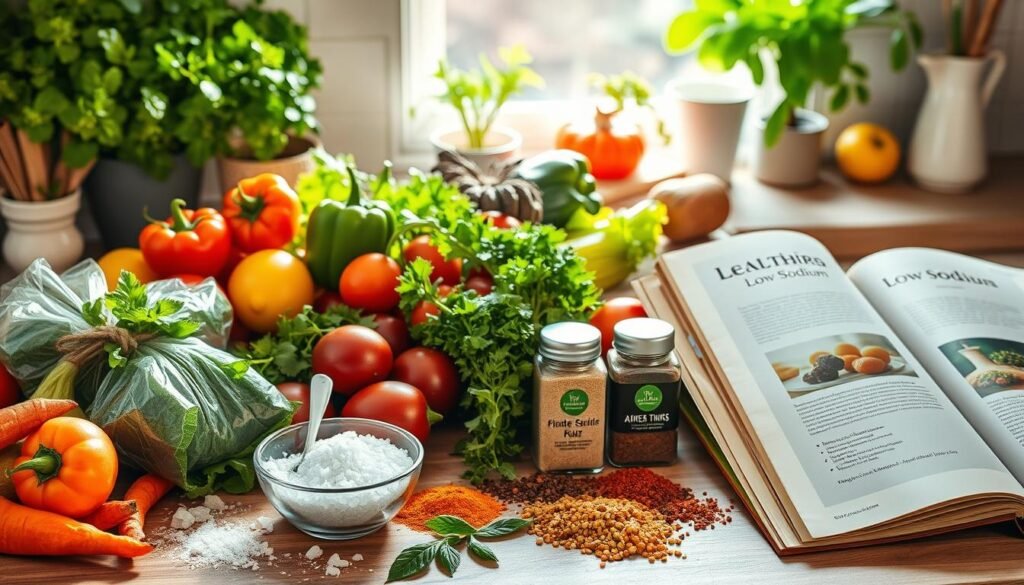
| Category | High Sodium Foods | Low Sodium Alternatives |
|---|---|---|
| Meats, Poultry, Fish | Bacon, Cold cuts, Ham | Fresh meats, Low-sodium deli meats |
| Dairy | Processed cheese, Buttermilk | Low-sodium cheese, Yogurt |
| Breads and Cereals | Salted bread, Packaged mixes | Unsalted bread, Most cereals |
| Vegetables and Fruits | Canned veggies, Pickles | Fresh/frozen veggies, Low-sodium canned veggies |
| Fats and Condiments | Soy sauce, Bottled dressings | Vinegar, Low-sodium sauces |
Best Practices for Controlling Cholesterol with Less Salt
To manage cholesterol well, focus on what you eat, especially salt. Go for low-sodium foods to help your heart and control cholesterol. Learning to cook with less salt is key too.
Choosing Low-Sodium Foods
Buying fresh fruits and vegetables is a great start to cut down on salt. These foods are not just low in salt. They are also full of important nutrients for your heart. Here are ways to do it:
- Go for fresh or frozen produce over canned items that have added salt.
- Pick whole grains like quinoa, brown rice, and whole wheat bread. These have naturally less sodium.
- Always check labels for hidden sodium in packaged foods.
Cooking Tips to Minimize Salt Use
You don’t need salt to make tasty meals. Use herbs, spices, and natural flavors to add zest without the salt. Try these ideas to keep meals tasty but low in sodium:
- Try herbs like basil, oregano, and cilantro to spice up your food.
- Add citrus juices or vinegars for extra flavor.
- Avoid pre-made sauces which usually have a lot of sodium.
| Food Category | Examples | Sodium Content (mg per serving) |
|---|---|---|
| Fruits | Apples, Bananas, Berries | 0-1 |
| Vegetables | Spinach, Carrots, Peppers | 0-5 |
| Whole Grains | Brown Rice, Quinoa, Whole Wheat Bread | 0-1 |
| Lean Proteins | Chicken Breast, Salmon, Tofu | 30-60 |
| Dairy | Fat-free Yogurt, Low-fat Milk | 100-150 |
Following these tips can greatly help in managing cholesterol with less salt. You can still enjoy a tasty, varied diet while looking after your heart.
Foods to Include in a Low Salt Diet for Heart Health
Add heart-healthy foods to your diet to manage cholesterol and lower sodium. It’s important to choose nutritious foods for overall health and heart wellness. A low sodium diet focuses on fresh, whole foods.
Fruits and Vegetables That Support Heart Health
Fruits and vegetables are key for a low-sodium diet because they’re rich in vitamins and minerals. Some great choices are:
- Tomatoes
- Spinach
- Carrots
- Bananas
- Mangoes
Fruits are great fresh, frozen, or canned sans added sugars. Leafy greens like Romaine lettuce and kale are great for nutritious choices for cholesterol management.
Whole Grains and Lean Proteins
Half of your grains should be whole grains. Some examples are:
- Quinoa
- Oats
- Brown rice
- Whole grain pasta
Lean proteins are essential. Consider:
- Seafood, like fish and shellfish
- Skinless poultry such as chicken or turkey
- Beans, lentils, and other legumes
- Unsalted nuts and seeds
They keep muscles strong and energy up without adding sodium.
Healthy Fats for Cholesterol Management
Opt for unsaturated fats over saturated to boost heart health. Good sources include:
- Olive oil
- Avocados
- Nuts and seeds
With a low sodium diet, watching portion sizes is also key. Always read nutrition labels for low sodium diet options. Choose dressings and condiments labeled low sodium or no salt added.
Choosing these foods improves flavor and heart health. Understanding sodium in food and focusing on whole ingredients benefits your health.
Learn more about reducing salt intake for a healthier heart.
Foods to Avoid in a Low Sodium, Low Cholesterol Diet
Working towards lower cholesterol is important. It means watching out for foods that are high in cholesterol and sodium. Knowing which foods to skip can help your heart stay healthy.
Saturated and Trans Fats to Limit
Foods high in bad fats can push up your cholesterol. Saturated fats are mostly found in animal products like:
- Cheese
- Fatty cuts of meat
- Full-fat dairy products
- Tropical oils like palm oil
Trans fats appear in fried foods and packaged snacks. They mess with your cholesterol, increasing the bad and lowering the good kind. Aim to keep saturated fats under 15 grams a day. And try to cut out trans fats completely.
Processed Foods and Hidden Sodium Sources
Many processed foods sneak in extra sodium. Even “healthy” labels can be misleading. To manage cholesterol better, look closely at nutrition facts and ingredients. Look out for these items:
- Canned soups
- Frozen dinners
- Snack foods like chips
- Processed meats such as bacon and deli meats
Eat more fresh, whole foods to avoid hidden sodium sources. Staying away from bad fats and too much sodium can help you improve your health. It might even lower your cholesterol.
| Type of Food | Examples | Health Impact |
|---|---|---|
| Saturated Fats | Fatty meats, full-fat dairy | Increases LDL cholesterol |
| Trans Fats | Fried foods, packaged snacks | Raises cholesterol levels, lower HDL |
| Processed Foods | Canned soups, frozen dinners | High in hidden sodium |
Additional Lifestyle Changes for Healthier Cholesterol Levels
Making small changes in your life can greatly improve cholesterol levels. Adding daily physical activity, stopping smoking, and drinking less alcohol can help. These steps boost heart health significantly.
Importance of Regular Physical Activity
Regular workouts are key for a healthy heart. Strive for 150 minutes of moderate activity each week. Try brisk walking, biking, or swimming.
These not only manage your weight but also lower the bad LDL cholesterol. At the same time, they increase the good HDL cholesterol. Lowering LDL and raising HDL makes for a better cholesterol balance and lessens heart disease risk.
Benefits of Quitting Smoking and Reducing Alcohol
Stopping smoking and cutting back on alcohol offers quick health perks. Giving up cigarettes boosts blood flow and HDL cholesterol levels. Meanwhile, drinking less drops blood pressure. These healthy choices better your heart’s health and aid in keeping a steady weight.
| Lifestyle Change | Benefits | Recommended Practice |
|---|---|---|
| Regular Exercise | Lowers LDL, raises HDL | 150 minutes/week |
| Quitting Smoking | Improves circulation, raises HDL | Immediate cessation |
| Reducing Alcohol | Lowers blood pressure | Limit to moderate consumption |
Meal Planning for a Healthy Heart
Meal planning is key for a healthy heart. It involves eating less sodium and cholesterol. Heart-healthy recipes make us feel good and cater to our dietary needs. It’s all about choosing the right foods and cooking methods.
Creating Heart-Healthy Recipes
When making heart-healthy recipes, use whole foods that are full of nutrients. Adding fiber-rich foods, like beans and lentils, helps lower bad cholesterol. Foods high in Omega-3s, especially fish like salmon, are great for reducing fats in the blood. Here’s how you can make your meals tastier:
- Use lean proteins such as poultry or plant-based options.
- Replace butter with liquid vegetable oils like olive or canola oil.
- Increase fruits and vegetables for added vitamins and minerals.
- Choose whole grains like brown rice and whole-grain pasta for fiber.
Preparing Meals at Home
Cooking at home lets you control what you eat. This means you can keep an eye on fats and salt. By tracking what you eat, you can stick to your heart-healthy goals. For example, your meal plan could look like this:
| Day | Total Calories | Total Fat (g) | Sodium (mg) | Dietary Fiber (g) |
|---|---|---|---|---|
| Day 1 | 1,688 | 46 | 1,162 | 29 |
| Day 2 | 1,621 | 31 | 1,558 | 24 |
Choose low-sodium cheese and low-fat milk to better your meals. By trying different methods, meal planning becomes simple and fun.
The Role of Professional Guidance in Diet Change
It can feel daunting to make big changes to your diet, especially to lower cholesterol. Getting help from a registered dietitian can offer valuable support. They have the knowledge to guide and motivate you towards a healthier way of living.
Consulting with a Registered Dietitian
A dietitian can make a personalized plan that fits your health needs. They look at what you eat and your lifestyle to find ways to manage cholesterol. With their help, you can learn which foods are good for a heart-healthy, low-sodium diet.
This includes tips on choosing:
- Healthy swaps for high-sodium foods
- Adding fruits and veggies to your meals
- Benefits of soluble fiber and healthy fats
Monitoring Progress and Adjusting Diet
Keeping track of your cholesterol gets you closer to your health goals. Dietitians guide you in monitoring what you eat and its impact on cholesterol. They help make changes to your diet if needed, leading to:
- Better motivation from seeing results
- Quick changes to your diet plan when necessary
- Support to overcome obstacles and stay on track
Conclusion
Eating less salt is key to better heart health and managing cholesterol well. Research shows that women who are overweight and have high blood pressure see big benefits when they cut back on salt. Their cholesterol levels go down, which lowers their risk of heart disease.
To keep your heart strong, it’s important to follow diet guidelines that limit how much salt you eat. Adding foods that are high in potassium can also help keep your heart healthy. Knowing which foods, like bread, pizza, and deli meats, have a lot of salt can help you make better choices.
Making changes to how much salt you eat while also living a healthy lifestyle can really improve how you feel. By choosing to eat less salt, you’re taking big steps toward a healthier heart. This can help lower your chances of getting chronic illnesses.