Did you know heart disease causes about 31.5% of all global deaths? Many people are now looking for good ways to control cholesterol. Red Yeast Rice, used in Chinese medicine for a long time, is getting attention. It is made by fermenting white rice with Monascus purpureus yeast. This natural product helps keep the heart healthy.
Red Yeast Rice has a key part called monacolin K, which works like the drug lovastatin. Studies show it can cut total cholesterol by 22.7%, and LDL cholesterol by 31%. With these results, Red Yeast Rice could be a great choice for those who like natural treatments. To learn more, you might want to read this detailed article.
Key Takeaways
- Red Yeast Rice is a traditional remedy that can lower cholesterol.
- It has monacolin K, which is like the statin drug lovastatin.
- Studies prove it significantly reduces total and LDL cholesterol.
- Be careful with unregulated products that have monacolin K.
- This supplement might also help with blood flow and metabolism.
- It’s important to have rules to make sure it’s safe and works well.
Overview of Red Yeast Rice
Red Yeast Rice is made by fermenting white rice with Monascus purpureus yeast. This process turns the rice a vibrant red. It’s known for its use in cooking and traditional health practices.
Many cultures use it as a dietary staple. It plays a huge role in nutrition and old health remedies.
What is Red Yeast Rice?
People often use Red Yeast Rice as a dietary supplement. It’s well-known for its power to lower cholesterol. Its effectiveness comes from monacolins, which influence cholesterol metabolism.
Monacolin K is especially similar to lovastatin, a drug for lowering cholesterol. Thus, Red Yeast Rice is used as a natural choice for heart health.
Historical Uses in Chinese Herbal Medicine
In traditional Chinese medicine, Red Yeast Rice has been valued for hundreds of years. It was used to help digestion and improve blood flow. It also tackled cholesterol issues.
But its use wasn’t limited to health. It was also a natural food coloring and preservative in many Asian cuisines. This shows the strong link between diet and health in traditional beliefs.
| Aspect | Details |
|---|---|
| Source | Fermented rice with Monascus purpureus |
| Primary Use | Dietary supplement for cholesterol reduction |
| Active Compound | Monacolin K |
| Historical Relevance | Used in traditional Chinese medicine |
| Culinary Application | Natural food coloring and preservative |
The Active Component: Monacolin K
Monacolin K is a main part of red yeast rice. It is known for lowering cholesterol. It works like the prescription drug lovastatin. It stops a certain enzyme in the body.
This stopping lowers cholesterol production in the liver. So, it helps reduce LDL cholesterol levels.
How Monacolin K Works
Monacolin K acts as a natural statin. It affects cholesterol the same way synthetic statins do. Studies show that red yeast rice, with enough Monacolin K, can significantly lower cholesterol.
For example, users of products with this component saw big improvements in their cholesterol levels.
Comparison with Prescription Statins
Red yeast rice and prescription statins like lovastatin work alike in managing cholesterol. However, red yeast rice’s monacolin K content can vary a lot. This leads to different effects across brands.
Some supplements might have very little Monacolin K. Others could have much more. This makes finding the right dose hard.
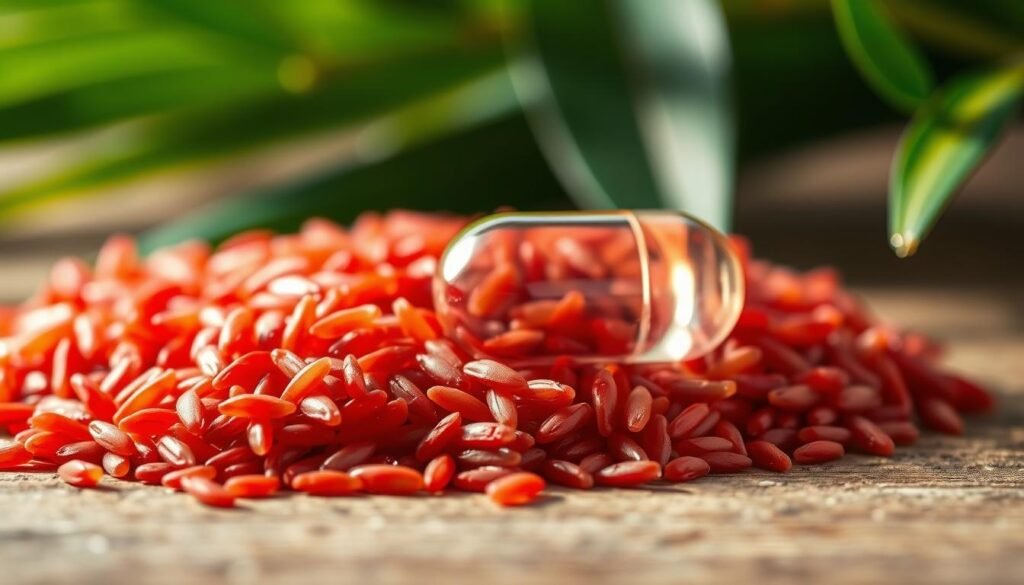
When thinking about using red yeast rice instead of prescription drugs, knowing about Monacolin K is key. Make sure to check the product labels carefully. It helps ensure you are using a safe and effective product. For more info, visit this resource.
Cholesterol-Lowering Effects
Red yeast rice is known for its power to lower cholesterol, especially LDL cholesterol. Many studies have shown it can decrease cholesterol levels effectively. It consistently works to reduce LDL and total cholesterol with regular use.
Impact on LDL and Total Cholesterol Levels
Studies show red yeast rice can lower LDL cholesterol by 15% to 34% in 6 to 24 months. One study found LDL fell by 39.4 mg/dL compared to a placebo, proving its strength. Plus, together with supplements like policosanols, it can lower LDL cholesterol up to 20% for those with moderate hypercholesterolemia.
Research Studies Supporting Effectiveness
Many clinical trials have confirmed red yeast rice lowers cholesterol effectively. One four-year study showed a 31% lower risk of heart disease and a 31.9% reduction in death from all causes. It also improved cardiovascular risk factors, like pulse wave velocity and endothelial function. These results support red yeast rice’s role in cholesterol management.
Variations in Efficacy Among Different Products
The effectiveness of red yeast rice varies by brand and formula due to different levels of monacolin K. Research found monacolin levels can differ by 100 times across products. This shows the need for quality supplements to lower LDL cholesterol effectively. Consumers must pick products with enough monacolin K to get red yeast rice’s full benefits.
Health Benefits Beyond Cholesterol
Managing cholesterol levels is key for heart health. Red yeast rice offers major health advantages. It helps blood flow better and cuts down the chances of strokes. These benefits strengthen our circulatory system. This system is vital for moving oxygen and nutrients through our body.
Improvement in Blood Circulation
Research shows that red yeast rice can cut LDL cholesterol by 15-34% over a placebo. This drop reduces artery plaque, crucial for better blood flow. A smoothly running cardiovascular system speeds up healing. It also ensures organs and muscles get more oxygen. These benefits boost heart health, making red yeast rice a great choice for those who care about their health.
Reduction in Stroke Risk
Managing cholesterol is key to lowering stroke risk. Studies reveal red yeast rice might cut the risk of heart events by 45% in some cases. By lowering LDL cholesterol and improving blood flow, stroke chances can greatly reduce. This underscores the value of natural options like red yeast rice in a healthy diet.
Safety and Side Effects of Red Yeast Rice
It’s important to know about red yeast rice and its effects if you’re thinking of using it to lower cholesterol. While many people handle it well, it’s key to know common side effects. This helps make sure it’s used safely.
Common Side Effects
Red yeast rice might cause some mild side effects. These include:
- Abdominal discomfort
- Heartburn
- Gas
- Headaches
- Dizziness
Sometimes, serious side effects can occur. These include problems with your liver or kidneys and allergic reactions. Watch out for symptoms like rashes, strong dizziness, or issues with breathing.
Potential Risks and Precautions
Red yeast rice could help manage cholesterol. But, it’s wise to use it carefully. The FDA hasn’t checked red yeast rice for safety or effectiveness. People with liver or kidney issues should steer clear. Pregnant and breastfeeding women should also avoid it, as the risks are not clear.
Limiting alcohol helps reduce the chance of liver problems. Red yeast rice might affect how other medicines work. This can lead to more serious side effects.
Before starting red yeast rice, talking to a healthcare provider is key. This is especially true for those on statins or other cholesterol medicines. Some red yeast rice products contain lovastatin, which requires caution because of possible drug interactions.
| Side Effect | Severity Level | Recommended Action |
|---|---|---|
| Abdominal Pain | Mild | Monitor and consult if persistent |
| Muscle Pain/Tenderness | Moderate | Discuss with healthcare provider |
| Signs of Kidney Problems | Severe | Seek immediate medical attention |
| Signs of Liver Problems | Severe | Discontinue use and consult a doctor |
| Allergic Reactions | Severe | Seek emergency care |
Interactions with Other Medications
Red yeast rice is popular for lowering cholesterol. But, it’s important to know how it reacts with other drugs. This is because it can cause serious health issues. People using red yeast rice need to watch out for reactions with statins, anticoagulants, and different prescriptions.
Risks with Statins and Other Cholesterol Drugs
Taking red yeast rice with statin drugs can be risky. It may cause muscle and liver problems. Some red yeast rice has lovastatin which can make this worse. If you’re using both, getting your liver checked regularly is key.
Effects with Anticoagulants and Other Prescription Medications
If you take blood thinners like warfarin, be careful with red yeast rice. It increases bleeding risks. There are other drugs to watch out for too:
- Azole antifungals like fluconazole and voriconazole
- Macrolide antibiotics including clarithromycin and erythromycin
- Protease inhibitors used for HIV treatment
- Blood thinners like aspirin and others
These drugs might change how red yeast rice works and boost side effect risks. Always talk to your doctor before starting red yeast rice if you’re on these meds.
Knowing about drug interactions is key. Red yeast rice can affect people differently based on their health, other meds, and medical conditions. Always get medical advice, especially if you’re on multiple therapies.
| Medication Type | Potential Interaction with Red Yeast Rice | Risk Level |
|---|---|---|
| Statins | Risk of muscle and liver issues | High |
| Anticoagulants | Increased bleeding risk | High |
| Antifungals | Possible liver toxicity | Moderate |
| Macrolide Antibiotics | Altered effectiveness and increased side effects | Moderate |
| Other Cholesterol Medications | Potential for compounded side effects | Moderate |
By understanding these interactions, patients can make smart choices. This helps them stay healthy while using red yeast rice supplements.
Dosage Recommendations for Red Yeast Rice
Finding the right amount for red yeast rice is key for cholesterol control. Doses range from 1,200 mg to 2,400 mg daily. This ensures the important ingredient, monacolin K, is present to help lower cholesterol.
Standard Dosage Guidelines from Studies
Dosage studies show different effects on cholesterol. Taking 2.4 grams each day can reduce bad cholesterol by 22% in 12 weeks. A lower dose of 1.2 grams daily cut LDL cholesterol by 26% in 8 weeks. Following these guidelines can really make a difference.
Factors Affecting Individual Dosage Needs
Everyone’s body and health are different, so dosing needs may vary. These factors include:
- General health
- Possible liver or kidney problems
- Other medicines being taken
- The particular red yeast rice brand used
It’s wise to start with a small dose and adjust with a doctor’s help. Consulting a doctor before using red yeast rice is crucial due to potential risks from various doses and brands.
To understand red yeast rice better, check out expert advice on the topic.
Red Yeast Rice as a Dietary Supplement
Red yeast rice products are getting more popular as natural dietary supplements. It’s important to be cautious when choosing the right one. Look closely at the quality and how much monacolin K they have. This ingredient is key for managing cholesterol. Some brands may have little to no active ingredients, though.
Choosing Quality Products
There are several important things to look at to get a quality red yeast rice supplement:
- Look for third-party testing certifications that verify the levels of active ingredients.
- Research brands with a reputation for transparency regarding product contents.
- Check for customer reviews highlighting effectiveness and experiences with potential side effects.
Red yeast rice might be cheaper than statins, but be careful. The amount of active ingredients isn’t always the same. This can make managing your cholesterol tricky.
Regulatory Considerations in the U.S.
The rules for dietary supplements, like red yeast rice, are pretty loose in the U.S. The FDA doesn’t closely monitor these supplements. So, many are sold without a lot of safety or effectiveness tests. Since 1998, the FDA has even stopped red yeast rice products with a lot of monacolin K from being sold as supplements. It’s important to understand these rules and the risks of using unregulated products.
Red Yeast Rice in Traditional and Modern Uses
Red yeast rice has a rich history, especially in Chinese culture. Known for its health benefits, it also adds a vibrant red color to food. It gives soups and rice a beautiful look and great taste.
This ingredient keeps culinary traditions alive while offering nutritional value.
Culinary Uses of Red Yeast Rice
Red yeast rice is now a favorite in modern kitchens. Chefs love its color and mild taste. It not only looks good but is good for you too.
People are adding it to their meals for health benefits. This ingredient meets the demand for healthy, yet traditional, eating.
Modern Adoption in Health Supplements
People are learning about red yeast rice’s health benefits. It’s often used to lower cholesterol. Many supplements contain monacolin K, which helps control cholesterol levels.
As more folks want natural health products, red yeast rice has become popular in the U.S. This shows its evolution and how it meets current health needs.