Did you know that we make about three times more cholesterol than we get from food? This fact makes us rethink how red meat affects cholesterol levels. Though many believe red meat raises cholesterol, recent research shows it’s more complicated. It’s crucial to look at how choosing what we eat influences cholesterol.
Looking into red meat and cholesterol offers new insights. It’s not just about eating less red meat. Think about how much you eat and the type of meat too. Health experts suggest no more than three servings of red meat a week. This helps keep your heart healthy.
Want to know more about what foods to skip for better cholesterol? Read this simple guide.
Key Takeaways
- High cholesterol and red meat consumption have been closely linked, but recent studies suggest a more complex relationship.
- The body produces more cholesterol than it absorbs from food, highlighting the significance of individual dietary choices.
- Moderation is key, with a recommended limit of three servings of red meat per week.
- Choosing lean cuts of red meat can significantly reduce saturated fat intake.
- Understanding the quality of the meat, such as grass-fed versus grain-fed, can impact overall health.
- Incorporating healthy fats and fiber into the diet is crucial for effective cholesterol management.
The Red Meat Conundrum
Red meat includes favorites like beef, pork, and lamb. It’s a key part of diets around the world. Red meat is packed with nutrients important for health. Yet, there’s debate about its effects on cholesterol and overall health. Knowing how red meat fits into a healthy diet is crucial.
Understanding Red Meat
Red meat is known for its high protein, which is vital for muscle and health. It also offers iron and zinc, boosting immunity and energy. Plus, it has vitamin B12 for nerves and blood cells. Even with these benefits, it’s important to think about how much we eat and its potential risks.
Nutritional Benefits of Red Meat
Research shows red meat has many nutritional benefits. It’s especially useful for diets missing some nutrients. Adding lean red meat can make meals tastier. It also boosts intake of key vitamins and minerals. Here’s a look at some important nutrients:
| Nutrient | Amount per 3 oz. serving |
|---|---|
| Protein | 22 grams |
| Iron | 2.1 mg (approximately 12% DV) |
| Zinc | 5.3 mg (approximately 48% DV) |
| Vitamin B12 | 2.4 mcg (100% DV) |
Understanding these nutrients helps us choose wisely about eating red meat. Those who eat it can enjoy its rich nutrients. Always consider how it fits into your health overall.
Cholesterol Basics
Understanding cholesterol is key for heart health. It’s essential in our bodies, helping with many vital functions. It helps make cell walls, is needed for creating hormones, and helps our bodies use vitamin D. Knowing about cholesterol is important for good health management.
Types of Cholesterol
There are two main cholesterol types: LDL and HDL. LDL is called “bad” cholesterol because it can clog arteries, leading to heart issues. HDL is known as “good” cholesterol. It helps move LDL to the liver to be removed from the body. Knowing the difference between these types helps us choose what to eat better.
How Cholesterol Functions in the Body
Cholesterol has many roles, supporting vital life processes. It’s needed for making bile for digestion, helps our bodies absorb vitamins, and is critical for hormones like estrogen and testosterone. It’s important to keep LDL and HDL balanced for good health. Our diet affects our cholesterol levels, making it crucial to understand its functions.
| Type of Cholesterol | Function | Health Impact |
|---|---|---|
| Low-Density Lipoprotein (LDL) | Transports cholesterol to cells | High levels lead to plaque build-up in arteries |
| High-Density Lipoprotein (HDL) | Removes cholesterol from bloodstream | Higher levels protect against heart disease |
The Myth Unveiled
Nutrition experts are rethinking the idea that red meat causes high cholesterol. Recent studies show it’s more complicated.
Factors like meat type, how it’s cooked, and your diet matter. This new view helps us understand the true impact of red meat on cholesterol levels.
Challenging the Assumptions
People often think red meat always raises cholesterol. But research suggests otherwise.
Lean red meat may lower saturated fat intake, affecting LDL cholesterol. Grass-fed meat is also healthier, offering better nutrition.
Factors Influencing Cholesterol Levels
Many things affect cholesterol, not just red meat. Important factors include:
- Type of Meat: Health outcomes are better with lean cuts.
- Cooking Techniques: Healthier cooking methods are grilling, broiling, or baking, not frying.
- Overall Dietary Diversification: A varied diet full of nutrient-rich foods is key for health.
- Saturated Fat Content: The type of fats in the diet is crucial, not just the color of the meat.
Making smart choices about red meat and cooking methods matters for heart health. Eating in moderation and keeping a balanced diet help control cholesterol.
Red Meat and Cholesterol Levels
The link between red meat and cholesterol is widely discussed. Eating red meat can change your blood fats, especially triglycerides. High cholesterol ups the risk for heart disease and stroke, impacting many in the U.S.
About 94 million U.S. adults have high cholesterol, notes the CDC. This condition leads to atherosclerosis, where cholesterol builds up in artery walls. It’s a key cause of heart attacks and strokes.
Diet plays a key role in keeping cholesterol levels healthy. Many studies have looked at red meat’s effects on cholesterol. They show a small rise in triglycerides but little change in total and LDL cholesterol. So, eating red meat in moderation is key.
Experts recommend no more than three red meat servings per week. Opt for lean cuts to lower cholesterol risks. Since saturated fat in red meat raises “bad cholesterol” (LDL), choosing leaner options like 95% lean beef is better.
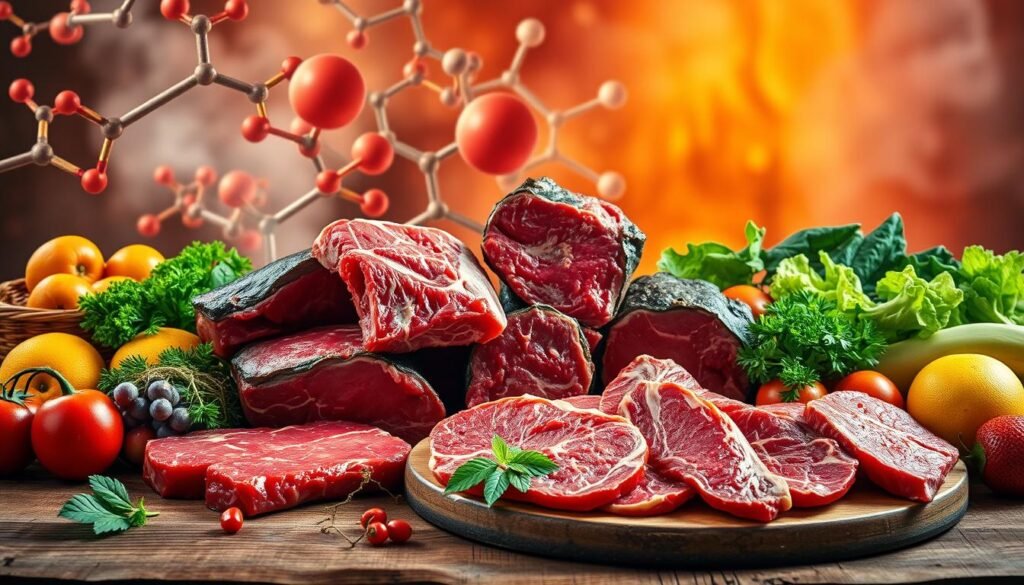
In summary, it’s key to understand red meat’s effect on cholesterol. Focusing on moderation and quality helps manage its impact on health.
Lean Cuts and Moderation
Enjoying lean cuts of meat is great for beef lovers who want to watch their cholesterol. Lean cuts have less fat, helping you manage saturated fats that can raise cholesterol. Making this choice supports healthy eating for cholesterol control and boosts overall health.
Choosing Lean Cuts
Picking the right red meat is crucial. Go for round, loin, or sirloin since they have less fat. With less than 5 grams of fat per serving, extra-lean beef is much healthier than regular beef. Studies show lean beef lowers LDL cholesterol levels significantly, making it a wise option for your diet.
The Role of Moderation in Diet
Moderation in diet is key for a healthy heart. Mixing red meat with fish, poultry, and plant proteins benefits cholesterol levels. Following the Beef in an Optimal Lean Diet (BOLD) plans and eating 113 grams of beef a day can cut total cholesterol. Eating proteins low in saturated fat is vital for heart health.
To sum up, go for lean meat and balance your diet for heart health. If you’re aiming to reduce cholesterol, include lean beef and plenty of plant foods. For tips on eating well for cholesterol management, visit this resource.
Cooking Techniques Matter
Knowing the right way to cook is key to making red meat healthier. The cooking method can change its nutrition. Grilling, broiling, or baking keeps the meat lean and cuts down extra fats. These ways help control cholesterol and keep us healthy.
Studies show cooking methods affect cholesterol oxidation in meat. For example, frying increases harmful cholesterol by-products more than boiling does. Ground meat has lots of these bad substances. However, fish fillets make the least because of their healthy fats.

The Dietary Guidelines for Americans suggest avoiding frying. They recommend cooking methods that are better for heart health. Using oils like canola or olive oil and adding lots of veggies can boost fiber intake. Trying new methods like sous vide or microwaving can also improve meat’s quality and save energy.
Learning different cooking techniques can make red meat dishes much healthier. It helps people choose better and keep a balanced diet. For tips on the best ways to cook meat, click this link.
What to Look for When Buying Quality Red Meat
When looking for quality red meat, many factors are key to a good buy. Buyers need to understand labels and find products that follow sustainable methods. It’s important to know the difference between grass-fed and grain-fed. Each has its own fat and nutrient content.
Understanding Labels: Grass-Fed vs. Grain-Fed
Labels tell us about the diet of livestock and meat quality. Grass-fed beef usually has less fat than grain-fed beef. It often has more omega-3 fatty acids, which are good for the heart. Plus, it may have more vitamins like vitamin E.
The American Heart Association suggests we watch how much saturated fat we eat. Both beef types have this fat. But grass-fed might be healthier, yet more expensive. Knowing these differences helps shoppers choose better red meat.
Local and Sustainable Sources
Buying sustainable meat supports animal welfare and helps the planet. Look for “Certified Grass-Fed” to ensure high standards in livestock care and feed. There’s a growing interest in nutrient-rich, sustainable meat from local farms.
Visiting local markets can lead to discovering lean and flavorful meats. Opting for quality, sustainable red meat benefits health and local businesses.
Impact of Red Meat on Cholesterol Health
Recent studies have brought new insights into how red meat affects cholesterol. They show how different meats interact with cholesterol levels in complex ways. The old view that red meat is always worse than white meat is changing.
Now, experts say the focus should be on how meat is cooked and its saturated fat content. This means we need to think differently about our food choices.
Emerging Research Findings
Research shows that red and white meats can both increase cholesterol if they have the same fat levels. A study with over 1,000 people found that plants are best for cholesterol health. It’s the saturated fat, not the meat’s color, that matters for cholesterol.
This is important for those trying to manage their cholesterol.
Comparative Studies with White Meat
Studies show that eating red or white meat raises bad cholesterol particles. However, switching from red to white meat doesn’t help much. This was confirmed by research in the American Journal of Clinical Nutrition.
Eating less red meat and more plants can help our cholesterol. This is what current dietary guidelines suggest.
| Type of Protein | Impact on Cholesterol Health |
|---|---|
| Red Meat | May raise large LDL particles; moderation recommended |
| White Meat | Similar effects to red meat when saturated fat is equivalent |
| Plant Proteins | Considered healthiest option for cholesterol levels |
We need to watch our fat intake and protein choices for good cholesterol health. The debate about red versus white meat highlights the need for careful diet decisions for heart health.
Embracing a Holistic Approach to Nutrition
In the world of healthy eating, holistic nutrition is key. It focuses on your whole diet instead of just single foods. Including many nutrient-rich foods like fruits, veggies, whole grains, and good fats, plus some red meat, makes a balanced diet. This balanced diet helps improve your overall health.
Recent research from the UK Biobank shows red and processed meats, like beef and pork, aren’t as bad for heart disease as once thought. This tells us to enjoy foods in moderation. It’s important to see your diet as a whole. Heart health is not just about how much meat you eat. It’s also about adding different food groups to get the nutrients you need.
Also, it’s good to exercise, manage stress, and avoid bad habits for your heart’s health. Functional medicine labs can help check your risk for heart disease with special tests. This helps make better food choices. By adopting a holistic approach to what you eat, you’re on your way to a healthier you.
Overall, eating a balanced diet and not overdoing it with red meat is smart. These healthy eating habits can make you feel better. Every meal you eat plays a part in your health.
Red Meat Alternatives for Cholesterol Management
Looking for other options than red meat can help manage cholesterol levels. Moving to plant-based proteins is great for health. There are many substitutes, which allows for informed food choices.
Plant-Based Proteins
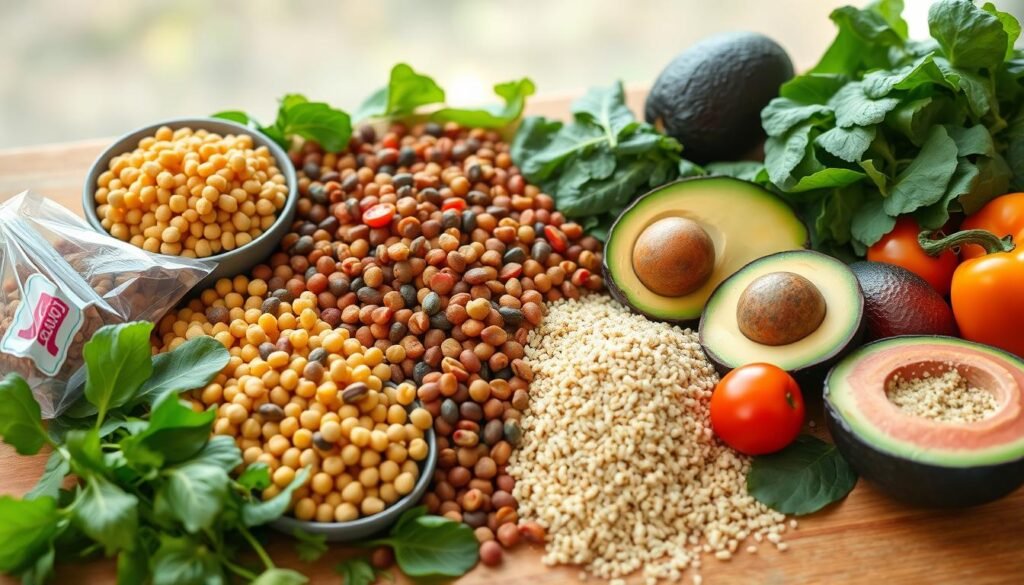
Plant proteins are a healthy way to cut down on saturated fats but keep the protein up. Foods like legumes, nuts, and soy are great instead of red meat. For example, 100 grams of baked lentils has only 116 calories and very little fat. It’s good for the heart.
But, 100 grams of steak has more calories and fat. This shows eating more plants can help manage cholesterol better.
Some good options are:
- Tofu (100 g has 144 calories and some fat)
- Tempeh (100 g with more calories and fat)
- Jackfruit (100 g is low in calories and fat-free)
Healthy Eating Patterns
Eating a variety of foods in a balanced way helps with cholesterol. It’s recommended to eat red meat less, no more than three times a week. Opt for other proteins like skinless poultry, white fish, and beans instead. These have less saturated fat.
Pair these proteins with whole grains for extra fiber. Fiber helps lower bad cholesterol levels.
Here’s how different proteins stack up nutritionally:
| Food Source | Calories (per 100g) | Protein (g) | Fat (g) |
|---|---|---|---|
| Lentils | 116 | 9 | 0.4 |
| Tofu | 144 | 17.3 | 8.7 |
| Skinless Chicken Breast | 151 | 30.5 | 3.2 |
| Broiled Top Sirloin Steak | 188 | 30.3 | 6.5 |
Lowering Cholesterol with Diet
Making smart choices is key to lowering cholesterol through diet. Understanding which foods are best can greatly help your heart health. It’s important to eat a variety of whole foods packed with nutrients.
Essential Dietary Practices
Here are some top tips for reducing cholesterol:
- Increase fiber intake: Eating foods like oatmeal, fruits, and beans that have a lot of soluble fiber can help lower cholesterol.
- Reduce saturated fats: Eating less red meat and full-fat dairy helps cut down total cholesterol levels.
- Avoid trans fats: Stay away from processed foods and some margarine since they can raise cholesterol.
- Choose healthier fats: Foods rich in omega-3 fatty acids, like salmon and walnuts, are good for your heart.
- Opt for lean cuts: Meats labeled “round,” “loin,” or “sirloin” have less saturated fat.
- Incorporate whey protein: Dairy with whey protein might help reduce LDL cholesterol and overall cholesterol.
- Limit processed meats: Eating more fish and poultry instead of processed meats helps lower bad fats.
- Stay active: Regular physical activity boosts HDL cholesterol, which is good for the heart.
- Maintain a healthy weight: Losing a little weight can improve your cholesterol numbers.
Conclusion
Understanding how red meat affects cholesterol means looking closely at what we eat. Recent studies tell us that red meat, especially beef, can slightly raise LDL-cholesterol levels. However, this doesn’t mean it will harm everyone’s cholesterol health.
Some people might see their LDL-cholesterol go up, while others won’t notice big changes. Eating quality meat and cooking it well can bring out its benefits. Red meat is rich in protein, iron, zinc, and vitamin B12.
Moving to a diet focused on whole foods and moderation is key. Including more plant proteins can make our diets healthier. This helps us make choices that are good for us and the planet. Recent research, like that from the University of California, San Francisco, shows that plant-based proteins are a great option.
In the end, a balanced diet with lots of different foods is crucial for good cholesterol health. We can still enjoy red meat by choosing healthier options and focusing on heart health. This way, we support our well-being and the environment.