Heart disease is the top killer in the United States. High cholesterol plays a big part in this. Over 95 million adults are at high risk due to their cholesterol levels. It shows why diet is key in managing cholesterol. High cholesterol meal plans can lead to a healthier heart and better lifestyle.
A heart-healthy diet can lower cholesterol and cut the risk of heart diseases. These meal plans include fruits, vegetables, whole grains, and lean proteins. They aim for a healthy balance. This is vital whether you’re preventing or managing cholesterol levels. Adopting these meal plans brings great health benefits.
In the next sections, we’ll explore cholesterol and diet tips. Readers will learn how to live healthier. Let’s start our journey on meal planning for heart health!
Key Takeaways
- Heart disease is the leading cause of death in the U.S., with high cholesterol a major risk factor.
- High cholesterol often shows no symptoms, making regular screenings crucial for monitoring health.
- Implementing high cholesterol meal plans can significantly lower cholesterol levels and improve overall health.
- A heart-healthy diet includes a balance of fruits, vegetables, whole grains, and lean proteins.
- Limiting saturated and trans fats is essential in managing cholesterol effectively.
Understanding Cholesterol and Its Impact on Health
Cholesterol is key for creating cell membranes and hormones. It’s mostly made by the liver, which produces what our bodies need. We don’t need to eat foods with cholesterol, but it’s important to know about cholesterol types and levels to stay healthy.
What is Cholesterol?
Cholesterol is a waxy substance in our blood. There are two main types: LDL cholesterol and HDL cholesterol. LDL is called “bad cholesterol” because it can build up in arteries, raising heart disease risk. HDL is “good cholesterol” as it carries cholesterol to the liver to be removed from the body.
Types of Cholesterol: HDL vs. LDL
The difference between HDL and LDL cholesterol matters for our health. Many Americans have high total cholesterol, over 200 mg/dL. Poor diets with saturated fats, sugars, and trans fats are often to blame. Watching your cholesterol and changing your lifestyle can help.
Knowing about cholesterol helps us live healthier. Lowering LDL cholesterol by eating right and exercising lowers heart disease risk. Eating beans and using healthy fats like olive oil or fatty fish improves cholesterol levels.
The Importance of Diet in Managing Cholesterol Levels
Diet is key in controlling high cholesterol. What we eat impacts our cholesterol levels. Foods with a lot of saturated fat raise bad cholesterol. But, foods full of soluble fiber can lower it. It’s important to follow dietary advice to keep a heart-healthy diet. Knowing about fats and their effects on cholesterol helps us choose better.
How Diet Affects Cholesterol
Some foods have a bigger effect on cholesterol than others. Eating a lot of saturated fats, mainly from animal products, increases bad cholesterol levels. A study showed that eating healthy improves cholesterol levels. Adding fruits, vegetables, and whole grains to our diet is good for our heart and gives us vital nutrients.
Key Dietary Recommendations from the American Heart Association
The American Heart Association highlights the role of diet in managing cholesterol. They recommend:
- Limited saturated fat to less than 6% of daily calories
- Staying away from trans fats, which are bad for cholesterol
- Adding soluble fiber from oats, beans, and fruits to help lower bad cholesterol
- Eating balanced meals with lean proteins and healthy fats
Following these dietary recommendations leads to a diet good for the heart. This way of eating greatly helps with cholesterol control. It also lowers the risk of heart disease.
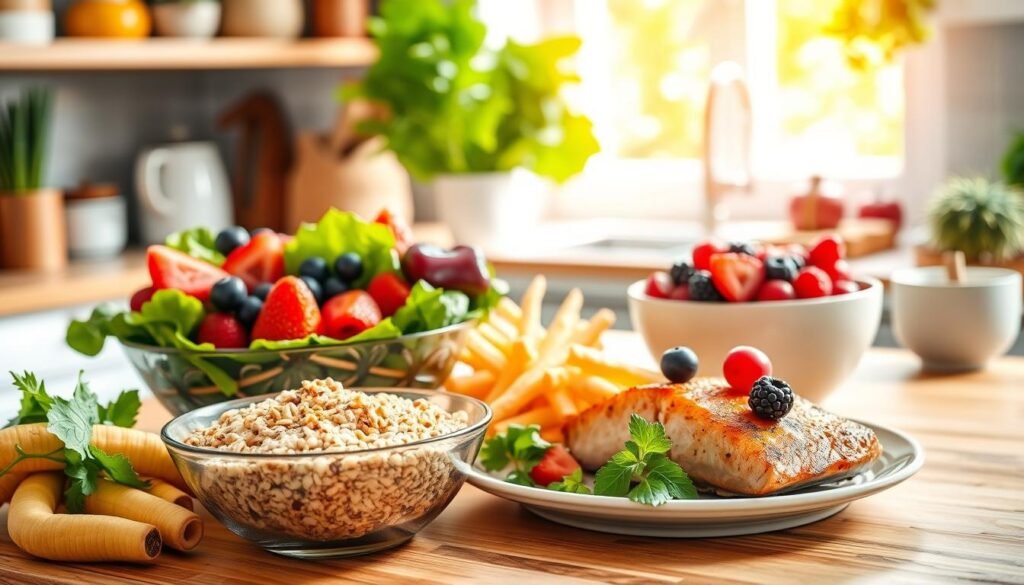
| Food Type | Effect on Cholesterol |
|---|---|
| Saturated Fat | Increases LDL Cholesterol |
| Trans Fat | Raises total cholesterol and lowers HDL |
| Soluble Fiber | Lowers LDL Cholesterol |
| Lean Proteins | Supports heart health |
| Healthy Fats (such as Omega-3s) | Improves cholesterol profile |
Foods to Limit for Lowering LDL Cholesterol
It’s key to know which foods to limit for better LDL cholesterol levels. Fats and some drinks are big factors in managing cholesterol. By knowing how they affect your body, you can improve your heart health.
Understanding Saturated Fats
Saturated fats come from red meats, full-fat dairy, and certain oils. Eating too much of these can raise your body’s cholesterol. The American Heart Association suggests keeping saturated fat under 6% of your daily calories for health.
Why to Avoid Trans Fats
Trans fats, found in fried and processed foods, bump up LDL cholesterol. They’re in baked goods, margarine, and snacks. Avoiding trans fats completely helps keep cholesterol in check. Use liquid vegetable oils for cooking, instead of solid fats like butter.
Alcohol Consumption: Balancing Risks and Benefits
Drinking alcohol in moderation can increase “good” HDL cholesterol. But, too much alcohol is bad for your health. Think carefully about how much alcohol you drink. Talk to a doctor for advice tailored to you.
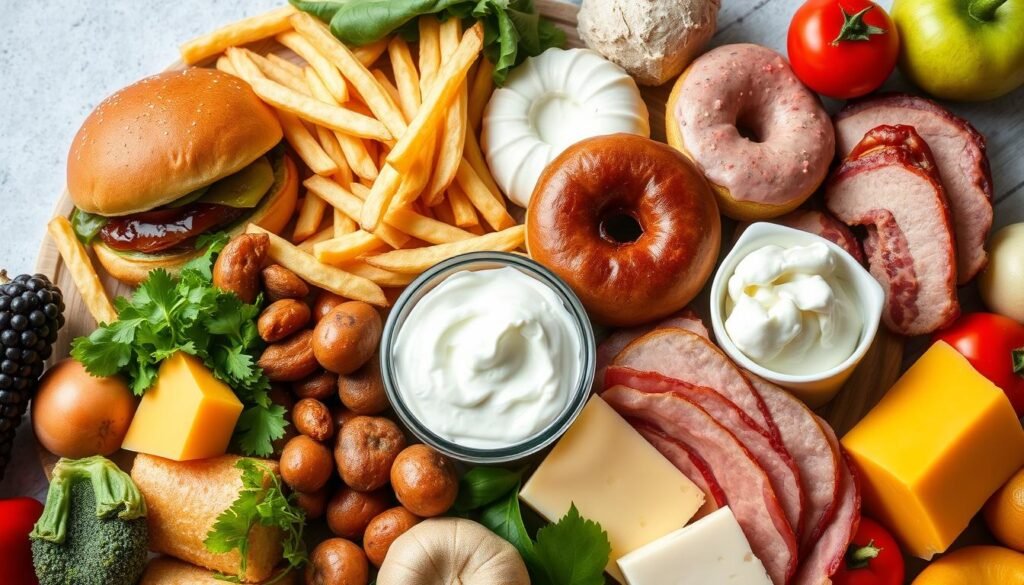
Want tips for a heart-healthy diet? Check out the 7-day meal plan. It helps cut down on saturated and trans fats. Plus, it advises on alcohol for keeping your heart healthy.
Foods to Include in Your High Cholesterol Meal Plans
Including certain foods to include in your daily diet can greatly aid in cholesterol management. Aim for soluble fiber, healthy fats, and plant options to boost heart health and control cholesterol.
Soluble Fiber Sources That Help Lower Cholesterol
Soluble fiber is key in lowering bad LDL cholesterol. It dissolves in water, trapping cholesterol, thus blocking its absorption. Top sources of this fiber are:
- Oats
- Beans
- Barley
- Fruits like apples and citrus
- Vegetables such as carrots and Brussels sprouts
Healthy Fats: The Role of Omega-3s
Healthy fats, especially omega-3 fats, play a big part in cholesterol health. They work by lowering triglycerides and aiding heart health. Key sources to get omega-3s include:
- Fatty fish (salmon, mackerel, sardines)
- Walnuts
- Flaxseeds and chia seeds
- Algal oil (a plant-based choice)
Plant-Based Options for Cholesterol Management
A plant-based diet packed with whole foods is great for cholesterol control. It provides a mix of fruits, vegetables, legumes, and whole grains loaded with nutrients and fiber. Here are some plant-based foods to consider:
- Tofu and tempeh
- Legumes such as lentils and chickpeas
- Quinoa and brown rice
- Leafy greens and colorful vegetables
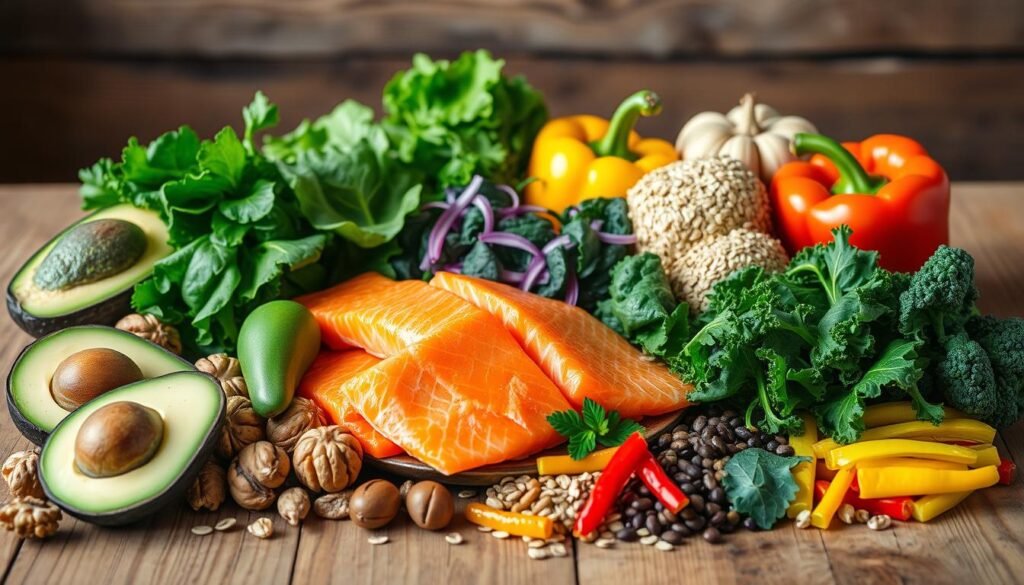
| Food Group | Food Sources | Health Benefits |
|---|---|---|
| Soluble Fiber | Oats, Beans, Fruits | Lowers LDL cholesterol |
| Omega-3 Fats | Fatty Fish, Walnuts, Flaxseeds | Reduces triglycerides, promotes heart health |
| Plant-Based Diet | Tofu, Legumes, Vegetables | Rich in nutrients, aids cholesterol management |
Creating Balanced Cholesterol Meal Ideas
Creating meals for balanced cholesterol is about adding foods that are good for your heart. Include lots of fruits and veggies, whole grains, and sources of healthy fats like nuts and seeds. These ingredients make your meals better and help keep cholesterol in check.
Incorporating Fruits and Vegetables
Fruits and vegetables are key for a heart-healthy diet. They give you important vitamins, minerals, and fiber. This helps lower the bad LDL cholesterol. Adding leafy greens, berries, and citrus fruits to your meals is easy. For great recipes, check out this link.
Whole Grains for Heart Health
Whole grains are a major source of soluble fiber, which helps reduce cholesterol. Items like oats, quinoa, and brown rice fit perfectly into any meal plan. They keep you satisfied and support your heart health. Eating whole grains also provides lasting energy and helps reduce inflammation. Experts recommend using unprocessed grains for the best meal options.
Implementing Nuts and Seeds in Your Diet
Nuts and seeds make meals interesting with their crunchy texture and healthy fats. They’re good for your heart. You can add them to salads, smoothies, or have them as snacks. Choices like almonds, walnuts, and seeds like chia or flax add fiber and important nutrients. They make your meals delicious and help lower cholesterol. For some great recipes, revisit the link mentioned earlier.
Cholesterol-Friendly Meal Prep Tips
Adopting a meal prep plan for lower cholesterol is key to heart health. It saves time and promotes good eating habits.
Batch Cooking for Healthy Eating
Batch cooking lets you make many meals at once. It means you always have healthy food ready. You use foods full of fiber like grains, beans, and veggies.
Having food prepared stops you from picking unhealthy snacks. For instance, making Slow Cooker Turkey Chili with 12 grams of fiber helps. So does having baked oatmeal ready for a quick, fibrous breakfast.
Smart Grocery Shopping for Cholesterol Management
The right grocery shopping is crucial for meal prep. Buy whole foods and skip the processed stuff for a heart-healthy diet. When you shop, remember these tips:
- Focus on fresh fruits and vegetables, aiming for 7-8 servings a day.
- Go for whole grains like barley and brown rice to get more fiber.
- Use healthy fats like olive oil, walnuts, and salmon for omega-3s.
- Add legumes and nuts for protein and more fiber.
These choices help keep cholesterol in check and boost overall health.
Cholesterol-Conscious Menu Planning
Planning meals with an eye on cholesterol is key to managing it well. Making meal plans with heart-healthy choices gives people confidence. Switching to low-cholesterol recipes improves health and makes eating more fun.
Sample High Cholesterol Meal Plans
Good menu planning features meals that fit dietary advice. It uses ingredients like:
- Vegetables, aiming for at least six servings of non-starchy options daily
- Fruits, particularly those with a low glycemic index
- Whole grains, which are high in fiber
- Lean protein sources like beans, lentils, fish, and poultry
Meals can be tasty like:
- Italian Sausage Veggie Skillet – with only 28mg of cholesterol per serving
- Mushrooms Bourguignon Sauce – has no cholesterol
- Pork Chops with Summer Squash – tasty with 80mg of cholesterol
These examples show how to mix heart health with great taste.
Adjusting Recipes for Lower Cholesterol
Changing recipes can make them healthier without losing taste. Small substitutions reduce bad fats. For instance:
- Using olive oil instead of butter adds flavor while cutting saturated fats
- Choosing vegetable-based spreads over margarine for healthier fats
- Opting for low-fat dairy or fortified options keeps up calcium
Learning and planning cholesterol-smart meals make healthy eating easier. It’s also satisfying. For more about what foods to avoid, check out this guide.
Cholesterol-Conscious Cooking Tips
Making meals healthier means using cooking tips that lower cholesterol. Adding methods that cook with less fat and sodium is key. This can improve heart health and keep meals tasty.
Healthy Cooking Methods to Try
Choosing the right cooking methods is crucial for cholesterol management. Think about these options:
- Grilling: A perfect method to cook proteins without extra fats.
- Steaming: Keeps flavors and nutrients and uses little oil.
- Baking: Cooks with less fat and still makes food delicious.
These cooking methods help in preparing nutritious meals that meet your goals. Making dishes like Roast Chicken Breasts with Peppers or Mushroom Bourguignon shows how tasty, low-cholesterol meals are possible.
Using Herbs and Spices to Enhance Flavor
Adding herbs and spices reduces the need for salt or fats. Garlic, basil, and cumin add rich flavors and benefits. Consider these:
- Parsley: It brings freshness to any dish.
- Turmeric: Offers anti-inflammatory benefits.
- Cilantro: Brightens meat and veggies alike.
Herbs and spices boost flavor and can also be good for you. These tips make cooking fun, matching health goals with taste preferences.
Conclusion
Switching to high cholesterol meal plans is a big step towards better heart health. It means choosing foods that help lower LDL cholesterol. For example, eating two cups of veggies like eggplant and broccoli every day can make a big difference.
Foods like beans, nuts, and vegetables are full of fiber and help a lot. Health experts also recommend using olive oil instead of butter. This swap is just one way to improve heart health.
Eating fatty fish rich in omega-3 fatty acids is another smart choice. It can lower cholesterol and boost overall health. Taking care of your cholesterol levels takes effort and smart eating, but it pays off by reducing heart disease risks.
Getting advice from a healthcare pro can customize your diet to fit your health needs. Also, checking out resources like dietary guidelines for lowering cholesterol is helpful. By sticking to these plans, you can manage your cholesterol and live healthier.