A 2020 study showed that over half a tablespoon of olive oil each day can reduce heart disease risk. People who use this amount of olive oil see fewer early deaths from heart and Alzheimer’s diseases. Olive oil is not just tasty; it’s full of monounsaturated fat, making it great for heart health.
The Greeks knew about olive oil’s health perks long ago. Now, science agrees. Extra virgin olive oil (EVOO) is key in the Mediterranean diet, famous for its health benefits. It’s loaded with plant compounds and antioxidants. Using olive oil instead of bad fats can help manage cholesterol. It can boost heart health in many ways, especially by helping control LDL (bad) and HDL (good) cholesterol levels.
Key Takeaways
- More than half a tablespoon of olive oil daily may lower heart disease risk.
- Olive oil has the highest percentage of monounsaturated fat among all edible oils.
- Extra virgin olive oil is a staple of the Mediterranean diet, linked to numerous health benefits.
- Studies show that replacing unhealthy fats with olive oil supports better cholesterol management.
- Olive oil consumption is connected to improved overall health and reduced cardiovascular risk.
Introduction to Olive Oil and Cholesterol
Olive oil is key in many diets worldwide, known for its health benefits. It is packed with monounsaturated fats, mainly oleic acid, making up about 71% of it. Olive oil is mainly healthy fat, with just a little saturated and polyunsaturated fat. Healthy dietary fats are its highlight. Just a tablespoon of extra virgin olive oil gives you lots of vitamin E and K.
Research shows olive oil benefits for cholesterol. It can lower “bad” cholesterol, known as LDL. Olive oil helps reduce heart disease and stroke risks, thanks to its antioxidants. These antioxidants support our heart by improving cholesterol removal and reducing damage from oxidation.
The Mediterranean diet, rich in olive oil, is great for lowering cholesterol levels and boosting heart health. Using olive oil daily can help keep your cholesterol in check. Extra virgin olive oil, loaded with polyphenols, helps fight inflammation and supports the heart.
Adding this healthy fat to your diet is good for more than just taste. It can help with weight management and may lower Alzheimer’s risk. Olive oil is a smart choice for those looking to improve their overall health.
Understanding Cholesterol and Its Types
Cholesterol is key for our health, affecting how our bodies work. It comes mainly in two forms: low-density lipoprotein (LDL) and high-density lipoprotein (HDL). Knowing about these can help us understand cholesterol’s effect on heart health.
What is LDL and HDL Cholesterol?
LDL is often called “bad” cholesterol because it can cause heart problems. It builds up in arteries, making it hard for blood to pass through. On the other hand, HDL is “good” cholesterol. It helps take away other cholesterols from your blood, keeping your heart healthy. It’s important to keep these two in balance for good heart health.
The Role of Cholesterol in Heart Health
Cholesterol is crucial for heart health. The liver and other cells make about 75% of our body’s cholesterol. The rest comes from food, especially from animal products. Eating too much saturated fat can raise your “bad” LDL levels. So, a heart-friendly diet is key.
The American Heart Association recommends fish for its omega-3 fatty acids. These are great for your heart. Olive oil, rich in monounsaturated fats, can lower “bad” LDL and cut heart disease risk. Having seven grams or more of olive oil daily could also reduce the risk of dying from dementia by 28%. This shows why picking healthy fats for your diet matters.
| Type of Cholesterol | Function | Health Impact |
|---|---|---|
| LDL Cholesterol | Transports cholesterol to cells | High levels increase heart disease risk |
| HDL Cholesterol | Removes excess cholesterol from the bloodstream | High levels lower heart disease risk |
Olive Oil Benefits for Cholesterol
Extra virgin olive oil (EVOO) is known for its heart health benefits. It can significantly change cholesterol levels, making it great for a healthy diet. EVOO, rich in good fats and polyphenols, is excellent for managing cholesterol.
How Extra Virgin Olive Oil Affects Lipid Profiles
EVOO is packed with monounsaturated fatty acids, mainly oleic acid. This helps lower “bad” LDL cholesterol and raise “good” HDL cholesterol. Taking one to four tablespoons of olive oil daily improves heart health.
Evidence from Recent Studies
Recent studies show olive oil’s positive impact on heart health. Those who consume more olive oil have a lower death risk from heart disease and some cancers. A study found that just half a tablespoon of olive oil daily can cut the risk of heart disease by 18%. Polyphenols in EVOO fight oxidative stress, preventing heart conditions.
A 2017 research highlighted olive oil’s polyphenols might shield against atherosclerosis and stroke. This proves EVOO’s importance in maintaining heart health.
The Mediterranean Diet and Olive Oil Consumption
The Mediterranean diet is full of amazing tastes, textures, and good-for-you nutrients. It’s built on whole foods and healthy fats, with olive oil playing a key role. This diet has many parts. Together, they help improve your health, especially your heart.
Components of the Mediterranean Diet
This diet includes lots of foods that are great for your body and your heart. The main parts are:
- Fruits and vegetables
- Whole grains
- Nuts and seeds
- Fish and seafood
- Moderate dairy, mostly from yogurt and cheese
- Herbs and spices for flavoring
- Olive oil as the primary fat source
Olive oil, especially extra virgin, is full of good fats and polyphenols. These help your body fight off illness and lower swelling.
Correlation between Mediterranean Diet and Cardiovascular Health
Studies show the Mediterranean diet is great for your heart. People who stick to this diet have fewer heart problems. Olive oil’s polyphenols are a big reason why. They boost good cholesterol and help your body handle fats better. This diet also cuts down bad cholesterol, helping protect against heart disease.
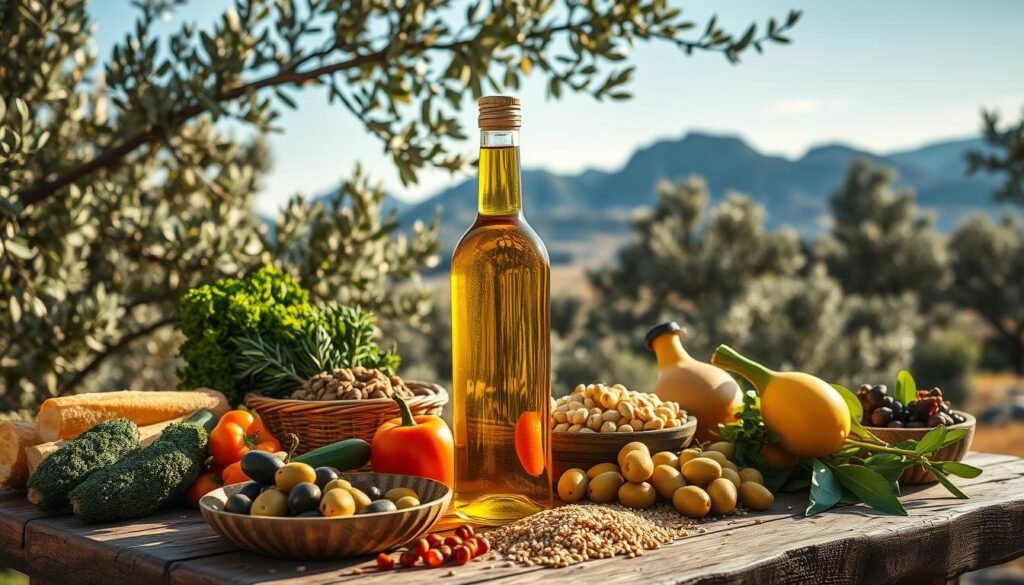
If you follow the Mediterranean diet, you’ll not only enjoy delicious food. You’ll also see big benefits for your heart. The mix of different healthy foods, especially olive oil, plays a big part in these benefits.
How Olive Oil Lowers Bad Cholesterol Levels
Olive oil is good for your heart. It has monounsaturated fats and special compounds that help lower bad cholesterol. This can lead to better heart health.
Monounsaturated Fats and Their Benefits
Monounsaturated fats are found in olive oil. They reduce bad LDL cholesterol. Adding these fats to your diet improves your heart health.
By eating foods with monounsaturated fats, you can lower your cholesterol. This can cut your risk of heart disease.
Polyphenols in Olive Oil: Antioxidant Properties
Olive oil has polyphenols. These are strong antioxidants that fight damage in the body. They help stop heart diseases.
Polyphenols make olive oil great at reducing bad cholesterol. Using olive oil can make your heart healthier. For more tips, visit this resource.
Comparing Different Types of Olive Oil
Knowing the types of olive oil helps make better kitchen choices. How they’re made, their taste, and nutrients vary a lot. These differences greatly affect our health. Extra virgin olive oil (EVOO) stands out for its quality. It’s especially good for managing cholesterol levels.
Extra Virgin Olive Oil vs. Regular Olive Oil
Extra virgin olive oil is top-notch. It comes from the first press of olives. This means it keeps more of its healthy qualities. Regular olive oil, however, might lose some during refining. Here’s how they compare:
| Type | Monounsaturated Fat (% of total fat) | Polyunsaturated Fat (% of total fat) | Saturated Fat (% of total fat) | Polyphenol Content (mg/kg) |
|---|---|---|---|---|
| Extra Virgin Olive Oil | 73% | 11% | 14% | 320 |
| Regular Olive Oil | Varies | Varies | Varies | 86 |
The Importance of Selecting High-Quality Olive Oil
Picking high-quality olive oil is a must for health. Extra virgin olive oil is rich in polyphenols. These antioxidants help fight inflammation and heart disease, boosting health.
When choosing olive oil, look at the harvest date, where it’s from, and how it’s stored. Keeping extra virgin olive oil in good condition means it stays fresh. This brings out the best taste and health perks in your meals.
Research Findings on Olive Oil and Cholesterol Management
Recent studies highlight the important effects of olive oil on cholesterol. This includes both bad (LDL) and good (HDL) cholesterol levels. The research findings show strong support for the health benefits of using olive oil.
Studies on Olive Oil’s Impact on LDL and HDL Levels
A big study in the Journal of the American College of Cardiology involved over 90,000 people for 28 years. It found that using more than half a tablespoon of olive oil daily could reduce heart disease death risk by 19%. This study shows olive oil helps manage cholesterol well, especially LDL.
Participant Insights from Recent Research Trials
Study participants mostly had Mediterranean backgrounds, known for a healthy lifestyle. This includes more exercise and eating lots of fruits and veggies. These habits likely helped show olive oil’s benefits.
Using olive oil was linked to a lower risk of heart diseases and some cancers. This suggests olive oil can increase good HDL while controlling bad LDL cholesterol.
Incorporating Olive Oil into Daily Diet
Adding olive oil to your daily diet can really boost your meals and heart health. It’s a key part of the Mediterranean diet, known for its versatility and health perks. Learning to use it right can make your meals healthier and your life better.
Tips for Cooking with Olive Oil
Choosing high-quality extra virgin olive oil is key to getting the most health benefits. Here are a few easy ways to use olive oil in your cooking:
- Use olive oil as a dressing for salads for flavor and health gains.
- Drizzle olive oil over roasted or grilled veggies to boost taste and keep them healthy.
- Replace butter with olive oil in baking for a healthier option.
- Sauté vegetables or meats in olive oil for rich flavors in your dishes.
- Add olive oil to homemade marinades to enhance flavor and health.
Healthy Replacements: Olive Oil vs. Other Fats
Choosing olive oil over bad fats can improve your cholesterol levels. Olive oil’s monounsaturated fats are better for heart health than saturated fats. Let’s compare olive oil to other fat sources:
| Fat Source | Saturated Fat (g per tbsp) | Cholesterol (mg per tbsp) | Health Benefits |
|---|---|---|---|
| Olive Oil | 1.9 | 0 | Promotes good cholesterol (HDL) |
| Unsalted Butter | 7.2 | 31 | Higher in saturated fat, less healthy |
Using olive oil daily not only adds flavor but also long-term health benefits. Switching from butter and other unhealthy fats can greatly improve your health. To find out more ways to use olive oil, check out these tips.
Potential Risks of Olive Oil Consumption
Olive oil is often praised for its health benefits. However, it’s important to know about its saturated fats. Knowing this can help people make better food choices, especially if they have health issues.
Understanding Saturated Fats in Olive Oil
Olive oil has a small amount of saturated fats, about 14%. This is less than in many animal fats and processed oils. But it can still be risky. People with high cholesterol need to watch their saturated fat intake. This helps avoid too much unhealthy cholesterol.
Keeping an eye on saturated fat intake matters. It helps not to go over the recommended daily amounts.
Impact on Individuals with High Cholesterol Risks
About 38% of adults in the United States have high cholesterol. This means their total blood cholesterol is 200 mg/dL or more. For them, being careful with fats, including olive oil, is key. Too much saturated fat can raise LDL cholesterol levels. This increases the risk of heart problems.
People with high cholesterol should work with health experts on their diet plans. It’s good to lower saturated fats and eat healthier fats instead. This supports heart health. Choosing the right oils and fats can help meet health goals.
FAQs about Olive Oil and Cholesterol
Many people are becoming more interested in heart health. They have lots of questions about how olive oil helps manage cholesterol. It’s important to clear up any wrong ideas about olive oil. We will talk about its role in eating healthy. Here, you’ll find answers to questions many people have about olive oil and its health perks.
Common Misconceptions About Olive Oil’s Health Benefits
There’s a common mistake that all olive oil is the same. But extra virgin olive oil is much better for your health than regular olive oil. Some think we should not use olive oil because it’s fat. But eating olive oil every day can help lower bad cholesterol, which is good for your heart. Others believe cooking with olive oil is bad. This isn’t true. Olive oil stays healthy even when you cook at high temperatures. It’s good for many types of cooking.
How Much Olive Oil Should You Consume Daily?
Finding out the right amount of olive oil to eat every day is key to its health benefits. Studies show that taking at least half a tablespoon of olive oil daily is good. It can really cut down the risk of heart disease. People who eat more olive oil have lower signs of inflammation and better cholesterol levels. If you want a diet that’s good for your heart, try having one to two tablespoons of olive oil regularly. Make sure it fits with the rest of your diet.
Conclusion
Olive oil is more than just good for cooking. It helps control cholesterol and boosts heart health. High-quality, extra virgin olive oil can lower “bad” LDL cholesterol. At the same time, it raises “good” HDL cholesterol. This is key to cut down high cholesterol risks. In the U.S., nearly 38% of adults face this issue.
Healthy fats, like those in olive oil, are vital for heart health. They’re a big part of the Mediterranean diet, which is full of tasty, heart-friendly meals. It’s good to use two to three tablespoons of olive oil daily. This matches the advice for cholesterol management and heart health. To learn more, see the impact of olive oil on cholesterol.
Using olive oil daily is a smart move for your health. It makes meals tastier and helps prevent heart disease. By adding it to your diet, you’re taking steps towards better cholesterol levels and heart health.