Did you know up to 38 million American adults have high cholesterol? This puts them at a higher risk for heart disease and strokes. That’s why finding effective treatments is so crucial. While some people choose medicine, natural options can work well too. Things like supplements have helped many, but making changes in diet and lifestyle is important. Always talk to a doctor before you change your treatment plan, though.
Key Takeaways
- Natural high cholesterol treatments can be effective in managing cholesterol levels.
- Plant sterols and stanols have been shown to lower LDL cholesterol by 6 to 12%.
- Fiber supplements, like psyllium, contribute to lowering overall cholesterol.
- Whey protein supplements can significantly reduce LDL and total cholesterol figures.
- Consultation with healthcare professionals is essential during cholesterol management.
- Incorporating foods rich in omega-3 fatty acids can further support heart health.
- Effective cholesterol management requires a combined approach of diet, lifestyle changes, and proper monitoring.
Understanding High Cholesterol and Its Risks
High cholesterol means too much fat is in your blood. It’s vital to know how cholesterol works. Cholesterol travels in the blood attached to proteins, creating lipoproteins. Among these, LDL, or “bad cholesterol,” builds plaque in the arteries. HDL, or “good cholesterol,” moves extra cholesterol to the liver to be removed.
High cholesterol isn’t just about high numbers. It can lead to atherosclerosis, where arteries narrow or block. This increases the risk of heart attacks, strokes, and cardiovascular issues. Without treatment, high cholesterol can bring serious invisible health risks.
Different factors can raise cholesterol risks. Unhealthy eating, little exercise, obesity, and getting older play roles. Conditions like kidney disease, diabetes, and hypothyroidism also affect cholesterol. These can make heart disease more likely.
The National Heart, Lung, and Blood Institute suggests getting checked regularly. Men 45 to 65 and women 55 to 65 should get tested every 1-2 years. After 65, yearly tests are recommended to keep track of cholesterol.
To manage high cholesterol, changing your lifestyle is key. Eat better, move more, and stop smoking. Losing just 5% to 10% of your weight can greatly improve your cholesterol. Doing aerobic exercises for at least 150 minutes a week helps too.
Common Medications for High Cholesterol
High cholesterol levels can be risky for your health. That’s why common medications for high cholesterol are important. Statins are the most known drugs in this group. They include Atorvastatin and Rosuvastatin. These drugs lower the bad LDL cholesterol and triglycerides. They might also increase the good HDL cholesterol. Many doctors prescribe them to reduce the risk of heart disease.
Other helpful cholesterol medications include Ezetimibe, a cholesterol absorption inhibitor. It cuts down LDL cholesterol and might slightly drop triglycerides. It can also boost HDL cholesterol. For people with genetic LDL issues or heart disease, PCSK9 inhibitors like Alirocumab and Evolocumab are key. They greatly lower LDL cholesterol.
Bile acid sequestrants, such as Cholestyramine and Colesevelam, are another type of drug. They’re used for lowering LDL cholesterol and might help up HDL levels too. Fibrates like Fenofibrate and Gemfibrozil mainly focus on triglycerides. They also offer a small LDL reduction and an HDL boost. Niacin is another option that lowers both LDL and triglycerides while raising HDL cholesterol.
Prescription omega-3 fatty acids, like Lovaza and Omacor, help manage cholesterol by lowering triglycerides. However, it’s essential to talk about possible side effects of these meds. For instance, statins might cause headaches, nausea, diarrhea, and muscle aches. Some studies suggest the muscle pain might be more about what people expect than the drug itself.
Finding the right treatment involves talking to healthcare providers. They help create a plan that fits your specific cholesterol levels and health needs. For more info on these common medications for high cholesterol, click on this link.
| Medication Type | Examples | Effect on LDL | Effect on HDL | Effect on Triglycerides |
|---|---|---|---|---|
| Statins | Atorvastatin, Rosuvastatin | Decrease | Increase slightly | Decrease |
| Cholesterol Absorption Inhibitors | Ezetimibe | Decrease | Increase slightly | Decrease slightly |
| PCSK9 Inhibitors | Alirocumab, Evolocumab | Significantly decrease | No significant effect | No significant effect |
| Bile Acid Sequestrants | Cholestyramine, Colesevelam | Decrease | Increase slightly | No significant effect |
| Fibrates | Fenofibrate, Gemfibrozil | Modest decrease | Increase | Decrease |
| Niacin | Nicotinic acid | Decrease | Increase | Decrease |
| Omega-3 Fatty Acids | Lovaza, Omacor | No significant effect | Possible increase | Decrease |
Natural High Cholesterol Treatments That Really Work
Several natural treatments can help with heart health and lower bad cholesterol. Adding plant sterols, fiber, and whey protein to your diet can make a big difference. Understanding how these natural choices work helps in managing cholesterol better.
Plant Sterols and Stanols
Plant sterols and stanols are known for reducing cholesterol. They are found in plant foods and lower cholesterol absorption in our intestines. Studies show that using them regularly can cut bad cholesterol by 6-12%. Adding foods with plant sterols to your diet every day is good for your heart.
Fiber Supplements
Fiber supplements, especially ones high in soluble fiber, help lower cholesterol. This fiber attaches to cholesterol in the gut, helping remove it from the body. Psyllium, a type of fiber, is proven to help if used consistently. Most people need supplements to reach the recommended 28 grams of fiber daily for heart health.
Whey Protein
Whey protein can also help lower cholesterol levels. It comes from milk and has been found to lower total and bad cholesterol. Adding whey protein to your diet helps manage cholesterol and is a great protein source.
Effective Dietary Changes for Lowering Cholesterol
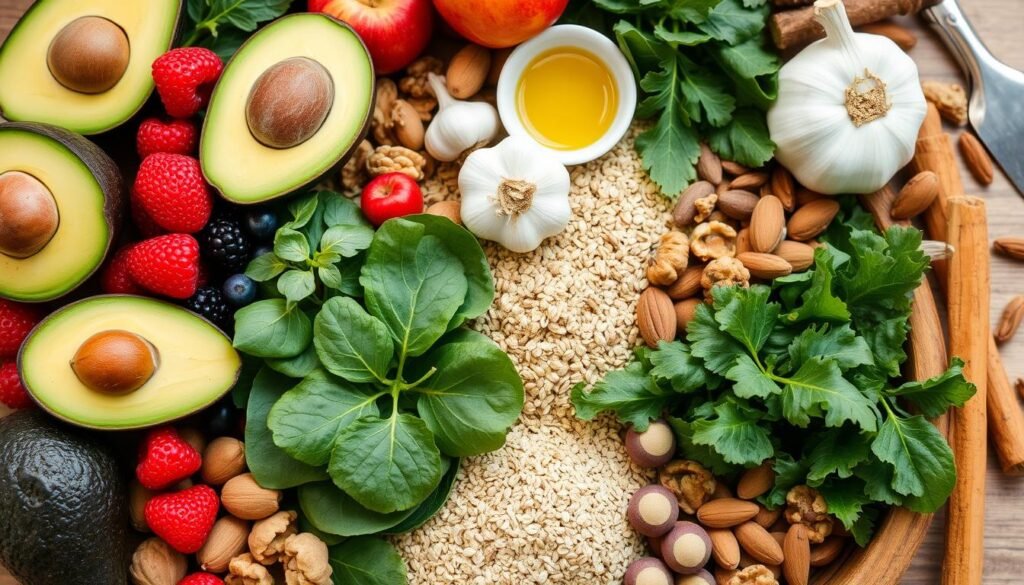
Want to manage your cholesterol better? Consider changing your diet. Adding omega-3 fatty acids and soluble fiber to your meals is a smart move. These nutrients greatly benefit your heart health.
Foods Rich in Omega-3 Fatty Acids
Omega-3s are key for a healthy heart. Eating foods like salmon, mackerel, walnuts, and flaxseeds helps. They improve heart function and control blood pressure. However, they don’t reduce LDL cholesterol directly. Experts suggest eating fatty fish twice a week to get these benefits.
The Role of Soluble Fiber
Soluble fiber is essential for blocking cholesterol’s absorption. You should eat 10 to 25 grams daily. Good sources include oats, barley, and fruits. These foods stop cholesterol from entering your bloodstream, lowering bad LDL levels. Try adding oatmeal to your breakfast or beans to your salads. For more diet tips, check out this resource.

Herbal Supplements: Do They Really Work?
Many people look into herbal supplements for cholesterol, hoping to find natural solutions. Garlic, red yeast rice, and policosanol are some top options. Each has different effects on managing cholesterol levels.
Garlic and Its Effects
Studies suggest garlic may lower “bad” LDL cholesterol a bit. But, the results vary across different research. Despite this, many enjoy adding garlic to their diet for its taste and potential health perks.
Red Yeast Rice
Red yeast rice is known for its potential to cut down LDL cholesterol, thanks to natural statins. But, the absence of regulation in its production raises safety concerns. The main worry is inconsistent quality and the risk of harmful contaminants. This stresses the importance of choosing products carefully and talking to a doctor.
Policosanol
The impact of policosanol on cholesterol is still under debate. Research offers mixed outcomes on its effectiveness. While some individuals see improvements, others don’t find it as helpful. That’s why it’s key to get advice from a healthcare provider before starting any new supplement, including policosanol.
Even though these herbal supplements might help, they shouldn’t be the only approach to managing cholesterol. It’s best to work with a healthcare professional for a well-rounded plan. For more details on supplements that can aid in lowering cholesterol, visit this resource.
Lifestyle Modifications for Better Cholesterol Levels
Making changes in your lifestyle is key for better heart health. This includes regular exercise and keeping an eye on your weight. Moving more helps increase your good cholesterol, HDL. It also lowers bad cholesterol, LDL, and fats in your blood. By doing these, you can enjoy lower cholesterol levels and reduce heart disease risks.
The Importance of Regular Exercise
Being active has many benefits for your heart. The American Heart Association says you should get at least 150 minutes of exercise each week. This helps boost your good cholesterol and cut down on the bad. You can try activities like walking, biking, or swimming. Making small changes, like using stairs or parking further away, can also help meet your fitness goals.
Weight Management Strategies
Keeping a healthy weight is important for cholesterol control. Studies show losing 5 to 10 pounds can lower total and bad cholesterol. Eating more fruits and veggies and choosing lean proteins can help. Focus on eating smaller portions and pick healthier foods, such as whole grains and good fats. These steps will help you keep the weight off and improve cholesterol levels.
Integrating Yoga and Meditation into Your Routine
Adding yoga and meditation to your daily life brings big benefits. These are especially true for those worrying about cholesterol. Research links yoga and cholesterol, showing they can help heart health. A 2013 study found that people with type 2 diabetes saw cholesterol and triglyceride levels drop after doing yoga for three months. They were also taking medication. Their HDL levels, which are good for you, went up too.
A 2019 study showed that women who did yoga three times a week for 26 weeks had lower total cholesterol and LDL levels. This highlights how yoga can reduce stress and manage cholesterol well. If you’re looking for a full health approach, these mind-body practices might be what you need.
Meditation also boosts these benefits. Analysis shows regular meditation can decrease cholesterol by about -14 mg/dL. It even reduces triglycerides a lot, by -32.56 mg/dL. Meditation’s mental perks are huge, making you more emotionally tough and helping you sleep better. Yoga, a type of movement meditation, also helps lower cholesterol. It’s a smart choice for health improvement.
With more people seeing the value of meditation for health, it’s recommended to try it. Not just for physical health but for mental well-being too. Exploring yoga could be a great extra to usual treatments. If you wonder how stress affects cholesterol, check out this resource for more info.
| Practice | Impact on Cholesterol Levels | Participants |
|---|---|---|
| Yoga | Decrease in total cholesterol, LDL; improvement in HDL | Various studies totaling 1147 |
| Meditation | Average decrease of -14 mg/dL in total cholesterol | Multiple clinical studies |
| Combined Yoga and Meditation | Reductions in total cholesterol (average -10.31 mg/dL) and triglycerides (average -13.50 mg/dL) | Studied populations in multiple reviews |
Monitoring Cholesterol Levels and Seeking Professional Advice
Keeping an eye on cholesterol is key for heart health. Between 2017 and 2020, around 86.4 million adults in the U.S. had high cholesterol. Regular checks are crucial for staying healthy.
Getting advice from professionals helps manage cholesterol well. Adults need a cholesterol test every 4 to 6 years. Those with heart disease or diabetes need tests more often. Kids and teens should also get checked regularly, based on their health.
It’s important to know what cholesterol test results mean. These tests look at LDL, HDL, triglycerides, and total cholesterol levels. Knowing about fasting before some tests is useful. Fasting 8 to 12 hours before can make results more accurate.
Advice from healthcare providers is part of managing cholesterol. They explain test results and suggest lifestyle or medication changes. This might include drugs like statins to lower LDL cholesterol. Plus, tips on exercising and eating right are often given.
Knowing heart disease risks is important. Cholesterol, family history, and lifestyle all affect your risk. Doctors may use tests like a CAC scan to understand your risk better. This helps in customizing your cholesterol plan.
| Age Group | Recommended Frequency of Cholesterol Checks |
|---|---|
| Healthy Adults | Every 4 to 6 years |
| Individuals with Heart Disease or Diabetes | More frequently |
| Children and Adolescents | Periodically, specific age ranges apply |
Regular cholesterol checks and expert advice can make a big difference. They help in better managing cholesterol, cutting down heart disease risk.
Conclusion
Managing high cholesterol takes a full plan. It includes diet changes, natural options, lifestyle shifts, and talking to doctors. Millions use statins as their main way to lower bad LDL cholesterol. There are also other choices like PCSK9 inhibitors and fibric acid derivatives for some people.
Lifestyle is huge in controlling cholesterol, says the American Heart Association. Eating better and moving more are key. Doing these can greatly lower cholesterol, studies say. Adding omega-3s and some supplements can also help alongside other treatments.
Each person needs their own cholesterol plan. If you stay active in managing it, you can protect your heart. To learn more, check this summary of cholesterol treatments. It goes deep into different treatments and advice.