Did you know that what you eat affects up to 30% of your cholesterol? It’s a big deal since 94 million Americans have high cholesterol. Cholesterol is necessary for making hormones and vitamin D. Yet, too much of it can lead to heart disease and stroke.
It’s key to know which high-cholesterol foods to eat less of. This includes foods full of saturated and trans fats. Managing cholesterol levels can be simple. Pay attention to foods high in cholesterol and make smarter food choices. This can improve your heart’s health. Check out this simple guide for more about which foods to avoid.
Key Takeaways
- A diet impacts between 20% to 30% of cholesterol levels in the body.
- Animal products are the primary sources of dietary cholesterol.
- Limiting saturated fats to 5% to 6% of daily caloric intake is essential for heart health.
- Aiming for 10 to 25 grams of soluble fiber daily can help reduce LDL cholesterol.
- Trans fats should be entirely avoided due to their detrimental effects on heart health.
Understanding Cholesterol and Its Importance
Cholesterol is key for our health and well-being. It helps keep cell walls firm, makes hormones, and more. To choose the right foods, we need to know about cholesterol and its kinds.
What is Cholesterol?
Cholesterol is a waxy material in our blood. Our liver makes it, but we also get it from eating meat, chicken, and dairy. Though our bodies need it, too much can raise our blood levels and risk our health.
Why Do We Need Cholesterol?
Cholesterol is important for a few reasons:
- It builds the membranes around cells.
- It’s needed to make certain hormones.
- It helps make vitamin D and substances that help digest food.
But, having too much cholesterol, especially LDL, can be harmful. It leads to heart disease. So, eating right to manage cholesterol levels is vital for our health.
Why is High Cholesterol Dangerous?
High cholesterol can seriously harm your health. It ups your risks for heart disease and stroke. It’s critical to know the dangers of high cholesterol for your heart’s health. Most people don’t know their cholesterol levels because high cholesterol doesn’t show clear signs until something severe happens.
Risks Associated with High Cholesterol
High cholesterol can cause arteries to narrow due to cholesterol buildup. This condition is called atherosclerosis and it raises the risk of heart disease. The dangers of high cholesterol include:
- Heart Attack: Arteries that supply blood to the heart can suddenly get blocked.
- Stroke: High cholesterol may restrict blood flow to your brain.
- Peripheral Artery Disease (PAD): It can reduce blood flow to your arms and legs, leading to pain.
- Coronary Artery Disease (CAD): Blockages in the heart’s arteries cause this condition.
If you have familial hypercholesterolemia or very high LDL levels, you might need medicines like statins. It’s smart to get your cholesterol checked regularly, every five years, especially with a family history of high cholesterol. Being proactive can help avoid dangerous health events before they happen.
Symptoms of High Cholesterol
Often, high cholesterol doesn’t show symptoms, making it hard to catch without tests. Yet, some physical signs might hint at high cholesterol, such as:
- Xanthomas: Yellowish skin growths that signal high cholesterol.
- Chest Pain: This could be discomfort from blockages, though not directly linked.
- Tiredness or Fatigue: Reduced blood flow from blockages may cause this.
Not having clear signs makes monitoring cholesterol levels crucial. Ignoring high cholesterol risks serious heart issues later on. Stay on top of your health by getting regular checks and being aware. Taking these steps can lessen the risk effectively.
| Indicator | Meaning/Description |
|---|---|
| Xanthomas | Yellowish growths on skin indicating high cholesterol levels |
| Chest Pain | Possible discomfort from blocked arteries affecting blood flow |
| Tiredness/Fatigue | General fatigue due to decreased blood circulation |
Foods with High Cholesterol to Limit
It’s important to keep an eye on your cholesterol for a healthy heart. Some foods, like those with a lot of unhealthy fats, really push your cholesterol up. Knowing about cholesterol-rich foods to avoid helps in choosing what to eat better.
Animal Products: The Major Sources
Animal foods often have a lot of cholesterol and fats. For example, red meats like beef and pork can raise your cholesterol and risk of heart disease. Foods like butter and cheese, which have a lot of saturated fat, add to the problem. Also, bacon and sausages, which are processed meats, should be eaten less because they add too much salt.
Knowing about these high cholesterol diet restrictions helps keep cholesterol in check.
Processed Foods and Their Impact
Processed foods are not great because they have unhealthy fats. Things like cookies from the store are filled with cholesterol and bad fats. And they have extra sugar that doesn’t help your health. By reading labels, you can avoid these cholesterol-rich foods to avoid and make better eating decisions.
Fried Foods and Trans Fats
Fried foods are a big source of trans fats, which are really bad for your health. They increase bad cholesterol, make you gain weight, and lead to other health problems. Try to eat less of things like French fries, doughnuts, and fried chicken. Staying away from these unhealthy fats is good for your heart.
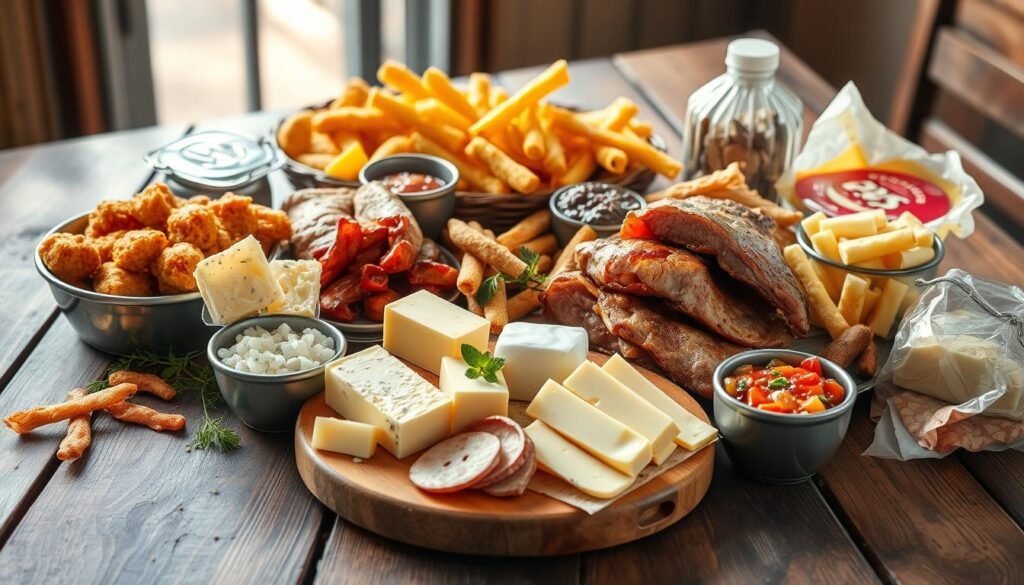
Choosing smart over fatty foods is key. Go for lean meats, seafood, and foods high in fiber to manage your cholesterol. For tips on what to eat and what not to, check out this resource.
Worst Foods for High Cholesterol
It’s very important to know how some foods affect cholesterol. We need to watch out for foods that are bad for high cholesterol. These are often foods high in saturated fats. Saturated fats are solid at room temperature.
These fats can raise your cholesterol a lot. You find them in processed meats, dairy, and some oils. Eating too much saturated fat can make your LDL (bad) cholesterol go up. This increases the risk of heart disease.
Saturated Fats Explained
The American Heart Association suggests keeping saturated fats to less than 6% of your daily calories. Foods high in these fats don’t offer much nutrition. They include things like fatty meats, full-fat dairy, and snacks with hydrogenated oils.
Making quick changes to what you eat can really help your health. That shows why it’s key to choose wisely. For more info on cholesterol foods that might surprise you, check out this resource.
Specific Foods to Avoid
Knowing which foods are high in cholesterol helps manage it better. Some of the worst foods for high cholesterol include:
- Hot dogs
- Chicken wings (one contains 119 mg of cholesterol)
- Fatty cuts of beef and pork
- Full-fat dairy products
- Coconut and palm oils
- Commercially prepared snacks with trans fats
Trans fats are really bad because they raise your bad cholesterol and lower the good kind. Avoid foods like margarine and vegetable shortening to better your heart health. Choosing options with less saturated fat, like grilled chicken or vegetable soups, can greatly help manage cholesterol.
How Diet Affects Cholesterol Levels
Diet is crucial for managing cholesterol levels in our bodies. What we eat affects our overall health, especially our heart. Knowing the difference between good and bad fats is key. This knowledge helps make choices that keep cholesterol levels healthy through diet.
Dietary Cholesterol vs. Unhealthy Fats
Foods rich in fats, like certain meats, eggs, butter, and full-fat dairy, are high in dietary cholesterol. A 2019 report from the AHA stated we used to limit it to 300 milligrams daily. But now, the suggestion is to keep it as low as possible, ensuring a balanced diet. One large egg has about 200 mg of cholesterol. Healthy people can have one egg daily. But, if your LDL cholesterol is high, it’s important to cut down on saturated fat and cholesterol.
Food Choices That Elevate LDL Cholesterol
Choosing the right foods can lower your cholesterol. Over time, blood cholesterol levels in Americans have dropped. This change is thanks to better medicine and understanding food’s effect on cholesterol. Adding 5 to 10 grams of soluble fiber every day helps reduce LDL cholesterol. Foods like avocados are also great for heart health and can lessen heart disease risks.
Switching to monounsaturated fats lowers LDL cholesterol too. Eating 2 grams of plant sterols each day can decrease LDL by 5% to 15%. Keeping saturated fats under 7% of your daily calories can also lower LDL by 8% to 10%. The American Heart Association recommends eating fish twice a week for omega-3s, great for the heart. Plus, whey protein found in dairy can cut down total and LDL cholesterol.
Cholesterol-Lowering Foods
Adding the right foods to your daily diet can greatly reduce cholesterol levels. This improves heart health. Knowing about soluble fiber and healthy fats in your meals is key.
Foods Rich in Soluble Fiber
Foods high in soluble fiber offer important benefits for lowering cholesterol. These foods, along with a well-balanced diet, help trap cholesterol. This stops it from entering your bloodstream. Good sources of soluble fiber include:
- Oats
- Legumes like beans and lentils
- Fruits such as apples and pears
- Vegetables including carrots and Brussels sprouts
- Barley and whole grains
Eating these high-fiber foods daily helps manage cholesterol. Studies show that high-fiber diets can lower cholesterol levels. Plus, they make you feel full, which prevents overeating.
Healthy Fats to Include in Your Diet
Healthy fats are also vital for heart health. These fats include:
- Fish, especially kinds like salmon, trout, and mackerel
- Nuts such as almonds, walnuts, and hazelnuts
- Avocado
- Olive, canola, and sunflower oils
These foods taste good and are packed with omega-3 fatty acids. Omega-3s help lower the risk of heart problems. Eating healthy fats daily is good for your heart and manages cholesterol.
| Food Type | Soluble Fiber Content | Healthy Fat Type |
|---|---|---|
| Oats | High | None |
| Legumes | High | None |
| Fish (Salmon) | None | Omega-3 Fatty Acids |
| Nuts (Almonds) | Moderate | Healthy Fats |
| Avocado | Low | Healthy Fats |
Regularly choosing these foods promotes a healthy heart lifestyle. It also ensures a good nutrient balance. Focusing on both soluble fiber and healthy fats is key for heart health.
Low Cholesterol Diet Tips
Eating a diet that’s good for your heart can help manage your cholesterol. Making meal plans for better cholesterol control is key. It means choosing foods packed with nutrients. By using fresh foods, avoiding processed items, and cooking at home, you can get healthier.
Meal Planning for Cholesterol Management
Creating meal plans focused on managing cholesterol is both beneficial and simple. Start by filling your diet with vegetables, whole grains, and lean proteins. It’s crucial to think about meal sizes and the nutrition they offer. Here are the top tips:
- Keep saturated fats to under 6% of your total daily calories, following the American Heart Association’s advice.
- Eat plenty of soluble fiber from fruits, beans, and oats to reduce cholesterol absorption.
- Add omega-3 rich fish like salmon to your meals at least twice a week to cut down bad cholesterol.
- Choose foods with plant stanols and sterols to help lower cholesterol more effectively.
Cooking Tips for a Heart-Healthy Diet
Making meals that are good for your heart is key for keeping cholesterol in check. Choosing how to cook can greatly impact your meals’ nutritional value.
Making simple changes can have big benefits. Use olive oil instead of butter to cut down on bad fats. Opt for baking, steaming, or broiling over frying. Cooking at home means you know exactly what’s in your food, avoiding hidden fats and sugars. Keep these cooking methods in mind:
| Cooking Method | Benefits |
|---|---|
| Baking | Keeps food moist without adding fats. |
| Steaming | Keeps the goodness in foods, no fats needed. |
| Broiling | Makes flavorful dishes with little fat. |
Choosing what’s best for your heart and planning meals carefully can maintain lower cholesterol. Sticking to these tips will help you stay healthy and balance your diet well.
Best Foods for Reducing Cholesterol
Eating a variety of foods rich in nutrients is key to managing cholesterol. Studies show that some foods are great for heart health. They can lower LDL (bad) cholesterol and boost your wellness.
Here are some top foods for keeping cholesterol in check:
- Fatty Fish: Salmon and mackerel have lots of Omega-3 fatty acids. These fats lower triglycerides and increase HDL (good) cholesterol. Try to eat them twice a week.
- Avocados: With lots of monounsaturated fats, avocados help raise HDL and cut down LDL cholesterol. They’re a strong choice for healthy meals.
- Nuts: Almonds and walnuts contain fats that help lower LDL cholesterol. Just remember to eat them in moderation.
- Legumes: Beans, lentils, and peas are packed with fiber. They offer plant-based protein that can reduce cholesterol levels.
- Leafy Greens: Foods like spinach and broccoli can lower cholesterol. They are good for your heart.
Also, adding these foods to your diet can make it even better:
“Eating things like oats and berries can lower bad cholesterol and help your heart.”
Among them are:
- Oats: Oats are full of beta-glucan. This stops cholesterol from being absorbed and helps your body get rid of it.
- Fruits: Apples, berries, and kiwis have soluble fiber. This type of fiber, especially pectin, can significantly reduce cholesterol.
- Olive Oil: Extra virgin olive oil is high in healthy monounsaturated fats. It can increase HDL and decrease LDL cholesterol.
Choosing the right foods is crucial for managing cholesterol. Below is a table listing these foods and their benefits:
| Food | Key Benefits |
|---|---|
| Fatty Fish | Lowers triglycerides; boosts HDL cholesterol. |
| Avocados | Increases HDL; decreases LDL cholesterol. |
| Nuts | Reduces LDL cholesterol; contains healthy fats. |
| Legumes | High in fiber; lowers bad cholesterol. |
| Leafy Greens | Supports heart health; helps lower cholesterol. |
| Oats | Prevents cholesterol absorption; promotes excretion. |
| Fruits | Contains soluble fiber; lowers cholesterol levels. |
| Olive Oil | Boosts HDL cholesterol; lowers LDL cholesterol. |
Adding these best foods to your daily meals can help you manage your health and lower high cholesterol risks.
Conclusion
Managing cholesterol is key to keeping your heart healthy, given heart disease is a major death cause in the U.S. Healthy eating is crucial for controlling cholesterol. Knowing which foods have bad cholesterol and fats helps people make better choices, improving heart health.
Eating foods like oats, avocados, and lots of fruits and veggies helps lower bad cholesterol. Also, foods like barley and green tea are not just good for the heart. They also offer important nutrients, boosting overall health. By choosing what to eat wisely, one can support a heart-healthy lifestyle.
Checking your cholesterol regularly and eating a diet with plenty of good foods can bring great health benefits. While genes affect cholesterol, eating right plays a big part in heart health. Following these tips can help ensure a long life of heart wellness.