Did you know that nearly 38% of adults in the United States have high cholesterol? This statistic shows how important it is to pay attention to managing cholesterol. By using effective portion control for cholesterol management, you can lower this risk and make your heart healthier. By planning and making smart choices, you can start to eat in a way that’s better for your cholesterol levels.
It’s key to understand how much food you should eat, especially if your doctor says you need to lower your cholesterol. Studies show that most people will eat almost all the food on their plates. In this section, we’ll share some easy-to-follow heart-healthy portion control tips. These tips are important for keeping cholesterol at a healthy level.
Key Takeaways
- Portion control is essential for lowering cholesterol levels and improving heart health.
- Understanding the difference between LDL and HDL cholesterol helps to manage overall health.
- Smart portion choices can prevent overeating and promote healthier eating habits.
- Incorporating more fruits and vegetables can aid in achieving recommended daily servings.
- Being mindful of serving sizes at restaurants is crucial for cholesterol management.
Understanding Cholesterol: The Good and Bad
Cholesterol isn’t just bad; it’s essential for our health. Knowing about the two types of cholesterol helps keep your heart healthy.
What is LDL and HDL Cholesterol?
“Bad” cholesterol, or LDL, can clog arteries and raise heart disease risk. On the other hand, “good” cholesterol, HDL, carries LDL to the liver for removal. It’s important to have a good balance of both for heart health.
Importance of Balance in Cholesterol Levels
To keep cholesterol in check, watch your lifestyle and what you eat. People over 20 should test their cholesterol every 4 to 6 years. Aim for total cholesterol under 150 mg/dL and LDL below 100 mg/dL for health.
Keeping an eye on these numbers helps prevent heart problems. Especially watch out if you have high triglycerides which can drop your good cholesterol.
| Cholesterol Type | Function | Ideal Level (mg/dL) |
|---|---|---|
| LDL Cholesterol | Transports cholesterol to cells; high levels can lead to plaque buildup | Below 100 |
| HDL Cholesterol | Removes LDL from bloodstream; protects against heart disease | Above 60 |
| Total Cholesterol | Overall cholesterol levels in the body | Below 150 |
Portion Control for Cholesterol Management
Effective cholesterol management requires understanding portion sizes. Many of us eat too much without realizing, which can lead to weight gain and higher cholesterol. Learning about portion control is key for heart health. We’ll discuss how portion sizes impact cholesterol and offer tips for keeping portions in check.
How Portion Sizes Affect Cholesterol Levels
Food portions directly affect your cholesterol and health. Up to 30% of your blood cholesterol comes from your diet, especially from animal products. Eating large portions means more saturated fats, which should be less than 6% of your daily calories. Also, avoid trans fats to keep your cholesterol healthy.
Using smaller plates can trick your mind into feeling full with less. Taking a 20-minute break before getting seconds helps control portions. Reading food labels for serving sizes can also guide your intake. By controlling portions, you can improve your diet and lower “bad” LDL cholesterol levels.
Recommended Portion Sizes for Heart Health
Heart health benefits from smart portion sizes. Use your palm to measure protein, a fist for fruits, and a cupped hand for grains. These sizes are based on the Mediterranean Diet, which lowers LDL cholesterol. It suggests eating fish twice a week and getting 10 to 25 grams of soluble fiber daily.
Here’s a table of portion sizes for heart-healthy eating:
| Food Group | Recommended Portion Size |
|---|---|
| Protein (e.g., meat, fish) | Palm of the hand |
| Fruits | Size of a fist |
| Cooked grains (e.g., rice, pasta) | Cupped hand |
| Nuts | About 1 ounce (small handful) |
| Vegetables | Two fist-sized portions |
Following these portion strategies can help you stick to a heart-healthy diet. For more advice on managing cholesterol through diet, check out this web resource. Knowing how portion control affects cholesterol empowers you to make healthier choices for your heart.
Heart-Healthy Food Choices to Incorporate
Making smarter choices about food can greatly improve heart health. Including a variety of fruits and vegetables, along with whole grains, is key. This helps manage cholesterol levels.
Benefits of Fruits and Vegetables
Fruits and veggies are full of important nutrients, antioxidants, and dietary fiber for cholesterol management. Eating more of these can lower bad LDL cholesterol levels. Berries are especially good because of their fiber, which lowers cholesterol and helps you feel full. Adding a variety of options like leafy greens, sweet potatoes, and cruciferous vegetables will boost heart health.
Incorporating Whole Grains into Your Meals
Whole grains, like brown rice, quinoa, and oatmeal, are rich in dietary fiber. This helps in lowering cholesterol. Opting for whole grains over refined grains reduces cholesterol intake and helps keep you full. Aim to make half your plate whole grains for better heart health. For heart-healthy eating tips, visit here.
| Food Group | Benefits | Examples |
|---|---|---|
| Fruits | Rich in fibers and antioxidants | Berries, apples, oranges |
| Vegetables | Low in calories and high in nutrients | Spinach, broccoli, carrots |
| Whole Grains | High in fiber, supports cholesterol management | Oatmeal, brown rice, quinoa |
| Nuts | Healthy fats and high in fiber | Almonds, walnuts, chia seeds |
Choosing Healthy Fats for Better Cholesterol
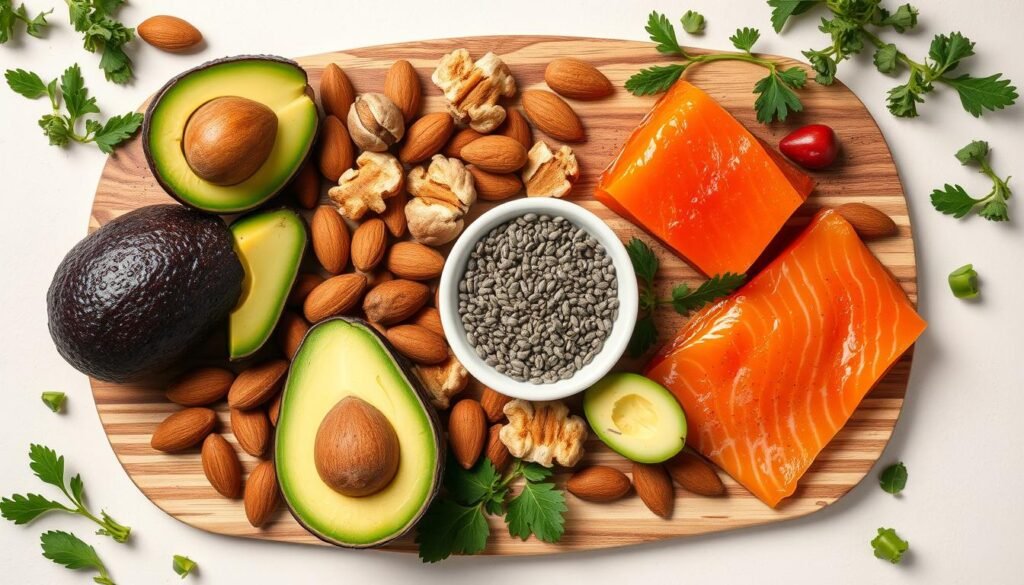
It’s important to know about fats for cholesterol control. Healthy fats help with heart health. Aim to use unsaturated fats and eat less saturated and trans fats. The oils you cook with affect your cholesterol levels.
Understanding Unsaturated vs. Saturated Fats
Unsaturated fats are in plant oils and fatty fish. They’re good for your heart. These fats lower bad LDL cholesterol and might boost good HDL cholesterol.
Main sources of unsaturated fats are:
- Olive oil
- Canola oil
- Safflower oil
- Avocados
- Nuts and seeds
Limits are key for saturated fats found in butter and meat. Try to keep these to about 10% of your daily calories. This helps your heart stay healthy and keeps cholesterol in check.
Which Oils to Use for Cooking
Picking the right oils for cooking is key for heart health. Good choices include:
| Cooking Oil | Type of Fat | Benefits |
|---|---|---|
| Olive Oil | Unsaturated | Reduces LDL, increases HDL |
| Canola Oil | Unsaturated | Heart-healthy, high smoke point |
| Safflower Oil | Unsaturated | Promotes healthy cholesterol levels |
Switching from saturated to healthier oils is wise. Adding omega-3-rich fish like salmon to your diet helps manage cholesterol. Being mindful of fat sources leads to better health choices and improved heart health.
Portion Control Strategies for Managing Cholesterol
Managing cholesterol is easier with effective portion control. Simple techniques can make a big difference. Mindful serving sizes help maintain a heart-healthy lifestyle.
Using Hands as a Measurement Tool
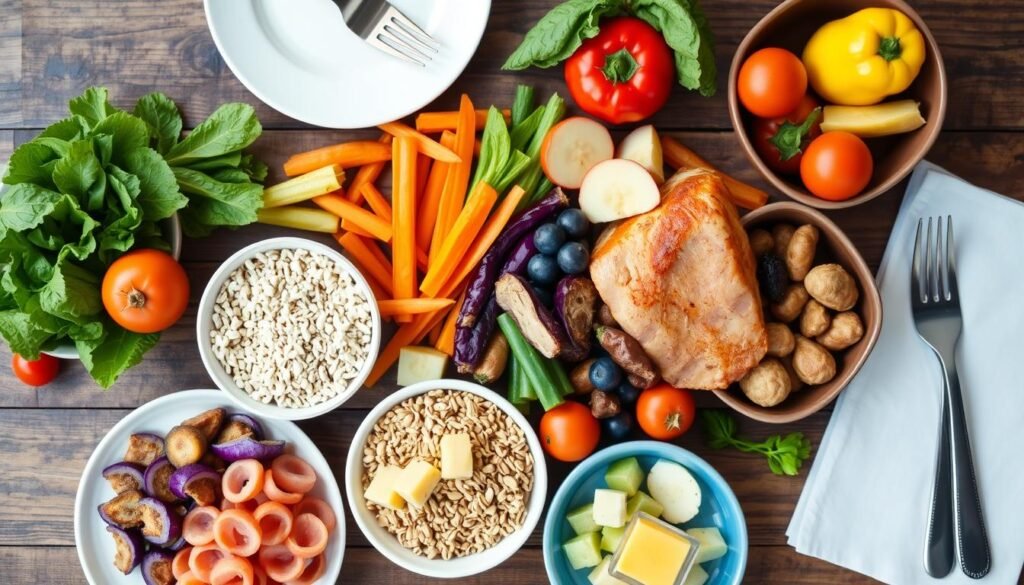
Your hands are great tools for measuring food. Use your palm to measure protein. A fist equals a serving of fruits or vegetables. This quick method helps avoid overeating.
Benefits of Smaller Plates and Bowls
Smaller plates and bowls can fool the brain. They make you think you’re eating more. This trick leads to satisfaction without the need to overeat. It’s a good way to manage cholesterol and eat healthily.
Cholesterol-Friendly Portion Sizes
Knowing what serving sizes are best is key to eating right and managing cholesterol. Learning the right portion sizes helps in making smart food choices. This impacts both your health and your weight.
For example, it’s best to eat 3-4 ounces of meat, 1-2 cups of vegetables, and 1 cup of fruit. These portion sizes are good for your cholesterol and your waistline.
Typical Serving Sizes for Various Food Groups
| Food Group | Recommended Serving Size | Examples |
|---|---|---|
| Vegetables | 2 cups daily | 1 cup raw or cooked, 2 cups leafy greens |
| Fruits | 2 cups daily | 1 medium fruit, 1 cup cut-up fruit, ½ cup dried fruit |
| Grains | 3-6 servings daily | 1 slice whole-grain bread, ½ cup cooked brown rice |
| Dairy | 3 servings daily | 1 cup milk, 1 cup yogurt, 1.5 ounces cheese |
| Protein | 2 servings daily | 1 ounce meat, ¼ cup beans or lentils |
| Fats and Oils | 2-3 servings daily | 1 teaspoon vegetable oil, 2 tablespoons light dressing |
Tips for Managing Snack Portions
- Stick to a small handful of nuts as a cholesterol-friendly snack.
- Choose whole fruits instead of fruit juices for better fiber intake.
- Use vegetable sticks with hummus for a nutritious option.
- Incorporate plain yogurt with fresh fruit for added nutrients.
- Monitor hunger and fullness cues to prevent overeating during snack times.
Eating Out Responsibly to Manage Cholesterol
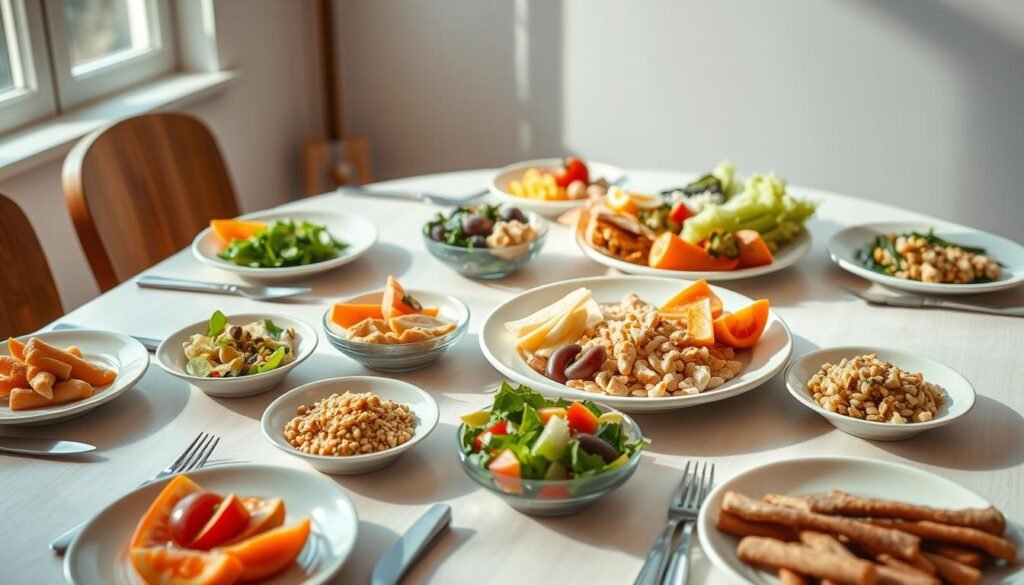
Dining out can be a joy but also a challenge for those watching their cholesterol. Restaurants often serve big dishes. These can be full of saturated fats and cholesterol, bad for your diet. But, if you’re careful with your choices and how much you eat, you can still enjoy dining out.
How to Navigate Restaurant Menus
Looking at restaurant menus? Search for healthier options that are good for managing cholesterol. Pick grilled or baked dishes instead of fried ones. Go for meals with lots of veggies, lean meats, and whole grains. These are the best choices for your heart. Feel free to ask the server about how the food is cooked and what’s in it. Many places are happy to help with dietary needs.
Portion Control Tips When Dining Out
Using portion control is key when eating out to keep a cholesterol-friendly diet. Here are some smart ways to do that:
- Ask for sauces or dressings on the side to use less.
- Choose smaller servings or share meals with friends.
- Get half of your meal boxed up before it comes to your table. This helps you not eat too much.
- Consider ordering appetizers as your main meal for smaller portions.
These strategies help you enjoy your meal out without losing track of your cholesterol goals. It makes managing portions easier.
| Food Item | Cholesterol (mg) | Recommended Serving |
|---|---|---|
| Chicken Liver | 315 | 1 serving (3 oz) |
| Prawns | 150 | 1 serving (3 oz) |
| Grilled Chicken Breast | 70 | 1 serving (3 oz) |
| Salmon | 60 | 1 serving (3 oz) |
| Vegetable Stir-Fry | 0 | 1 serving (1 cup) |
Implementing Portion Control in Daily Lifestyle
Adding mindful eating practices to your daily life can change how you handle food. It makes you aware of when you’re hungry or full. This helps in choosing the right amount of food. Making changes in your lifestyle for portion control is key to staying healthy and avoiding diseases.
Practicing Mindful Eating
Mindful eating means enjoying every bite and listening to your body. It stops you from eating too much, especially with leftovers around. By dishing out right-sized meals and not eating from packages, you cut down on snacking. Tools like “Lose It” or “My Plate” help keep track of calories and nutrients, supporting mindful eating.
Strategies to Avoid Snacking on Leftovers
Pre-portioning meals helps control your eating later. Choosing smaller dishes when out helps too. Either take half your meal home or get a small dish. These steps help with portion control. Eating at least five servings of fruits and veggies each day can also reduce cholesterol. Look at the table below for the right portion sizes.
| Food Group | Recommended Portion Size |
|---|---|
| Fruits | 1 medium piece or 1/2 cup chopped |
| Vegetables | 1 cup raw or 1/2 cup cooked |
| Whole Grains | 1 slice of bread or 1/2 cup cooked pasta/rice |
| Lean Meats | 3 ounces (about the size of a deck of cards) |
| Beans/Lentils | 1/2 cup cooked |
| Nuts/Seeds | 1 ounce or a small handful |
The Role of Exercise in Cholesterol Management
Exercise is key for managing exercise and cholesterol. It greatly affects your lipid profiles, making your cholesterol healthier. Studies show that being active improves LDL-cholesterol in many ways and boosts HDL-cholesterol for your heart’s health.
How Physical Activity Affects Cholesterol Levels
Exercise has proven benefits for cholesterol, no matter your diet. Activities like walking or cycling help lower bad fats and improve good cholesterol. Doing moderate exercise for 30 minutes, five days a week, works best.
Staying active also helps with weight control, which is good for managing cholesterol. Losing just 10 to 20 pounds can make a big difference in lowering bad cholesterol levels. Not smoking and limiting alcohol raises good cholesterol, aiding heart health.
Recommended Activities for Heart Health
There are many fun ways to keep your heart healthy:
- Brisk walking or jogging
- Swimming or water aerobics
- Cycling, whether outdoors or on a stationary bike
- Group fitness classes, such as Zumba or spinning
- Dancing or aerobic workouts
Varying your activities keeps exercise interesting and helps you stay on track. Following the American Heart Association’s advice for exercise can greatly improve your cholesterol levels.
Conclusion
Managing cholesterol with diet involves heart-healthy portion control. Knowing how portion sizes impact health helps people make better diet choices. Studies show that using portion-control tools can lower calorie intake significantly.
A heart-healthy diet and good portion control can improve your weight and heart health. Research found that after a year, people lost weight and ate better by being mindful. Staying active and eating carefully helps keep cholesterol in check.
A healthy food relationship is key to managing cholesterol well. It leads to a better life quality. With mindful eating and control over portion sizes, heart health is achievable.