Over 50,000 people took part in the Danish Diet, Cancer, and Health Study. It revealed an amazing link between eating vegetables and a healthy heart. Those who ate lots of nitrate-rich vegetables like leafy greens had a much lower risk of heart disease.
Leafy greens don’t just bring few calories to the table. They are also full of vital nutrients that help manage cholesterol levels. Adding foods like spinach, kale, and broccoli to your diet can help keep your cholesterol in check. This article will dive into how leafy greens and cholesterol are related. It will show why these veggies are key to a diet that keeps your heart running well.
Key Takeaways
- Over 50,000 participants in a major study linked leafy greens to heart health.
- Consuming nitrate-rich vegetables can lower heart disease risk by 12-26%.
- Just one cup of raw or half a cup of cooked greens daily can greatly benefit cardiovascular health.
- Leafy greens contribute to cognitive function, with their effects comparable to a younger mind.
- Kale and other greens are rich in essential vitamins and minerals for overall health.
- Regular intake promotes digestive health and helps regulate blood glucose levels.
- Leafy greens aid in detoxification, supporting the body’s natural processes.
The Importance of Cholesterol Management
It’s crucial to manage cholesterol for good health. High LDL cholesterol ups your heart disease and stroke risk. As of 2020, about 86 million U.S. adults had high cholesterol, says the CDC. It’s important to know HDL is good and LDL is bad cholesterol.
Eating right helps manage cholesterol levels. Studies show certain foods can lower LDL cholesterol. For example, a 2015 study found eating avocados daily reduced LDL. A 2021 study showed legumes beat white rice at lowering LDL too.
Eating fatty fish, nuts, fruits, and whole grains can better your cholesterol. Fatty fish, for instance, raises HDL and lowers LDL. This helps decrease heart risk. Fiber-rich foods stop the body from absorbing too much cholesterol and fat. This highlights a healthy diet’s role in cholesterol control.
If you’re curious about leafy greens and cholesterol, research shows they may help. They bind bile acids and help rid the body of cholesterol. This could be a smart dietary move for heart health.
| Food Type | Benefit | Reference |
|---|---|---|
| Avocado | Lowers LDL cholesterol | 2015 Study |
| Legumes | Significantly reduces LDL cholesterol | 2021 Study |
| Fatty Fish | Increases HDL, decreases LDL | 2022 Review |
| Whole Grains | Prevents cholesterol absorption | 2016 Review |
| Nuts | 30% lower risk of cardiovascular disease | 2016 Review |
Understanding LDL Cholesterol
It’s very important to know about LDL cholesterol for a healthy heart. LDL cholesterol is seen as the bad type because it collects in arteries. This can cause blockages and lead to heart problems. Keeping LDL levels below 100 mg/dL helps avoid these issues.
Many things affect your body’s cholesterol. Eating lots of red meat and processed foods raises your LDL cholesterol. But, eating leafy greens and healthy foods helps manage it. Foods that are good for you have nutrients that help keep cholesterol in check.
The American Heart Association says adults should check their cholesterol every four to six years, starting at age 20. They recommend keeping total cholesterol under 200 mg/dL. Also, high triglycerides, over 150 mg/dL, are bad for the heart.
Your lifestyle choices play a big part in your LDL cholesterol levels. Being active, eating right, and checking your cholesterol helps a lot. Knowing about LDL cholesterol is key to planning a heart-healthy life.
| Cholesterol Type | Optimal Level | Risk Level |
|---|---|---|
| LDL Cholesterol | Less than 100 mg/dL | 130 mg/dL and above |
| Total Cholesterol | Less than 200 mg/dL | 240 mg/dL and above |
| HDL Cholesterol | 60 mg/dL and higher | Below 40 mg/dL (men) or 50 mg/dL (women) |
| Triglycerides | Less than 150 mg/dL | 150 mg/dL and above |
Leafy Greens and Cholesterol: The Surprising Connection
Leafy greens are magic for our cholesterol levels. Packed with vitamins and minerals, they fight bad LDL cholesterol. Their high fiber helps lower this cholesterol, making them key for a heart-healthy diet.
How Leafy Greens Impact Cholesterol Levels
Eating leafy greens helps control cholesterol. They’re low in calories but full of nutrients. They reduce cholesterol absorption and aid in lowering total levels.
Leafy greens also promote good digestion and weight maintenance, vital in heart disease prevention. Spinach, kale, and Brussels sprouts, full of vitamins A, C, K, iron, magnesium, and calcium, are great choices for slashing LDL cholesterol.
Why LDL Cholesterol Matters for Heart Health
LDL cholesterol is a big red flag for heart health. High levels mean a higher risk of heart disease and stroke. A leafy greens-rich diet is crucial in controlling these levels.
Antioxidants in these vegetables cut down on heart disease and more. Knowing the tie between LDL and heart health pushes us towards better eating habits.
| Green Vegetable | Calories (kcal per serving) | Fiber (g) | Vitamins | Minerals |
|---|---|---|---|---|
| Spinach | 23 | 2.2 | A, C, K | Iron, Magnesium |
| Kale | 33 | 3.6 | A, C, K | Calcium, Iron |
| Brussels Sprouts | 38 | 3.8 | C, K | Iron, Potassium |
Leafy greens do more than just lower LDL cholesterol. They also strengthen our hearts. So, they’re essential for keeping our hearts running well.
Benefits of Leafy Greens in a Heart-Healthy Diet
Eating leafy greens every day can do wonders for your heart. They’re packed with good stuff that your heart loves. Making them a key food for a healthy heart.
Nutritional Profile of Leafy Greens
Leafy greens are rich in essential nutrients. They have vitamins A, C, E, and K, and minerals like calcium and iron. These help with immunity and keeping your eyes healthy. Adding spinach, kale, and Swiss chard to your diet can cut down heart disease risks.
Antioxidants and their Role in Heart Health
Antioxidants in leafy greens are great for the heart. They fight stress and inflammation, which can lead to heart disease. Eating these greens often can lower the risk of heart problems. They clean up harmful oxygen in our bodies. This shows how vital leafy greens are for preventing heart disease.
Cholesterol-Lowering Foods: The Role of Leafy Greens
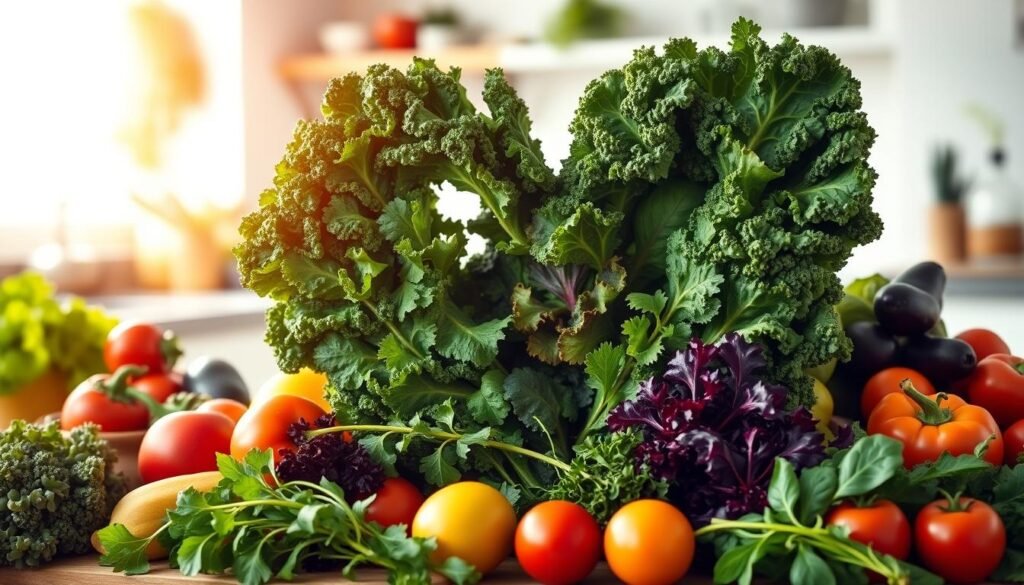
Eating foods that lower cholesterol is key for heart health. Leafy greens are superstars because of their fiber. They are important for keeping cholesterol down, a must-have in a heart-healthy diet.
Fiber Content and Cholesterol Absorption
Leafy greens like kale and spinach are high in fiber, which manages cholesterol. This fiber grabs onto cholesterol in the gut, preventing it from entering our blood. It lowers “bad” LDL cholesterol. Broccoli and Brussels sprouts also offer fiber and nutrients for heart health.
Vitamins and Minerals That Support Heart Health
Leafy greens have essential vitamins and minerals, such as potassium, magnesium, and calcium. These help with blood pressure and heart muscle function. Potassium, for instance, helps manage blood pressure levels. Adding these veggies to your diet helps follow a balanced diet plan, reducing heart disease risk. For more dietary advice, check out foods that help with cholesterol.
Incorporating Leafy Greens into Your Diet
Adding leafy greens to your daily meals is a smart move for better nutrition. They allow for creative cooking and offer health benefits. Plus, these greens fit easily into any schedule.
Easy Ways to Add Greens to Meals
It’s both enjoyable and beneficial to include leafy greens in your diet. Here are some fun ideas:
- Add a handful of spinach to a morning smoothie.
- Include kale or Swiss chard in soups and stews for added texture and nutrition.
- Use collard greens as healthy wraps instead of traditional bread for sandwiches.
- Incorporate watercress into salads for a fresh, peppery kick.
- Mix beet greens into grain bowls or stir-fries for a nutrient boost.
Leafy Greens Recipes for Cholesterol Management
Leafy greens are at the heart of recipes that help manage cholesterol, and they taste great. Try these nourishing dishes:
| Recipe | Main Ingredients | Key Benefits |
|---|---|---|
| Kale Salad with Lemon Dressing | Kale, lemon juice, olive oil, avocado | Rich in vitamin K, supports heart health |
| Spinach and Feta Stuffed Chicken | Spinach, feta cheese, chicken breast | High protein, low fat, promotes healthy cooking |
| Collard Greens Stir-Fry | Collard greens, garlic, bell peppers, tofu | Packed with antioxidants, helps with cholesterol |
| Beet Greens Quiche | Beet greens, eggs, cheese, whole grain crust | Nutrient-dense, aids in digestion |
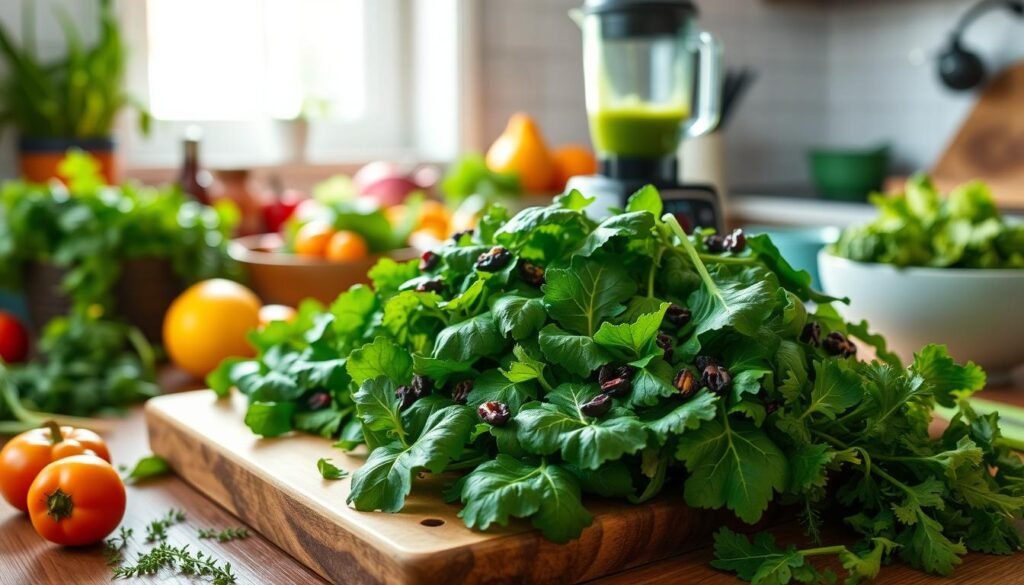
Choosing a diet rich in leafy greens opens up many tasty possibilities. It also boosts your health and wellness. These ideas and recipes make it easy to enjoy more greens, improve cholesterol, and increase nutrients in your meals.
Other Cholesterol-Friendly Veggies
Adding different cholesterol-friendly veggies to your diet makes meals tastier and healthier. Veggies like kale, spinach, and collard greens are great for your heart. Eating a variety of vegetables often can lower bad cholesterol levels.
Comparative Benefits of Various Leafy Greens
Leafy greens have their own ways to help manage cholesterol. Let’s look at some top choices:
| Leafy Green | Benefits |
|---|---|
| Kale | Rich in antioxidants, aids in lowering LDL cholesterol levels. |
| Spinach | High in fiber and vitamins that contribute to improved heart health. |
| Collard Greens | Excellent source of calcium and fiber, helping in cholesterol reduction. |
| Brussels Sprouts | Contains compounds that support lower cholesterol and overall well-being. |
| Broccoli | High in vitamins and antioxidants that can lower LDL levels. |
How to Combine Greens with Other Heart-Healthy Foods
Eating greens with other healthy foods can make them even better for your cholesterol. Here are some ways to do that:
- Mix leafy greens with whole grains like quinoa or brown rice for a nutritious base.
- Incorporate lean proteins such as chicken or fish to create well-rounded meals.
- Top salads with healthy fats like avocados or nuts to enhance flavor and nutrient absorption.
- Add legumes such as beans or lentils for a fiber boost, which aids in cholesterol reduction.
Check out more tips on combining heart-healthy foods with leafy greens to enhance your diet.
Common Misconceptions About Leafy Greens and Cholesterol
There are many wrong ideas about leafy greens and their effect on cholesterol. People often think all green veggies help with cholesterol the same way. This leads to confusion on which ones are good for the heart. Knowing the truth about these myths is key to using greens in a diet the right way.
Debunking Myths Around Green Vegetables
Many believe eating any green veggies will improve cholesterol levels. This isn’t true, as not all greens work the same. For example, some may have compounds that don’t help lower cholesterol at all.
- Myth 1: “All leafy greens are low in calories and cholesterol.” Yes, many are low in calories. But it’s important to watch out for added fats or dressings.
- Myth 2: “Green vegetables solely lower cholesterol.” In fact, greens work best when eaten with fruits, whole grains, and fats that are good for your heart.
- Myth 3: “Cooking leafy greens eliminates all benefits.” Actually, while cooking might lower some good nutrients like nitrates, many benefits still stay.
Misunderstandings about leafy greens can mislead us in our diet choices. Knowing the facts helps in making smart decisions. Below is a table that compares different greens and their effects on cholesterol:
| Leafy Green | Nutritional Benefits | Cholesterol Impact |
|---|---|---|
| Spinach | High in nitrates and antioxidants | May help lower LDL cholesterol |
| Kale | Rich in vitamins A, C, K | Supports overall heart health |
| Swiss Chard | Contains dietary fiber | May reduce cholesterol absorption |
| Romaine Lettuce | Low in calories, high in vitamins | Minimal direct impact on cholesterol |
The myths about leafy greens and cholesterol highlight the importance of knowing the facts. By understanding which greens truly benefit cholesterol, we can eat better. This will support heart health and proper cholesterol management.
How Lifestyle Choices Affect Cholesterol Levels
It’s key to know how lifestyle choices impact your cholesterol. Eating right is crucial. Leafy greens and nutritious foods help lower cholesterol. By choosing what to eat wisely, you can keep your cholesterol in check and boost your health.
The Importance of a Balanced Diet
Eating fruits, veggies, whole grains, and healthy fats is what a heart-healthy diet is all about. These foods are full of nutrients and fiber that help manage cholesterol. Greens are super important for antioxidants and vitamins. They are key to good cholesterol levels. Mixing these foods into your diet is a big step toward heart health. For more tips on eating right, check out this article.
Exercise and Its Role in Cholesterol Management
Regular exercise is also a big deal for cholesterol. Working out can up your good cholesterol while cutting down the bad. Walk, bike, or swim to keep your heart strong. By staying active and eating well, you tackle cholesterol from all sides.
Monitoring Your Cholesterol Levels
Knowing about your health means keeping an eye on cholesterol levels. This helps you understand your heart health. It also lets you know what changes you need in your diet and lifestyle. You should know the right time to check cholesterol, as it affects the results you get.
When to Check Your Cholesterol
Start checking cholesterol at 20 years old. After that, adults should check their cholesterol every four to six years. This depends on their heart disease risk factors. If you have conditions like diabetes or a family history of heart disease, you might need to check it more often. Regular checks help you make smart choices for managing cholesterol.
Understanding Your Cholesterol Test Results
Understanding your cholesterol test can be tough. But it’s important for making good health decisions. A typical test checks your total cholesterol, LDL, HDL, and triglycerides. To stay healthy, here are the numbers you want to hit:
| Cholesterol Type | Desirable Level (mg/dL) |
|---|---|
| Total Cholesterol | Less than 200 |
| LDL (Bad Cholesterol) | Less than 100 |
| HDL (Good Cholesterol) | 60 or higher |
| Triglycerides | Less than 150 |
With these numbers in mind, you can change your diet to manage cholesterol better. For example, eating more leafy greens helps. For more help, check out this resource on understanding cholesterol test results.
Advice from Nutritionists on Leafy Greens
Nutritionists stress the value of leafy greens for a healthy diet. These veggies are packed with nutrients and boost health. By following nutritionist advice on leafy greens, you can maximize their benefits.
Expert Tips for Maximizing Nutritional Benefits
Here are some recommendations to get the most out of leafy greens:
- Raw or Cooked: Eating them raw preserves most vitamins, but cooking them can make some nutrients easier to absorb.
- Variety is Key: Mix up your greens like kale, spinach, and collard greens. This way, you get lots of different nutrients.
- Pair with Healthy Fats: Adding healthy fats, such as olive oil, helps your body take in the vitamins in greens.
- Season Wisely: Mustard powder can make cooked greens even healthier by boosting their ability to fight cancer.
What to Look for in Leafy Greens at the Store
When picking leafy greens, make quality and freshness your top criteria. Here’s what to keep an eye out for:
- Color: Choose greens with rich, deep colors. That means they’re full of nutrients.
- Texture: Greens should be crisp, not wilted or turning yellow.
- Size: Smaller leaves tend to be tender, while larger ones might be tougher.
By following these guidelines on leafy greens and learning how to pick them, you’ll eat healthier. Including a variety of greens in your diet supports well-being and lowers chronic disease risk.
Conclusion
Research shows leafy greens significantly impact cholesterol and heart health. Studies found that eating these vegetables can reduce heart disease risk by 15.8%. This makes green veggies key for wellness and not just for managing cholesterol.
Experts suggest we eat 5 to 7 servings of fruits and veggies each day, focusing on leafy greens like kale and spinach. These greens are full of nutrients, fiber, and antioxidants. They help the heart and do much more for our health.
To better our heart health, we should start with simple steps. Adding more greens to our meals is an easy way to control cholesterol. By choosing these foods, we’re taking a big step towards living healthier.