Did you know up to 80% of patients forget what their doctor says immediately after leaving? This shows a big problem in healthcare: good communication between patients and providers is key. The Accreditation Council for Graduate Medical Education states that skills in talking and listening are vital for doctors to get good results for patients. Bad communication can lead to not understanding treatment plans, being unhappy, and even legal issues. With more focus on patient happiness as a sign of good healthcare, better talks between patients and providers can greatly improve health discussions.
It’s very important to know how to talk about your health needs with your provider for better results. Having open talks helps patients share their worries and what they prefer. Providers can then explain things more clearly. By putting the patient first in talks, we can close the gap between patients and healthcare providers. This makes for a nicer and more effective healthcare environment.
Key Takeaways
- Effective communication is critical for patient satisfaction and improved health outcomes.
- Interpersonal skills and active listening are crucial in healthcare interactions.
- Understanding health needs enhances dialogue between patients and providers.
- Open communication can reduce misunderstandings and improve treatment adherence.
- Patients with better communication experiences are more likely to engage in their care.
The Importance of Effective Patient-Provider Communication
Effective communication between patients and doctors is key in healthcare. It greatly affects a patient’s experience and health outcomes. Clear communication helps patients follow medical advice and builds trust.
Bad communication can have serious effects. This highlights the need for good communication skills in healthcare. Poor communication can lead to medical errors and lower satisfaction. Studies show that patients with communication problems are more at risk.
Impact on Patient Outcomes and Satisfaction
Good patient-doctor talks lead to better health outcomes. Studies confirm that clear conversations improve treatment following, thus raising satisfaction. When patients understand their health situations and treatments well, they take an active part in care. This improves health. Health programs that train providers help make these conversations better.
Consequences of Poor Communication
Poor communication in healthcare can be very harmful. It can cause wrong diagnoses and wrong medication being given. This can upset patients a lot. These mistakes can even result in legal problems for health workers. Showing how vital good communication is. To solve this, it’s important to understand and tackle barriers like language and literacy. Tools and trained interpreters can help make sure everyone gets good care.
| Consequences of Poor Communication | Potential Impacts |
|---|---|
| Misdiagnosis | Delays in treatment and worsening conditions |
| Medication Errors | Adverse drug reactions and complications |
| Increased Emotional Distress | Higher levels of anxiety and dissatisfaction |
| Legal Repercussions | Potential lawsuits and financial liabilities |
It’s crucial to include good communication practices in health systems. As health organizations aim to better care quality, focusing on communication importance is key. This ensures the safety and happiness of patients.
Understanding Patient-Centered Care Communication
Good communication in healthcare is key to the best patient outcomes. It focuses on understanding what patients need for their health. It also helps build strong bonds between patients and healthcare workers. By encouraging patients to take part in making decisions about their care, this approach is very important. Here are some main ideas that shape this type of communication.
Key Principles of Patient-Centered Communication
Several important ideas form the base of patient-centered care communication:
- Empathy: Healthcare workers need to show they truly care about how patients feel and what they go through.
- Active Listening: It’s vital for them to really listen to patients. They should give feedback that shows they understand each patient’s unique view.
- Shared Decision-Making: Working together is key. Patients should feel free to share what they want and be part of their treatment plans.
- Respect and Dignity: Being treated with respect makes patients feel safe. Then, they’re more likely to open up about their thoughts and feelings.
Using these important ideas, healthcare workers can talk better with patients. This leads to happier patients who follow their treatment plans. You can learn more about patient-centered care communication in this resource.
Building Rapport with Healthcare Providers
It’s very important to build a good relationship between healthcare providers and patients. Good relationships between nurses and patients are the foundation of great care. When patients are comfortable, they share important info. This helps create care plans that really fit them. Ways to build good rapport include:
- Establishing Trust: Making patients feel safe and respected encourages them to talk openly.
- Nonverbal Communication: How we use body language and make eye contact matters a lot in communication.
- Consistent Interaction: Talking regularly and meaningfully with healthcare providers improves patient relationships.
- Addressing Concerns: Paying attention to and acting on what patients need helps build stronger connections.
Even with challenges like not enough nurses and limited time, there are ways to build better communication. Focusing on patient-centered communication helps patients stay involved in their health care journey.
How to Communicate Health Needs to Providers
Talking about health needs with providers is key to getting the best care. Knowing how to share these needs makes the healthcare experience better. It’s important to pinpoint health issues. These can range from physical symptoms to concerns about one’s lifestyle.
Identifying Your Health Needs
Knowing your health needs is crucial for good talks with your doctors. Before appointments, gather your health insurance info, medical history, past tests, medications, and family health background. This detailed info helps your provider address your concerns more easily and makes your visit smoother.
Effective Techniques for Dialogue
Good dialogue methods lead to better talks during medical visits. Here are tips to improve communication:
- Bring a pen and paper to jot down vital info or tape the talk.
- Have a friend or family member come with you for support during appointments.
- Be honest about symptoms or worries to direct your provider in caring for you properly.
- Tell your doctor about any daily routines you struggle with, like bathing or getting dressed.
- Share your past medical care and treatment to provide a complete health picture.
Promoting open talks and asking for clarifications when confused is important. Requesting detailed explanations about medications and treatments or asking for written follow-up care instructions makes for clear communication. This approach strengthens patient confidence and improves healthcare interactions.
Managing LDL cholesterol levels effectively with your doctor is essential for good heart health.

Healthcare Communication Techniques to Enhance Clarity
Effective healthcare communication is key between patients and providers. Patients often struggle to express their concerns. Active listening and clear language make an environment that encourages talking.
Understanding and using clear language helps improve how we talk to each other. This is important for better communication.
Active Listening and Reflection
Active listening is crucial in talking to patients. It means truly hearing what they say, not just waiting to respond. Providers show they care by listening well.
The BATHE method is useful. It covers Background, Affect, Troubles, Handling, and Empathy. It leads to deep talks and builds trust. Providers can better understand what patients are worried about.
Using Clear and Concise Language
Clear language avoids confusion from hard medical terms. It makes sure patients understand vital details. Speaking clearly and correctly is key.
Adapting your tone for the person you’re talking to helps. Nonverbal cues like nodding and eye contact show you’re listening. This avoids mistakes and betters patient care.

Addressing Health Concerns with Healthcare Professionals
Good communication is key to great healthcare outcomes. Knowing the usual communication roadblocks helps in better discussing health issues with doctors. These often include language gaps, feeling upset, and not understanding medical terms. It’s crucial for both patients and doctors to recognize and tackle these barriers first.
Recognizing Common Communication Barriers
Things like broken systems and not enough staff pose big challenges. For instance, a study by the NIH shows that 27% of medical mistakes are due to communication failures. The University of Maryland found that such issues cost the U.S. healthcare $12 billion a year. This is worse where nurses have too many patients, reducing their patient interaction time. Also, cultural and language differences widen the gap in healthcare quality, especially for those on the fringes of society.
Strategies for Overcoming Obstacles
To break down communication barriers, a detailed plan is necessary. Training in sensitivity and special programs helps providers manage differences better. Plus, a focus on patient care builds trust and teamwork. Using tech also helps a lot; it makes talking easier and helps patients stick to their treatments. Good communication strategies boost healthcare quality and lead to better health.
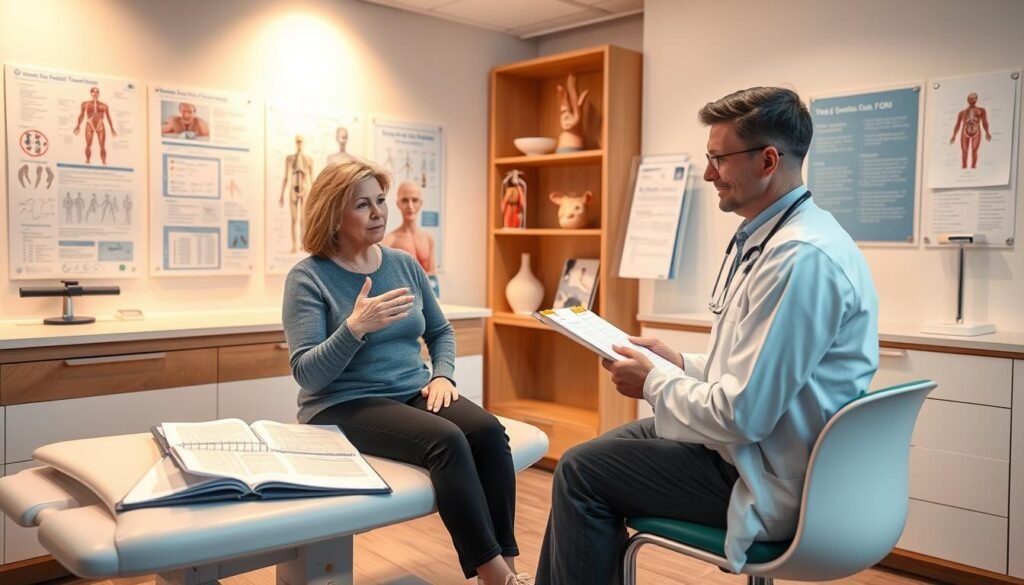
Improving Communication in Healthcare Settings
Effective communication is key to better care in healthcare settings. It can change the patient experience for the better. By using structured communication, healthcare providers and patients can understand each other better. This leads to more satisfaction and better health results.
Transforming the Patient Experience
Patient respect, dignity, and empathy are essential. A report shows that nearly 60% of patients seek understanding from their healthcare providers. Showing empathy builds trust and openness. Also, effective communication makes medical terms easier to understand. This is important because only 12% of Americans fully understand health information.
- Using education materials at a 5th to 8th-grade level can improve patient comprehension.
- When patients feel heard and valued, they have a better opinion about the care they receive.
- Letting patients help decide on their care boosts their confidence and engagement.
Role of Technology in Communication
Technology is essential in today’s healthcare communication. Around 75% of American adults have smartphones. This opens up opportunities to use mobile apps for direct messaging. Telehealth and patient portals make it easy to share information. They keep patients involved in their healthcare. Using these tech tools can reduce confusion and make communication simpler and more efficient.
- Call center services in healthcare help prevent misunderstandings and make patient interactions smoother.
- Apps for healthcare staff support instant communication within the team.
- Better communication methods cut down on confusion, improving the patient experience.
Patient Advocacy Strategies for Effective Communication
Navigating the healthcare system can be tough for many. Using patient advocacy strategies is key to help people understand their rights and responsibilities. With the right support, patients can engage better with healthcare providers. This leads to a better experience and outcomes.
Understanding Your Rights as a Patient
Knowing your rights is key for good communication in healthcare. You have the right to ask questions, get second opinions, and be part of your treatment plan. Using these rights helps you talk better with your doctors. This ensures you know about your health and treatment options well. Understanding your rights, like getting care with respect, helps improve your health results. For more on patient advocacy, see this resource.
The Significance of Family Involvement
Having family involved in healthcare makes the patient experience better. It improves talking between patients and doctors. When family comes to appointments, they offer support and help speak up about worries. This can reduce stress, making it easier to talk openly. Healthcare workers can then meet patients’ needs better when families help talk about treatment plans. This makes sure everyone understands the plan. Loved ones’ engagement not only improves communication but also gives patients support through shared information and teamwork.
Enhancing Health Dialogue with Providers
Creating a good health conversation between patients and providers is key to better outcomes. It’s crucial for patients to speak openly for better understanding and care. Providers can use certain strategies to make informative talks more common.
Tips for Encouraging Open Conversations
Good talk leads to patients who get and like their care more. Here are tips to make openness easy:
- Schedule enough time for meetings so everything can be talked about.
- Create a friendly space where patients aren’t afraid to share their worries.
- Be clear about what will happen in every visit.
- Use the teach-back method to check if patients understand.
- Ask for patient feedback to make care better.
Tools for Feedback and Improvement
Effective feedback tools can really help how we talk in healthcare. These tools make conversations better:
- Surveys to learn what patients think of their care.
- Online platforms for patients to give anonymous thoughts.
- Programs that teach staff how to communicate well.
Conclusion
Improving communication between patients and their healthcare providers is key for better patient outcomes and satisfaction. Good communication makes patients feel valued and comfortable to share their health concerns. This leads to deeper discussions that greatly affect their healthcare journey. Studies have shown that using both talking and non-talking strategies helps improve patients’ lives significantly.
It’s also important to focus on older adults’ communication needs due to age-related challenges they face. Enhancing these strategies boosts patient happiness and promotes adherence and emotional well-being. We can close the communication gap through this, enhancing the overall care experience.
To conclude, making a dedicated effort to share health needs and use proven communication tactics can greatly improve healthcare quality. Future studies should delve into the details of how patients and providers interact. This will help discover new ways to meet the needs of different patients.