Did you know that nearly 2 in 5 American adults have high cholesterol? This startling statistic highlights the need to understand cholesterol-rich foods like eggs and shellfish. It’s important considering the effect on our health. As science moves forward, we learn more about how dietary cholesterol affects heart health and our lifespan. This guide aims to show the value of adding these foods to a meal plan wisely. We will look at which choices are good for you and which ones to be careful with.
Dietary cholesterol is a complex topic. Some studies link high cholesterol food intake to health risks. But it’s not just about how much you eat. It’s crucial to know the difference between cholesterol-heavy foods like eggs and shellfish and those harmful to health. The evidence gives a balanced view, suggesting moderation and smart choices in our diet. To learn more about handling cholesterol, visit this guide.
Key Takeaways
- Understanding the role of dietary cholesterol is crucial for heart health.
- Eggs and shellfish are nutrient-dense and can fit into a balanced diet.
- Moderation is key when it comes to consuming cholesterol-rich foods.
- Research continues to evolve on how dietary choices influence cholesterol levels.
- Making informed dietary decisions is vital for maintaining overall health.
Understanding Cholesterol: An Overview
Understanding Cholesterol is important for heart health. It acts as a crucial building block in our body, especially for hormones and cell walls. It’s a waxy substance made in the liver and found in meat and dairy. Knowing the difference between the cholesterol in food and in blood helps us choose better diets.
What is Cholesterol?
Cholesterol is a fat-like molecule needed for several body processes. It helps make hormones, vitamin D, and substances that digest food. Our bodies need it, but too much can be harmful. Cholesterol travels in our blood, affected by what we eat and how our liver works.
Types of Cholesterol: HDL vs. LDL
There are two main kinds of cholesterol: HDL and LDL. HDL is called “good” cholesterol because it helps remove cholesterol from arteries, taking it back to the liver. On the other hand, LDL is the “bad” type. High LDL levels can cause artery plaque, raising heart disease risks.
A balance between HDL and LDL helps keep our hearts healthy. More HDL can lessen problems from high LDL levels. Diet, exercise, and genes all play a part in this balance.
| Type of Cholesterol | Importance |
|---|---|
| HDL (High-Density Lipoprotein) | Supports cardiovascular health by removing cholesterol from arteries. |
| LDL (Low-Density Lipoprotein) | Excess levels can lead to plaque buildup and increased heart disease risk. |
Cholesterol-Rich Foods (Eggs, Shellfish) and Their Impact
Eggs and shellfish are linked to blood cholesterol. It’s vital to understand this link for a healthy cholesterol level. Some worry about dietary cholesterol’s effect on blood cholesterol too much. Studies show that these foods don’t usually change blood cholesterol much in a balanced diet.
Dietary Cholesterol vs. Blood Cholesterol
Dietary cholesterol is mostly from animal products like eggs and shellfish. An egg has about 372 mg of cholesterol. This is about 60% of what you need daily. A 3-ounce serving of shrimp has more than half the daily recommended amount. People react differently to dietary cholesterol. Research shows dietary cholesterol’s effect on blood levels is small compared to saturated fats in processed meats and full-fat dairy.
How Dietary Cholesterol Affects Health
Looking at Cholesterol-Rich Foods’ overall diet impact is key. Eggs and shellfish provide key nutrients and protein with little saturated fat. Lean meats like liver have more cholesterol but less saturated fat. This is unlike foods high in both cholesterol and saturated fats, which increase heart disease risks.
Experts suggest eating cholesterol-rich foods in moderation. You can have up to four egg yolks or two shellfish servings weekly for a healthy heart. Eating two to three servings of fish and shellfish a week helps maintain good cholesterol levels. Shrimp and crab offer lean protein, are low in calories, and have good fats. They’re great for a balanced diet.
The Nutritional Value of Eggs
Eggs are a great source of important nutrients that help keep us healthy. They are filled with good stuff, which is why many people love them. Their benefits of eggs make them a favorite in different diets.
Cholesterol Content in Eggs
One large egg has about 200 mg of cholesterol. But recent studies show they’re okay to eat in a balanced diet. They don’t raise heart disease risks. The American Heart Association says eating one egg daily is fine for heart health. And for healthy seniors, two eggs a day is okay.
Health Benefits of Eggs
Eggs pack a powerful nutritional punch. They have high-quality protein, vitamins, and minerals. Adding eggs to a diet rich in veggies, fruits, grains, low-fat dairy, and lean meats can boost nutrition. This supports many body functions.
Eggs and Heart Health
Eating eggs in moderation is good for keeping cholesterol in check. Health groups like the Canadian Cardiovascular Society don’t restrict eggs for healthy adults. Instead of cutting down on eggs, it’s better to replace saturated fats with unsaturated ones. This helps lower bad cholesterol more effectively.
Research hasn’t found a strong link between eating eggs daily and higher cholesterol or heart disease risks. This is true even for people who eat a lot of eggs.
| Nutritional Component | Per Large Egg |
|---|---|
| Cholesterol | 200 mg |
| Protein | 6 g |
| Vitamin D | 41 IU |
| Vitamin B12 | 0.6 mcg |
| Iron | 0.9 mg |
Eggs are full of needed nutrients and fit into a heart-healthy diet. They support a healthy lifestyle. And they do this without harming our heart health.
The Nutritional Value of Shellfish
Shellfish are filled with nutrients that make them a great addition to your diet. They include shrimp, crab, and oysters which are low in bad fats. But, they’re high in cholesterol. Still, their nutritional value won’t hurt your heart if you eat them right.
Cholesterol Content in Shellfish
Different shellfish have different amounts of cholesterol. For example, a 3-ounce serving shows these levels:
| Type of Shellfish | Cholesterol (mg) |
|---|---|
| Clams | 27 |
| Oysters | 27 |
| Blue Crab | 32 |
| Shrimp | 57 |
| Scallops | 22 |
Prawns have more, about 210 mg per 140 g. But, most people eat less than 300 mg of cholesterol a day. This shows shellfish can match dietary guidelines well.
Health Benefits of Shellfish
Shellfish have great health perks. Shrimp and crab, for example, are loaded with omega-3 fatty acids. These good fats help your heart by lowering the bad cholesterol. They also give you vital vitamins and minerals for better health. Eating them smartly is key to a healthy diet.
Shellfish and Healthy Diet
Adding shellfish to your meals is a good idea. It’s good for your heart because it has little trans fats and lots of omega-3s. If you have health concerns like familial hypercholesterolemia, eat them in moderation. Balancing your diet lets you enjoy shellfish while benefiting from its nutrients. To learn more about managing cholesterol, check out this article on the importance of what you eat.

High Cholesterol Diet: Myths and Facts
It’s important to know the truth about a high cholesterol diet. Many people mix up myths and facts about dietary fat and cholesterol. It’s a myth that eating cholesterol raises blood cholesterol a lot. Studies show this isn’t true. Recent guidelines have stopped recommending a limit of 300 mg/day of dietary cholesterol. This change lets people rethink their diets.
Dispelling Common Myths
Some think they must avoid all high-cholesterol foods. But some foods high in cholesterol, like eggs, have little saturated fat. An egg has just 1.56 grams of saturated fat. Also, eggs are packed with nutrients and offer choline, which many Americans need more of.
Understanding Saturated Fats
The topic of understanding saturated fats is key to managing cholesterol. Limiting trans fats, found in processed foods, is important. The discussion about saturated fats is complex. The American Heart Association suggests eating more fruits, veggies, grains, and lean proteins instead of foods high in saturated fat. This advice can guide better food choices and boost heart health.
Having high cholesterol doesn’t mean you can’t enjoy food. Learning about healthy foods helps you make smart choices. For more info on fat and cholesterol, or how diet impacts cholesterol, visit trusted sites.
| Food Item | Cholesterol (mg) | Saturated Fat (g) | Health Benefits |
|---|---|---|---|
| Egg (1 large) | 186 | 1.56 | Rich in vitamins and supports brain health. |
| Shrimp (3 oz) | 166 | 1.4 | High in protein and low in calories. |
| Salmon (3 oz) | 63 | 1.0 | Omega-3 fatty acids promote heart health. |
Moderation in Consumption: Guidelines for Eggs and Shellfish
Learning how to enjoy eggs and shellfish in a healthy way is key. We should eat them in moderation for meals that are both tasty and nutritious. Here, you’ll find tips on how many eggs and shellfish servings are good for heart health.
How Many Eggs Can You Eat?
For most people, eating 3-4 eggs per week is okay. Studies show this amount doesn’t really affect cholesterol levels badly. So, you can get the good stuff from eggs without worrying too much about cholesterol.
Shellfish Consumption Recommendations
Shellfish are packed with important nutrients. Eating a bit of shellfish several times a week is good for a heart-friendly diet. Try having about 4-6 ounces when you eat them. This way, you get the benefits without too much cholesterol. Following these shellfish consumption recommendations helps manage cholesterol while letting you enjoy their taste.
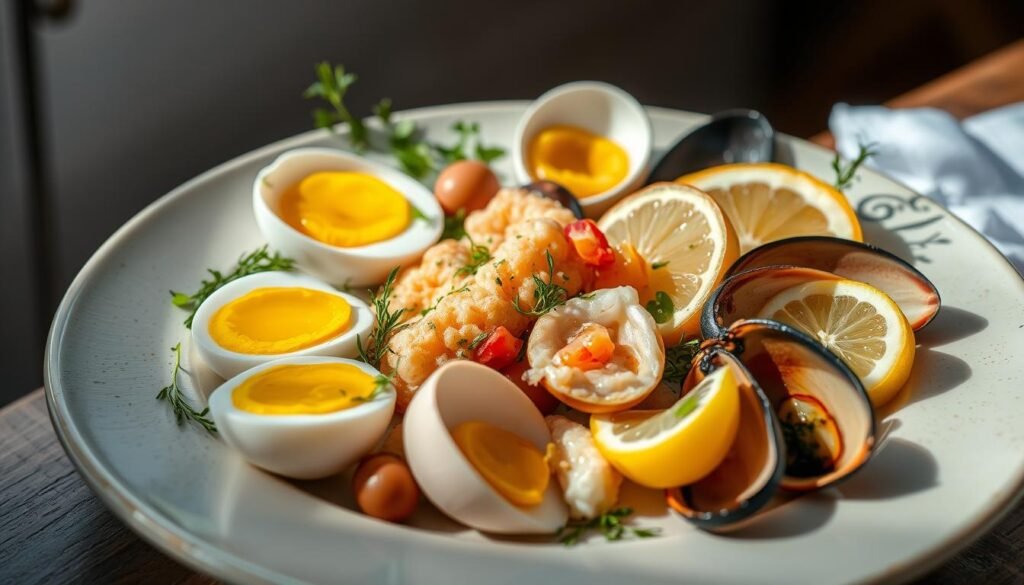
| Food | Recommended Serving Size | Weekly Intake |
|---|---|---|
| Eggs | 1 Egg | 3-4 Eggs |
| Shrimp | 4-6 Ounces | 2-3 Times |
| Crab | 4-6 Ounces | 2-3 Times |
| Clams | 4-6 Ounces | 2-3 Times |
| Scallops | 4-6 Ounces | 2-3 Times |
Following these tips helps keep your diet healthy and delicious. It’s all about balance and enjoying eggs and shellfish wisely.
Lowering Cholesterol Naturally
Taking charge of health this way means a big difference in cholesterol levels. Eating foods full of nutrients is a must. They are vital in this mission. Adding these foods to your daily meals, along with staying active, is essential.
Foods That Help Lower Cholesterol
Certain foods are stars at lowering cholesterol. Soluble fiber, found in oats, beans, and fruits, cuts LDL cholesterol significantly. Fatty fish, such as salmon, are high in omega-3s, improving heart health. Walnuts also play a part in keeping your heart strong.
- Soluble Fiber: Helps lower cholesterol levels.
- Fatty Fish: Rich in omega-3s—includes salmon, sardines, and mackerel.
- Walnuts and Avocados: Beneficial for heart health.
- Plant Sterols: Adding 2 grams daily can lower LDL cholesterol by 5% to 15%.
- Healthy Fats: Replacing saturated fats with monounsaturated fats supports heart health.
The Role of Physical Activity
Being active is just as important as diet changes. Exercising for 30 minutes a day boosts good cholesterol and lowers the bad. Aiming for 150 minutes of moderate exercise a week makes a clear difference. Activities like walking, swimming, or cycling help meet these goals effectively.
Importance of a Balanced Diet
A balanced diet is key to controlling cholesterol. It means focusing on foods that are good for your heart. Avoiding saturated and trans fats and eating plenty of fruits, veggies, and healthy fats is crucial. Not smoking and drinking less alcohol also helps. Even losing a little weight can greatly improve your heart’s health.
Cholesterol and Heart Health: A Closer Look
Understanding the tie between cholesterol and heart health is key. High LDL cholesterol is a risk factor for heart disease. Knowing this encourages people to take steps for their health.
The Link Between Cholesterol Levels and Heart Disease
Bad cholesterol, or LDL, can lead to hyperlipidemia. This increases the risk of heart issues from plaque buildup. It’s important to keep cholesterol in check for heart health.
HDL cholesterol is good for you. It helps remove bad cholesterol from your blood. This balance can reduce the risk of heart disease.
Managing High Cholesterol Levels
Dealing with high cholesterol involves diet and lifestyle changes. Eating less than 300 mg of cholesterol daily is recommended. Be careful with foods like shellfish that have nutritional benefits but need moderation.
Choosing how your food is prepared is also crucial. Avoid adding too much saturated or trans fats. Opt for foods with good fats, omega-3, and fiber instead.
- Consume heart-healthy fats such as avocado and oily fish.
- Incorporate legumes and beans for their soluble fiber.
- Consider plant sterols to help reduce LDL absorption.
Being active is key to handling cholesterol. A diet based on these tips supports better cholesterol and heart health.

Importance of Overall Dietary Patterns
We need to focus more on the overall way we eat, rather than just specific foods. It’s key to look at everything we eat as a whole. This means eating lots of different healthy foods. That way, we can really improve our health.
Focus on Plant-Based Foods
Eating lots of fruits, vegetables, grains, and beans is great for your heart. These foods help you eat less bad fats and cholesterol. Focus on plant-based foods for better nutrients and less disease risk.
Combining Nutritional Choices for Better Health
Choosing a variety of foods is best for our health. It’s more effective than eating isolated foods. Different foods working together can reduce inflammation and make hearts healthier. Looking at food combinations, like the Healthy Eating Index or DASH score, helps us see their health impact.
Conclusion
The impact of foods high in cholesterol, like eggs and shellfish, on heart health is quite significant. Many health-conscious people think about this a lot. Studies show that dietary cholesterol is in many foods, such as meats with lots of fat and dairy products that are full-fat.
Moderation is essential. By eating these types of foods in a smart way, people can keep their cholesterol at a good level. This helps them keep their heart healthy without missing out on these foods.
Healthy adults can eat up to one whole egg a day. For older adults who have stable cholesterol levels, eating two eggs is fine. Some people worry about eating too much cholesterol.
However, research shows that eating eggs regularly, with a diet full of nutritious foods, can improve your cholesterol levels. This can make you healthier overall. It’s important to eat a variety of foods and maintain a healthy lifestyle for the best health.
By being careful about how much cholesterol-rich food they eat, individuals can enjoy its benefits without worrying about their cholesterol. Dietary guides and studies on personalized nutrition can help people make good food choices. This supports heart health and overall wellness for a long time.