Did you know Americans eat almost 100 pounds of red meat each year? That’s a lot! It shows how important it is to know the right amount of red meat to eat. Eating red meat in the right amounts is key. It’s good for your heart and overall health.
Let’s talk about how much red meat you should eat. It’s key to find a good balance in your diet. Following these tips means you can still enjoy red meat. And, you’ll avoid the health problems from eating too much of it. Let’s dive into how to fit red meat into your meals the right way.
Key Takeaways
- Knowing the right amount of red meat helps keep your diet balanced.
- Controlling portions reduces health risks from too much red meat.
- The usual serving size for red meat is about 3 to 4 ounces.
- Visual aids can make it easier to know how much to eat.
- It’s important to realize how big portions can be, especially in restaurants.
Understanding Red Meat and Its Nutritional Value
Red meat is important in diets around the world. It is full of nutrients and good for health. This part talks about red meat’s value and its nutrition.
What is Red Meat?
Red meat comes from mammals, like cows and pigs. It’s darker because of something called myoglobin. This makes red meat taste unique and why it’s loved in cooking.
Nutritional Profile of Red Meat
Red meat has a lot of nutrition. For example, 3.5 ounces of broiled beef has:
| Nutrient | Per 100g Serving |
|---|---|
| Calories | 217 |
| Protein | 26.1g |
| Fat | 11.8g |
| Saturated Fat | 4.5g |
| Iron | 12% of the Daily Value |
| Zinc | 43% of the Daily Value |
| Vitamin B12 | 101% of the Daily Value |
Red meat is full of protein, vitamins, and minerals. It has iron. This kind of iron is easy for our bodies to use. It helps prevent iron deficiency anemia.
Picking lean red meat cuts is smart. It reduces saturated fat but keeps the health perks. Red meat has things like creatine and CLA that are good for you. Eating it in moderation is crucial to avoid health issues. Knowing about red meat helps you add it wisely to your diet.
Importance of Portion Control with Red Meat
Learning about portion control with red meat improves your eating habits. Knowing how much to eat reduces health risks from too much red meat. These risks include serious chronic conditions. Knowing the risks helps you avoid eating too much.
Health Risks Associated with Overconsumption
Eating too much red meat can cause health problems. It can increase your risk of heart disease, colorectal cancer, and stroke. Eating too much red meat can lead to unhealthy levels of fat and cholesterol. This can cause serious health issues. It’s important to watch how much you eat.
Benefits of Portion Control
Controlling how much red meat you eat has many benefits. It helps you control your calories and lowers disease risk. Eating the right amount leads to a balanced diet with various foods. This helps you stay healthy and maintain a good weight over time.
| Health Risks | Benefits of Portion Control |
|---|---|
| Increased risk of heart disease | Regulates calorie intake |
| Higher likelihood of colorectal cancer | Reduces risk of chronic diseases |
| Potential for stroke | Promotes a healthier weight |
| Imbalance in dietary fat and cholesterol levels | Encourages a varied diet |
Portion Sizes for Red Meat
Knowing how much red meat to eat is key to a healthy diet. The American Heart Association suggests how much and what kinds to choose. Following their advice means you can still enjoy red meat and be healthy.
Recommended Serving Sizes by Type of Red Meat
Different types of red meat have different serving sizes. It’s important to eat a variety for good health. Here are the servings you should aim for:
| Type of Red Meat | Recommended Serving Size (cooked weight) |
|---|---|
| Sirloin steak | 3-4 ounces |
| Tenderloin | 3-4 ounces |
| Flank steak | 3-4 ounces |
| Beef steak (8 oz) | 163 grams |
| Rump steak (5 oz) | 102 grams |
| Quarter-pound beefburger | 78 grams |
| Bacon (thick rashers) | 2 rashers (70 grams) |
Visualizing Portion Sizes
Seeing portion sizes can really help. For instance, 3 ounces of red meat is about as big as an iPhone. This stops us from eating too much, especially when eating out. Here’s how to picture healthy portions:
- A 3-ounce serving of chicken is like a deck of cards.
- A 3- to 4-ounce serving of fish is the size of a checkbook.
- Comparing food to everyday items makes portion sizes clearer.
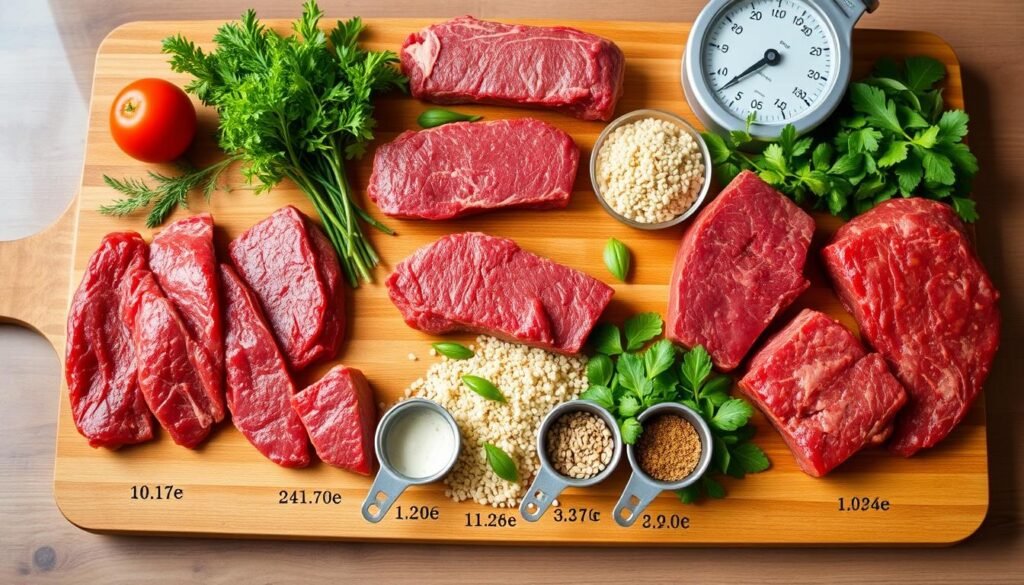
Red Meat Portion Recommendations
To stay healthy, knowing daily and weekly guidelines for red meat servings matters. Adults should aim for 5.5-6.5 ounces of proteins daily, including red meat sometimes. Eating red meat a few times a week is okay and gives you vital nutrients.
Daily and Weekly Guidelines
Red meat servings should be 3 to 6 ounces, about a deck of cards in size. To keep up with the daily and weekly guidelines for red meat servings, try these tips:
- Have 3-4 ounces of red meat per meal.
- Don’t eat more than 700 grams of raw meat a week.
- Add different proteins like beans, nuts, and dairy to your meals.
Swapping red meat for plants can cut diabetes risk. Choosing nuts and legumes over red meat might lower your risk by 30%. You can learn more about choosing between red meat and other foods here.
Using the Plate Method for Portioning
The Plate Method helps balance your meals with red meat. Divide your plate: half vegetables, a quarter carbs, and a quarter protein. This helps control portions and includes more food groups for better health.
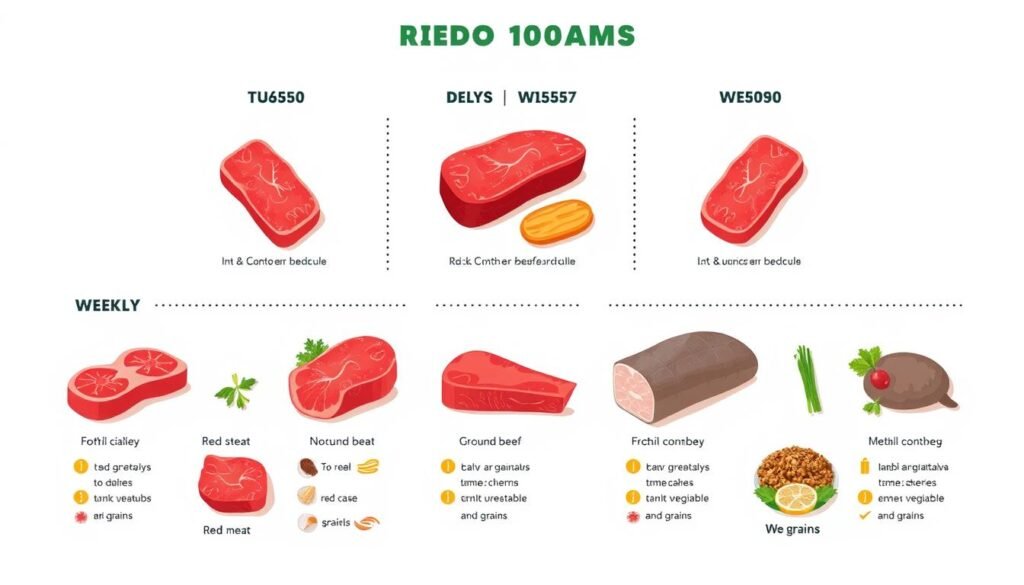
Following these tips allows you to enjoy red meat safely. Watching how much and how often you eat red meat, alongside exercising, boosts health and well-being.
How Much Red Meat Should I Eat Per Meal?
To figure out how much red meat to eat, think about what’s generally suggested and what you prefer. Choosing lean red meat is good for your health and the planet.
General Recommendations for Adults
In Australia, guidelines say adults should eat about 455 grams of lean red meat a week. This should be spread out over three or four meals. Nutrition experts agree this is a good amount for staying healthy. Australians already eat about 57 grams of red meat a day, fitting these guidelines.
An ideal portion of red meat is about 3-4 ounces per meal. This amount meets protein needs without too many calories. To manage portion sizes, compare the meat to a deck of cards. Round out your meal with veggies and grains for more nutrients.
- Lean cuts like pork and turkey are excellent choices.
- Serving sizes for fish, particularly those rich in omega-3 fatty acids, remain consistent at around 3 ounces.
- Choosing grilling, roasting, or broiling methods can make a significant difference in fat content and overall healthfulness of the meal.
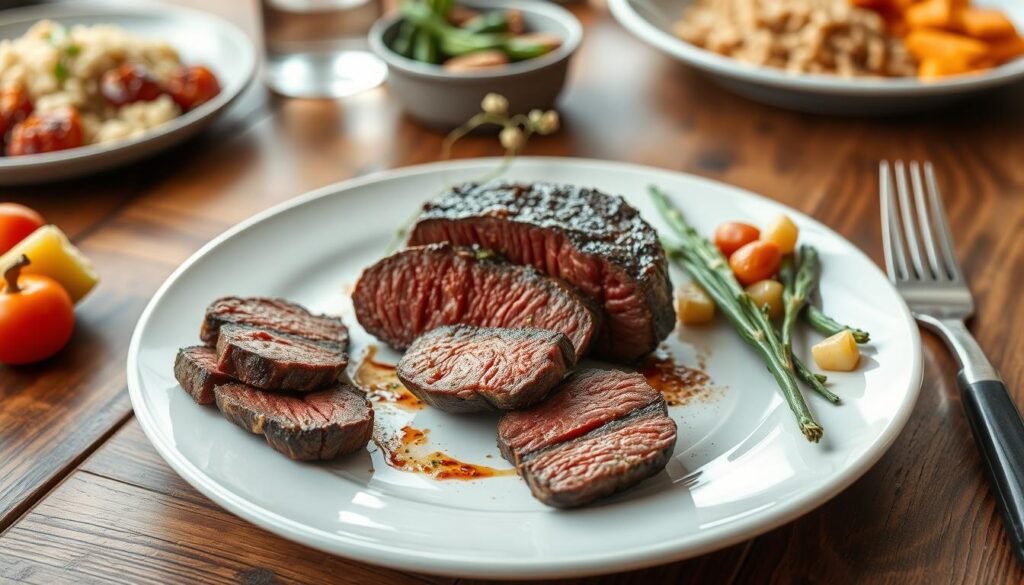
Portion Distortion: Recognizing the Problem
Portion distortion is a big issue when eating out, especially in restaurants. Many places serve food amounts that are much larger than we need. This can cause us to eat too much and pick up bad eating habits. When looking through a restaurant menu, it’s very important to know how to spot the right food amounts. This helps keep our meals healthy and balanced.
The Impact of Restaurant Portion Sizes
Over time, the size of meals at restaurants has grown a lot. Since the 1970s, dinner plates are now 6 cm bigger, leading people to eat more than they should. For example, research shows that 90% of people eat more when given larger portions. This leads to too many calories, which is a factor in the increase of obesity. It’s tough for customers to know how much they should really eat when faced with huge meals.
Common Misconceptions About Serving Sizes
There are many wrong ideas about how big meal portions should be. Some people think bigger portions mean better value, which encourages eating too much. Take dry pasta for instance, where a single portion is 75g, becoming 150g once cooked, with 270 calories. But, what’s considered normal in a restaurant is often much more, which means more calories. Understanding the correct sizes of portions is key. It helps people make better food choices.
Optimal Red Meat Portions for a Balanced Diet
Adding the right amount of red meat to your diet can improve your health. It’s key to eat red meat with other healthy foods for a balanced meal. Choose lean cuts to eat less saturated fat, making your diet healthier.
Integrating Red Meat with Other Food Groups
Mixing red meat with high-fiber veggies and whole grains is vital. This mix brings important nutrients and helps with digestion. For example, enjoy a 3-ounce lean beef with colorful veggies and whole grains for a balanced meal. Add dried beans or lentils for plant-based protein and less saturated fat. Choosing recommended beef cuts leads to better health.
Creating a Balanced Meal
A balanced meal includes lean red meat and is good for you. A well-rounded plate has:
- 100g cooked red meat, like lean beef or lamb
- Veggies such as broccoli, carrots, and bell peppers
- Whole grains, for example, quinoa or brown rice
- Plant proteins like beans or lentils for extra nutrients
This balanced approach lowers the risks from eating too much red meat. Keep red meat to about 100g per meal, a few times a week, for heart health. Change up each meal with healthy cooking methods, like baking, for delicious and right-sized red meat portions.
Best Portion Sizes for Red Meat: Tips and Tricks
Managing portion sizes makes enjoying red meat better while keeping a diet balanced. Knowing the right portion sizes for red meat helps in eating healthily. It also helps control weight and supports good digestion. Using careful methods in cooking is key to success.
Practical Strategies for Portion Control
To change how you prepare meals and keep serving sizes right, try these tips:
- Meal Prepping: Prepare your meals ahead. This helps control how much you eat.
- Using Smaller Plates: Smaller dishes make your plate look full without overeating.
- Pre-Portioning: Split big meat packages into recommended sizes before freezing them.
Cooking Techniques to Maintain Ideal Portions
Different cooking ways can change how nutritious red meat is and its size. Some methods keep it tasty without adding too many calories:
- Grilling: It makes the meat flavorful with less fat.
- Baking: Keeps meat moist and lets you control what’s added.
- Avoid Fried Options: Frying or using a lot of sauce adds extra calories.
By using these smart tips for portion control and cooking right, you can enjoy red meat in a balanced diet. This plan is good for your health and makes meals enjoyable.
Conclusion
Knowing how much red meat to eat is key for a healthy life. Research shows sticking to recommended amounts lets people enjoy their favorite meals. This also cuts health risks linked to eating too much meat.
Eating less red and processed meat reduces the risk of dying early. It also boosts overall health. Choosing healthier proteins like beans and chicken is good for the heart. It also meets the demand for eating less red meat.
Teaching people about correct meat portion sizes is important. It’s good for personal health and public health too. To learn more about red meat and health risks, check this important article.