It might shock you, but beef causes 36% of the U.S.’s food-related greenhouse gases. This fact may prompt anyone to think about their diet. Cutting down on red meat is good for both health and the planet. Eating too much red meat can increase the risk of heart disease, some cancers, and diabetes. Knowing how to eat less red meat can help us live healthier.
Switching from a lot of red meat to healthier choices doesn’t mean you have to give it up entirely. Small steps, like choosing chicken, fish, or plant proteins, can make a big difference. They keep meals tasty and are better for you. This article will show you easy ways to eat less red meat and still enjoy your food.
Key Takeaways
- Beef contributes significantly to greenhouse gas emissions.
- Reducing portion sizes can effectively cut back on red meat consumption.
- Health benefits of reducing red meat include lower risks of chronic diseases.
- Substituting red meat with poultry or seafood is recommended.
- Adopting a variety of protein sources can lead to better nutrition.
The Health Risks of Excess Red Meat Consumption
Knowing the health risks of eating too much red meat is key to choosing what to eat. Studies show that eating a lot of red and processed meats can lead to serious health issues.
Increased Risk of Chronic Diseases
Eating more than 90 grams of red or processed meat daily can raise your chances of getting chronic diseases. There is evidence linking red meat to diabetes, heart disease, and certain types of cancer. Processed meats are especially bad because they have a lot of salt, which can lead to high blood pressure.
- Eating more unprocessed red meat each day can increase your risk of dying by 13%.
- Processed red meat raises your risk of dying by 20%.
- Choosing healthier options instead of red meat can lower your death risk by 7% to 19%.
Impact on Longevity
Cutting down on red meat can make a big difference in how long you live. Staying under 70 grams of red meat daily can make you healthier. For pregnant women, it’s important to avoid raw meat because of toxoplasmosis risks. Choosing lean meats and cooking them by grilling instead of frying can also cut down on fat.
How you store and cook meat matters, too. Freeze meat before it goes bad and make sure to defrost it properly. Cooking meat thoroughly is key to killing off any bad bacteria. This is crucial for staying healthy and living longer.
Understanding Red Meat and Its Alternatives
Red meat is a popular protein source. It includes beef, pork, and lamb, each with unique flavors and uses. Knowing about these can help us choose our proteins wisely. To cut down on red meat, it’s good to learn about other healthy options. These alternatives provide similar nutritional value.
Types of Red Meat
Red meat comes from mammals’ muscle. The most common types include:
- Beef
- Pork
- Lamb and mutton
- Goat
Processed meats like bacon, hot dogs, and sausages are also red meats. Eating these often can increase the risk of heart disease and some cancers.
Healthier Protein Options
Choosing healthier proteins can lower red meat intake. Here are some great choices:
- Poultry, like chicken and turkey
- Fish and other seafood
- Beans and legumes for dietary fiber
- Nuts and seeds
These foods are good for the heart. They offer important nutrients without red meat’s risks. Trying things like Meatless Mondays or vegetarian meals can improve health. It can also save money and help the planet. For better heart health, the American Heart Association suggests eating less processed meat. Also, the International Agency for Research on warns that red meat could be a carcinogen. It’s important to be mindful of how much we consume.
How to Reduce Red Meat Intake
To improve your health, it’s important to eat less red meat. Looking at what you currently eat will show how to make smart changes. By knowing how much and how often you eat red meat, you can make a good plan to reduce it.
Assess Your Current Consumption
Start by writing down your meals to see how much red meat you eat. In Australia, the average person eats about 81 grams of red meat each day. This fact can help you know where to begin to cut back. Eating red meat often can raise your cholesterol. By noticing if you eat red meat many times a week, you can find ways to eat less of it.
Set Manageable Goals
Once you know how much red meat you eat, set goals that you can reach. Try to eat red meat only on certain days, not going over 455 grams a week. Break big goals into smaller steps to make them easier. For example, use less meat in recipes like chili or stew. Eating meals without meat and using other foods like chicken or beans instead of red meat helps too. These steps will help you eat less red meat and improve what you eat.
Simple Swaps to Lower Red Meat Consumption
It’s possible to eat less red meat and still enjoy your meals. Start by swapping out meat with other proteins. These changes are good for your health and add variety to your diet.
Substituting Poultry and Seafood
Using more poultry and different kinds of seafood is a smart move. For example, choose ground turkey instead of ground beef. It cuts down on bad fats but keeps the protein. Try cooking turkey, chicken, or salmon instead of beef or lamb to make meals healthier and tasty. Also, using grilled chicken or fish in your sandwiches or salads instead of deli meats can make a big health difference.
Incorporating Plant-Based Proteins
Going vegetarian sometimes is exciting. Try beans, lentils, tofu, and grains like quinoa or buckwheat. You could make dishes like stuffed peppers with black beans, chicken, and veggies. They taste great and use less meat. Plus, plant foods are often cheaper than meat, saving you money.
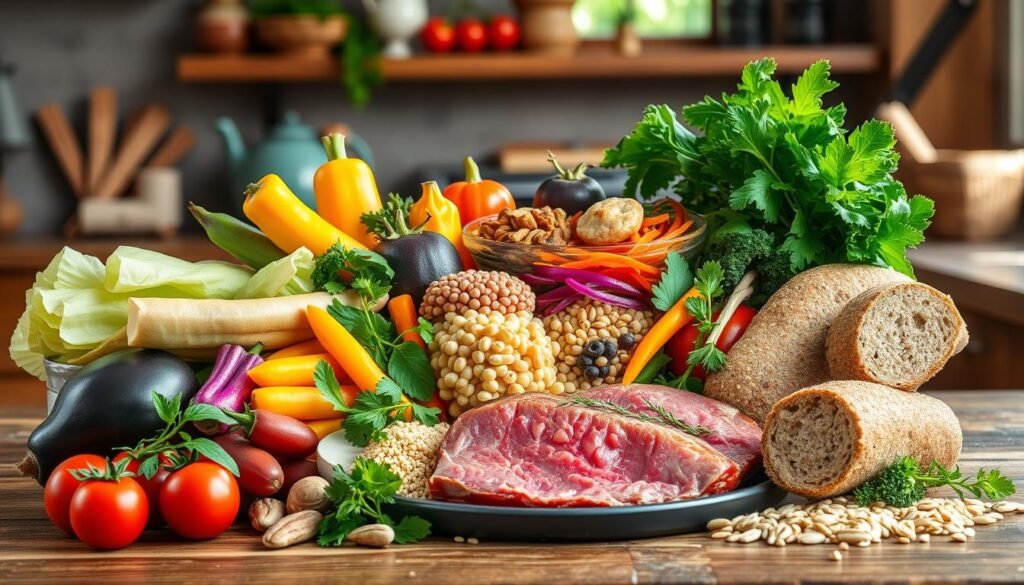
Trying Meat Free Monday can help you cut down on red meat. On these days, eat diverse plant-based meals to boost your digestion and feel better. Adding meatless meals to your weekly routine is good for your health and the planet.
Adopting a Plant-Forward Diet
Moving to a plant-forward diet benefits both your health and the planet. Adding whole grains and colorful veggies boosts nutrient intake and health. This way of eating reduces red meat. It also makes meals rich and enjoyable each day.
Focus on Whole Grains and Vegetables
Whole grains and veggies are key to a plant-based diet. They are packed with vitamins, minerals, and fiber. This helps digestion and overall health. Eating more of these and less red meat meets nutritional and calorie needs.
Benefits of Beans and Legumes
Beans and legumes are great protein sources, with little fat. They can take the place of red meat in many dishes. This makes meals filling and nourishing. Adding these foods benefits health and the environment. Plus, there are tasty ways to use beans in your diet. Studies show learning about plant-based diets makes it easier to eat less meat.
| Food Type | Protein Content (grams per 100g) | Fiber Content (grams per 100g) | Fat Content (grams per 100g) |
|---|---|---|---|
| Black Beans | 21.6 | 8.7 | 0.9 |
| Lentils | 25.8 | 7.9 | 0.4 |
| Chickpeas | 19.3 | 7.6 | 2.6 |
| Quinoa | 14.1 | 2.8 | 1.9 |
| Brown Rice | 2.6 | 2.0 | 0.9 |
Switching to a diet rich in plants is good for health and the earth. It lets people enjoy many flavors and textures. Legumes and whole grains are delicious and healthy options.
Strategies to Cut Down on Red Meat
There are smart ways to eat less red meat. Try meatless days and smaller portions. These steps make you healthier and let you try new proteins.
Designating Meatless Days
Having meatless days every week is a great idea. It pushes you to try new, plant-based recipes. Cutting down on red meat becomes easier this way, without feeling too hard.
Reducing Portion Sizes
Controlling how much meat you eat is another tip. Eat smaller pieces of meat, like tiny burgers or less bacon. This approach helps you eat more veggies, grains, and beans, leading to a healthier diet.
| Strategy | Benefits |
|---|---|
| Meatless Days | Encourages creativity in the kitchen, helps in exploring plant-based options. |
| Reducing Portion Sizes | Leads to gradual reduction in red meat intake, promotes healthier eating habits. |
The Importance of Meal Variety
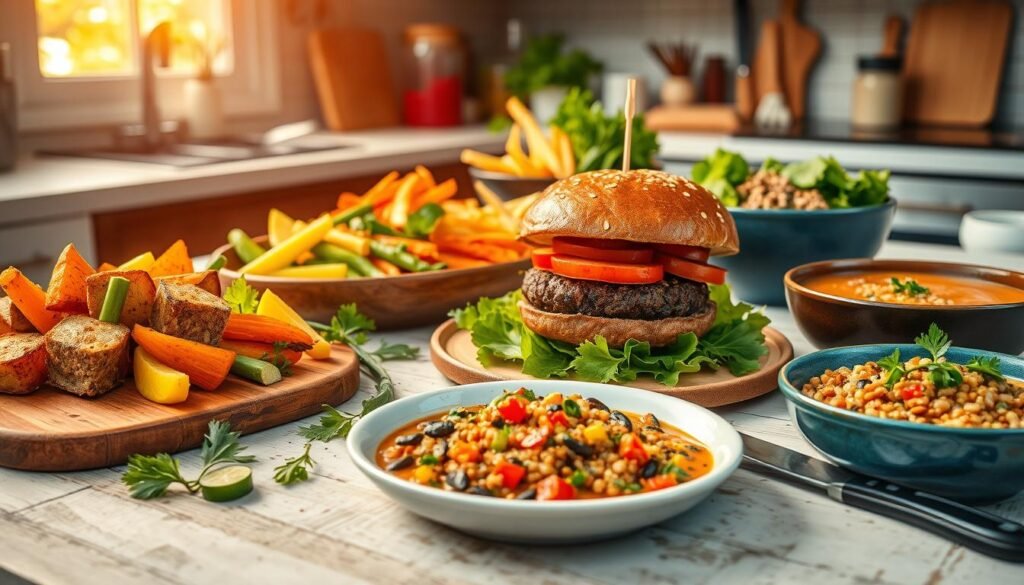
Having a variety of meals is key to getting better nutrition and enjoying your food more. Trying different plant-based dishes can bring new tastes and improve your diet. To eat less red meat, adding a range of meals is very important.
Boosting Nutritional Value with Variety
Eating lots of fruits and vegetables makes meals colorful and full of nutrients. You can still enjoy meats like chicken and fish in small amounts. This way, you save money and eat healthily. Eating less red meat and trying other proteins like dairy carefully can keep meals exciting and good for you and the planet.
Adding plant proteins from beans, nuts, seeds, and whole grains makes meals more nutritious. This variety also helps you feel full and satisfied.
Creative Meatless Recipe Ideas
Being creative with your cooking can make mealtime fun. You can mix mushrooms with beef or use bacon for flavor in veggie dishes. This cuts down on red and processed meats. Here are some meatless recipes to try.
| Recipe | Main Ingredients | Description |
|---|---|---|
| Vegetable Stir-Fry | Broccoli, bell peppers, carrots, tofu | A quick and colorful dish packed with nutrients and flavor, served over whole grains. |
| Lentil Soup | Lentils, tomatoes, carrots, celery | A hearty soup rich in protein and fiber, perfect for a satisfying meal. |
| Chickpea Salad | Chickpeas, cucumbers, tomatoes, red onion | A refreshing salad that provides a great source of plant-based protein. |
| Black Bean Tacos | Black beans, corn, avocado, corn tortillas | Flavorful tacos that fill you up with fiber and healthy fats. |
Mindful Eating and Eating Less Meat
Mindful eating can greatly help you eat less red meat. Knowing the right amount to eat is key. Three ounces of protein-rich foods is a good serving size. This helps make balanced meals with vegetables, grains, and healthy fats. It leads to better portion control and makes you think about your food choices.
Understanding Serving Sizes
Knowing how much to eat is very important. Use tools or visual cues to gauge meat portions. This is vital for health and environmental reasons. It helps you understand how much meat you really need.
Building a Balanced Plate
A balanced plate includes different types of food. It helps you eat a variety of nutrients and less fatty meat. Here’s how to make one:
- Filling half the plate with colorful vegetables.
- Including whole grains, like quinoa or brown rice, in a quarter of the plate.
- Limiting red meat to about three ounces or less.
- Adding healthy fats, such as avocado or nuts, for nutrition.
With mindful eating and balanced meals, you can eat better and less red meat. This improves your eating habits and care for yourself.
| Food Type | Serving Size | Benefits |
|---|---|---|
| Vegetables | Fill half the plate | Rich in vitamins, minerals, and fiber. |
| Whole Grains | 1/4 of the plate | Provide energy and essential nutrients. |
| Red Meat | 3 ounces or less | Source of protein but should be limited. |
| Healthy Fats | Fat sources as needed | Support heart health and enhance flavor. |
Flexitarian Approach to Eating
The flexitarian way of eating is mainly about more plants and less meat. It lets you enjoy the benefits of a vegetarian diet but still eat meat sometimes. This makes switching to more plant-based meals easy and fulfilling.
What is Flexitarian Eating?
Flexitarian eating means eating lots of plant foods like fruits, vegetables, grains, beans, nuts, and seeds. Sometimes, you can have good animal products like grass-fed beef, wild fish, or organic eggs. It’s a balanced style of eating that supports health and still fits personal tastes.
Benefits of a Flexitarian Lifestyle
Going flexitarian has many health perks:
- Lower Rates of Chronic Diseases: Eating less meat can mean a healthier weight, less cholesterol, and lower blood pressure.
- Reduced Cancer Risk: This diet can cut the risk of some cancers, like colon cancer, by limiting red and processed meats.
- Improved Heart Health: Plant-rich diets can greatly lower blood pressure and boost heart health.
- Sustainable Choices: A flexitarian diet can also reduce greenhouse gases, helping the planet as well as your health.
- Weight Management: Foods low in calories but high in nutrients help with weight control and overall health.
Adding more plant proteins, such as beans, lentils, and tofu, to your meals promotes better nutrition and digestive health. With smart food choices, flexitarian eating is a sustainable and healthy way of life for many.
Examining the Environmental Impact of Red Meat
Studies show that producing red meat greatly ups greenhouse gases, hurting our planet. To examine the environmental impact of red meat, research looks at its links to problems like agriculture harm, forest loss, and land changes.
Food-Related Greenhouse Gas Emissions
About 40 percent of the world’s greenhouse gases come from agriculture. This highlights the need to eat less red meat. Doing so cuts down on methane from cattle, a gas much worse than CO2. Eating less meat can lead to better use of our natural spaces and help ecosystems.
Benefits of Sustainable Diet Choices
Making eco-friendly diet choices benefits our health and the Earth. Eating less meat helps with species variety, food availability, and saves forests from turning into grazing fields. Those who adjust their diet help reduce the food sector’s greenhouse gases. This effort makes the Earth better for future generations.

Real-World Tips for Cutting Back on Red Meat
Cutting back on red meat is easier than you think. All it takes is some planning and smart shopping. Here are tips to change your diet easily.
Planning Your Weekly Meals
Meal planning helps in reducing red meat. Create a weekly menu focusing on plant-based choices. You’ll eat healthier this way.
Try having meat-free days every week. Use beans, legumes, and lots of veggies. You’ll enjoy varied meals while boosting your health.
Shopping Strategies for Better Choices
Smart shopping is key to eating less red meat. Buy grains, legumes, and veggies in bulk. It saves money and keeps your pantry full.
Shop at local farmers’ markets for fresh, organic food. Also, try tofu and tempeh as meat alternatives. These changes help you eat better without losing taste or nutrition.
Conclusion
Cutting down on red meat improves health and helps the environment. This article shows how to do it well. By changing what we eat bit by bit, we can avoid diseases and live longer. It’s also a chance to try new, healthy foods.
Less red meat means better health, studies show. Eating less can lower the risk of heart problems. It also means less harm to the planet. So, eating less processed and red meat is good for us and Earth.
Making these changes is good for a lifetime. It’s a smart move for those wanting to live healthier. With easy steps and diet changes, we can use less red meat. This helps our health and has a lasting positive effect.