Did you know about 95 million American adults have high cholesterol? This fact shows we need to change our diets to fight this issue. Sweet potatoes are not just tasty; they are good for your heart too. These colorful veggies are full of vitamins and minerals. They have vitamin A, vitamin C, potassium, and fiber. This makes them great for anyone trying to manage their cholesterol.
Studies show sweet potatoes can help lower bad LDL cholesterol that clogs arteries. They have antioxidants that fight inflammation, improving our health and cutting heart disease risks. Adding sweet potatoes to a balanced diet is a tasty way to boost heart health. To learn more about heart-healthy diets, here’s a guide on foods to avoid for lowering.
Key Takeaways
- Sweet potatoes are rich in vital vitamins and minerals for heart health.
- These tubers can help reduce bad LDL cholesterol levels.
- Sweet potatoes’ anti-inflammatory effects may lessen heart disease dangers.
- Eating fiber from sweet potatoes can positively influence cholesterol levels.
- Due to their nutritional value, they are considered a superfood.
The Nutritional Profile of Sweet Potatoes
Sweet potatoes are known for their excellent nutritional content. A medium-sized one has about 112 calories, very little fat, and 3.9 grams of fiber. These nutrients provide energy and improve digestive health. Also, sweet potatoes are packed with vitamin A. They offer 102% of what you need daily for better vision, immunity, and heart health.
Key Nutrients That Support Heart Health
Sweet potatoes are good for your heart. They have carotenoids and antioxidants that fight oxidative stress. Their vitamin A content is also very high. Eating sweet potatoes regularly helps keep your heart healthy, thanks to these nutrients working together.
Carbohydrate Content and Fiber Benefits
A medium-sized sweet potato has around 26 grams of carbs. This includes simple sugars and resistant starch. The fiber in sweet potatoes, 3.9 grams per serving, helps control blood sugar. This makes them a great option for those watching their carb intake. Plus, a high-fiber diet can reduce colon cancer risks and boost digestive health.
Understanding Cholesterol and Its Importance
Cholesterol is key for our bodies. It helps build cell membranes and make hormones. We have to know about LDL and HDL, the two main types.
Types of Cholesterol: LDL vs. HDL
LDL is what many call “bad” cholesterol. If you have too much, it can cause plaque to build up in your arteries. This ups the risk of heart disease. HDL is the “good” kind. It carries cholesterol back to the liver to be gotten rid of. Having the right balance of these is vital for a healthy heart.
How Cholesterol Affects Heart Health
Cholesterol levels have a big say in the health of your heart. Changing what you eat can make a difference. Eating less saturated fat and more fiber helps a lot. It stops your body from absorbing too much cholesterol. Most Americans eat more cholesterol than needed, risking heart disease. By choosing healthier foods, we can manage cholesterol better and keep our hearts strong.
| Cholesterol Type | Common Name | Health Impact |
|---|---|---|
| LDL | Bad Cholesterol | Increases risk of plaque buildup in arteries |
| HDL | Good Cholesterol | Helps remove cholesterol from arteries |
Understanding the difference and choosing smarter food options can keep your cholesterol healthy. This lowers heart disease risks.
Sweet Potatoes and Cholesterol: A Powerful Connection
Research shows a solid link between sweet potatoes and cholesterol control, pointing out their heart health benefits. Sweet potatoes, thanks to their nutritional makeup, seem to lower LDL cholesterol levels.
How Sweet Potatoes Lower LDL Cholesterol
The relationship between sweet potatoes and cholesterol is significant. Eating sweet potatoes may greatly reduce LDL cholesterol levels. Using sweet potato leaf powder in diets has shown a big decrease in LDL cholesterol, up to 48.7%. This proves their importance in maintaining heart health and preventing diseases.
The Impact of Carotenoids on Cholesterol Levels
Carotenoids in sweet potatoes act as antioxidants and help manage cholesterol. These compounds also have anti-inflammatory qualities, which assist in reducing cholesterol levels. Fighting oxidative stress, they may boost heart health and ensure cholesterol stays in check. Hence, sweet potatoes are key for a heart-friendly diet.
Potassium’s Role in Cholesterol Management
Potassium, found abundantly in sweet potatoes, is vital for heart health. One sweet potato delivers about 438mg of potassium, crucial for cardiovascular care. It balances sodium levels and prevents blood thickening. Enough potassium can help keep LDL cholesterol in check, boosting health and wellness.
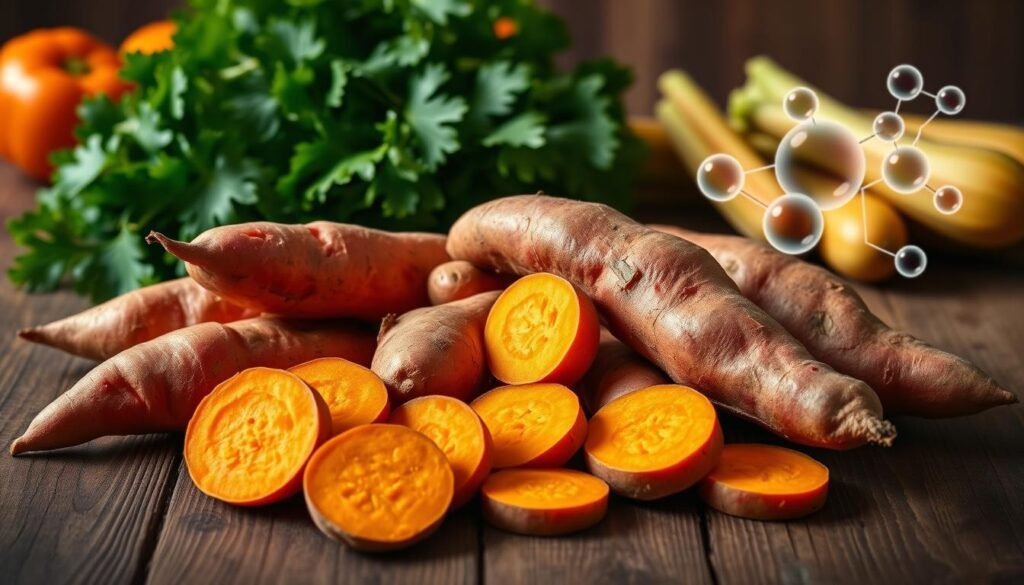
| Nutritional Component | Amount per 100g |
|---|---|
| Calories | 112 |
| Protein | 2g |
| Carbohydrates | 26g |
| Fiber | 4g |
| Calcium | 39mg |
| Magnesium | 32mg |
| Phosphorus | 61mg |
| Potassium | 438mg |
| Vitamin C | 2.5mg |
| Folate | 14µg |
| Choline | 16mg |
| Vitamin A | 922µg |
| Beta Carotene | 11,100µg |
| Alpha Carotene | 9.1µg |
Health Benefits of Sweet Potatoes
Health benefits of sweet potatoes show they’re more than tasty side dishes. They are full of nutrients and antioxidants. These help in improving heart health.
Antioxidant Properties and Their Impact
Sweet potatoes are a superfood packed with antioxidants. These antioxidants fight against oxidative stress. This stress can lead to heart disease and other chronic illnesses. Sweet potatoes contain carotenoids like beta-carotene. These support good cholesterol levels and reduce inflammation, which is good for heart health.
These tubers also have phytochemicals that boost your immune system. Purple sweet potatoes have unique pigments. These pigments can help fight certain cancer cells.
Sweet Potatoes as a Superfood for Heart Health
Sweet potatoes are rich in fiber, potassium, and vitamins. Adding sweet potatoes to your diet can lower cholesterol. This is done by removing excess cholesterol from your blood. They have a medium glycemic index, perfect for people with diabetes. They help control blood sugar levels and keep you full.
The fiber in sweet potatoes supports a healthy digestive system. It also lowers the risk of heart disease. Dietary fiber works by binding with bile acids. This stops cholesterol from forming. This process increases good cholesterol while decreasing bad cholesterol.
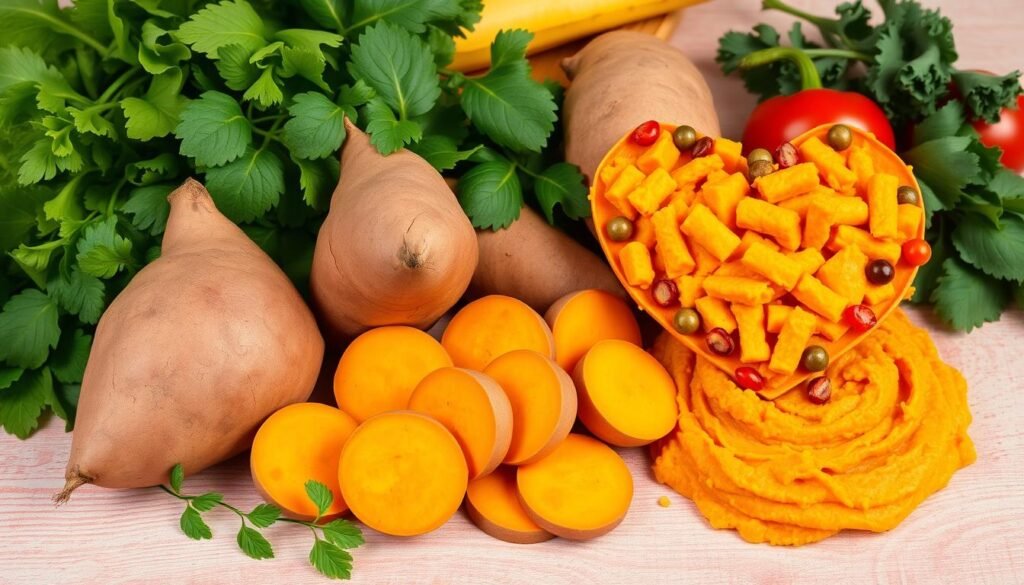
| Nutritional Component | Content per 5-inch Sweet Potato |
|---|---|
| Calories | 112 |
| Fat | 0.1g |
| Sodium | 71.5mg |
| Carbohydrates | 26.1g |
| Dietary Fiber | 3.9g |
| Protein | 2g |
| Vitamin A (DV %) | 769% |
| Fiber (DV %) | 26% |
Sweet potatoes earn their superfood title. They improve heart health and have strong antioxidant powers. Including them in your meals boosts both flavor and nutrition.
Incorporating Sweet Potatoes into a Low Cholesterol Diet
Adding sweet potatoes to your diet is a great idea. They taste good and are full of nutrients. Cooking them in a healthy way keeps those nutrients in. Here are some tips on how to cook sweet potatoes. You’ll also find some tasty recipes to try.
Healthy Cooking Methods for Sweet Potatoes
There are many healthy ways to cook sweet potatoes. These methods keep the nutrients in:
- Baking: This keeps most of the nutrients in the sweet potatoes. It also makes them tasty.
- Steaming: Steaming helps sweet potatoes keep their vitamins and minerals. This is done without adding unhealthy fats.
- Boiling: Boiling is fast and easy. It’s good for making soups and stews. However, it might cause some nutrient loss.
Delicious Sweet Potato Recipes
Sweet potatoes don’t have to be boring. Here are some recipes that are really tasty:
- Sweet Potato Mash: Creamy and sweet with a touch of cinnamon. It’s made even better with olive oil.
- Sweet Potato and Black Bean Tacos: These tacos have a filling of sweet potatoes and black beans. They’re topped with fresh avocado for extra taste.
- Baked Sweet Potato Fries: These fries are crispy and flavored with herbs. They’re healthier than regular French fries.
- Stuffed Sweet Potatoes: These are sweet potatoes filled with spinach, feta, and nuts. It’s a meal that’s good for you.

| Recipe | Main Ingredients | Heart Health Benefits |
|---|---|---|
| Sweet Potato Mash | Sweet potatoes, cinnamon, olive oil | Full of fiber and antioxidants |
| Tacos | Sweet potatoes, black beans, avocado | They’re rich in potassium and good fats |
| Baked Fries | Sweet potatoes, herbs, olive oil | These have fewer calories and less fat than regular fries |
| Stuffed Potatoes | Sweet potatoes, spinach, feta | They help keep your nutrient levels balanced |
How Sweet Potatoes Fit into Healthy Eating
Sweet potatoes boost heart health as part of a balanced diet. They’re loaded with vitamins and minerals vital for well-being. They also help foster good eating habits by providing key nutrients for heart health.
Balancing Nutrients for Optimal Heart Health
It’s crucial to balance sweet potatoes with other healthy foods. Add lean meats, beans, and greens to ensure a mix of nutrients. This helps manage cholesterol and keeps energy up all day.
Combining Sweet Potatoes with Other Nutrient-Rich Foods
Add other colorful veggies to sweet potatoes for better heart health. A meal with sweet potatoes, broccoli, and chickpeas is tasty and good for you. Including eggs or shellfish helps with cholesterol levels too. This is key for heart health and overall wellness.
Scientific Studies Supporting Sweet Potatoes’ Benefits
Many scientific studies show sweet potatoes are good for the heart. They look at sweet potatoes’ makeup and how they help lower heart disease risk. Experts believe the dietary fiber in sweet potatoes is key for managing cholesterol and heart health.
Research on Sweet Potatoes and Heart Disease
Research on sweet potatoes has found they’re good for the heart. Carotenoids and phenolic acids in them help protect the heart. Eating sweet potatoes often might lead to better cholesterol levels, helping fight heart disease worldwide.
Studies Focused on Dietary Fiber and Cholesterol
Studies have found dietary fiber in sweet potatoes is important for cholesterol control. This fiber lowers cholesterol absorption in the gut, which is good for the heart. Foods high in fiber, like sweet potatoes, are proven to be great for heart health.
| Compound | Range in Sweet Potatoes (mg/100g) | Health Benefit |
|---|---|---|
| Chlorogenic Acid | 10 – 408 | Acts as an antioxidant, may lower cardiovascular risk |
| Gallic Acid | 1.8 – 136.1 | Contributes to overall heart health and antioxidant activity |
| Dietary Fiber | Varies by cultivar | Reduces cholesterol absorption, supports heart health |
Other Dietary Considerations for Cholesterol Management
Managing cholesterol is not just about eating the right foods. It also means knowing what foods to stay away from. Foods that harm heart health should be avoided. Knowing which foods hurt cholesterol levels helps people make smart food choices. This can help manage cholesterol and improve overall health.
Foods to Avoid for Lowering Cholesterol
Some foods raise bad cholesterol and need to be eaten less. Foods to avoid include:
- High-saturated fat meats, like red and processed meats.
- Full-fat dairy products such as cheese, cream, and whole milk.
- Fried foods and baked goods with trans fats.
- Sugary drinks and processed foods rich in added sugars.
Eating a lot of these foods can raise bad cholesterol. This increases the risk of heart disease.
Additional Foods That Support Cholesterol Levels
On the other hand, some foods are good for cholesterol levels. Eating these foods can help manage cholesterol better:
- Fruits: Apples, berries, and oranges help lower cholesterol.
- Vegetables: Leafy greens and cruciferous vegetables are good choices.
- Whole grains: Oats and whole grain bread help lower cholesterol.
- Healthy fats: Nuts, seeds, avocado, and fatty fish help balance cholesterol.
These foods can greatly help in managing cholesterol and keeping the heart healthy.
| Type of Food | Impact on Cholesterol |
|---|---|
| High-Saturated Fat Foods | Increases LDL Cholesterol |
| Fruits | Reduces Total and LDL Cholesterol |
| Vegetables | Supports Healthy Cholesterol Levels |
| Whole Grains | Lowers LDL Cholesterol |
| Healthy Fats | Reduces LDL, Increases HDL Cholesterol |
Conclusion
Sweet potatoes are great for heart health. They help lower bad cholesterol and raise good cholesterol. This is because they’re packed with fibers, vitamins, and antioxidants.
They have stuff like resistant starch and bioactive compounds. These support the heart and manage cholesterol. Eating sweet potatoes doesn’t hike up triglyceride levels. This makes them a heart-friendly food for a low-cholesterol diet.
So, sweet potatoes are key for cholesterol control. Adding them to your diet can improve health and lessen heart disease risks. They’re a smart choice for boosting heart health.
To learn more about sweet potatoes and their health perks, check out detailed studies here.