Only 5% of Americans eat enough fiber daily. This is shocking because the American Heart Association recommends at least 28 grams of fiber every day to help lower cholesterol. Not getting enough fiber affects health and increases the risk of heart disease. Knowing how soluble fiber reduces cholesterol can improve heart health.
Soluble fiber is key in managing cholesterol by binding with bile acids in the gut. This process removes them from the body and stops more cholesterol from entering the blood. Adding soluble fiber to meals can lower bad LDL cholesterol, which is linked to heart disease. Foods like oats, fruits, veggies, nuts, and legumes are full of soluble fiber. These foods help create a better lipid profile for heart health.
Key Takeaways
- Only 5% of Americans meet the recommended daily fiber intake.
- Soluble fiber can help lower LDL cholesterol levels effectively.
- Foods high in soluble fiber include oats, fruits, and legumes.
- Increased fiber intake can enhance overall heart health.
- Achieving fiber intake recommendations is vital for cardiovascular disease prevention.
- Natural solutions like dietary changes can lead to significant health benefits.
Understanding Cholesterol: The Basics
Cholesterol is a waxy substance crucial for bodily functions like hormone production and cell membrane structure. It comes in several types, including Low-Density Lipoprotein (LDL) and High-Density Lipoprotein (HDL). LDL is called “bad” cholesterol because it builds up in arteries, leading to heart disease.
HDL is known as “good” cholesterol. It helps move LDL cholesterol to the liver for elimination. This process keeps a healthy balance and lowers heart disease risks.
Knowing your cholesterol levels is key for heart health. The CDC says LDL should be below 100 mg/dL and HDL above 60 mg/dL. Total cholesterol should be under 200 mg/dL. Eating healthy fats and limiting saturated fats can improve cholesterol levels.
Diet cholesterol impacts blood cholesterol levels a little, about 20% to 30%. But, saturated and trans fats in food play a bigger role. The U.S. Food and Drug Administration banned partially hydrogenated oils to cut trans fat intake. This helps reduce LDL cholesterol.
Add soluble fiber to your diet to manage cholesterol better. Aim for 10 to 25 grams daily to lower LDL cholesterol. Making smart food choices, like those in the Mediterranean Diet, reduces heart disease risk. This diet focuses on healthy fats and less on saturated and trans fats.
Stay informed about your cholesterol levels. Know the difference between LDL and HDL. Changing your diet is key to better heart health. Regular checks and lifestyle changes can greatly improve your well-being.
What is Soluble Fiber?
Soluble fiber can dissolve in water. It forms a gel in the digestive system. This makes it different from insoluble fiber, which adds bulk to stool. You can find soluble fiber in foods like oats, beans, fruits, and vegetables. It’s easy to add to your diet.
This fiber type isn’t just good for your gut. It also helps manage cholesterol levels. It reduces how much cholesterol enters your bloodstream. Eating foods rich in soluble fiber can lower harmful LDL cholesterol. This is linked to a lower heart disease risk.
Studies show that 5 to 10 grams of soluble fiber each day can lower cholesterol by 5 to 11 points. Foods high in this nutrient include:
- 1 cup of cooked oatmeal with berries and flax seeds gives about 3 grams of soluble fiber.
- A dinner of chili with beans and a pear dessert has around 4 grams.
- Snacking on ½ cup raw carrots with ¼ cup hummus provides about 2 grams.
- For dinner, 1 cup of steamed veggies like cabbage or broccoli adds 2 grams.
Adding soluble fiber to your diet is key for managing cholesterol. Eating a variety of these foods offers major heart health benefits.
How Soluble Fiber Helps Lower Cholesterol
Understanding how soluble fiber affects heart health is crucial. This type of fiber is key in managing cholesterol. By eating enough soluble fiber every day, big improvements in LDL (bad cholesterol) and HDL (good cholesterol) can happen.
Mechanism of Action in the Body
Soluble fiber works mainly in the intestines. There, it grabs onto cholesterol, stopping it from entering the blood. Thus, it gets removed from the body. When it ferments in the large intestine, it makes fatty acids that help health, including better cholesterol levels. Eating 5 to 10 grams of soluble fiber daily can lower LDL cholesterol.
Impact on LDL and HDL Cholesterol Levels
Studies show that foods high in soluble fiber can decrease LDL cholesterol. For instance, oatmeal, beans, and some fruits have 1 to 2 grams of soluble fiber per serving. Adding these foods to your diet can lower LDL by 5 to 11 points. On the other hand, it can also boost HDL, the “good” cholesterol, making a better cholesterol balance.
For those looking to eat more fiber, the Mayo Clinic recommends whole foods high in soluble fiber. This includes apples, pears, Brussels sprouts, and kidney beans. By doing this, you can greatly improve your heart health.
Cholesterol-Lowering Foods Rich in Soluble Fiber
Eating foods high in soluble fiber is good for your heart. It helps manage cholesterol. Foods like oatmeal and beans are packed with nutrients for wellness. Here are tips for adding more fiber to your diet.
Examples of High-Fiber Foods
Add different high-fiber foods to your diet to lower cholesterol. Here are some good choices:
- Oatmeal: A great breakfast, oatmeal has beta-glucan. This fiber lowers cholesterol.
- Beans and legumes: Eating 4.5 ounces of beans a day can cut LDL cholesterol. Try kidney beans, black beans, and lentils.
- Fruits: Apples, pears, and citrus are great. They lowered cholesterol in studies.
- Vegetables: Brussels sprouts and carrots add fiber and vitamins to your meals.
- Nuts: Eating 1.5 ounces of nuts like almonds can lower LDL cholesterol.
- Whole grains: Choose whole-grain pasta for more soluble fiber.
- Avocados: They have oleic acid, which may cut bad cholesterol.
Daily Intake Recommendations
To keep your heart healthy, set daily fiber goals. Aiming for 5 to 10 grams of soluble fiber each day is best. Here’s a meal plan to help:
| Meal | Food Item | Fiber Content (grams) |
|---|---|---|
| Breakfast | 1 cup of cooked oatmeal | 4 |
| Snack | 1 medium apple | 4 |
| Lunch | 1 cup of lentil soup | 9 |
| Dinner | 1 cup of cooked black beans | 15 |
| Snack | 1 ounce of almonds | 3 |
This plan gives about 35 grams of fiber daily, above the recommended amount. By choosing these foods, you can enjoy tasty meals and boost heart health.
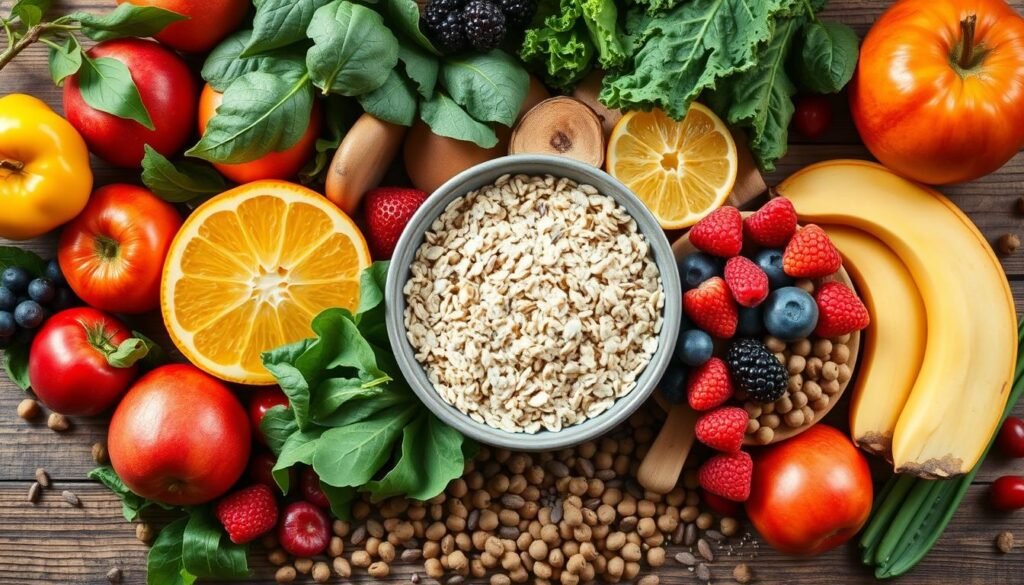
Integrating Soluble Fiber into Your Heart-Healthy Diet
Creating a heart-healthy diet means making smart changes. Adding soluble fiber is key to lowering cholesterol. It’s easy and fun to include in your meals every day.
Start by choosing whole grains over refined ones. Whole grain bread and cereals are full of the fiber your heart loves. Try simple swaps, like oats in pancakes or barley in soups, to add more fiber to your diet.
Eating more beans, like black beans, navy beans, and lentils, improves your fiber intake. For instance, a cup of black beans has about 4.8 grams of soluble fiber. Beans make your meals more fulfilling and heart-happy.
- Healthy snacks, like fruits, are great too. A small orange provides 1.8 grams of soluble fiber.
- Add flaxseeds to smoothies or yogurt for an extra 1.1 grams of fiber per tablespoon.
- Try new recipes with veggies, such as Brussels sprouts, to boost your nutrition.
Gradually changing your diet helps you adapt more easily. Remember, drinking plenty of water is important with more fiber. It helps your digestion and avoids discomfort. A dietitian can offer personalized advice for a heart-healthy plan with more soluble fiber.
In summary, making small changes like switching grains, adding beans, and eating fruit makes your diet better. These adjustments make your heart healthier and your meals tastier.
Benefits of a Heart-Healthy Diet with Soluble Fiber
A diet good for the heart that has soluble fiber is very beneficial for your health. It helps lower cholesterol and supports body functions. Many people don’t realize how important a diet rich in fiber is. As a result, most people in the U.S. eat about 15 grams of fiber daily. This is much less than the 25 grams recommended for women and 38 grams for men.
Overall Health Benefits
Eating food with plenty of soluble fiber is great for your health. It helps keep your digestive system healthy and your gut happy. Eating more fiber can also improve your blood pressure, help you manage your weight, and lessen the risk of diseases. These diseases include type 2 diabetes and strokes. Studies have found that eating fiber-rich foods may even help you live longer, especially for men and women who eat it regularly over the years.
Potential for Weight Management
Adding a lot of soluble fiber to your diet can help you manage your weight. Foods high in fiber like beans, lentils, and whole grains make you feel full. This reduces the chance of eating too much. One clinical dietician saw a 30-point drop in cholesterol by eating fiber instead of lean meats. This shows how important soluble fiber is for weight control and heart health.
| Health Aspect | Impact of Soluble Fiber |
|---|---|
| Cholesterol Levels | Can decrease LDL cholesterol by 5 to 10 grams daily |
| Digestion | Aids in maintaining digestive health and gut microbiome |
| Weight Management | Promotes satiety and reduces overall calorie intake |
| Cardiovascular Health | Reduces risk of heart disease and high blood pressure |
Specific Sources of Soluble Fiber to Consider
Adding specific sources of soluble fiber can really help lower cholesterol and boost heart health. Three good options are oat bran fiber, psyllium husk fiber, and flaxseed fiber. Each offers special benefits and can be easily added to your daily meals.
Oat Bran Fiber and its Effects
Oat bran fiber is rich in beta-glucan, a kind of soluble fiber that lowers bad cholesterol. Regular consumption enhances heart health and provides key nutrients. A serving offers about 14 grams of fiber, a strong source of soluble fiber. You can add it to your breakfast cereal or baked treats to help reach your fiber goals.
The Role of Psyllium Husk Fiber
Psyllium husk fiber is a dense source of soluble fiber and is easy to use. It’s available as a supplement, making it simple to boost your fiber intake and focus on cholesterol. Taking 5 to 10 grams daily can lower bad cholesterol. This flexible fiber can be put into smoothies, yogurt, or baked items, allowing for varied usage.
Flaxseed Fiber Benefits
Flaxseed fiber mixes soluble fiber with omega-3 fatty acids, supporting heart health and adding nutrition. About 2 grams of soluble fiber are in a tablespoon of ground flaxseed. Adding flaxseed to your meals, like oatmeal or salads, enhances fiber intake and helps reduce cholesterol.
| Source | Fiber Content (per serving) | Benefits |
|---|---|---|
| Oat Bran Fiber | 14 grams | High in beta-glucan, targets LDL cholesterol |
| Psyllium Husk Fiber | 5-10 grams (supplement) | Effective in lowering cholesterol levels |
| Flaxseed Fiber | 2 grams (per tablespoon) | Rich in omega-3s and soluble fiber |
Including Beans and Legumes in Your Diet
Trying to manage cholesterol better? Look no further than beans and legumes. These superfoods are rich in dietary fiber. This fiber is key to lowering bad LDL cholesterol. A study in 2021 found that eating a cup of beans daily can lower cholesterol in just 29 days.
From black beans to lentils and chickpeas, these foods are not only healthy but also versatile. They can transform any meal, adding both taste and health benefits. Want to make your meals more exciting with beans and legumes? Here are a few suggestions:
- Add black beans to salads for added texture and protein.
- Whip up a hearty lentil soup for a warming and nutritious option.
- Use chickpeas to create creamy hummus, perfect for dipping fresh vegetables.
Between 2014 and 2017, Americans ate more legumes, about 11.7 pounds per year. This shows we’re choosing heart-healthy foods more often. With nearly 86 million adults facing high cholesterol in 2020, it’s a smart choice.
Adding different beans and legumes to your daily meals promotes a balanced, fiber-rich diet. It’s great for keeping cholesterol in check and boosting overall health. Plus, they’re easy to prepare, making mealtime simple and nutritious.
Check out this table for a quick guide on the fiber content and benefits of various beans and legumes:
| Type | Fiber per 1 Cup (Cooked) | Benefits |
|---|---|---|
| Black Beans | 15 grams | Rich in antioxidants and promotes heart health. |
| Lentils | 16 grams | Supports digestive health and stabilizes blood sugar levels. |
| Chickpeas | 12 grams | Helpful for weight management and packed with protein. |
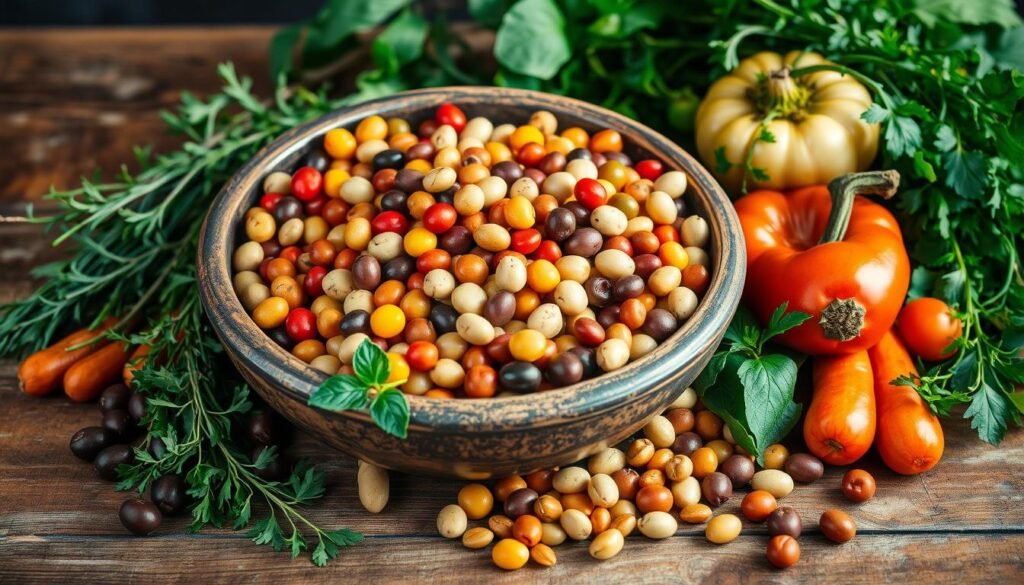
Adding beans and legumes to your diet is a tasty way to improve your heart health and manage cholesterol. They are delightful additions to any meal plan, enhancing your diet with their health benefits.
Exploring the Role of Fruit Fiber in Health
Fruit fiber is key to good health, especially for the heart. Apples, pears, and berries have lots of soluble fiber. This type of fiber is very beneficial for health. Sadly, very few people eat enough fruits or get enough dietary fiber.
Most people eat less fruit than they should. Only a few hit the fiber intake that doctors recommend for health. In the U.S., about 90% don’t eat the recommended amount of fruit. It’s clear we need to eat more fruit to stay healthy.
Fruit fiber has parts like pectin, hemicellulose, and cellulose. Pectin makes up about 35% of fruit fiber. Research shows that pectin helps gut health by creating short-chain fatty acids. These acids are good for your digestion.
Eating more fruit can support your heart health. There are guidelines for how much fruit different people should eat. Following these can improve your diet and health.
Soluble fiber from fruits helps more than just your stomach. It can also lower bad cholesterol. This lowers the risk of heart disease. Adding fruit to smoothies, salads, or yogurt makes it fun to eat more fiber.
To learn more about the power of high-fiber foods, check out this article here.
Conclusion
Eating soluble fiber daily can greatly improve your heart health and manage cholesterol. Studies show that 25g of fiber, with 6g being soluble, lowers cholesterol. This decrease is seen in both total and LDL (bad) cholesterol levels. In clinical studies, patients eating soluble fiber saw drops in cholesterol and triglycerides. This shows how vital soluble fiber is for heart health.
Choosing a diet high in soluble fiber helps lower cholesterol and supports weight loss. It also keeps blood sugar levels in check. Foods like oats, beans, and barley are great for those with high cholesterol or heart disease risk. Eating more whole, fiber-rich foods leads to lasting benefits for your heart.
To manage cholesterol better, try adding more soluble fiber to your meals. This positive change is good for anyone wanting to reduce heart risk and improve health. For more tips on cholesterol and diet, please visit this comprehensive guide.