About 100 million adults in the US have high cholesterol. This shows how important diet is in managing this health risk. Refined carbs and sugar have a big impact on cholesterol levels. This is crucial because bad balances can lead to heart disease. Many processed foods have hidden sugars and refined carbs. Eating too much of these can damage heart health. It’s key to know how these foods affect cholesterol for a good diet and health.
Key Takeaways
- Understanding how refined carbohydrates can elevate LDL cholesterol levels.
- The importance of keeping HDL cholesterol levels above 60 for heart health.
- Excess sugar intake can hinder cholesterol management and lead to heart disease.
- Proper diet management includes focusing on healthy, low glycemic index foods.
- Losing a small percentage of body weight can significantly improve cholesterol levels.
Understanding Cholesterol and Its Types
Cholesterol is crucial for our bodies. It helps build cell membranes and make some hormones and vitamins. It’s key to learn about cholesterol types, especially Low-Density Lipoprotein (LDL) and High-Density Lipoprotein (HDL) cholesterol.
LDL cholesterol is the “bad” kind. It can gather in artery walls, causing them to narrow. This increases the risk of heart issues like disease, attacks, and strokes. HDL cholesterol is the “good” kind. It carries LDL cholesterol to the liver to be removed. This process is good for your heart health.
It’s vital to check cholesterol levels regularly. Adults should do this every 4 to 6 years, as recommended by the American Heart Association. Early checks help spot any issues with LDL and HDL cholesterol balance. Making changes early can help a lot.
Diet and exercise are key to managing cholesterol. Eating heart-healthy foods and staying active can improve cholesterol levels. For detailed info on cholesterol and diet, visit this link on cholesterol management.
| Cholesterol Type | Function | Health Implications |
|---|---|---|
| LDL Cholesterol | Transports cholesterol to cells | High levels can lead to atherosclerosis and increased heart disease risk |
| HDL Cholesterol | Helps remove cholesterol from the bloodstream | High levels promote heart health and lower disease risk |
Understanding cholesterol types helps people make smarter food and lifestyle choices. This knowledge promotes better heart health.
What Are Refined Carbohydrates?
Refined carbohydrates are carbs that have been heavily processed. They lose important nutrients and fiber. Foods like white bread and sugary cereals are common refined carbs. These carbs lack the fiber and nutrients found in whole grains. They can cause a quick rise in blood sugar. This can lead to weight gain and increase the risk of metabolic diseases.
Experts often advise eating fewer refined carbohydrates. They are linked to health issues like obesity, heart disease, and type 2 diabetes. Diets high in refined carbs usually have less fiber. This lack of fiber can cause digestive problems and even colon cancer.
Many nutritionists say we should eat fewer refined carbohydrates. They point to the increasing obesity rates in America. Since 1970, people have eaten less saturated fat but more refined carbs. Eating more whole grains instead of refined carbs could make us healthier. For more information, check out this study from the American Journal of Clinical.
It’s important to know about refined carbohydrates. Making smart choices about carbs can help us follow dietary guidelines. Choosing whole grains is better for our long-term health and nutrition.
The Role of Sugar in Our Diet
Added sugars are more common in the American diet today than ever before. The average person eats about 22 teaspoons of sugar every day. This amount is above the recommended levels. High sugar consumption can lead to serious health issues. It’s vital to know the difference between added sugars and natural sugars found in fruits and dairy. This knowledge helps us make better choices about our dietary intake.
Eating too much sugar can lead to obesity and increase the risk of diabetes. Studies show that lots of added sugars can harm cholesterol levels. This is worrying because it could lead to heart problems. High sugar levels can raise “bad” LDL cholesterol and lower “good” HDL cholesterol, which is essential for heart health. This link between sugar and heart disease is concerning. Explore more about the relationship between sugar intake and cardiovascular health.
To better understand sugar’s effects, look at a table comparing added sugars to natural sugars. It shows how each affects our health.
| Aspect | Added Sugars | Naturally Occurring Sugars |
|---|---|---|
| Source | Processed foods, sugary drinks | Fruits, dairy products |
| Health Risks | Obesity, diabetes, high cholesterol | Provides essential nutrients, lower risk |
| Cholesterol Impact | Increases LDL, decreases HDL | No significant effect |
| Recommended Intake | Less than 10% of total energy intake | Natural and unprocessed as part of a balanced diet |
We need to understand the differences between added and natural sugars for our health. By reducing added sugars, we can improve our health. It’s a key step to keeping our cholesterol in check. Making informed choices helps us live healthier.
Refined Carbohydrates and Sugar’s Effect on Cholesterol
Understanding how refined carbs and sugar affect cholesterol is key for heart health. High sugar intake can badly impact your lipid profiles. This means LDL cholesterol goes up while HDL decreases.
Connection Between Sugar Intake and Cholesterol Levels
Studies show a clear link between eating too much sugar and worse cholesterol levels. Too much sugar can lead to higher LDL cholesterol, increasing heart risks. The American Heart Association suggests women limit sugar to 25 grams daily and men to 36 grams.
Yet, people in the U.S. often eat three to six times that amount. This pushes cholesterol levels up, posing a threat to heart health.
How Excess Sugar Leads to Higher LDL Cholesterol
Consuming too much fructose and sucrose makes the liver turn these sugars into fat. This boosts LDL cholesterol. Not only does sugar increase LDL, but it also lowers HDL cholesterol. High LDL with low HDL can lead to fatty deposits in arteries. This raises the risk of heart disease and stroke.
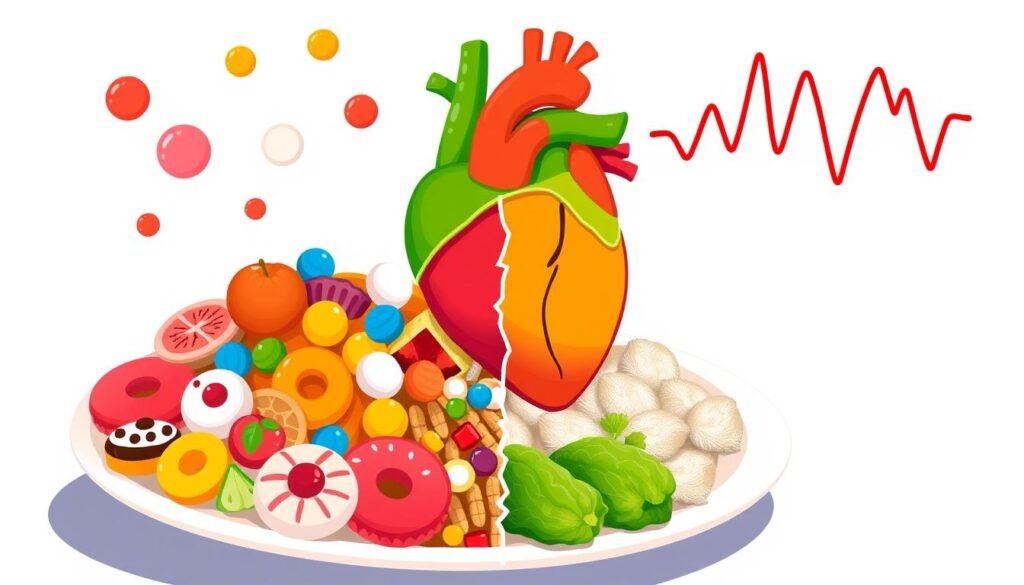
Switching sugar-heavy snacks and drinks for whole grains and natural sugars can help control cholesterol. Whole grains have a positive impact on heart disease prevention. It highlights how diet choices play a role in keeping cholesterol levels healthy.
The Glycemic Index and Its Importance
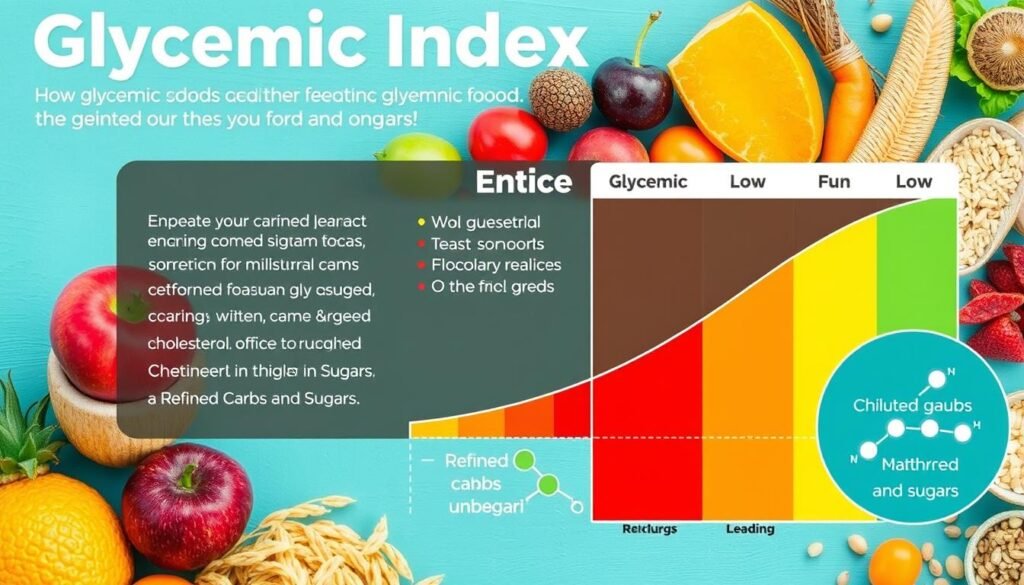
The glycemic index (GI) tells us how foods affect our blood sugar. Foods are rated from zero to 100. Here, 100 is pure glucose, and zero means no sugar impact. Low GI foods, with a score under 50, include things like peppers and strawberries.
On the other hand, high GI foods score over 70. These are often processed items and sugary drinks.
Understanding High vs. Low Glycemic Index Foods
Food types have different GI scores. Here are some examples:
- Banana (ripe) – 51
- Carrots (raw) – 16
- Apple (golden delicious) – 39
- Popcorn – 55
- Watermelon – 72 or 80
The GI can change based on how food is prepared and its ripeness. For instance, frying adds fat, which slows sugar absorption.
Effects on Blood Sugar and Cholesterol
Eating high-GI foods can quickly raise your blood sugar. Low-GI foods, in contrast, keep sugar levels stable. This helps manage cholesterol too.
Focusing on legumes, whole grains, and greens is good for glycemic control. It’s key for heart health, balancing sugar levels, and cholesterol.
The Impact of Triglycerides on Cholesterol Levels
Triglycerides are a type of fat in our blood. They come from extra calories, especially sugars and carbs. If you have too many, they can harm your heart.
Knowing your triglyceride levels is key. It helps you understand your health better:
| Triglyceride Level | Category |
|---|---|
| Less than 150 mg/dL | Normal |
| 150 to 199 mg/dL | Borderline High |
| 200 to 499 mg/dL | High |
| 500 mg/dL and above | Very High |
Sugary foods and refined carbs cause high triglyceride levels. Americans get about 25% of their energy from these foods. This eating pattern can lower good cholesterol, increasing heart disease risk.
Making changes in your lifestyle can help. Exercise regularly and eat healthy fats, like those in olive and canola oils. Include omega-3s from fish oil in your diet. For some, medications like statins and fibrates might be needed.
It’s crucial to watch your triglyceride levels for good heart health. Making smart food choices can greatly improve your well-being.
How Insulin Resistance Affects Cholesterol
Insulin resistance has a big impact on cholesterol in the body. It often starts from eating too much sugar. This creates a problem with insulin and sugar in the body. Because of this, the levels of bad (LDL) and good (HDL) cholesterol can change.
The Cycle of Insulin and Sugar Consumption
Eating lots of refined carbs and sugars starts a bad cycle in the body. After you eat sugar, the body uses insulin to control blood sugar. But in people with insulin resistance, too much insulin leads to more LDL (bad) cholesterol and less HDL (good) cholesterol. This makes plaque build up in arteries, increasing heart disease risk. Exercising can fight these changes by making the body better at using insulin, boosting HDL, and lowering LDL and fats in the blood.
Metabolic Syndrome and Cholesterol Issues
Metabolic syndrome includes problems like high blood pressure, high blood sugar, too much fat around the waist, and strange cholesterol levels. In the U.S., 25-50% of people have this issue, showing a big health concern. It’s closely related to insulin resistance, which messes up cholesterol levels. Studies show that up to 70% of diabetics have bad cholesterol levels. Eating foods high in saturated and trans fats makes these cholesterol problems worse, leading to serious health issues.
If you’re worried about your cholesterol, it’s important to know how insulin resistance and metabolic syndrome relate. Eating foods with soluble fiber, like oats and beans, can lower bad cholesterol. Also, cutting down on sugar and exercising more can control both insulin resistance and cholesterol. For more info, read a great study on how chronic inflammation affects lipids and what diet changes help here.
| Condition | Effect on Cholesterol | Management Strategy |
|---|---|---|
| Insulin Resistance | Higher LDL, Lower HDL | Increase physical activity, reduce sugar |
| Metabolic Syndrome | Abnormal cholesterol levels | Adopt a balanced diet, monitor blood sugar |
| Dyslipidemia | Abnormal lipid levels | Incorporate soluble fiber, limit fats |
Preventing High Cholesterol Through Dietary Changes
Making dietary changes is key to cholesterol prevention and heart health. Around two-thirds of people don’t see their cholesterol levels change much after eating foods high in cholesterol. This shows eating the right foods may be more helpful for controlling cholesterol than we used to think.
Eating more foods rich in nutrients and fibers like vegetables, fruits, and beans is beneficial. These foods lower blood sugar and cholesterol levels. For example, adding more spinach and bell peppers to your diet can improve your heart health.
| Current Food Choices | Recommended Swaps |
|---|---|
| Processed snacks | Whole foods like nuts and seeds |
| Sugary beverages | Water or herbal teas |
| Baked goods | Oatmeal or fruit-based desserts |
| Red meat | Fatty fish or legumes |
Eating less refined carbs and more protein helps lower bad cholesterol and raise good cholesterol. Healthy fats in foods like avocados, olive oil, and fatty fish are great for this. It’s also good to cut out added sugars from candies and sweetened drinks to improve heart health.
Choosing whole foods made at home helps keep your metabolism healthy. This supports optimal cholesterol prevention. For more tips on what to eat, check out this resource.
Conclusion
Knowing how refined carbs and sugar affect cholesterol and heart health is key. This article showed how diet impacts cholesterol. It highlighted the importance of low LDL and high HDL cholesterol for heart health.
Watching what you eat is important for cholesterol control. Too much refined carbs and sugar is bad. Eating whole foods instead of processed foods helps maintain healthy cholesterol and improves well-being.
For tips on managing cholesterol and understanding its causes, check out this comprehensive guide. Informed choices can boost heart health and lower high cholesterol risks.