Nearly 93 million American adults over 20 have cholesterol levels above 200 mg/dL. This shows the importance of understanding high cholesterol’s effect on health. Doctors call it hyperlipidemia or hypercholesterolemia. These conditions can lead to heart diseases, the top cause of death in the U.S.
Knowing medical terms like hyperlipidemia helps us understand cholesterol’s impact. Cholesterol is crucial for many body functions but can be harmful in high amounts. Dyslipidemia includes various lipid problems affecting cholesterol and triglycerides, highlighting the need for awareness.
Key Takeaways
- 93 million Americans have a total cholesterol count above 200 mg/dL.
- Hypercholesterolemia indicates excessive non-HDL and LDL cholesterol in the blood.
- Dyslipidemia encompasses various lipid disorders that can impact health.
- Understanding cholesterol terminology aids in recognizing personal health risks.
- Early diagnosis and management of high cholesterol can significantly lower cardiovascular risk.
Understanding Cholesterol and Its Importance
Cholesterol is a special type of fat called a lipid. It’s vital for several body functions. It helps make hormones, create vitamin D, and aids in digestion. It’s important to know about the different kinds of cholesterol and their effects on health.
What is Cholesterol?
There are two main forms of cholesterol in our bodies: Low-Density Lipoprotein (LDL) and High-Density Lipoprotein (HDL). LDL is often called “bad” cholesterol because it can lead to plaque in arteries, causing health problems. On the other hand, HDL is “good” cholesterol. It helps move cholesterol from the arteries to the liver, where it’s removed from the body. Keeping these two types in balance is key for a healthy heart.
The Role of Cholesterol in the Body
The body needs a certain amount of cholesterol to work right. It’s crucial for the structure of cell membranes, making bile acids, hormones, and vitamin D. The National Heart, Lung, and Blood Institute suggests getting your cholesterol checked regularly. They recommend starting checks around ages 9 to 11 and then every five years. Managing good cholesterol levels and keeping bad cholesterol in check lowers the risk of heart disease.
| Type of Cholesterol | Common Name | Health Implications |
|---|---|---|
| Low-Density Lipoprotein (LDL) | Bad Cholesterol | Increases risk of atherosclerosis and heart disease |
| High-Density Lipoprotein (HDL) | Good Cholesterol | Helps reduce heart disease risk by transporting cholesterol |
Knowing about your cholesterol levels is crucial. Inactivity, bad eating habits, and certain health issues can worsen cholesterol levels. This can lead to serious health problems. By understanding how cholesterol works and keeping it balanced, you can take charge of your heart health.
Common Terms Related to High Cholesterol
Knowing the terms linked to high cholesterol helps manage and recognize lipid problems. Key terms include hypercholesterolemia, dyslipidemia, and their effects on health. Understanding these helps patients and doctors talk better about managing cholesterol.
Hypercholesterolemia Explained
Hypercholesterolemia means having high cholesterol in the blood. It can come from genes or lifestyle choices. About 38% of adults in the U.S. face this, raising their heart disease risk.
Spotting hypercholesterolemia early can lead to treatments. These treatments can lower cholesterol and boost health.
Dyslipidemia: A Broader Category
Dyslipidemia covers many lipid issues, like high cholesterol and low HDL. It includes too much LDL cholesterol or not enough HDL cholesterol. Both issues can lead to heart disease.
People with dyslipidemia might need lifestyle changes or drugs. This helps handle the condition well.
Lipid Disorder and Its Implications
Lipid disorders mean any abnormal lipid levels, affecting overall health. These disorders can cause arteries to harden, leading to atherosclerosis, heart attacks, and strokes. People with lipid disorders need to check their health often.
They might also need to change their lifestyle or take medicine. This can lower their health risks.
What Is the High Cholesterol Medical Term?
Hyperlipidemia is what doctors call high cholesterol. It’s key for keeping your heart healthy. This problem means too many lipids, like cholesterol and triglycerides, are in your blood. When LDL cholesterol levels get too high, it’s risky for your heart. This type is often called bad cholesterol. On the other hand, HDL is the good kind. It helps clear cholesterol from your blood.
Definition of Hyperlipidemia
Hyperlipidemia means having too much LDL cholesterol in your blood. Almost 73.5 million adults in the US struggle with it. They are at twice the risk of heart disease compared to those with normal levels. It’s important to keep an eye on this condition. Sadly, less than half of those affected get treatment to lower their cholesterol.
Distinction Between Different Types of Cholesterol
Different types of cholesterol play different roles in your health. LDL can lead to artery blockage, while HDL moves cholesterol to the liver for removal. It’s good to keep HDL levels in check, ideally under 150 mg/dL. People usually start heart checks at 35 for men and 45 for women, sometimes earlier if there’s a greater risk. Learning about cholesterol’s effects is vital for heart health. Understanding these relationships is crucial.
Health Risks Associated with High Cholesterol
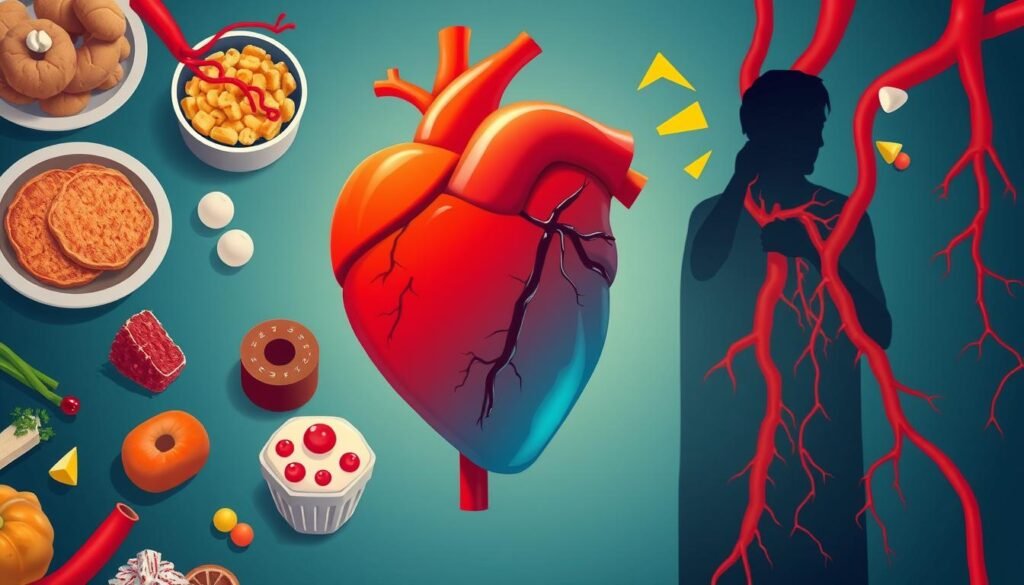
High cholesterol is a big health risk, especially leading to atherosclerosis. This condition narrows the arteries due to plaque. It seriously harms cardiovascular health.
Understanding Atherosclerosis
Atherosclerosis is a long-term disease of the arteries. It’s marked by cholesterol and plaque buildup, narrowing the arteries. This can lead to more heart problems. High LDL cholesterol levels increase this risk.
Cardiovascular Risk Factors
Several factors boost the health risks from high cholesterol. These include:
- High blood pressure
- Diabetes, especially type 2, affecting up to 70% of people with it
- Obesity, especially in type 1 diabetics
- Smoking, which lowers HDL cholesterol and increases heart disease risk
Eating lots of saturated and trans fats raises cholesterol levels. But, you can fight this with regular exercise, like brisk walking for 30 minutes a day.
Atherosclerosis does more than damage heart health. It can lead to heart attacks and strokes, top causes of death in the U.S. Watching cholesterol levels and knowing your heart risk can help avoid these dangers.
| Cholesterol Level (mg/dL) | Risk Level | Recommended Action |
|---|---|---|
| Below 200 | Desirable | Maintain a healthy lifestyle |
| 200-239 | Borderline high | Consider lifestyle changes |
| 240 and above | High | Consult a healthcare provider |
Cholesterol Levels: What Do They Mean?
It’s crucial to understand cholesterol levels when looking at heart health. Doctors measure cholesterol in milligrams per deciliter of blood (mg/dL). There are two key types: LDL and HDL. Each plays a different role in heart health. Knowing these levels helps decide if you need lifestyle changes or medical help.
Understanding LDL and HDL Cholesterol
LDL, or low-density lipoprotein, is known as “bad” cholesterol. If LDL levels get too high, plaque builds up in your arteries. This greatly increases your risk of heart disease and stroke. Health experts say LDL levels above 160 mg/dL are too high.
HDL stands for high-density lipoprotein and is the “good” cholesterol. It helps by moving cholesterol to the liver to be removed. HDL levels below 40 mg/dL are not good and can mean a higher risk of heart problems.
Normal Ranges and What They Indicate
What’s considered normal for cholesterol levels depends on your age, ethnicity, and sex at birth. Here are the normal ranges for total cholesterol, LDL, and HDL:
| Cholesterol Type | Normal Range (mg/dL) | High Risk |
|---|---|---|
| Total Cholesterol | Below 200 | 200 or higher |
| LDL Cholesterol | Less than 100 | 160-189 |
| HDL Cholesterol | 40 (men) / 50 (women) | Below 40 (men) / Below 50 (women) |
Keeping your cholesterol in check is vital. Experts advise getting tested from ages 9 to 11 and then every five years. Adults may need tests more often, depending on factors like age and family history.
Diagnosing High Cholesterol Levels
Getting a handle on high cholesterol involves careful tests and ongoing checks. It’s key in spotting lipid problems and gauging heart disease risks. Knowing this helps start treatments early, leading to better health.
Importance of Cholesterol Testing
Testing for cholesterol is vital, especially if heart diseases might be in your future. The American Heart Association says adults need tests every 4 to 6 years. If heart issues run in your family, or you’ve had high cholesterol, get checked more often. Knowing your levels guides you to healthier life choices and if needed, medications. For details, check this cholesterol testing page.
Who Should Be Tested and When?
Men from 45 to 65 and women from 55 to 65 should test their cholesterol every 1 to 2 years. Kids between 9 to 11 should get their first test, then every 5 years. If you’re overweight, early testing helps nip problems in the bud.
Some people, like those with a certain inherited condition, need frequent tests due to higher risks. Regular testing can lower the dangers of high bad cholesterol.
Cholesterol Management Strategies
Managing high cholesterol involves lifestyle and diet changes. These methods are key to better heart health and lower risk factors. By eating right, exercising, and keeping track of cholesterol, big improvements can happen.
Lifestyle Changes to Lower Cholesterol
Making lifestyle changes is important for controlling cholesterol. Important steps include:
- Quitting smoking and reducing alcohol use
- Keeping a healthy weight
- Using stress management techniques daily
Such changes can significantly lower cholesterol and the risk of heart disease.
Heart-Healthy Diet Recommendations
A heart-healthy diet is vital for managing cholesterol. Focus on adding:
- Fruits and vegetables
- Whole grains like oats and brown rice
- Healthy fats from nuts, seeds, and fish
Eat less saturated and trans fats to improve your cholesterol. This way of eating helps with cholesterol and overall health.
Exercise and Its Impact on Cholesterol Levels
Exercise greatly affects cholesterol levels. Cardio activities like walking, running, biking, or swimming are good because they:
- Increase HDL (good) cholesterol and decrease LDL (bad) cholesterol
- Help with weight loss, which is good for cholesterol
- Make blood flow better and strengthen the heart
Adding exercise to your routine is good for long-term health and cholesterol.
Medical Treatments for High Cholesterol
Managing high cholesterol involves lifestyle changes and medications. Statin therapy is the most common treatment. It greatly lowers LDL cholesterol and cuts the risk of heart disease. Statins are for those with cardiovascular issues, high LDL-C, and adults 40-75 with diabetes or risk factors.
Understanding Statin Therapy
Drugs like Atorvastatin (Lipitor), Fluvastatin (Lescol XL), and Rosuvastatin (Crestor) reduce LDL and triglycerides. They also boost HDL slightly. These drugs are key in treatment for many. Even people who don’t fit the usual criteria may benefit from them, based on overall risk.
Other Cholesterol-Lowering Medications
There are more treatments besides statins. Ezetimibe stops cholesterol absorption in the intestine. PCSK9 inhibitors like Alirocumab (Praluent) and Evolocumab (Repatha) also lower LDL cholesterol. They’re for those who don’t respond to first-line treatments. Then, there are bile acid sequestrants and ACLY inhibitors, including bempedoic acid.
For those with high triglycerides, fibrates and omega-3 fatty acids can help. Knowing all these treatments helps create personalized plans. For deeper info, consider visiting this resource.

Prevention of High Cholesterol Risks
To prevent high cholesterol, it’s important to take action early. Getting regular check-ups helps catch risks before they turn into bigger problems. Knowing what increases your cholesterol is crucial. With this knowledge, you can start making changes to keep it under control.
Importance of Regular Check-Ups
Keeping an eye on your cholesterol is key to staying healthy. With regular check-ups, doctors can spot and tackle risk factors early. These include being overweight, not moving enough, and having a family history of high cholesterol. The American Heart Association recommends starting cholesterol screenings between ages 20 and 35. Catching issues early can make a big difference.
Risk Factors and How to Manage Them
Many things can raise your cholesterol. It’s important to manage these risks effectively. Here’s how:
- Obesity: A BMI over 30 needs attention. Losing 5% to 10% of your weight can help.
- Inactivity: Aim for 150 minutes of exercise a week to keep cholesterol in check.
- Unhealthy Diet: Cut down on bad fats. Eat more fruits, veggies, and whole grains.
- Smoking: This habit hurts your “good” cholesterol, increasing disease risk.
- Excessive Alcohol: Drinking less helps manage cholesterol better.
- Family History: If high cholesterol runs in your family, watch your levels closely.
Making these lifestyle tweaks can lower your cholesterol. More than that, they help prevent future problems. Knowing how to manage cholesterol can lead to smarter health choices and better outcomes.
| Risk Factor | Impact on Cholesterol | Management Strategy |
|---|---|---|
| Obesity | Increases LDL, lowers HDL | Weight loss, healthy diet |
| Inactivity | Negative impact on HDL levels | Regular exercise |
| Unhealthy Diet | Elevates LDL levels | Heart-healthy diet |
| Smoking | Reduces HDL | Quitting smoking |
| Excessive Alcohol | Can raise LDL | Limited consumption |
Current Guidelines and Recommendations
It’s essential for healthcare workers and patients to know the latest cholesterol management guidelines. The way we treat cholesterol is changing because of new studies. Now, treatments are more customized. Doctors look at more than just cholesterol numbers. They consider each person’s unique risk factors.
Updated Cholesterol Management Guidelines
The latest guidelines have new levels for when to act on cholesterol. A total cholesterol below 200 mg/dL is normal. But if it’s 240 mg/dL or more, that’s high. LDL, the “bad” cholesterol, should be under 100 mg/dL. If it’s between 130 to 159 mg/dL, that’s borderline high. Managing triglycerides is also key. They should be under 150 mg/dL.
Recent Research Impacting Treatment Options
New research has changed how we can treat high cholesterol. The American Heart Association now recommends strong statin therapy for adults 20 to 75 with an LDL-C of 190 mg/dL or more. People aged 40 to 75 with diabetes should get a moderate-intensity statin. This is also advised for those at an intermediate risk of heart disease but without diabetes.
Changes in lifestyle are also vital in controlling cholesterol. Eating less saturated fat and exercising for 150 minutes a week are key moves. The DASH diet is highly recommended too. Quitting smoking has been shown to improve cholesterol levels. This shows the importance of a comprehensive approach to managing cholesterol.

| Cholesterol Type | Normal Levels | High Levels |
|---|---|---|
| Total Cholesterol | Less than 200 mg/dL | At or above 240 mg/dL |
| LDL Cholesterol | Less than 100 mg/dL | 160 to 189 mg/dL (High) |
| HDL Cholesterol | Above 40 mg/dL (Recommended) | Below 40 mg/dL (Low) |
| Triglycerides | Less than 150 mg/dL | 200 to 499 mg/dL (High) |
Conclusion
Knowing about high cholesterol is key to good health. This summary shows that both lifestyle and genes affect cholesterol levels. People can live healthier by being active, dealing with stress well, and eating right.
Checking cholesterol often, especially if at risk, helps people make smart choices. The American Heart Association is a great resource. They offer help on managing cholesterol through lifestyle changes and medication like statins, if needed.
Understanding cholesterol is the first step in avoiding heart diseases. By being informed and dedicated, individuals can improve their heart health significantly.