Did you know almost half the adults in the U.S. face high blood pressure? This revealing fact points to a major health issue affecting about 121.5 million Americans. Alongside, two out of five adults battle high cholesterol. This shows that high cholesterol and blood pressure are interconnected issues. They pose big risks to cardiovascular health.
Finding out how these two health matters are linked is key for prevention and managing them. This article looks at the complex connection between high cholesterol and blood pressure. It covers shared risk factors and offers tips for a healthier life. By understanding how they affect each other, people can take steps to lower their risks and aim for a healthier future.
Key Takeaways
- Nearly half of American adults experience high blood pressure.
- Approximately 38% of adults have high cholesterol levels.
- More than 60% of those with high blood pressure also contend with high cholesterol.
- Regular screening is vital for finding these conditions early.
- Proper management greatly cuts the risk of heart disease and stroke.
Introduction to Cholesterol and Blood Pressure
Cholesterol is a waxy substance found in our bodies. It helps in hormone production and cell repair. It’s essential for health, but too much can lead to heart problems. In the U.S., about 95 million adults over 20 have high cholesterol.
Blood pressure measures how hard blood pushes against artery walls, key for circulation. A normal reading is 120 over 80 mmHg. Above that can mean hypertension. Nearly 1 in 3 U.S. adults have both high blood pressure and cholesterol, raising health concerns.
High cholesterol and blood pressure are major heart disease factors. They increase the risk of heart attacks and strokes. Sadly, over half of those diagnosed don’t manage their condition well. This is due to lifestyle and not sticking to medical advice.
It’s important to know about high cholesterol and hypertension. For good health, keep total cholesterol under 200 mg/dL. Watching your LDL (bad) and HDL (good) cholesterol levels is key to lowering heart disease risks.
Better lifestyle choices can improve cholesterol and blood pressure. Diet, exercise, and handling stress are crucial. With the right information, people can work on better health. This reduces the dangers tied to high cholesterol and blood pressure.
The Importance of Monitoring Cholesterol Levels
Keeping an eye on your cholesterol is key to avoiding big health problems. High cholesterol can cause plaque to build up in your arteries. This increases the risk of heart disease. Knowing your cholesterol levels, like LDL (the “bad” kind) and HDL (the “good” kind), helps you understand your heart health better.
The American Heart Association recommends that adults start checking their cholesterol at 20 years old. They should get checked every four to six years. If there’s a problem, they might need checks more often. Your cholesterol should be under 200 mg/dL (5.2 mmol/L). People with high cholesterol should make healthy changes, such as:
- Limiting saturated fat to less than 6% of their daily calories.
- Avoiding trans fats.
- Eating more fruits, veggies, whole grains, and healthy oils.
Being active for 150 minutes a week can also help lower cholesterol and blood pressure. It’s great when paired with eating healthier. Losing 5% to 10% of your weight if you’re overweight helps a lot too. It’s important for nonsmokers to stay away from secondhand smoke to keep their cholesterol levels healthy.
More and more Americans suffer from high cholesterol today. It’s very important to keep track of your cholesterol levels. You can learn about good testing and how to handle it by visiting this resource. Regular checks and healthy living are key to keeping your heart in good shape.
The Significance of Blood Pressure Management
Keeping blood pressure in check is key to avoiding major health problems like heart issues. A normal reading means the systolic number is below 120 mmHg and diastolic is under 80 mmHg. If blood pressure goes high, called hypertension, it might not show any clear signs. This makes it a “silent killer” that can cause serious complications without proper treatment.
Handling high blood pressure means making some lifestyle changes. Cutting down on salt and exercising regularly can make a big difference. Our food choices are crucial for keeping blood pressure in check. Eating foods high in potassium and low in sodium can help manage high blood pressure. This highlights how critical our diet is, as what we eat directly influences our blood pressure.
Combining a healthy diet with regular workouts can control high blood pressure. This reduces the chance of heart diseases. By looking after our blood pressure, we improve our health and live longer, better lives.
Understanding the Link Between High Cholesterol and High Blood Pressure
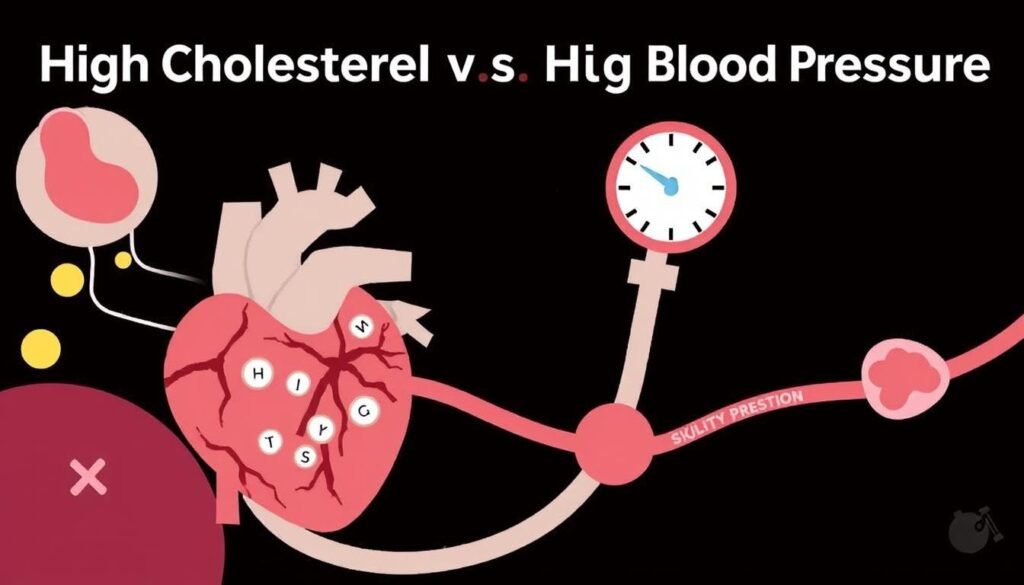
High cholesterol and high blood pressure often go hand in hand, affecting heart health greatly. Nearly half of adults in the United States struggle with high blood pressure. Shockingly, only half get the right treatment. Two-thirds of U.S. adults battle high cholesterol, but only one-third treat it properly. It’s key to understand how cholesterol and blood pressure are connected to manage them well.
Elevated cholesterol can lead to atherosclerosis. This is when plaque builds up in blood vessels, causing arteries to harden and narrow. This makes it tougher for blood to flow, pushing the heart to work harder and raise blood pressure. Thus, high cholesterol can cause high blood pressure later on, starting a risky cycle that may get worse over time.
Tackling both issues is vital for lowering heart disease and stroke risks. Eating heart-healthy foods like fruits, vegetables, beans, nuts, and whole grains is crucial. These foods should be low in bad fats. Also, doing 150 minutes of aerobic exercise weekly helps control cholesterol and blood pressure.
These conditions might need medication for management. Statins are often used to slash high cholesterol levels by more than 50%. But, these meds don’t usually lower blood pressure. So, different medications might be needed to treat each condition effectively, particularly for those with both high cholesterol and high blood pressure.
Understanding the link between high cholesterol and high blood pressure underscores the need for regular health check-ups. Staying informed about these issues aids in preventing and treating them better. For those with high cholesterol, getting blood tests regularly is crucial because there are often no clear symptoms.
| Condition | Statistics | Treatment Status |
|---|---|---|
| High Blood Pressure | Nearly half of U.S. adults | Only half treated appropriately |
| High Cholesterol | About 71 million Americans | Only one-third treated appropriately |
| Atherosclerosis | Leads to heart problems | Requires monitoring and management |
Does High Cholesterol Cause High Blood Pressure
It’s crucial to understand how high cholesterol impacts blood pressure for good health. People often ask if high cholesterol leads to high blood pressure. Studies show a strong link between cholesterol and blood pressure. This highlights the need to keep cholesterol in check to ensure arterial health and avoid high blood pressure.
Examining the Relationship Between Cholesterol and Hypertension
High cholesterol can make arteries narrower by causing plaque buildup, which may raise blood pressure. The connection between cholesterol and blood pressure involves complicated body functions. One of these is the renin-angiotensin system that helps control blood pressure but can be upset by high cholesterol.
Keeping an eye on cholesterol is key to knowing your risk for heart diseases and stroke. These are major health issues in the U.S.
The Role of Arteries in Blood Pressure Regulation
Healthy arteries are vital for normal blood pressure levels. When they get clogged with cholesterol, they narrow and stiffen, pushing up resistance. This shows how important arterial health is for our heart and blood flow. If your total cholesterol is over 200 mg/dL, your blood pressure could go up. It’s important to manage both cholesterol and blood pressure together.
| Cholesterol Type | Optimal Level (mg/dL) | High Level Definition |
|---|---|---|
| Total Cholesterol | 150 | Above 200 |
| LDL (“bad” cholesterol) | 100 | Above 130 |
| HDL (“good” cholesterol) | 40 (men), 50 (women) | Below 40 (men), Below 50 (women) |
| Triglycerides | Less than 150 | Above 200 |
Common Risk Factors for High Cholesterol and Hypertension
Understanding the key risk factors for high cholesterol and hypertension plays a big role in staying healthy. These issues often come from both genetics and how we live. Knowing these risks helps us take steps to improve health.
Genetics and Family History
Our genes significantly affect our risk for high cholesterol and hypertension. If high cholesterol runs in your family, you might face the same problems. Familial hypercholesterolemia (FH) is a condition seen in about 1 in 311 people worldwide. It’s caused by gene mutations that block the body from removing LDL cholesterol properly.
As we get older, handling cholesterol becomes harder, bumping up cholesterol levels. Men are at a higher risk of having more cholesterol at younger ages compared to women. But after menopause, women’s cholesterol levels can go up, increasing their risk too.
Lifestyle Factors: Diet, Exercise, and Obesity
How we live has a big impact on our cholesterol levels and blood pressure. Eating lots of saturated and trans fats can lead to high cholesterol and heart issues. It’s important to keep saturated fats under 10% of your daily calories to stay healthy. Drinking too much alcohol can also make cholesterol levels worse.
Not being active makes you more likely to become obese. This links to higher bad cholesterol and a bigger chance of heart disease and high blood pressure. Stress can make cholesterol worse by releasing certain hormones.

Consequences of High Blood Pressure and High Cholesterol
High blood pressure and high cholesterol are major health risks. They can lead to serious conditions, particularly cardiovascular disease. Knowing these risks helps us see why managing them is crucial.
The Relationship with Cardiovascular Disease
High cholesterol can increase hypertension risk by 24%. This was found in a study with 6,674 people over 14 years. Of these, 809 faced cardiovascular events, showing the need for monitoring cholesterol.
Potential for Heart Attacks and Strokes
Combining high blood pressure with high cholesterol can cause heart attacks and strokes. In a study, less than 10% in low-risk groups had cardiovascular events. But 16.2% in high-risk groups did, showing how critical it is to manage these conditions.
Effective Lifestyle Changes for Managing Cholesterol and Blood Pressure
Making changes to your lifestyle is key to controlling cholesterol and blood pressure. Eating right and staying active are especially good for your heart’s health.
Dietary Recommendations: The DASH and Mediterranean Diets
The DASH diet focuses on eating whole foods and reducing salt. It recommends:
| Food Group | Recommended Servings (for 2,000 calories) |
|---|---|
| Grains | 6 to 8 servings |
| Vegetables | 4 to 5 servings |
| Fruits | 4 to 5 servings |
| Fat-Free or Low-Fat Dairy | 2 to 3 servings |
| Nuts, Seeds, or Dry Beans and Peas | 4 to 5 servings |
| Fats and Oils | 2 to 3 servings |
| Sweets and Added Sugars | Fewer than 5 servings per week |
Try to keep sodium under 2,300 mg daily on the DASH plan. If you need tighter control, go even lower. The Mediterranean diet centers on olive oil, fish, nuts, and legumes. It’s packed with omega-3s that help lower cholesterol and blood pressure.
The Importance of Regular Exercise
Staying active helps keep your cholesterol and blood pressure in check. Aim for 150 minutes of moderate exercise every week. Try exercises like walking, biking, or swimming to boost your good cholesterol and control weight. These activities also improve your blood flow and lung health.
Making small changes, like taking the stairs or short walks, adds up to big health benefits. Also, quitting smoking boosts your heart health. Your circulation starts to improve within just three months after you stop.

Medications for High Cholesterol and Hypertension
Doctors often suggest meds for things like high cholesterol and high blood pressure when healthier habits aren’t enough. The need for these meds varies by person. Statins are key for controlling cholesterol, while RAS blockers help with blood pressure.
When Medication is Necessary
If diet and exercise don’t get cholesterol levels down, meds might be needed. People with heart disease, diabetes, or very high LDL might get statins. Talking to healthcare providers is crucial to figure out if meds are needed.
Keeping an eye on lipid and blood pressure levels helps make sure treatments work. If needed, dosages can be changed. For more info on how blood pressure meds might affect cholesterol, check this resource.
Types of Medications Commonly Prescribed
There are many meds for managing high cholesterol and hypertension:
- Statins: In the U.S., drugs like Atorvastatin (Lipitor®) and Rosuvastatin (Crestor®) are often used. They lower LDL cholesterol and can bump up HDL.
- RAS Blockers: These include ACE inhibitors like Lisinopril and ARBs like Telmisartan. They’re good for lowering blood pressure without messing with cholesterol much.
- Fibrates: Meds like Fenofibrate and Gemfibrozil lower triglycerides and might slightly increase HDL cholesterol.
- Bile Acid Sequestrants: Drugs such as Cholestyramine and Colesevelam can cut down LDL cholesterol and may boost HDL cholesterol.
- Non-statin Agents: Ezetimibe stops cholesterol from being absorbed in the gut. It’s often used with statins for better results.
Doctors have many treatments to choose from, based on what each patient needs. Remember, every med has possible side effects. Keeping in touch with your doctor is key to managing cholesterol and blood pressure well.
Conclusion
The link between high cholesterol and blood pressure is complex but vital for heart health. Keeping an eye on these can help manage risk factors. Studies show that people with hypertension and high cholesterol face a higher chance of heart diseases.
About 68% of U.S. adults suffer from these issues. This calls for more awareness and steps to control them.
Employers can help by offering wellness programs. These programs help check cholesterol and blood pressure. A tool like Hello Heart can help employees take control of their health. This not only lowers healthcare costs but also boosts productivity and well-being.
You can find more tips on managing health at Hello Heart’s guide. It’s full of helpful info.
Cardiovascular disease is a top killer in the U.S. Knowing how cholesterol and blood pressure interact is key. Acting on this knowledge and getting help when needed can lower heart risks significantly. This means a better, longer life.