Did you know that over 95 million American adults have high cholesterol? This condition increases their risk for heart disease. It’s vital to manage cholesterol levels for good heart health. Much of this management starts with what you put in your grocery cart. A well-planned grocery shopping trip for cholesterol-friendly foods can greatly improve your diet. This guide will help you shop with confidence, giving tips for heart-healthy groceries and ensuring a nutritious grocery list for your heart.
Key Takeaways
- Start your protein options with over 93% lean ground chicken or turkey.
- Choose products that list whole grains first in the ingredient list or as 100% whole grain.
- Aim for vegetable oils like canola, olive, or peanut for healthier unsaturated fats.
- Include fresh, frozen, or canned vegetables and fruits in your diet.
- Pick dairy options like fat-free or low-fat for heart health.
Understanding Cholesterol and Its Impact on Health
Cholesterol is a waxy substance in our blood. It helps make cells and hormones. But, too much cholesterol is bad for health. It’s crucial to know how it affects us.
The body has two main types of cholesterol: LDL and HDL cholesterol. LDL is bad because it blocks arteries, raising heart disease risk. HDL is good because it cleans LDL from our blood, which is good for the heart.
What we eat affects our cholesterol levels. Foods from animals, like meats and dairy, add to it. Eating too much saturated and trans fats also boosts bad cholesterol. We should eat less saturated fat, no more than 5% to 6% of daily calories.
In 2018, the US FDA stopped the use of partially hydrogenated oils. This move aimed to cut down trans fat in foods. Understanding your cholesterol levels is key. A diet high in soluble fiber helps lower bad cholesterol.
Foods like beans, lentils, fruits, and oats can help reduce cholesterol. Following a Mediterranean Diet also supports heart health. Testing cholesterol regularly is important. It helps take early action for better health.
Choosing healthy snacks can also improve heart health. Try nuts, seeds, fruits, hummus, Greek yogurt, and veggies. Healthy oils and fish make meals better. Adding herbs and spices can also enhance flavor without the bad fats.
| Cholesterol Type | Impact on Health | Sources |
|---|---|---|
| LDL Cholesterol | Contributes to plaque buildup in arteries, increasing heart disease risk | Animal products, saturated and trans fats |
| HDL Cholesterol | Helps remove LDL from the bloodstream | Healthy fats from fish, olive oil, and avocados |
| Soluble Fiber | Helps lower LDL cholesterol levels | Fruits, oats, legumes, and whole grains |
Foods to Avoid for Healthy Cholesterol Levels
Avoiding certain high-cholesterol foods is key to healthy cholesterol levels. Items full of saturated and trans fats should be limited. Fatty meats, full-fat dairy, and processed snacks are big no-nos.
A slice of Swiss cheese has about 20mg of cholesterol. A 3oz portion of canned shrimp has a whopping 214mg. The American Heart Association suggests keeping daily cholesterol under 300mg. So, these foods to avoid for cholesterol are not good for you. Also, eating an extra 2oz of processed meat daily could boost your heart disease risk by 42%.
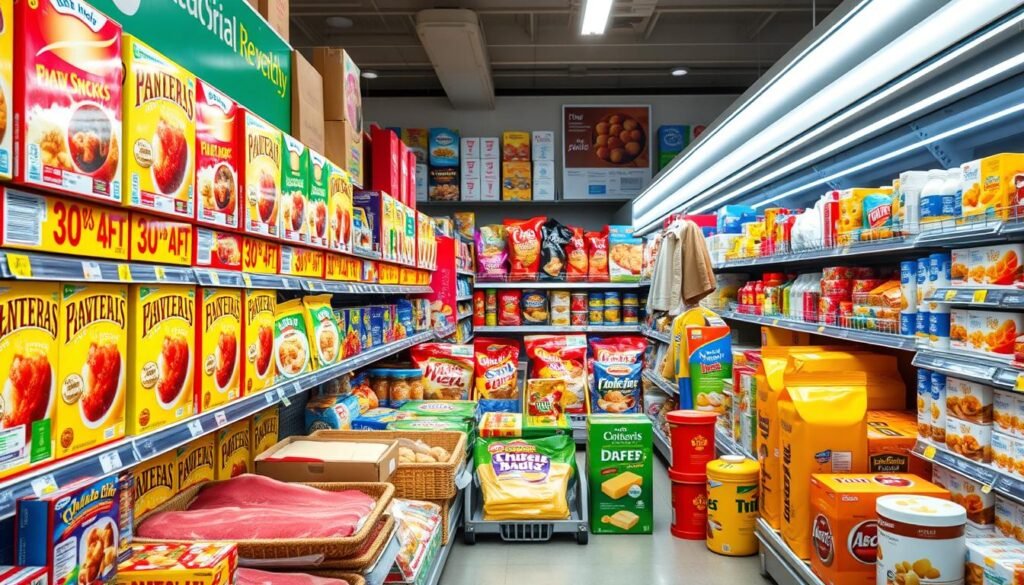
Hidden sodium in canned foods and condiments can also be risky. It’s crucial to know what triggers high cholesterol. Try healthier swaps, like using yogurt instead of sour cream to cut saturated fat and cholesterol.
Although shrimp is high in cholesterol, scallops are a better seafood choice. Aim to replace high-cholesterol foods with heart-healthy options. Mindful eating can improve cholesterol levels in 3-6 months.
Want more details on what to avoid? Check out this article on high-cholesterol foods to learn which foods to skip for better cholesterol management.
Shopping for Heart-Healthy Meals
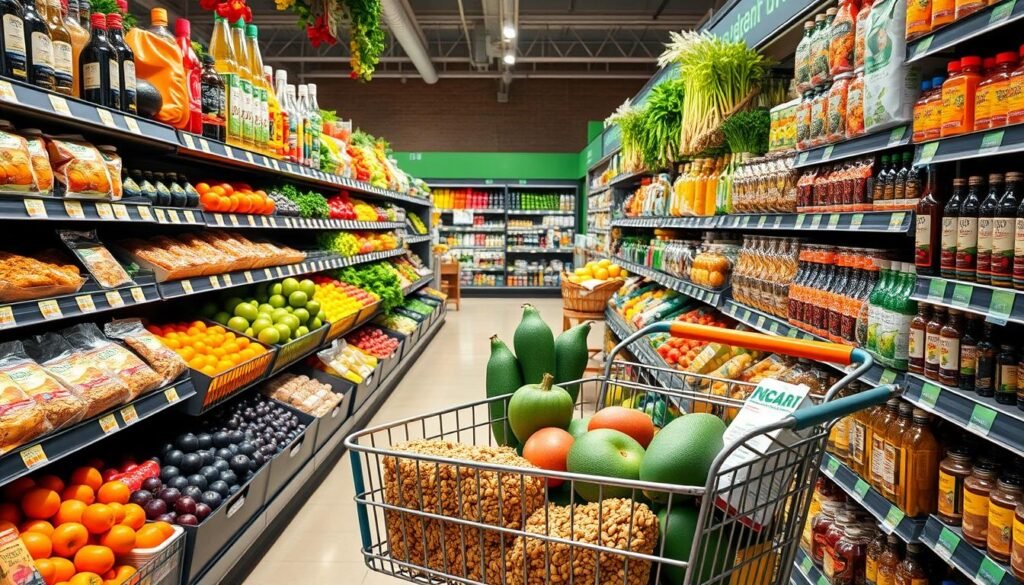
Shopping for heart-healthy meals starts with a smart plan. Knowing what your heart needs is the first step. Focusing on foods full of nutrients is key for a healthy heart.
Eating more fiber is very important for your heart. You can get more fiber by eating whole grain foods. These include whole wheat bread, brown rice, and cereals rich in fiber. Such foods make your heart and body healthier.
It’s important to eat less saturated fats. This means eating red meat less, like once a week, and having seafood more often. Choosing low-fat dairy, such as skim milk and plain yogurt, is also good for your heart.
When looking at condiments, stay away from those with too much added sugar. It’s better to use healthy oils like olive or canola oil. These oils help your heart work better.
Look for items with the American Heart Association’s heart-check mark while shopping. This mark means they are good for your heart. It’s a good way to know you’re making healthy choices.
| Food Category | Heart-Healthy Choices | Limit or Avoid |
|---|---|---|
| Fruits & Vegetables | Berries, citrus, carrots, broccoli | None |
| Whole Grains | Whole wheat bread, brown rice, quinoa | Refined grains |
| Dairy | Low-fat yogurt, skim milk, low-fat cheese | Full-fat dairy |
| Proteins | Skinless chicken, fish, tofu | Red meat |
| Fats & Oils | Olive oil, canola oil | Coconut oil, palm oil |
Making a shopping plan that fits your likes and health needs is great for your heart. Talking to a dietitian can make shopping simpler. This effort helps you make smarter food choices and build healthy habits.
Grocery Shopping for Cholesterol-Friendly Foods
Shopping for cholesterol-friendly foods is key to heart health. It’s important to pick the right food groups. These foods improve cholesterol levels and boost overall health. Knowing which foods to choose makes grocery shopping easier.
Key Food Groups to Focus On
Heart health needs specific foods. Here’s what to include:
- Fresh Vegetables: Choices like kale, spinach, and broccoli cut down on blood fats.
- Fruits: Apples and avocados help lower bad cholesterol. Berries are good for extra antioxidants.
- Whole Grains: Fiber-rich foods like oats and barley reduce cholesterol intake.
- Healthy Proteins: Choose lean meats and beans. Lentils and soy are great for lowering cholesterol.
Reading Nutrition Labels
Learning to read nutrition labels is important. Here’s what to look for:
- Look for at least 3 grams of fiber per serving.
- Choose foods with less than 5 grams of saturated fat.
- Pick items with under 140 milligrams of sodium.
This knowledge helps you make healthy choices. Shopping with these tips in mind leads to a healthier life.
| Food Group | Examples | Cholesterol Benefits |
|---|---|---|
| Vegetables | Kale, Spinach, Broccoli | High in fiber, lowers cholesterol |
| Fruits | Apples, Avocados, Berries | Reduces LDL cholesterol |
| Whole Grains | Oats, Barley | Limits cholesterol absorption |
| Healthy Proteins | Lentils, Salmon, Soy | Helps lower LDL cholesterol levels |
Best Vegetables and Fruits for Lowering Cholesterol
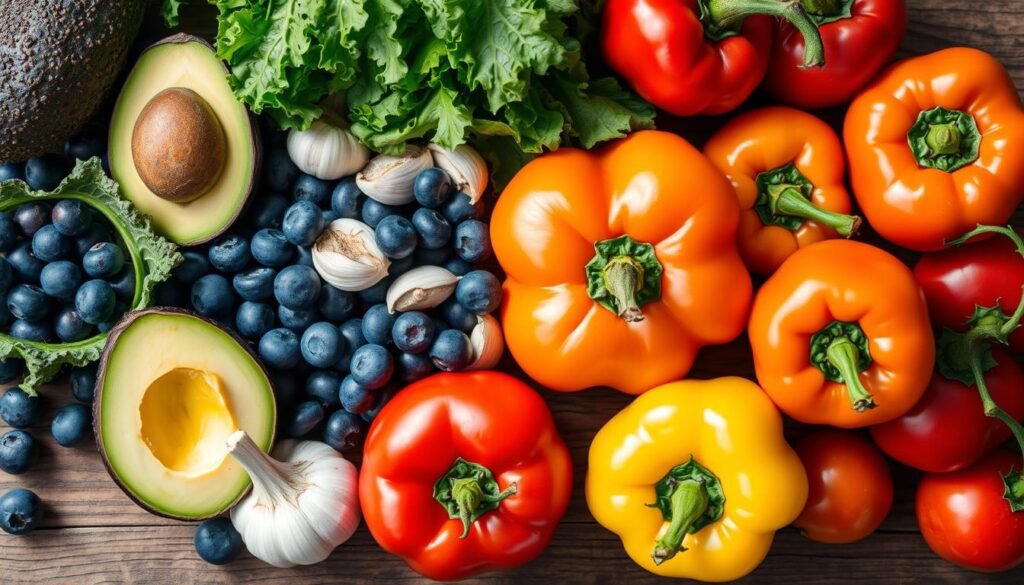
Eating different colorful fruits and vegetables every day is key for lowering cholesterol. These foods are full of fiber, vitamins, and antioxidants that are good for the heart. Adding the best fruits and vegetables to your diet can make your heart stronger and healthier.
Colorful Options in Produce Aisles
Choosing colorful fruits and vegetables when you shop is important. These bright foods are packed with nutrients that help the heart. Here are some top picks:
- Berries – Full of fiber, antioxidants, and vitamins, berries such as blueberries and strawberries help lower cholesterol.
- Apples – They have pectin, a kind of soluble fiber, which can cut cholesterol by up to 10%.
- Leafy Greens – Spinach and kale are rich in antioxidants, aiding in cholesterol reduction.
- Oranges – These fruits offer vitamin C and fiber, helping to improve cholesterol levels.
- Root Vegetables – Carrots and sweet potatoes are not just colorful. They also have fiber that’s good for the heart.
Adding many colorful fruits and vegetables to your meals not only makes eating more fun but also helps lower cholesterol naturally. This is a tasty way to improve your diet and focus on heart health.
Whole Grains: The Heart-Friendly Choice
Whole grains are crucial for a heart-healthy diet. They are rich in essential nutrients and fiber. This supports heart health. Benefits of whole grains include lowering bad cholesterol. This reduces heart disease and stroke risks.
Adding oats, quinoa, brown rice, and whole-wheat pasta to meals is beneficial. Oats have beta-glucan which cuts cholesterol absorption. Eating 100% whole grain products boosts heart health significantly.
The USDA suggests half our grains should be whole grains. Rye is a good choice, with 12g of fiber per cup. This lowers bad cholesterol.
Choosing quinoa is nutritious, offering 8g of protein and 5g of fiber per cup. Swapping white rice for brown rice increases fiber. Brown rice provides over 3g of fiber per cup, promoting health.
The American Heart Association says to pick products with at least 51% whole grains. These grains improve fullness and supply important nutrients. They include B vitamins, iron, magnesium, and selenium.
For optimal health, include three servings of whole grains daily. Try a slice of whole-grain bread, a cup of whole-grain cereal, or half a cup of cooked whole grains. This supports a heart-healthy diet.
For more info on whole grains and health, visit this resource.
Healthy Proteins to Include in Your Cart
Choosing the right proteins is key for a healthy heart and keeping cholesterol in check. Adding different healthy proteins to your meals can make you feel better and give you important nutrients. Try to balance lean meats with plant-based proteins to cover all your nutritional bases.
Lean Meats and Plant-Based Alternatives
Go for lean meats like skinless chicken breast, turkey, and fish. They have less saturated fat than fattier meats. A 3-ounce piece of skinless chicken breast has about 27 grams of protein. It’s a great choice for any meal.
Salmon fans will be happy to know it provides 19 grams of protein per 3-ounce serving. If you prefer beef, 93% lean ground beef has 22 grams of protein. These options help you get plenty of protein, which is good for controlling cholesterol.
Besides lean meats, plant-based proteins are great for your heart. Foods like lentils and beans are packed with nutrients and don’t have cholesterol. Half a cup of cooked lentils has almost 24 grams of protein and 10 grams of fiber.
Half a cup of black beans has about 7 grams of protein, which is good for your gut. Eggs have 6 grams of protein each, and 2 tablespoons of natural peanut butter have 7 grams. Peanut butter is great for snacks and different meals.
The National Institutes of Health says it’s important to eat proteins from both animal and plant sources. Proteins are made of amino acids that our bodies need to work well. Eating this way keeps our muscles strong, as studies show, and helps our brains stay sharp as we age.
To easily see which proteins are good for heart health, check the table below:
| Protein Source | Serving Size | Protein (grams) |
|---|---|---|
| Skinless Chicken Breast | 3 ounces | 27 g |
| Salmon | 3 ounces | 19 g |
| 93% Lean Ground Beef | 3 ounces | 22 g |
| Lentils (cooked) | 1 cup | 18 g |
| Black Beans | 1/2 cup | 7 g |
| Egg | 1 large | 6 g |
| Natural Peanut Butter | 2 tablespoons | 7 g |
These proteins can help make your diet broader and better for your heart. For tips on cholesterol and food choices, visit this helpful guide.
Healthy Fats and Oils: Making Smart Swaps
Eating healthy fats is key for a strong heart. It’s important to know which oils are good for managing cholesterol. By choosing the right fats, you boost your meal’s health benefits and support well-being.
Choosing the Right Cooking Oils
Look for cooking oils high in unsaturated fats. Olive oil, avocado oil, and canola oil are great choices. They make food taste good and help your heart. Swap out saturated fats like butter for these healthier options to improve your cholesterol levels.
Try baked corn tortilla chips instead of fried ones for a healthy snack. Choose low-salt pretzels or baked potato chips to cut down on fat without losing flavor. These snack swaps show you care about using healthy fats for heart health.
When eating out, go for healthy choices. Choose soups with veggies in low-sodium broth instead of cream-based soups. Pick grilled chicken sandwiches without the skin over big cheeseburgers to eat well and keep saturated fats low.
The table below shows popular cooking oils, their fat content, and their benefits. This helps you make smart choices about which oils to use for managing cholesterol.
| Cooking Oil | Type of Fat | Benefits |
|---|---|---|
| Olive Oil | Monounsaturated | Rich in antioxidants, lowers LDL cholesterol |
| Canola Oil | Polyunsaturated | Promotes heart health, reduces inflammation |
| Avocado Oil | Monounsaturated | High smoke point, beneficial for cooking |
| Sesame Oil | Polyunsaturated | Contains omega-3s, boosts flavor |
| Peanut Oil | Monounsaturated | Good for frying, enhances stir-fried dishes |
Conclusion
Grocery shopping for heart health is vital. Knowing which foods to pick and which to skip can lower cholesterol levels. This guide stresses a diet full of veggies, fruits, whole grains, lean meat, and good fats.
Reading nutrition labels while shopping helps manage diet and cholesterol. It’s important to watch out for saturated fat and cholesterol. Aim for 10 to 25 grams of soluble fiber daily to reduce cholesterol absorption. Adding plant stanols, sterols, and omega-3 fats can lower bad cholesterol and triglycerides.
Choosing the right foods when shopping can boost heart health. Keeping an eye on sodium and alcohol intake is key to avoiding heart problems. These habits lead to healthier meals and a lifestyle focused on better cholesterol control.