Did you know almost 40% of American adults have high cholesterol? This fact highlights the need for ways to manage cholesterol, especially in older adults. Foods that lower cholesterol are key for seniors. They help reduce cholesterol levels and boost overall health.
Cholesterol is mainly in animal products. So, it’s important to choose what you eat wisely. Foods that help control cholesterol involve cutting down on saturated and trans fats. These are in processed meats and refined carbs. Adding heart-healthy foods with plenty of fiber, healthy fats, and nutrients is crucial.
This article explores food choices and diets for older adults to lower cholesterol and improve heart health. For more tips on managing cholesterol with diet, visit this helpful resource.
Key Takeaways
- Nearly 40% of American adults experience high cholesterol.
- Choosing foods low in saturated fat is essential for cholesterol management.
- Incorporating Omega-3 fatty acids from fatty fish can benefit heart health.
- Including fiber-rich fruits and vegetables can help lower LDL cholesterol levels.
- Healthy fats from sources like avocados and nuts are beneficial in moderation.
- Understanding cholesterol types is key in managing heart health risks.
- Meal planning can aid in maintaining a cholesterol-lowering diet.
Understanding Cholesterol and Its Impact on Health
For seniors, understanding cholesterol is vital for their health. Cholesterol is a waxy substance made by the liver. It travels in the blood, carried by lipoproteins, affecting health significantly.
Types of Cholesterol
Focus is on two main types:
- Low-Density Lipoprotein (LDL): Known as “bad” cholesterol, it can cause artery plaque. This raises the risk of heart disease and strokes.
- High-Density Lipoprotein (HDL): This “good” cholesterol helps clear cholesterol from blood. It supports heart health.
Cholesterol control is key for seniors. Diet affects 20% to 30% of blood cholesterol. Animal products, rich in cholesterol, should be eaten in moderation.
Health Risks Associated with High Cholesterol
High cholesterol poses serious risks, especially for the elderly. Though it’s not the sole health threat, it teams up with issues like high blood pressure and diabetes. Smoking also raises these risks.
Controlling cholesterol is critical. Seniors should limit saturated fats and eat 10-25 grams of fiber daily. Including fish weekly is advised. Maintaining a healthy weight and moderate alcohol can boost “good” cholesterol levels.
Doctors suggest personalized plans for managing cholesterol, considering one’s health, medications, and preferences. Knowing these risks helps seniors choose diets that benefit their hearts.
| Cholesterol Type | Impact on Health |
|---|---|
| LDL (Bad) | Leads to plaque in arteries, raising the risk of heart issues. |
| HDL (Good) | Clears cholesterol from blood, lowering heart disease risk. |
Foods for Cholesterol Control in Older Adults
It’s key for older adults to understand how diet affects cholesterol levels. Good nutrition is crucial for lowering “bad” LDL cholesterol and increasing “good” HDL cholesterol. Eating right can improve heart health for seniors. A diet rich in whole grains, fruits, vegetables, and healthy fats is vital. This way, seniors can manage cholesterol and boost their overall health.
Importance of a Healthy Diet
A nutritious diet is a strong weapon against high cholesterol. Studies show that people between 63 and 79 who eat certain foods see big improvements. One research project, backed by the California Walnut Commission, found interesting results. Out of 628 people, those who ate walnuts daily lowered their LDL cholesterol significantly. This shows the importance of healthy eating for older adults in controlling cholesterol.
Important parts of a heart-smart diet include:
- Lean proteins – Like fish, skinless poultry, and beans, which help reduce cholesterol.
- Fruits and vegetables – Packed with antioxidants, they boost overall health.
- Whole grains – Foods such as oatmeal and brown rice, rich in fiber, help manage cholesterol.
- Healthy fats – Avocados, olive oil, and nuts are good for the heart.
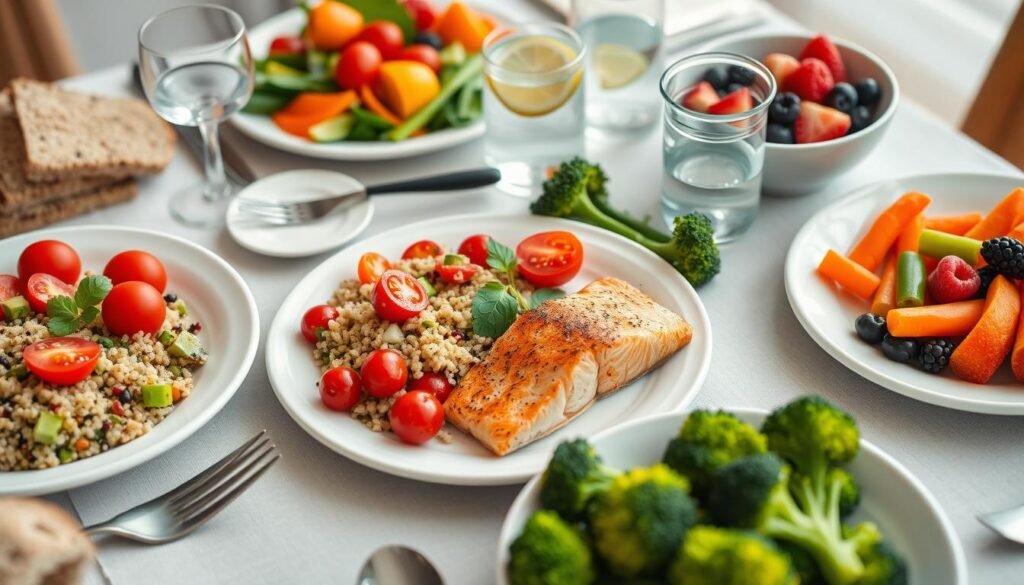
Eating less food with saturated and trans fats is crucial. These fats are in processed foods and some animal products. By choosing nutritious options, seniors can greatly improve their heart health. For meal ideas, check out these cholesterol-friendly meals for seniors.
Heart-Healthy Foods for Seniors
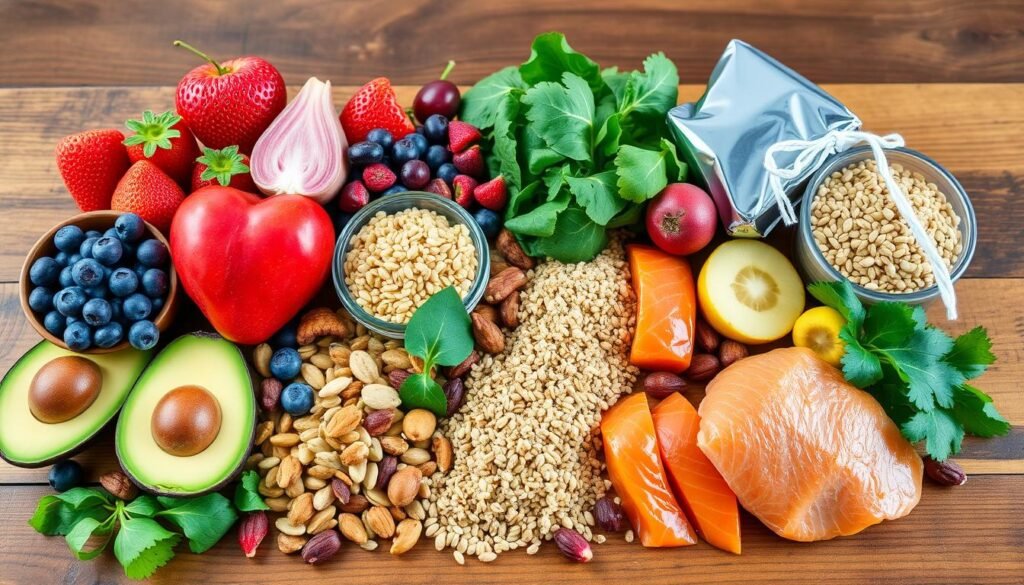
Eating right is very important for seniors, especially for their heart. Adding certain foods to their diet could really help in controlling cholesterol. It’s good to eat plenty of whole grains and legumes. These foods are great for keeping cholesterol levels down.
Whole Grains: A Vital Source of Fiber
Whole grains are full of fiber which is good for the heart. Eating things like whole-grain bread, oatmeal, and brown rice can help. These foods lower the bad cholesterol (LDL) and are good for digestion. They make sure the heart stays healthy. The American Heart Association recommends that seniors make half their grains whole grains.
Legumes: Nature’s Nutrient Powerhouses
Legumes, like beans, lentils, and peas, are packed with protein and nutrients. They have a lot of fiber which helps in reducing cholesterol levels. Adding them to the diet can make meals more nutritious and tasty. By eating legumes regularly, seniors can improve their heart health.
| Food Group | Examples | Benefits |
|---|---|---|
| Whole Grains | Oatmeal, Brown Rice, Whole Wheat Bread | Rich in fiber, lowers LDL cholesterol, promotes heart health |
| Legumes | Beans, Lentils, Peas | High in protein and fiber, lowers cholesterol, reduces hypertension risk |
Best Foods to Lower Cholesterol in Elderly
Older adults can improve heart health by managing their cholesterol through diet. Including certain foods in daily meals is key. Fatty fish and nuts are among the best for lowering cholesterol in the elderly.
Fatty Fish: Omega-3 Fatty Acids Benefits
Fatty fish like salmon, mackerel, and sardines are loaded with Omega-3 fats. These fats boost the “good” HDL cholesterol and lower triglycerides. Eating fatty fish twice a week can cut the risk of heart diseases. It helps seniors manage cholesterol effectively.
Nuts: Tiny But Mighty Nutrition
Nuts such as walnuts, almonds, and pistachios are great for a heart-healthy diet. They offer protein, fiber, and good fats. Just a daily serving can reduce “bad” LDL cholesterol levels. Nuts, with 80 percent of their calories from healthy fats, support heart health. By eating about 30 grams of nuts daily, seniors can lower cholesterol.
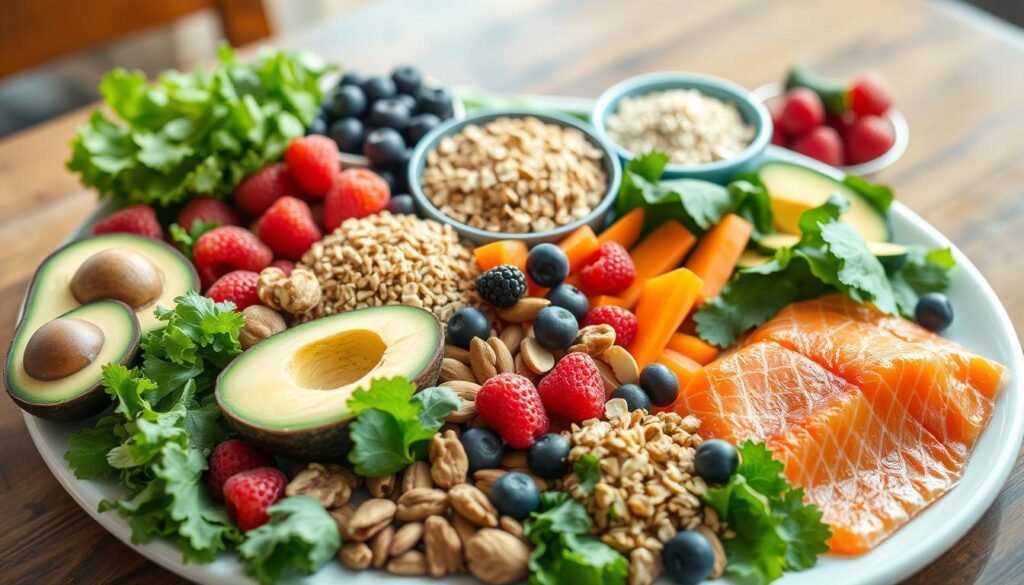
Adding these foods to a balanced diet can greatly impact cholesterol levels. For more heart health diet tips, visit this resource.
Fruits and Vegetables for Cholesterol Management
Adding various fruits and vegetables to the diet is key for managing cholesterol well, especially in older adults. These options are packed with essential nutrients. Plus, they have fiber which is great for reducing bad cholesterol. By choosing these foods, older adults can follow a low cholesterol diet and keep their hearts healthy.
High-Fiber Fruits: Natural Help in Lowering Cholesterol
Some fruits, like apples, berries, and grapes, are high in soluble fiber. This kind of fiber helps decrease cholesterol. Studies show eating these fruits can lower total and LDL cholesterol. Click here for more info on foods that are good for the heart. Berries also help with blood pressure and heart wellness. Adding beans to your diet, about three-quarters of a cup daily, can reduce LDL cholesterol by up to 19%.
Leafy Greens: Antioxidant Powerhouses
Spinach, kale, and collard greens are full of antioxidants and nutrients for the heart. They’re low in calories yet rich in fiber, which is perfect for a low cholesterol diet for older adults. Including these veggies in your meals supports healthy cholesterol and overall health. More vegetables in your diet can also improve blood sugar and cholesterol levels, making them key for heart health.
Incorporating Healthy Fats into the Diet
It’s crucial to know how healthy fats can keep your heart in good shape. They help seniors eat in a way that’s smart for their cholesterol. This leads to an overall healthier lifestyle.
Avocados: The Heart-Healthy Fruit
Avocados are great for older folks because they’re packed with good fats. These fats reduce bad cholesterol and increase the good kind. Plus, avocados have fiber to help with cholesterol too.
Eating avocados often makes meals creamy and tasty, as well as healthier.
Extra Virgin Olive Oil: A Key Ingredient
Extra virgin olive oil is a must-have for heart-friendly fats. Seniors find it useful for keeping a balanced cholesterol level, thanks to its antioxidants. It keeps the good cholesterol stable while cutting down the bad.
Adding these fats to your diet is key to eating well. They’re part of the Mediterranean diet, which is all about fruits, veggies, grains, and good fats. This diet plan is perfect for keeping your heart in great shape.
| Healthy Fats | Benefits for Cholesterol Management | Meal Ideas |
|---|---|---|
| Avocados | Lower LDL cholesterol, raise HDL cholesterol | Avocado toast, guacamole, salads |
| Extra Virgin Olive Oil | Reduces LDL cholesterol, maintains HDL cholesterol | Salad dressings, drizzling over vegetables, marinades |
Importance of Soluble Fiber in Diet
Soluble fiber is key for a healthy heart, especially for older adults. It helps lower cholesterol by blocking its absorption into the blood. By eating foods rich in soluble fiber, older adults can improve their heart health. This also helps manage cholesterol levels better.
How Soluble Fiber Lowers Cholesterol Levels
Soluble fiber helps manage cholesterol by absorbing it and then removing it from the body. Studies found that soluble fiber lowered LDL cholesterol by -8.28 mg/dL on average. For each extra 5 g/day of soluble fiber, total cholesterol dropped by -6.11 mg/dL. This shows its role in cholesterol management, even boosting the effects of statins. Foods like oats, beans, and some fruits are good for lowering cholesterol.
Best Sources of Soluble Fiber for Seniors
There are many great sources of soluble fiber for older adults to add to their diets. Below are some of the best choices:
| Food | Fiber Content (per serving) | Benefits |
|---|---|---|
| Oats | 4g | Linked to reducing total and LDL cholesterol |
| Legumes (beans, lentils) | 7-8g | Support heart health and lower cholesterol |
| Barley | 6g | Helps reduce cholesterol levels |
| Fruits (apples, pears, berries) | 3-5g | Provide antioxidants and fiber for cholesterol management |
| Flaxseed | 3g | May significantly lower total and LDL cholesterol |
Adding these foods to your diet can lower cholesterol and promote overall health. For more info on the benefits of fiber, check out this detailed guide.
Cholesterol-Friendly Meals for Seniors
Meal planning is key in keeping the heart healthy, especially for seniors. Including meals good for cholesterol helps control levels and ensures tasty eating. It’s about choosing a mix of foods that bring essential nutrients for managing cholesterol.
Meal Planning Tips for Heart Health
Here are useful tips for meal planning with heart health in mind:
- Incorporate more fiber: Try for at least 6 grams of fiber each meal. Look to legumes and whole grains as great options.
- Select lean proteins: Aim for a minimum of 12 grams of protein per serving to support healthy aging.
- Choose healthy fats: Use olive oil instead of butter for better heart health.
- Make use of leftovers: Cooking more and using leftovers saves time and keeps meals healthy.
- Customize meal plans: Plan meals around personal tastes while focusing on foods that lower cholesterol.
Simple Recipes for Cholesterol Management
Try these easy recipes to help with heart health:
- Quinoa Salad: Mix quinoa, chickpeas, and various veggies. It’s full of plant-based protein and fiber.
- Vegetarian Taco Filling: Use beans and roasted butternut squash for a tasty, low-fat filling.
- Lentil Stew: French green lentils and veggies make for a simple, nutrient-rich meal.
- Flaked Tuna and Lemon Pasta: This quick, flavorful meal includes healthy fats and can be made in 30 minutes.
Using a 7-day meal plan helps incorporate cholesterol-lowering foods effectively. Checking progress with health professionals can also increase the benefits of these lifestyle changes.
Find out more about cholesterol management at this resource. Learning to prepare heart-healthy meals lets seniors improve health and enjoy a rich diet.
Conclusion
Managing cholesterol through diet is key for heart health in older age. It helps improve overall well-being. Seniors are more at risk for cholesterol problems.
So, focusing on what they eat is very important. Heart-healthy diets for seniors can lower bad cholesterol. This leads to a healthier life.
Foods like whole grains, legumes, and healthy fats are good for lowering cholesterol. Eating less saturated fat and cholesterol is also crucial. Plus, being active for 120 minutes a week helps too.
Older adults can better their heart health by eating diverse, nutrient-rich foods. Making simple changes to diet and lifestyle is powerful. It lets seniors fight high cholesterol and live a health-conscious life.