Did you know almost 94 million American adults have high cholesterol? This puts them at higher risk for heart diseases and strokes. This fact comes from the CDC. It shows why knowing about foods high in cholesterol is key to good health. While our bodies need cholesterol for making hormones, cells, and vitamins, too much is dangerous. Cardiologist Romit Bhattacharya points out the need to balance good cholesterol intake with the risks of eating cholesterol-rich foods that are also high in bad fats. Knowing which foods to avoid is critical for heart health.
Keeping cholesterol levels healthy is vital to prevent heart disease and stroke. These are among the top causes of death globally. Regular checks are key to keeping cholesterol at safe levels. Let’s look into what high cholesterol foods to steer clear of and their effect on our health.
Key Takeaways
- Nearly 94 million American adults are affected by high cholesterol.
- Understanding high cholesterol foods can help prevent serious health issues.
- Cholesterol is vital for many bodily functions but can be harmful in excess.
- Regular cholesterol testing is important for maintaining heart health.
- Maintaining a heart-healthy diet can significantly lower health risks associated with high cholesterol.
- Being informed about unhealthy fats and cholesterol-rich foods is crucial for making better dietary choices.
Understanding Cholesterol: The Basics
Cholesterol is key to our health, involved in many body functions. It helps in making hormones, absorbs vitamin D, and builds cell membranes. It’s a waxy substance made by our liver and found in some foods.
What is Cholesterol?
Cholesterol isn’t always bad. It comes in two types: HDL and LDL. HDL, the “good cholesterol,” carries cholesterol to the liver to be broken down. On the other hand, LDL, the “bad cholesterol,” can cause artery-plaque and heart disease risk.
The Role of Cholesterol in the Body
Our bodies need the right cholesterol balance to work well. Too much LDL and not enough HDL can lead to atherosclerosis. This condition narrows arteries and increases heart disease and stroke risks.
Diet, activity, and other conditions like diabetes affect cholesterol levels. Knowing these can help us stay healthy.
| Type of Cholesterol | Health Impact |
|---|---|
| HDL (High-Density Lipoprotein) | Helps remove cholesterol from the bloodstream, lowers the risk of heart disease. |
| LDL (Low-Density Lipoprotein) | Excess can lead to plaque buildup in arteries, increasing the risk of cardiovascular issues. |
Why High Cholesterol is a Concern
High cholesterol carries serious health risks that we can’t ignore. It often leads to heart disease and stroke. Even without symptoms, the threat of high cholesterol can lead to heart attacks.
Health Risks Associated with High Cholesterol
High cholesterol is closely linked to several health risks. Conditions like heart disease, diabetes, and chronic illnesses can worsen cholesterol levels. For example, people with chronic kidney disease might see quicker plaque buildup in their arteries. This increases their risk of coronary artery disease.
About one in five people who die from coronary artery disease are under 65. This fact highlights the need to watch cholesterol levels at all ages. Being overweight, inactive, or eating foods high in saturated and trans fats can raise cholesterol. So, it’s key to stay informed and manage our health.
The Importance of Regular Cholesterol Testing
It’s crucial to test cholesterol levels regularly to keep our hearts healthy. The National Heart, Lung, and Blood Institute (NHLBI) says kids should get tested between ages 9 and 11, then every five years. For adults, men ages 45 to 65 and women 55 to 65 need tests every one to two years. Those over 65 should get tested every year. Early testing helps spot high cholesterol early. This means we can deal with it before it becomes a major issue.
Knowing about cholesterol testing helps us care for our heart health better. It leads to smart lifestyle choices like eating less saturated fat, staying active, and not smoking.
| Age Group | Testing Frequency |
|---|---|
| Children (9-11 years) | Every 5 years |
| Men (45-65 years) | Every 1-2 years |
| Women (55-65 years) | Every 1-2 years |
| Individuals >65 years | Annually |
High Cholesterol Foods: What to Knowledge and Avoid
It’s crucial to know the difference between good and bad cholesterol sources. This knowledge helps us choose wisely what we eat. Foods high in cholesterol are not all the same. Some are good for your heart, while others are not.
We must look at the nutrition foods offer to manage cholesterol levels. This way, we keep our hearts healthy.
The Difference Between Healthy and Unhealthy Cholesterol Sources
Good cholesterol sources like eggs and full-fat yogurt are packed with nutrients. They don’t harm cholesterol levels much. But, we should eat less of unhealthy high-cholesterol foods. These include processed meats and fried foods because they hurt heart health.
- Ground red meats, like hamburgers, have lots of saturated fat, raising cholesterol.
- Pork items, such as bacon and ham, are also full of saturated fats.
- Processed meats like cold cuts and hot dogs increase cholesterol due to saturated fat and sodium.
- Eating potato chips and french fries is bad because they have unhealthy fats.
- Drinking high-sugar drinks like sodas can boost blood pressure and bad cholesterol, posing heart risks.
- Processed cheese and ice cream, though delicious, are filled with bad fats and sugars, upping cholesterol.
It’s important to watch how much cholesterol you eat. Eating healthy foods like nuts, seeds, and fish is good for you. A balanced diet with fruits, veggies, and whole grains is best for the heart. It helps fight the dangers of bad cholesterol foods.
Knowing which foods increase or decrease cholesterol helps us eat better. For more tips on eating right to manage cholesterol, visit essential dietary guidelines.
Types of Cholesterol: HDL vs LDL
It’s key to know the difference between HDL and LDL cholesterol for heart health. Each type plays a vital role in our bodies and affects our well-being in unique ways. Learning to manage these can lead to a healthier heart.
What are HDL and LDL Cholesterol?
“Good” cholesterol, or HDL, moves excess cholesterol from arteries to the liver for removal. High levels of HDL lower heart disease and stroke risk. On the other hand, “bad” cholesterol, LDL, deposits cholesterol in arteries, causing plaque buildup. This buildup boosts the chance of heart complications.
The Impact of HDL and LDL on Heart Health
Keeping HDL high and LDL low is vital for heart health. HDL helps minimize LDL’s harmful effects. Diet is key for managing cholesterol levels. Heart health can be supported by:
- Eating soluble fiber from foods like oatmeal, kidney beans, and apples to reduce LDL.
- Having omega-3 rich fish twice a week to up HDL levels.
- Adding walnuts to meals for heart protection and lower heart attack risk.
- Eating avocado twice a week to boost HDL quality and quantity.
- Choosing foods with plant sterols or stanols to drop LDL by 5% to 15%.
Cutting back on saturated fat and avoiding trans fats benefits cholesterol levels. Regular cholesterol check-ups help with making informed lifestyle changes for heart health.
https://www.youtube.com/watch?v=0U7YHRW5dyc
| Cholesterol Type | Impact on Heart Health | Ways to Improve Levels |
|---|---|---|
| HDL Cholesterol | Reduces risk of heart disease | Eat omega-3 fish, incorporate avocados, consume walnuts |
| LDL Cholesterol | Increases risk of heart disease | Limit saturated and trans fats, include soluble fiber |
Foods That Raise Cholesterol Levels
It’s important to know which foods can harm your health. Foods like processed meats, fried items, and unhealthy fats are key players. They make cholesterol levels go up. Learning about this helps us make better food choices.
Processed Meats and Their Health Risks
Processed meats, like bacon and sausages, are full of cholesterol and bad fats. Eating these can lead to more heart disease. So, it’s good to eat less of them and try healthier options instead.
The Role of Fried Foods in High Cholesterol
Fried foods pack a lot of unhealthy trans fats. Think french fries and fried chicken. They shoot your cholesterol up. Try baked or air-fried dishes as tastier, healthier choices.
Unhealthy Fats: Understanding Saturated and Trans Fats
Saturated fats are mainly in animal products and full-fat dairy. They boost the “bad” cholesterol. Meanwhile, trans fats in snacks and some margarines are very risky. Watching how much you eat of these fats can help keep your heart healthy.
| Food Type | Cholesterol Level | Fat Type | Health Impact |
|---|---|---|---|
| Processed Meats | High | Saturated Fats | Increases heart disease risk |
| Fried Foods | Moderate to High | Trans Fats | Raises LDL cholesterol |
| Saturated Fats Sources | Varies | Saturated Fats | Contributes to heart health issues |
| Trans Fats Sources | High | Trans Fats | Significantly harmful to heart health |
The Nutritional Value of Cholesterol-Rich Foods
It’s important to know the nutritional value of foods high in cholesterol for a balanced diet. Some high cholesterol foods are actually good for health, as long as we watch our overall intake. It’s all about choosing the right foods without too much saturated fat.
Which High Cholesterol Foods Are Beneficial?
Certain foods high in cholesterol are also packed with vital vitamins and minerals. Here’s a look at some good options:
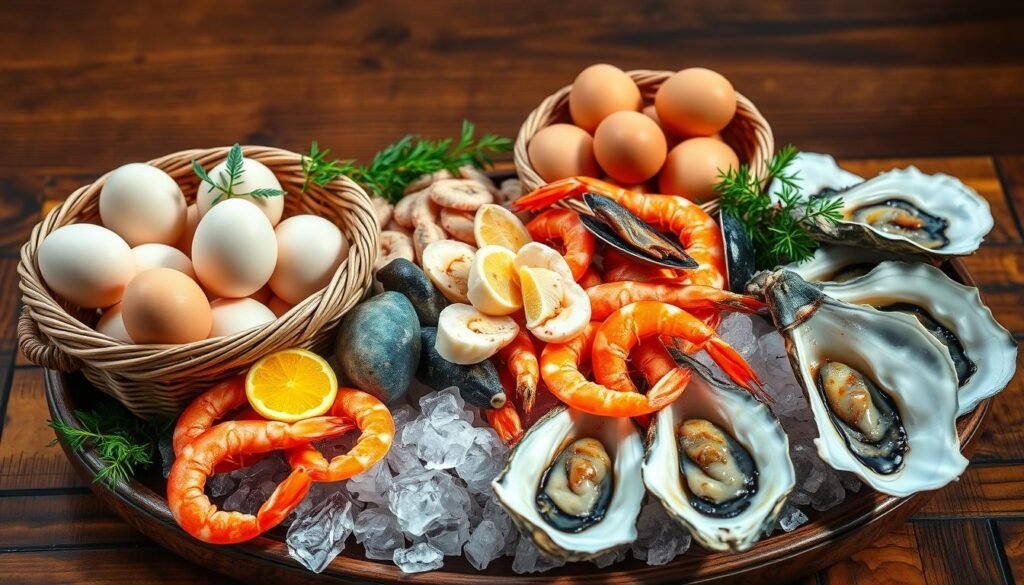
- Shellfish: Choices like prawns, crab, and lobster have a lot of cholesterol but little saturated fat. They fit well in most diets.
- Eggs: Despite concerns about their cholesterol, eggs are rich in protein and essential nutrients. They’re good for boosting HDL, the “good” cholesterol.
- Liver: Liver is not only cholesterol-rich but also has important nutrients like iron and B vitamins. Still, eat it in moderation due to its vitamin A.
Feel free to enjoy mussels, clams, and oysters. They’re low in both saturated fats and cholesterol. A heart-healthy diet focuses on cutting saturated fat, not ditching cholesterol completely. This source offers more about dietary cholesterol in a healthy lifestyle.
Eggs: Are They Really Bad for Cholesterol?
Old advice used to say to be careful with eggs because of their cholesterol. A large egg has about 186 mg of cholesterol but just a bit of saturated fat. Yet, recent research says that eggs are okay for most people’s diets, without badly affecting cholesterol levels.
Many health experts say eggs are good in a balanced diet. They have lots of protein and key nutrients like vitamin D. Eggs are seen in a good light if eaten right, especially for those without cholesterol issues.
Identifying Unhealthy Fats
Knowing how to spot unhealthy fats is key to keeping your heart strong. You need to recognize saturated and trans fats to make better food choices. These fats increase cholesterol, affecting your health.
Saturated Fats: What You Need to Know
Saturated fats stay solid at room temperature and come mostly from animals. Foods high in these fats include red meat, full-fat dairy, and some oils like palm oil. The American Heart Association advises eating less saturated fat—no more than 6% of your daily calories.
This is to keep cholesterol in check. Eating too much saturated fat raises LDL cholesterol. This boosts your risk of heart disease.
Trans Fats: The Worst Offenders
Trans fats are even worse than saturated fats. They not only increase LDL cholesterol but also lower the good HDL cholesterol. You’ll find them in processed foods, baked treats, and fried snacks. These fats greatly raise the chance of chronic diseases.
Since 2006, the FDA requires that food labels show trans fat content. This helps people be more mindful of what they eat. The American Heart Association wants everyone to cut out trans fats, especially if you’re working on lowering LDL cholesterol.
Heart-Healthy Substitutes for High Cholesterol Foods
Making better food choices can greatly improve heart health. Using heart-healthy substitutes helps control cholesterol. It’s smart to avoid fried foods and pick better processed meats for a well-rounded diet.
Alternatives to Fried Foods
Fried foods often have bad fats that raise cholesterol. Go for baked or grilled foods instead. Here are smarter picks:
- Avocado oil replaces vegetable oil for cooking.
- Popcorn is a good swap for chips when you want something crunchy.
- Try Greek yogurt instead of sour cream to cut down on saturated fat.
- Choose sweet potato wedges over French fries for a crispy treat.
Healthier Options for Processed Meats
Processed meats might up cholesterol and harm your health. Better choices can enhance your diet. Think about these alternatives:
- Use ground turkey not ground beef for a leaner protein.
- Pick Canadian bacon over regular bacon for less fat.
- Add legumes like black beans, chickpeas, and lentils for protein without the cholesterol.
Adding these heart-healthy substitutes to your meals aids cholesterol management and boosts well-being. Focus on foods rich in fiber, lean proteins, and healthy fats for a heart-happy meal plan.
| Unhealthy Food | Heart-Healthy Substitute |
|---|---|
| Fried chicken | Grilled chicken |
| Regular bacon | Canadian bacon |
| Heavy cream | Almond milk or Greek yogurt |
| Traditional salad dressing | Vinegar and lemon juice |
| Chips | Air-popped popcorn |
How to Lower Cholesterol Naturally Through Diet
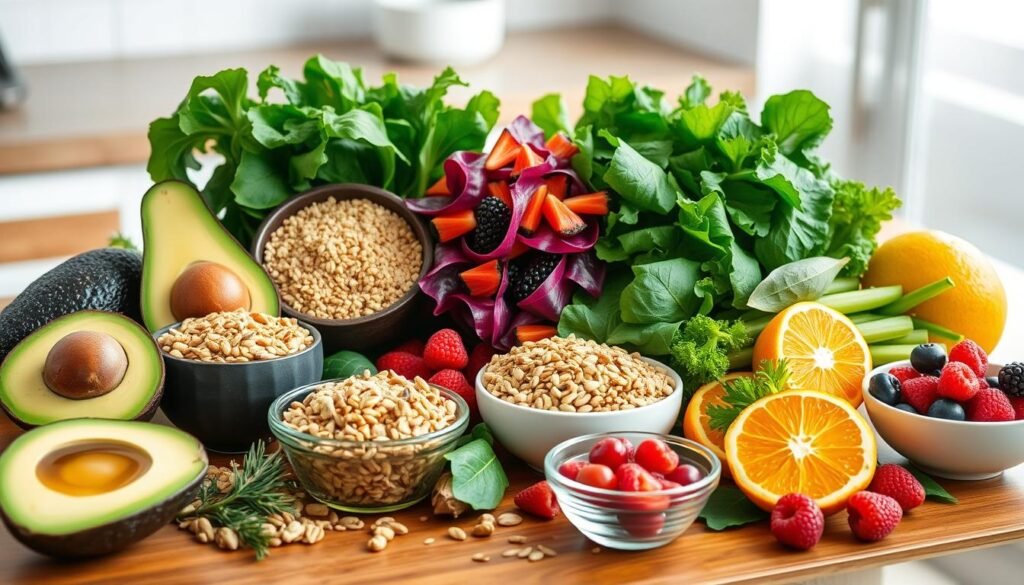
Changing your diet can greatly lower cholesterol naturally. Foods high in fiber and healthy fats are key for a heart-healthy lifestyle. By picking the right foods, you can better your cholesterol while enjoying tasty meals.
The Importance of Fiber in Your Diet
Fiber in your diet is vital for keeping cholesterol in check. Soluble fiber, found in oats, beans, lentils, and some fruits, helps lower LDL cholesterol. These fibers grab cholesterol in our guts, lowering its entry into the blood. Try to eat 25-30 grams of fiber daily for heart health.
Foods to Include for a Heart-Healthy Lifestyle
Adding heart-healthy foods to your diet helps control cholesterol. Think about these foods:
- Oats: A top source of soluble fiber that lowers LDL cholesterol.
- Fatty Fish: Fish like salmon and mackerel offer omega-3s, which are good for the heart.
- Nuts: A few almonds and walnuts can reduce bad cholesterol.
- Avocados: These are full of monounsaturated fats, improving cholesterol levels.
- Legumes: Beans and lentils are great for plant protein and are high in fiber.
- Leafy Greens: Spinach and kale are full of vitamins and promote heart health.
- Whole Grains: Pick brown rice and whole grain pasta for more fiber.
Using olive oil as your main cooking fat adds antioxidants and healthy fats. This helps in the fight to lower cholesterol naturally. Eating meals with these foods can lead to better health and lower cholesterol.
Making Informed Choices at the Grocery Store
Making smart choices at the grocery store is key to managing cholesterol and keeping your heart healthy. It’s important to know how to read nutrition labels. This knowledge helps shoppers make the best decisions about what to eat.
Reading Labels: What to Look For
Knowing how to read food labels is crucial for a heart-healthy lifestyle. Here’s what to keep an eye on:
- Saturated and Trans Fats: Choose foods low in these fats to keep LDL cholesterol levels down.
- Sodium Content: Watching sodium intake is important to avoid high blood pressure and its risks.
- Added Sugars: Opt for foods with less added sugar to control calories and improve nutrition.
- Nutrition of Ingredients: Try to get more calcium, iron, and vitamins from your food.
Building a Heart-Healthy Grocery List
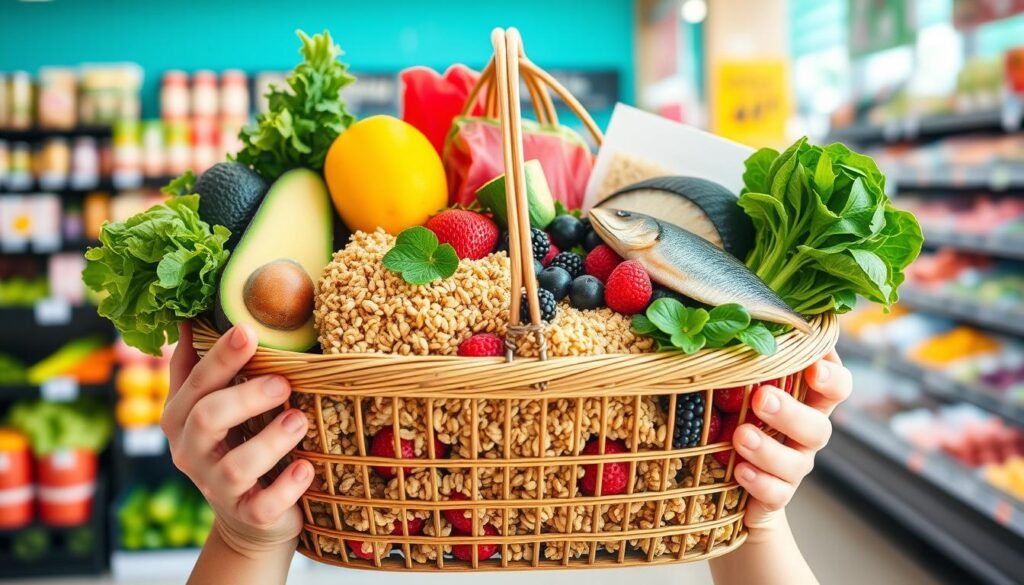
Starting with a heart-healthy grocery list is the first step to nutritious eating. Your list should have these:
- Fresh Produce: Add lots of fruits and vegetables for their fiber, which helps lower cholesterol.
- Whole Grains: Choose grains like oats and quinoa that have lots of soluble fiber for cholesterol management.
- Lean Proteins: Pick lean meats, fish, and plant proteins that are good for the heart and don’t increase bad cholesterol.
- Healthy Fats: Use oils like olive or avocado instead of butter. Stay away from tropical oils that increase LDL cholesterol.
The Importance of Lifestyle Changes in Managing Cholesterol
Lifestyle changes are key to keeping cholesterol in check. Adding activities like moving more and stopping smoking can make your heart healthier. These steps help lower bad LDL cholesterol and boost good HDL cholesterol.
Physical Activity and Its Impact on Cholesterol
Staying active is one of the best ways to control cholesterol. You should aim for 150 minutes of exercises like walking or swimming each week. These activities lower bad cholesterol and raise the good kind. Mixing up your routine with different exercises is also helpful.
Quitting Smoking and Other Healthier Habits
Stopping smoking is great for your cholesterol and heart. People who quit often see a rise in their good cholesterol within a year. Eating right, with lots of omega-3s and fiber, also supports a healthy heart. For more tips on managing cholesterol, visit this link.
| Lifestyle Change | Impact on Cholesterol |
|---|---|
| Regular Physical Activity | Increases HDL, lowers LDL |
| Quitting Smoking | Improves HDL levels |
| Healthy Diet | Reduces LDL, promotes overall heart health |
| Weight Loss | Can improve cholesterol numbers |
Conclusion
Understanding how to handle foods with high cholesterol is key for a healthy heart. It’s vital to know which cholesterol foods are good and bad. This is because our bodies produce most of the cholesterol we need. Making smart choices about what we eat is important in controlling cholesterol.
Improving our diet and changing our lifestyle can greatly reduce heart disease risks. The American Heart Association advises eating less saturated fat and more fruits, vegetables, whole grains, and lean proteins. Even foods like eggs and shrimp, which have more cholesterol, can be okay in moderation.
Recent studies, including this important research, show diet isn’t the only thing that affects cholesterol. Knowing how your body reacts to different foods is crucial, especially if heart disease runs in your family. By focusing on healthy eating and being mindful of what you eat, you can help keep your heart strong.