Eating just 5.3 ounces of processed meat each week can raise the risk of heart disease and death. This fact highlights why it’s crucial to eat red meat in moderation. Although red meat has faced criticism, enjoying it wisely can be good for your health and a smart addition to a balanced diet.
Red meat in your meals offers proteins, iron, and vitamin B12, which are important for health. It’s key to know the difference between processed and unprocessed meat. By eating red meat in moderation, you can enjoy its benefits and lower health risks. We will share tips on how to enjoy red meat in a healthy way next.
Key Takeaways
- Moderate consumption of red meat can contribute essential nutrients to your diet.
- Understanding serving sizes and balancing red meat with other proteins is important.
- Key nutrients from red meat include protein, iron, and vitamin B12.
- Lean cuts of meat can enhance health benefits and minimize risks.
- Differentiating between processed and unprocessed meat affects health outcomes.
Understanding Red Meat and Its Nutritional Value
Red meat comes from non-bird mammals and is a key part of many diets. It includes beef, lamb, pork, and venison. Red meat is full of important nutrients. But, eating it in moderation is key to getting its benefits while reducing risks.
Key Nutrients in Red Meat
Red meat is loaded with nutrients good for health. It has a lot of:
- Protein: Essential for fixing muscles, growing, and making hormones.
- Heme Iron: Key for moving oxygen in the blood and helping with energy.
- Zinc: Needed for fighting off sickness and cell health.
- B Vitamins: Vitamin B12 is especially needed for healthy blood and making DNA.
A 4-ounce piece of 80% lean ground beef has around 19 grams of protein. It also has lots of B vitamins and minerals.
Types of Red Meat
It’s good to know about different types of red meat to choose wisely. You can find red meat like this:
| Type of Red Meat | Examples | Nutritional Highlights |
|---|---|---|
| Conventional | Beef, Pork, Lamb | High in protein, heme iron, and B vitamins but might have more saturated fats. |
| Grass-fed | Grass-fed Beef, Lamb | More Omega-3 fatty acids and antioxidants, maybe less fat. |
| Organic | Organic Beef, Pork | Could have more nutrients and fewer bad things because of natural farming. |
| Processed | Bacon, Sausages, Hot Dogs | Often has a lot of salt and preservatives, which can be risky for health. |
Learning about red meat’s nutrients and types helps people make better eating choices. This way, they can enjoy its great taste in a healthy way.
The Health Benefits of Moderate Red Meat Consumption
Moderate amounts of red meat can boost your health. It’s packed with high-quality protein and key nutrients. These factors make it an important part of a well-rounded diet. So, knowing about these benefits helps people make smarter food choices.
Protein and Essential Nutrients
Red meat is a top source of protein. Protein helps fix tissues, build muscles, and keep enzymes working right. Besides protein, red meat has zinc, niacin, and vitamin B12. These nutrients are vital for immune health and creating energy.
Impact on Muscle Repair and Growth
Eating red meat in moderation is good for your muscles. It’s especially beneficial for athletes or active people. The high-quality protein in red meat supports muscle recovery after workouts. This makes it a good choice for those aiming to boost their physical health.
Role of Heme Iron in the Diet
Heme iron in red meat absorbs into the body better than plant-based iron. It’s key for moving oxygen in our blood. Including moderate red meat in your diet helps avoid iron deficiency. This is crucial for pregnant women and young kids, who are at higher risk of anemia.
| Nutrient | Source | Role in the Body |
|---|---|---|
| Protein | Red Meat | Muscle Repair and Growth |
| Zinc | Red Meat | Immune Function |
| Niacin | Red Meat | Energy Production |
| Vitamin B12 | Red Meat | Nerve Function and Blood Cell Formation |
| Heme Iron | Red Meat | Oxygen Transport |
Red Meat in Moderation: Daily Serving Recommendations
Figuring out the right amount of red meat to eat is key to staying healthy and enjoying your food. A cooked serving is about 3 ounces, just like the health experts suggest. Staying under 70 grams of red or processed meat each day is best. Doing this helps avoid the health issues that come from too much meat.
Understanding Portion Sizes
It’s really important to know how much red meat is okay. If you want to eat red meat the right way, try these tips:
- Avoid exceeding the 3-ounce serving size per meal.
- Limit daily intake to the recommended maximum of 70 grams for red meat.
- Focus on employing lean meats, which contain less than 10 grams of fat per 100 grams.
- Utilize an 8-ounce portion per week as a benchmark within a balanced diet.
How to Balance Red Meat with Other Proteins
Mixing up your protein sources can boost nutrition and cut down health risks. Here’s how to enjoy red meat in a good way:
- Substituting red meat with poultry, fish, beans, and legumes.
- Ensuring that at least half of your protein intake comes from plant-based sources.
- Planning meals that include a diverse array of protein options while keeping meat consumption lower.
- Contemplating the overall balance of your diet by allowing room for vibrant vegetables and whole grains.
Healthy Red Meat Choices for a Balanced Diet
It’s important to choose red meat wisely to keep a balanced diet. Picking healthy options boosts meal quality and health. Lean cuts and alternatives help enjoy red meat’s goodness while cutting health risks.
Choosing Lean Cuts of Meat
Lean meats are key for good nutrition. The USDA says lean beef should have less than 10 grams of total fat in a 3.5-ounce serving. This helps lower bad fat intake. Here’s a list of some recommended lean beef cuts:
- Eye of round
- Round tip
- Top round
- Bottom round
- Top sirloin
- Top loin
- Chuck shoulder
For ground beef, aim for labels showing 93% or 95% lean. These options cut down on fat but keep the taste.
Grass-fed Vs. Conventional Meat
Choosing between grass-fed and conventional meat matters too. Grass-fed has more omega-3s, good for heart health. Conventional meat is still healthy but might lack these omega-3 benefits. Knowing where your meat comes from helps make healthier choices.
| Type of Meat | Fat Content (per 3.5 oz) | Cholesterol (mg) | Omega-3 Fatty Acids |
|---|---|---|---|
| Lean Beef | Less than 10g | 95 | Varies |
| Extra-Lean Beef | Less than 5g | 95 | Negligible |
| Grass-Fed Beef | Varies, typically lower | 95 | Higher than conventional |
| Conventional Beef | Varies, generally higher | 95 | Lower than grass-fed |
By focusing on healthy red meat options, we can enjoy its taste and benefits while reaching our dietary goals. Learning about fat content and meat sources leads to healthier decisions.
Impact of Excessive Red Meat Consumption
Understanding the impact of too much red meat is key for our health. Many studies point to big health risks with eating a lot of it, especially the unprocessed kind. The Global Burden of Diseases study in 2019 said about 896,000 people died worldwide from eating unprocessed red meat. This shows why eating it in moderation is very important.
Health Risks Overview
Red meat can lead to serious health problems. These include heart diseases, type 2 diabetes, and some cancers like colorectal cancer. Eating red meat for a long time can even increase the chance of dying from these diseases. In 2019, such habits led to around 23.9 million years of healthy life lost, putting a huge strain on health systems. People who eat very little meat tend to live longer and are less sick.
Association with Heart Disease and Cancer
Eating red meat is closely linked to serious health issues. Studies show that too much red meat raises the risk of heart disease. This has been seen in people who have higher death rates. Specifically, unprocessed red meat is tied to a greater risk of cancers like colorectal cancer. The World Health Organization says processed meats can cause cancer, urging us to choose our food wisely.
Understanding Processed vs. Unprocessed Meat Risks
There’s a big difference in health risks between processed and unprocessed meats. Processed meats, with lots of preservatives and salt, are worse for our health than unprocessed kinds. We should focus on eating less processed meats. As food guidelines change, we need to understand more about how too much red meat affects our health. For more information, read the advice from health experts here.
Tips for Enjoying Red Meat in Moderation
You don’t have to give up health to enjoy red meat. There are smart ways to enjoy it in moderation. By cooking it healthier and mixing it with veggies and grains, your meals will be both tasty and good for you.
Cooking Methods That Reduce Fat
The way you cook red meat matters a lot for your health. Here are some tips to do it right:
- Grilling or broiling: These let extra fat drip off, making your meal leaner.
- Trimming visible fat: Cut off fat before cooking to eat less saturated fat.
- Using marinades: Use herbs, spices, and things like lemon juice in marinades to add flavor without calories.
Incorporating Vegetables and Grains
Adding vegetables and whole grains to red meat dishes is a win-win. Here’s how it helps:
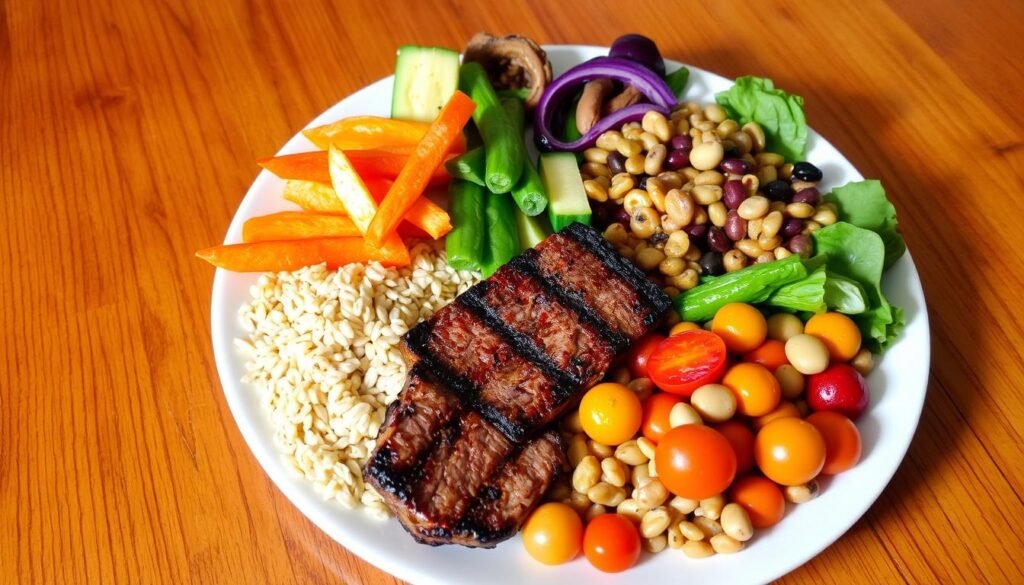
- Vegetable-rich sides: Eating red meat with lots of veggies adds important vitamins and fiber.
- Whole grains: Choose grains like quinoa or brown rice for more nutrients and to feel full longer.
- Plant-based proteins: Using beans, legumes, and nuts in your meals lets you enjoy less red meat but still get plenty of protein.

Incorporating Lean Red Meat into Your Diet
Adding lean red meat to your diet can be easy and good for you. You simply have to be smart about it. This means eating a balanced diet and not too much red meat. You can do this by swapping red meat for other protein sources now and then. This way, you can enjoy different tastes and get various health benefits.
Substituting Red Meat with Other Proteins
There are many plant proteins that are great swap-outs for lean red meat. These can make your meals interesting while still giving you the nutrients you need. Good options to try include:
- Beans
- Legumes
- Tofu
- Quinoa
- Nuts and seeds
This method helps keep your diet diverse and allows for eating lean red meat in smaller amounts. By adding these alternatives, you get the important nutrients without depending too much on red meat.
Creating Balanced Meal Plans
Meal plans that include a mix of lean red meat, veggies, and grains are great for balance. Here’s an example of what a day’s meals could look like:
| Meal | Ingredients | Nutrients |
|---|---|---|
| Breakfast | Oatmeal with nuts and fruits | Fiber, Protein, Vitamins |
| Lunch | Lean ground beef stir-fry with vegetables | Protein, Iron, Minerals |
| Dinner | Grilled chicken with quinoa and spinach salad | Protein, Fiber, Antioxidants |
| Snack | Hummus with carrot sticks | Healthy Fats, Fiber |
Following this kind of meal plan can help set a strong dietary pattern. It makes adding lean red meat to your diet easy and pleasant. Such a diet offers both nutrition and enjoyment.
Expert Recommendations on Red Meat Consumption
Nutritionists call for a balanced approach when eating red meat. They suggest moderation and making smart choices. Guidelines recommend enjoying a few servings of red meat each week, preferably unprocessed. This balance reduces health risks and still lets you enjoy red meat.
Guidelines from Nutritionists
Red meat should be less than 6% of your daily calories, say nutritionists. This helps your heart. Swapping red meat for things like poultry or plants can drop hypertension risk by 8%–15%. It shows following expert advice on red meat pays off.
Understanding Dietary Guidelines for Meat Intake
Eat less than 350g of unprocessed red meat a week, experts say. This cuts the risk of heart disease and high blood pressure. Adding lean meats and focusing on plants and low-fat dairy is key. Knowing these tips helps you eat better and improve your health.
| Recommendation | Details |
|---|---|
| Red Meat Portion Size | Aim for around 100g per serving, no more than 350g of unprocessed red meat per week. |
| Processed Meat Intake | Limit or avoid due to high salt and saturated fat content, which can increase health risks. |
| Healthier Protein Alternatives | Consider foods like poultry, fish, eggs, legumes, and soy products to reduce hypertension risk. |
| General Meat Consumption | Not exceeding 6% of total daily caloric intake is advised for maintaining heart health. |
| Weekly Red Meat Limit | Experts suggest keeping red meat under 12 to 18 ounces weekly to lower cancer risk. |
How to Safely Store and Prepare Red Meat
To avoid foodborne illnesses, it’s key to store and prepare red meat correctly. This ensures the meat stays quality and safe. Knowing how to handle and cook meat is vital for your health.
Storing Raw and Cooked Meat
Storing red meat safely requires different approaches for raw and cooked varieties. Always keep raw meat on the refrigerator’s bottom shelf. This prevents contaminating other food. Raw meat needs sealing in containers or plastic wrap to keep it fresh.
- Keep raw meat in the refrigerator at temperatures below 40°F (4°C).
- Utilize airtight containers for storing leftover cooked meat.
- Freeze raw red meat if it’s not going to be cooked within a few days.
Cooking Techniques for Safety
It’s crucial to cook red meat to the correct temperature to ensure it’s safe. This kills off any harmful bacteria. The USDA advises cooking ground meats to at least 160°F (71°C). Steaks and roasts should reach 145°F (63°C), followed by resting for three minutes.
| Type of Meat | Recommended Cooking Temperature |
|---|---|
| Ground Beef | 160°F (71°C) |
| Beef Steaks and Roasts | 145°F (63°C) |
| Beef Liver | 160°F (71°C) |
Using methods like grilling, broiling, or roasting helps reduce fat in meals. These techniques support safe meat handling and enhance your dishes. For tips on making healthier food choices, check out this guide.
Addressing Common Myths About Red Meat
Many people still believe myths about red meat and health risks. It’s important to know the facts. This knowledge helps clear up wrong ideas and guide healthy eating choices. By understanding red meat’s health benefits, we can value its place in our diets more.
Debunking Health Concerns
There’s research that questions the idea that red meat raises LDL cholesterol levels. Studies show lean red meat doesn’t greatly affect these levels if eaten in moderation. Saturated fats have more impact on cholesterol than the cholesterol in foods. Choose high-quality red meat for a tender, tasty option. Prefer grilling or baking to frying for extra health gains.
The Role of Red Meat in a Healthy Diet
Red meat is packed with crucial nutrients like protein, iron, and key vitamins. It’s important to know the difference between meat types regarding health risks. High intake of both unprocessed and processed red meat is linked to higher mortality rates from diseases. An extra serving of red meat daily increases the mortality risk by 13% for unprocessed and 20% for processed.
However, eating more fish, poultry, and legumes instead of red meat can cut the mortality risk significantly. Lowering red meat consumption to less than half a serving daily could reduce death rates greatly. Using lean cuts and choosing grass-fed beef are healthier options that also consider the environment.
| Type of Meat | Health Risks | Benefits | Serving Recommendations |
|---|---|---|---|
| Unprocessed Red Meat | Increased mortality risk by 13% per serving | Rich in iron and protein | Limit to 1 serving per day |
| Processed Red Meat | Increased mortality risk by 20% per serving | Flavorful options | Avoid excessive consumption |
| Lean Cuts (e.g., Sirloin, Tenderloin) | Lower impact on cholesterol | High-quality protein source | Incorporate in moderation |
| Grass-Fed Beef | Lower environmental impact | Higher concentration of monounsaturated fats | Choose when possible |
Red Meat in Moderation: A Balanced Perspective
Red meat holds a special place in cultures worldwide. It’s tied to tradition and celebration. At the same time, it’s crucial to consider the environmental effects of its consumption. Finding a balance is key, valuing both its cultural role and understanding its ecological impact.
Examining the Cultural Significance of Red Meat
Red meat is central to many cultural events, from American barbecues to British Sunday roasts. It’s not just food, but a way to connect people and celebrate heritage. Its role is significant in bringing people together, creating a sense of community and belonging.
Environmental Considerations and Meat Consumption
However, the environmental cost of red meat is substantial. Its production uses a lot of resources and contributes to pollution. From releasing greenhouse gases to using vast amounts of land and water, meat production poses sustainability challenges. Eating less red meat helps the planet. This approach lets us enjoy different proteins like chicken, fish, and beans. It respects traditions while caring for the earth.
| Aspect | Details |
|---|---|
| Cultural Role | Integral to traditions, celebrations, and social gatherings. |
| Environmental Impact | High resource consumption leading to greenhouse gas emissions. |
| Moderation Benefits | Reduces ecological footprint and encourages diverse dietary choices. |
| Protein Alternatives | Poultry, fish, legumes, nuts provide essential nutrients. |
Conclusion
Eating red meat in moderation is key to a balanced diet. Studies show that too much red meat, processed or not, can be harmful. Yet, moderate amounts might not be as bad as once thought. The advice on how much to eat ranges widely.
Each person should make wise choices about their meat intake and serving sizes. This helps enjoy the benefits without facing big health risks.
Some research shows a small link between eating unprocessed red meat and certain health issues like cancer and heart disease. Yet, other studies find no strong tie between meat eating and dying earlier. It highlights why eating meat in moderation matters. It’s also important to eat different types of protein.
Adding red meat to your meals moderately can boost your health and fit into a healthy lifestyle. Dietary advice keeps changing, so staying updated on new research is smart. NutriRECS’s detailed review points out the complex role of meat in our health. For more information, check the full discussion here.