Did you know nearly 50% of Americans now prefer plant-based foods? This change is due to health reasons and concerns about traditional fishing’s ecological effects. More companies are making seafood alternatives that are good for the heart. These alternatives taste like fish and are healthier. They lower bad fats and help the heart. In this article, we will look at great choices that are good for you and the planet. They are perfect for those wanting to eat well and enjoy tasty meals.
Key Takeaways
- Plant-based seafood alternatives provide similar flavors and textures to traditional fish.
- These options are becoming increasingly popular in the marketplace.
- Ingredients like jackfruit, seaweed, and tofu can be used to replicate fish dishes.
- Choosing seafood substitutes can address ethical, health, and ecological concerns.
- Algae-based supplements can help maintain omega-3 fatty acids without consuming fish.
- Heart-healthy diets can significantly impact cardiovascular health.
Introduction to Seafood Substitutes
The demand for seafood alternatives is on the rise. This reflects a change in how people view their diet. Now, they focus on health and the environment. They look for options that taste like seafood but are better for the planet. Plant-based seafood has been developed to meet these needs. It’s for those who care about their lifestyle and nutrition.
Studies show plant-based diets can help reduce cholesterol and boost heart health. They may also cut the risk of chronic diseases. This encourages eating with heart health in mind. Plus, making seafood substitutes often uses less resources. This means they have a smaller carbon footprint than regular seafood.
Companies like Good Catch and Ocean Hugger Foods offer great plant-based seafood. Good Catch has fish fillets, crab cakes, and tuna. Ocean Hugger makes a plant-based tuna from tomatoes, great for sushi and poke bowls. TUNO by Loma Linda makes a soy-based alternative to canned tuna. These products show how versatile plant-based seafood can be.
Key ingredients in these substitutes include legumes like peas and chickpeas. They’re prized for their protein and ability to mimic fish texture. Seaweed and algae help bring ocean flavors. Flavors from miso and tamari make these alternatives tasty and enjoyable.
About 24 percent of Americans look to eat more plant proteins. 65 percent have tried foods designed to look and taste like meat but are made from plants. There’s been a 23 percent boost in plant-based seafood sales in 2020. This shows a growing interest in such options.
| Brand | Product | Main Ingredients |
|---|---|---|
| Good Catch | Fish Fillets | Legumes, seaweed |
| Ocean Hugger Foods | Plant-Based Tuna | Tomatoes, plant ingredients |
| TUNO by Loma Linda | Tinned Fish Alternative | Soy protein, plant ingredients |
Thanks to food technology advances, plant-based seafood options are expanding. This makes it easier for more people to choose these healthy and sustainable substitutes for fish.
The Importance of Heart-Healthy Eating
Eating well is key to keeping your heart healthy. Studies show diet plays a big role in preventing heart disease. Choosing foods like fruits, veggies, whole grains, and lean proteins helps a lot.
It’s important to eat less saturated fat to avoid high cholesterol. Making smart choices at the store is part of this.
Link Between Diet and Cardiovascular Health
Your diet affects your heart health a lot. Eating whole foods can make your heart work better and lower disease risk. Adding foods high in fiber, like grains and legumes, is good for your cholesterol.
The American Heart Association says to keep saturated fat under 6% of your daily calories. This means only 11 to 13 grams of saturated fat in a 2,000 calorie diet. Watching how much fat you eat helps your heart stay healthy.
Benefits of Reducing Saturated Fats
Cutting down on saturated fats is good for your heart. Too much saturated fat can make your cholesterol high and increase heart disease risk. Choosing better fats, like monounsaturated and polyunsaturated, can improve your health.
With more adults becoming obese, it’s vital to eat healthier. Heart-healthy diets make a big difference in lowering health risks.
Understanding Seafood Alternatives for Heart Health
Choosing seafood alternatives is key for a heart-healthy diet. Ingredients like tofu, banana blossom, and jackfruit are great options. They have low saturated fat and are rich in nutrients. These substitutes add interesting textures and flavors to your meals, making your diet both beneficial and tasty.
Tofu is a flexible choice in plant-based meals. It’s a good swap for fish because it’s high in protein and low in fat. You can cook tofu in many ways to taste like seafood. It fits well in dishes from stir-fries to being grilled. Banana blossom is another unique option. It’s excellent for getting a fish-like flaky texture. Once marinated and cooked, it’s perfect for dishes like fish tacos or crispy fritters.
Jackfruit is becoming popular for its ability to mimic seafood. It’s full of vitamins and mimics the texture well in meals. You can make dishes like jackfruit “tuna” salad or curry recipes. These alternatives are getting more attention, especially from the younger crowd. Almost half of the people know about plant-based seafood options now.
Using these seafood alternatives is good for your heart and the planet. It’s a tasty way to eat sustainably. Moving towards plant-based meals can make a big difference. It leads to healthier eating habits, better heart health, and less environmental impact.
Plant-Based Seafood Swaps
Plant-based seafood swaps are becoming popular with health-conscious people and those seeking sustainable meals. Options like tofu and banana blossom stand out for their health perks. They are known for being adaptable in many recipes.
Using Tofu as a Fish Substitute
Tofu is a top pick for mimicking fish because it takes on flavors well. It’s packed with protein and calcium. This makes it great for those cutting down on meat. You can grill, fry, or bake tofu to make it taste like fish. To enhance flavor absorption, many suggest pressing tofu to rid it of extra water. This step makes every bite rich and enjoyable.
Banana Blossom: A Versatile Replacement
Banana blossom makes dishes like fish tacos feel authentic. Its texture closely resembles that of flaky fish. It’s becoming a favorite for its spice-absorbing properties. This boosts the taste of your meals. Plus, it’s full of fiber and nutrients good for the heart. That makes it a smart pick for a healthy diet.
For more details on plant-based seafood options, check out this article.
Unique Seafood Substitute Options
Exploring unique seafood substitutes is good for health and the planet. Carrots and jackfruit are great seafood alternatives. They bring new tastes and important nutrients that help keep your heart healthy.
Carrots as a Salmon Alternative
Carrots can surprisingly replace salmon. When marinated, they taste similar to smoked salmon. This makes them very useful in different dishes. Carrots alternative offers a seafood-like taste while providing the goodness of vegetables. They are full of beta-carotene, vitamins, and minerals which boost health.
Jackfruit for Tuna and Other Seafood
Jackfruit is amazing for replacing seafood, like tuna. Its texture is similar to fish. This makes it a good choice for many recipes. Known as a jackfruit seafood replacement, it easily takes on other flavors. Using jackfruit in recipes expands your meal choices and is good for your heart.
The interest in unique seafood substitutes is growing. More people want to lessen their impact on overfished species. These foods are a sustainable choice and keep favorite tastes. With more than 34% of the world’s fisheries overfished, these options also support the environment and health. For tips on a heart-healthy diet, check out this resource.
Heart-Friendly Seafood Options in the Market
People are choosing healthier foods, including heart-friendly seafood. The market is full of tasty alternatives like plant-based fish sticks and fillets. These products keep your heart in mind while cutting down on bad fats.
Eating more seafood is good for your heart. Experts suggest having 8 ounces a week. You can pick sustainable fish like Pacific chub mackerel, which has less mercury. Wild-caught Alaska salmon is also great, with fewer emissions and top-notch sustainability.
Canned salmon is an affordable way to get heart-healthy omega-3 fats. Sardines pack a punch with omega-3s, calcium, and vitamin D. Farmed rainbow trout offers important nutrients. Herring, rich in vitamin D and selenium, is another great choice with lots of omega-3s.
Be careful with some fish though. Swordfish has sustainability nods but high mercury. Avoid orange roughy because of its mercury levels too. Pacific halibut is a better, more sustainable choice. Luckily, there’s a wide variety of seafood in the U.S., making smart choices easier.
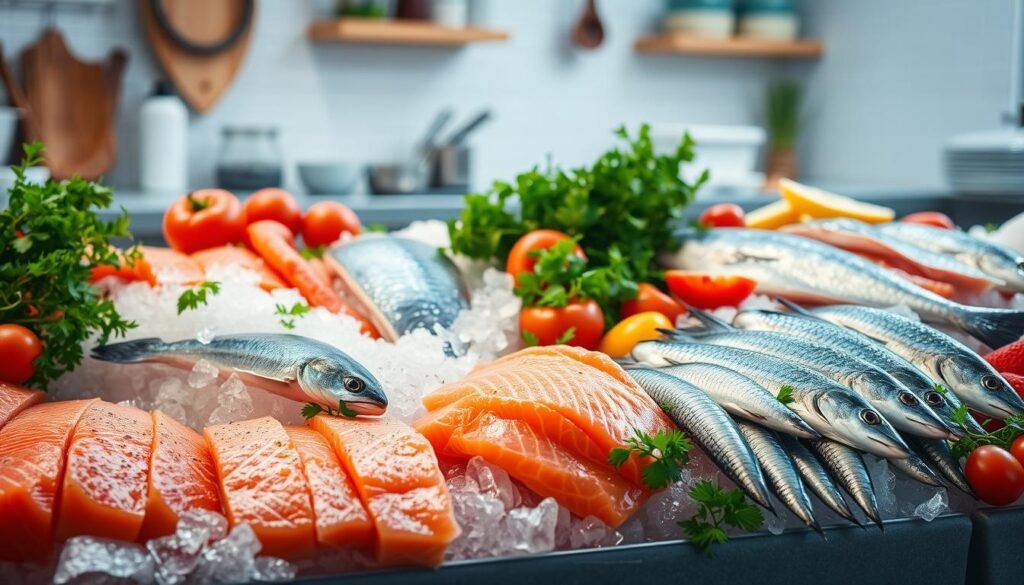
| Seafood Option | Mercury Content | Omega-3 (per 3 oz) | Vitamins & Minerals | Sustainability Rating |
|---|---|---|---|---|
| Pacific Chub Mackerel | Low | 1,700mg | Vitamin B12, Selenium | Best Choice |
| Wild-Caught Alaska Salmon | Low | 1,500mg | Omega-3, Vitamin D | Best Choice |
| Sardines | Low | 300mg | Calcium, Vitamin D | Best Choice |
| Rainbow Trout (U.S. Farmed) | Low | 800mg | Omega-3, Vitamin D | Best Choice |
| Herring | Low | 1,400mg | Vitamin D, Selenium | Best Choice |
| Orange Roughy | High | N/A | N/A | Avoid |
Adding these heart-friendly choices to your meals benefits your health. As people learn about nutrition and the environment, the choice of seafood grows. This makes including seafood in our diets easier and better for our health.
Prepared Seafood Alternatives: The Convenience Factor
In our fast-paced world, the ease of meal prep is a big deal. Seafood alternatives come in handy here. They let people enjoy meals full of nutrients without spending too much time cooking. Convenient seafood choices are on the rise. They include meal kits and ready-made dishes that make eating well easier.
Plant-Based Fish Sticks
Plant-based fish sticks are becoming a favorite for quick meals. They fit many dietary needs. These options give the taste of fish sticks but with healthier ingredients. Now many brands offer these frozen alternatives. They are perfect for anyone wanting a tasty snack or an addition to their meal.
Homemade Fish Cakes with Healthy Ingredients
Making fish cakes at home is both fun and fulfilling. You can use good-for-you ingredients like chickpeas, nori, and spices. This way, you create healthy fish cakes that taste great and nourish your body. This cooking method boosts creativity and lets you tweak recipes to your liking. Adding ingredients full of vitamins and minerals makes these fish cakes a smart choice for health.
Using services that offer prepared seafood alternatives helps streamline meal prep and shopping. More people are choosing these services. They look for simple, tasty solutions for their meals. The demand is up, especially with the popularity of meal kits. Knowing about the convenience of these options helps people make better choices. They can enjoy food that suits their busy lives.
| Prepared Seafood Alternative | Key Features | Nutritional Benefits |
|---|---|---|
| Plant-Based Fish Sticks | Quick cooking time, convenient packaging | Rich in protein, low in saturated fats |
| Homemade Fish Cakes | Customizable ingredients, healthier alternatives | Contains fiber, high in vitamins and minerals |
Essential Nutrients Provided by Seafood Alternatives
Exploring seafood alternatives opens up a world of essential nutrients. These options are packed with vitamins and minerals needed for health. They are great for those wanting to avoid fish but keep their nutrient levels up.
Vitamins and Minerals Found in Plant-Based Options
Seafood alternatives are often rich in vital nutrients. For instance, legumes like beans and peas offer protein, iron, and fiber, similar to fish. They also provide vitamins in seafood alternatives, including:
- Calcium
- Iron
- B vitamins (such as B12 in fortified products)
Adding these to your diet improves nutritional variety and heart health, all without seafood.
Maintaining Omega-3 Levels Without Fish
Many worry about keeping up omega-3 without fish. Yet, algae supplements and seeds such as flaxseeds solve this. These alternatives are high in omega-3 fatty acids, which are good for the heart. Sources rich in omega-3s include:
- Flaxseeds
- Chia seeds
- Walnuts
- Almond milk (fortified)
Eating a mix of these nutrient-dense plant foods helps maintain a balanced, healthy diet.
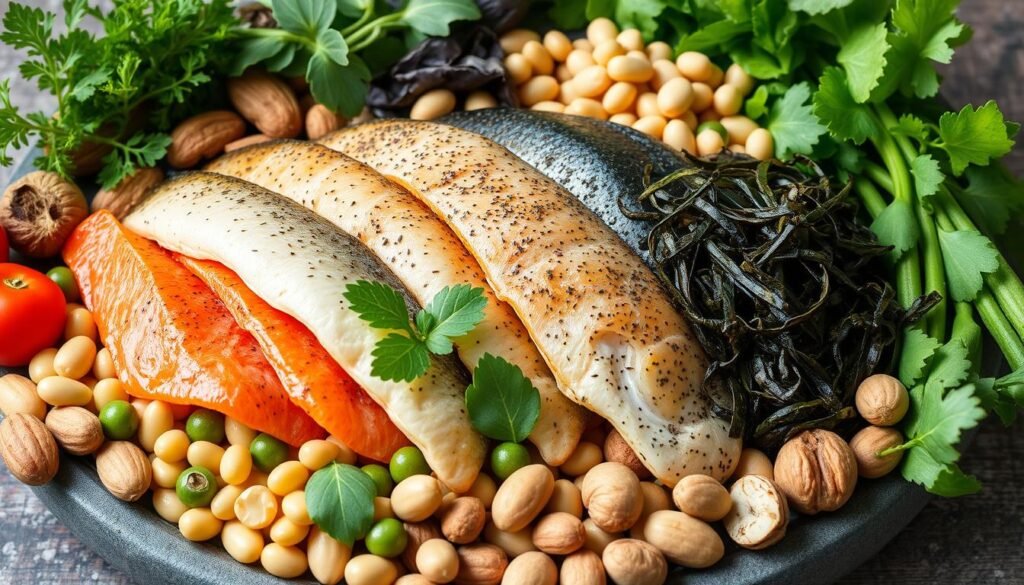
| Food | Essential Nutrients | Omega-3 Content |
|---|---|---|
| Flaxseeds | Fiber, Protein, Magnesium | High |
| Chia Seeds | Calcium, Iron, Antioxidants | High |
| Walnuts | Protein, Vitamin E, Manganese | Moderate |
| Fortified Almond Milk | Calcium, Vitamin D, Vitamin E | Varies |
Cooking Techniques for Seafood Substitutes
Using seafood substitutes lets you try new cooking methods. It’s a creative way to enjoy the flavors and health benefits of seafood without the fish. Tofu and jackfruit are very flexible in the kitchen. Preparing them can result in dishes that taste like the sea. Adding seaweed brings unique flavors that make your meals even better.
Recipes for Tofu and Jackfruit Dishes
Tofu is great for creating dishes that are tasty in many ways. Here’s how you can cook it:
- Stir-frying: Cut tofu into pieces and mix it with veggies and soy sauce. This makes a quick and easy dish.
- Grilling: Soak tofu in your favorite spices, then grill it. This gives it a nice crispy edge.
- Baking: When you bake tofu and add nutritional yeast, it gets a chewy texture and cheesy taste.
- Jackfruit Tacos: Shredded jackfruit in barbecue sauce is perfect for a fish taco twist.
Incorporating Seaweed for Fished-Flavors
Seaweed can make your food taste like it’s from the sea. Using nori or wakame boosts flavor and nutrition. Try these ideas:
- Seaweed Salad: Mix wakame with sesame oil, soy sauce, and fresh veggies for a tasty salad.
- Tofu & Seaweed Soup: A warm soup with tofu, seaweed, and green onions is comforting and healthy.
- Seaweed Sushi Rolls: Rolling seasoned rice and veggies in nori makes a refreshing meal.
Trying these cooking methods can be really rewarding. They make your meals not just healthy, but also full of flavor and fun to make.
Exploring Heart-Healthy Plant-Based Options
Eating a variety of heart-healthy plant-based foods is key to keeping your heart strong. Foods like legumes, whole grains, and veggies are great alternative protein sources. They help lower the risk of heart disease and improve your health.
Beans, lentils, and chickpeas are full of fiber and protein. They are good for lowering cholesterol. Adding them to your meals helps build a heart-healthy diet. Whole grains such as quinoa, brown rice, and oats keep your cholesterol and sugar levels in check. These foods boost your energy and health.
Fruits and veggies are important too. They help control blood pressure and reduce heart problems. Packed with vitamins, minerals, and antioxidants, they are good for your heart.
Eating lots of heart-healthy plant foods can lower blood pressure and cholesterol. This helps decrease the risk of heart disease. Choosing these foods makes for a heart-friendly and tasty diet. Check out more on heart-healthy foods here.
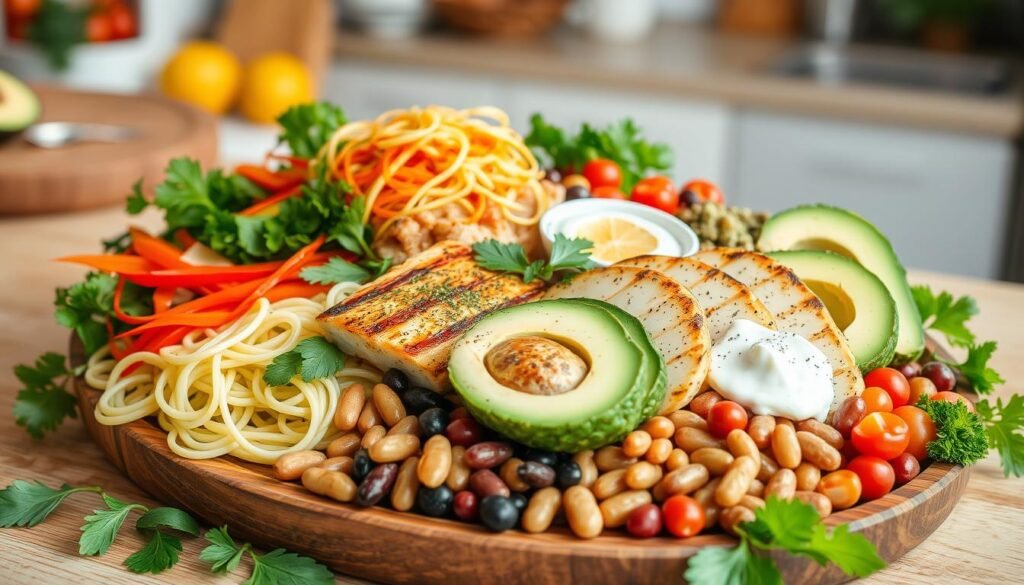
| Food Group | Examples | Heart Health Benefits |
|---|---|---|
| Legumes | Beans, Lentils, Chickpeas | High in fiber, lowers cholesterol |
| Whole Grains | Oats, Quinoa, Brown Rice | Improves blood cholesterol and sugar levels |
| Fruits and Vegetables | Spinach, Berries, Avocado | Rich in vitamins, lowers blood pressure |
| Nuts and Seeds | Almonds, Walnuts, Chia Seeds | Rich in omega-3s, anti-inflammatory properties |
Adding heart-healthy plant options to your diet is good for your heart and makes meals enjoyable. Make wise choices today for a healthy future.
Conclusion
Choosing the right seafood alternatives is key for those looking to boost their heart health. Fatty fish such as salmon and mackerel are packed with Omega-3 fatty acids. These important nutrients help keep the heart strong, support brain health, and improve overall physical condition.
The push for health has led the industry to adopt sustainable practices, certified by groups like the Marine Stewardship Council (MSC). This ensures people enjoy seafood that’s not only fresh but also responsibly sourced. Also, with the help of technology like blockchain, consumers can be sure about where their seafood comes from.
There’s also a growing selection of plant-based seafood alternatives. They offer the taste and texture of seafood, but are cruelty-free and sustainable. By choosing these, consumers support a heart-healthy diet without missing out on taste or nutrition.
To learn more about seafood market trends and the impact of health-conscious consumers, visit this source.