About 95 million adults in the US struggle with high cholesterol. This condition greatly increases their risk for heart disease and stroke. It’s crucial to choose wisely what we eat, especially foods high in protein but low in cholesterol. By eating a balanced diet with the right recipes, we can keep our hearts healthy. And, we can do it without giving up delicious meals. These meal ideas are rich in protein yet low in cholesterol, promising tasty and healthy eating.
Key Takeaways
- The discussion focuses on high-protein, low-cholesterol meal options to support heart health.
- Each dinner recipe contains a minimum of 12 grams of protein and 6 grams of fiber per serving.
- Quick and easy preparation methods, often requiring only 20 minutes of cooking time.
- Recipes feature nutrient-dense ingredients such as lentils, sweet potatoes, and fresh fish.
- Highlighting the importance of making smarter food choices to manage cholesterol.
- Incorporating a variety of flavors from different cuisines to make meals enjoyable.
- Understanding how to integrate heart-healthy protein into daily eating habits.
Understanding Cholesterol and Its Impact on Health
Cholesterol plays a key part in health but can be harmful in high amounts. Knowing about cholesterol helps people choose well for their hearts. This knowledge can promote heart wellness.
What Is Cholesterol?
Cholesterol is a waxy substance made by the body and found in some foods. It helps build cells, create hormones, and produce vitamins. Though our bodies make cholesterol, we also get it from animal products like meat, eggs, and full-fat dairy. Eating these foods changes cholesterol levels in our blood, affecting our health.
The Role of Cholesterol in the Body
Cholesterol is crucial for cell membranes and making certain hormones. Keeping cholesterol levels in check is essential. Eating foods high in saturated and trans fats can raise bad cholesterol. Reducing saturated fat intake to less than 7% of daily calories can help lower bad cholesterol. This change decreases the risk of heart disease.
Risks Linked to High Cholesterol Levels
High cholesterol levels can cause major health issues. Too much bad cholesterol raises the risk of heart disease, heart attacks, and strokes. It’s more about saturated and trans fats than dietary cholesterol itself. Diet changes, like eating fish twice a week and adding soluble fiber, can lower bad cholesterol. These habits can reduce the risk of heart disease.
| Cholesterol Source | Cholesterol Content | Effect on Health |
|---|---|---|
| Egg (large) | ~200 mg | Considered healthy for individuals with normal cholesterol |
| Processed Meats | Varies (high in saturated fat) | Increases bad cholesterol and heart disease risk |
| Shellfish (shrimp, lobster) | High dietary cholesterol | Relatively healthy option if not fried |
| Full-fat Dairy Products | Varies (high in saturated fat) | Can contribute to higher cholesterol levels |
Importance of Protein in a Healthy Diet
Protein is key for a balanced diet. It helps in muscle growth and repair. Eating enough protein is crucial for good health.
How Protein Supports Body Functions
Proteins are built from amino acids, the essentials of life. They create enzymes, hormones, and more. Adding proteins to meals supports muscles and recovery.
This is vital for those who are physically active. Getting enough protein helps the body work well.
Benefits of a High-Protein Diet
Eating a lot of protein has many advantages. It keeps you full longer, which is great for weight control. High-protein foods boost metabolism too.
This is good for improving body shape. Foods like legumes, nuts, and seafood provide many nutrients. They also help keep the heart healthy.
| Food Source | Protein Content (per serving) | Cholesterol Content |
|---|---|---|
| Dry Beans | 16 g | 0 mg |
| Legumes | 16 g | 0 mg |
| Chicken Breast (Skinless) | 26 g | 73 mg |
| Salmon | 22 g | 63 mg |
| Mixed Nuts | 5 g (per ounce) | 0 mg |
Knowing the importance of healthy proteins is key. It helps people live better through a protein-rich diet.
High-Protein, Low-Cholesterol Foods for Every Meal
Eating high in protein and low in cholesterol foods is key for staying healthy and keeping your heart strong. There are many choices, making it easy for anyone to enjoy these kinds of meals. It’s all about finding the right mix of lean meats, plant proteins, and alternative dairy products.
Lean Meat Options
Lean meats are a great way to eat food that’s rich in protein but low in fat. One of the best picks is skinless chicken breast, which has 34.8g of protein in a 145g serving. Other good choices include:
- Canned tuna – 28.2g of protein per 120g serving
- Salmon fillet – 23.8g of protein in a 120g serving
- Lean beef mince – 26.1g of protein per 125g serving
Plant-Based Protein Sources
If you prefer eating plants, there are lots of foods that are good for your cholesterol levels. Things like beans, lentils, and chickpeas are full of protein and good for you. Here are some of the best plant-based proteins:
| Food Item | Protein Content (per serving) |
|---|---|
| Black beans | 8.9g per 120g |
| Chickpeas | 8.6g per 120g |
| Kidney beans | 8.3g per 120g |
| Lentils | 7.3g per 120g |
| Quinoa | 8.1g per 185g |
Dairy Alternatives
Adding dairy alternatives to your meals can also help with getting enough protein. Things like almond milk and soy products are both high in protein and good for your heart. For instance:
- Cottage cheese provides 20.3g of protein in a 165g serving.
- Milk offers 8g of protein per cup.
- Ground flaxseeds deliver 6.6g of protein in a 30g serving.
Cholesterol-Friendly Recipes to Try
Finding low-cholesterol meal options can make your diet better and more delicious. We have a variety of cholesterol-friendly recipes for you. They are tasty and packed with good nutrients.
Hearty Vegetarian Dishes
Vegetarian meals are good for keeping your cholesterol down. They can also be very fulfilling. Here are some to try:
- Vegetarian Curry – A fragrant blend with 240 calories, 6g fat, and 8g protein per serving.
- African Peanut Stew – It’s rich and flavorful, with 349 calories and 10g protein. Great for dinner.
- Italian Sausage Veggie Skillet – Combines veggies and flavors, offering 251 calories and 16g protein.
- Meatless Mushroom Bourguignon – Savory but light, perfect for protein needs and cholesterol care.
Delicious Seafood Meals
Seafood is great for healthy fats and protein. These meals will delight you:
- Grilled Salmon – A top choice rich in omega-3 fatty acids.
- Shrimp & Fish Lemon Herb Salad – Zesty and refreshing. It’s full of low cholesterol nutrients.
- Tuna Salad – Flavorful and rich in protein. Makes for an excellent sandwich filling.
Chicken-Based High-Protein Options
Lean poultry is great for heart-healthy meals. Check out these recipes:
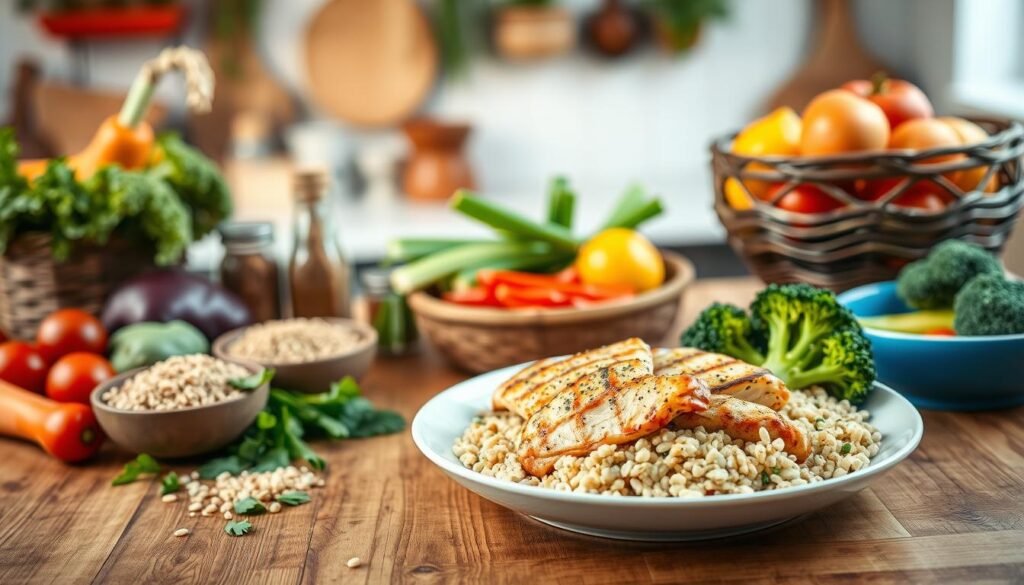
- Baked Lemon Herb Chicken – Tasty and low in bad fats.
- Chicken Piccata Meatballs – Each meatball is only 63 calories and 4g protein. It’s a fast, healthy meal.
- Chipotle Ranch Chicken Tacos – A fun taco variant that’s good for your cholesterol.
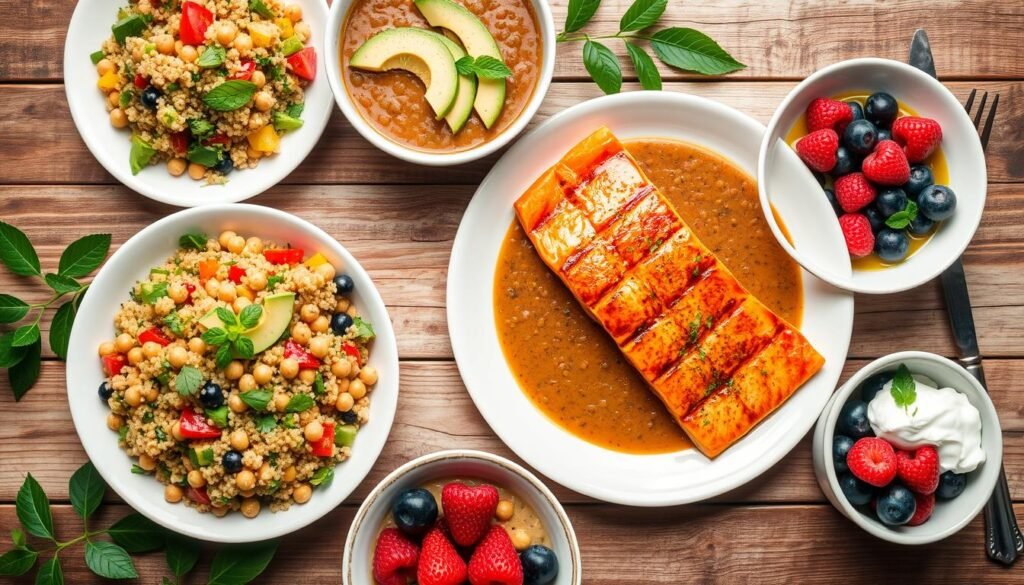
Using these cholesterol-conscious recipes in daily meals is a tasty way to stay healthy. You can enjoy many nutritious ingredients. Plus, you make meals that help your heart.
Meal Prep: Planning Your High-Protein, Low-Cholesterol Menu
Effective meal prep is key for sticking to a healthy diet. It saves time and gives you access to good meals. It makes eating healthy easier and helps reach your health goals.
Efficient Grocery Shopping Tips
To shop better, make a list of high-protein items like chicken and lentils. Include fruits and veggies to lower cholesterol. Bulk buys save money. Use items like quinoa and nuts. Choose seasonal produce for better taste and freshness.
Batch Cooking Ideas
Batch cooking means making many meals at once. Cook large amounts of lean meats and veggies together. This approach creates meals that are simple to warm up. Look at this meal plan for great meal ideas.
Storing and Reheating Meals Properly
Storing food right is vital. Use airtight containers to keep meals fresh. When warming up food, steaming or using the microwave is best. Eat your meals in a timely manner to avoid waste. For recipes that keep the nutrients in, see this resource.
High-Protein, Low-Cholesterol Snack Ideas
Snacking smart is vital for those keeping an eye on their cholesterol. Luckily, there are plenty of high-protein, low-cholesterol snacks. They are not just tasty but also keep your heart healthy. These snacks focus on healthy proteins to satisfy and nourish.
Easy Plant-Based Snacks
Plant-based snacks are both tasty and good for your health. Here are a few top picks:
- Hummus with celery sticks: A refreshing choice, with about 250 calories per serving.
- Roasted chickpeas: They’re crunchy, flavorful, and have around 184 calories and 6 grams of fat.
- Guacamole with baby carrots: Creamy and delicious, with roughly 90 calories and 8 grams of plant-based fat.
- Apple slices with nut butter: A snack with around 210 calories that combines fiber and healthy fats.
- Black bean salsa: Tasty and low-calorie, at just 70, this option is rich in flavor.
Quick Protein Boosters on the Go
For quick snack options, try these low-fat, high-protein foods:
- Greek yogurt: Packed with protein, it’s a quick pick-me-up with about 120 calories.
- Protein bars: Look for low sugar types, which have around 180 calories.
- Edamame: A cup gives you about 240 calories and 18 grams of protein.
- Energy balls: Lemon-Blueberry Energy Balls have 7 grams of protein each.
- Tuna nori wraps: With about 153 calories, they are a great protein-filled snack.
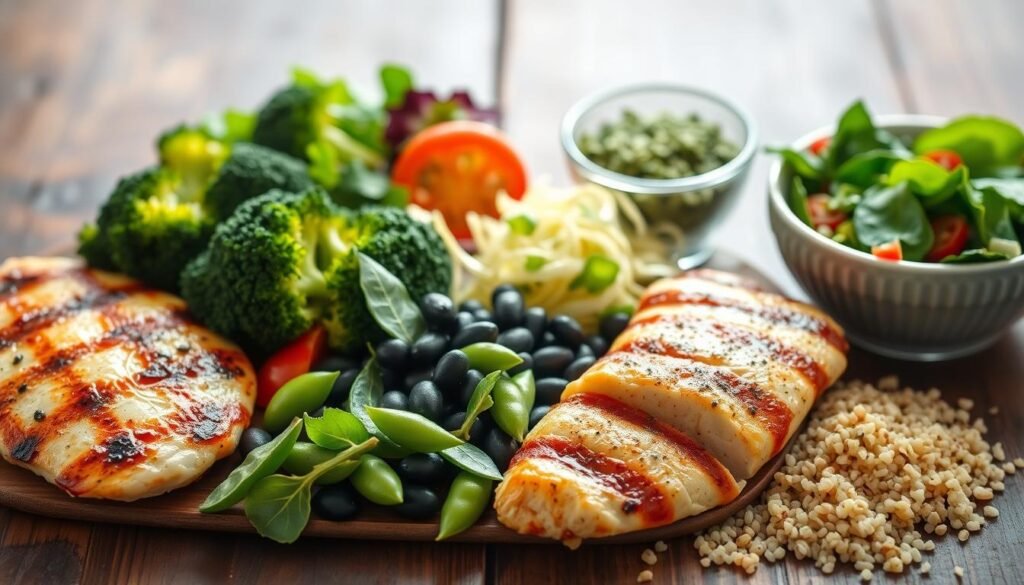
Adding these high-protein, low-cholesterol snacks helps maintain a healthy diet. They keep your heart well and give you the energy for the day.
| Snack | Calories | Protein (grams) | Cholesterol |
|---|---|---|---|
| Hummus with celery sticks | 250 | 5 | 0 mg |
| Roasted chickpeas | 184 | 7 | 0 mg |
| Guacamole with carrots | 90 | 2 | 0 mg |
| Greek yogurt | 120 | 22 | 5 mg |
| Edamame | 240 | 18 | 0 mg |
Combining Flavors: Spices and Herbs to Enhance Meals
Using herbs and spices in meals boosts taste and heart health. They’re key for tasty, heart-healthy proteins. Instead of just salt or fat, many spices and herbs add deep flavor healthily.
How Herbs Help Lower Cholesterol
Garlic, basil, and cilantro are famous for their flavors and cholesterol-lowering effects. They make daily meals tasty and heart-friendly. Adding them not only improves taste but also supports a healthy diet. Herbs like garlic and basil may lower cholesterol.
- Garlic
- Basil
- Oregano
- Thyme
Spices That Promote Heart Health
Spices also enhance flavor and benefit the heart. Turmeric has curcumin, reducing inflammation. Cinnamon helps keep blood sugar in check, perfect for heart-friendly recipes. Key spices include:
- Turmeric
- Cinnamon
- Ginger
- Cayenne pepper
Get creative with these ingredients for tasty, heart-conscious meals. For instance, add garlic, turmeric, and olive oil to a veggie stir-fry. It tastes great and is good for your heart.
| Herb/Spice | Benefit | Usage |
|---|---|---|
| Garlic | Lowers cholesterol | Use fresh or powder in dressings, marinades |
| Basil | Antioxidant properties | Fresh in salads, pesto, or dried in sauces |
| Turmeric | Anti-inflammatory | Add to curries, rice, or smoothies |
| Cinnamon | Regulates blood sugar | Sprinkle on oatmeal or in baking |
Adding these spices and herbs enhances meals and supports a healthy heart. This approach helps turn simple dishes into delightful, cholesterol-friendly meals for better health.
Lifestyle Changes to Support Low Cholesterol
Making changes in your lifestyle is key to keeping your heart healthy. Being active and eating right are the main steps. These steps can have a big impact on your cholesterol and how you feel.
Exercise and Its Impact on Cholesterol Levels
Working out for 30 minutes, five times a week, can help your cholesterol. This activity raises your “good” cholesterol levels. Quitting smoking also makes a big difference quickly. It boosts good cholesterol and cuts heart disease risk in a year. Losing a little weight can also drop cholesterol levels. Doing daily tasks can become easier and better for your heart.
Mindful Eating Techniques
Eating mindfully helps you make better food choices for low cholesterol. Pay attention to what and how much you eat. This helps create healthier habits. Eat foods like salmon, walnuts, oatmeal, and kidney beans. They offer omega-3 fatty acids and the soluble fiber you need for managing cholesterol. Aim for 10 to 25 grams of soluble fiber a day. Also, keep saturated fat under 7% of your daily calories. This approach balances your diet.
Nutritional Guidelines for a Heart-Healthy Diet
Learning about nutritional guidelines is very important for a heart-healthy diet. By choosing the right mix of nutrients, people can improve their health with smart food choices. It’s important to focus on how much protein you eat and manage your cholesterol.
Recommended Daily Intake of Proteins
Adults need about 46 to 56 grams of protein every day. But, this amount might change depending on your age, if you’re a man or woman, and how active you are. It’s important to eat different foods that are high in protein but low in cholesterol. Foods like fish, chicken, beans, nuts, and lean beef are good for your heart and give you the protein you need.
Understanding Your Body’s Cholesterol Needs
Keeping an eye on your cholesterol is key for a healthy heart. You should try to eat less saturated fat, no more than 6% of your total daily calories. Also, try to eat less than 2,300 milligrams of salt each day. If you can, go for less than 1,500 mg to help lower your blood pressure and keep your heart healthy. Eating healthy fats, like those found in olive oil, avocados, and certain fish, can help control your cholesterol. For more tips, check out these detailed nutrition guidelines.
Conclusion
Adding foods high in protein and low in cholesterol to your daily diet is key for heart health. This article has shown how protein impacts health and the need to manage cholesterol. Knowing how they work together helps us choose better for a healthy life.
With tasty recipes, meal prep tips, and lifestyle advice, this guide helps improve your diet and enjoy food. Plant-based options like lentils and nuts, plus lean proteins, can reduce cholesterol and boost heart health. Research on protein and heart health backs up the benefit of these diet changes.
Making smart food choices means balancing nutrition with food you love to eat. For those curious about high-protein diets and benefits, this article is a great start. Look into the science of protein and heart risks for more insights. Check out more details through this resource.