Did you know nearly 95 million American adults have high cholesterol levels? This fact highlights the urgent need to understand cholesterol’s impact on health. Cholesterol is crucial for various body functions, like making hormones and building cells. Yet, too much cholesterol can threaten heart health.
Let’s dive into cholesterol’s role in our health. We’ll cover its benefits and the risks of having too much. High levels of LDL, the “bad” cholesterol, can clog arteries. This can lead to heart disease or stroke. Keeping cholesterol in check is key for our heart and overall health. Check out the cholesterol health risks.
Key Takeaways
- High cholesterol is common in the US, needing awareness and action.
- Cholesterol is important for hormone production and cell structure.
- Controlling cholesterol is critical to avoid heart and vessel diseases.
- It’s important to regularly monitor cholesterol levels.
- Making lifestyle changes can help lower bad cholesterol for better health.
Understanding Cholesterol
Cholesterol is a fatty substance made by the liver and found in some foods. It’s important for many body processes, like making hormones and helping with digestion. But, having too much can cause health issues.
There are two main types of cholesterol sources. The liver makes what’s called endogenous cholesterol. The kind we get from food is exogenous cholesterol. Eating lots of saturated and trans fats can increase cholesterol levels. This can lead to problems with heart health.
Most of the time, high cholesterol doesn’t show any symptoms. That’s why getting blood tests is important for finding it. Kids should start getting tested between ages 9 and 11. Adults should have tests more often as they get older.
Lifestyle choices can affect cholesterol levels. Not exercising, being overweight, and eating poorly can all lead to bad cholesterol. Being obese is a big risk. Not staying active can reduce the “good” cholesterol, HDL.
| Cholesterol Risk Factors | Controllable Factors | Health Risks |
|---|---|---|
| High cholesterol | Inactivity | Heart disease |
| Atherosclerosis | Obesity | Heart attacks |
| Elevated LDL levels | Unhealthy diet | Strokes |
So, cholesterol is both good and bad for us. It’s needed for our bodies but can be harmful in excess. By getting regular checks and managing our lifestyle, we can keep our cholesterol in check. This helps lower the risk of heart diseases.
Types of Cholesterol
It’s important to know about the different types of cholesterol for heart health. Cholesterol varies by its density and role. Each type impacts our health and disease risk in unique ways.
Low-Density Lipoprotein (LDL) – The “Bad” Cholesterol
LDL is called the “bad” cholesterol. If your LDL is high, it can cause plaque in your arteries. This ups your risk for heart diseases. People should check their LDL levels. Over 100 mg/dL is worrying. Eating well and exercising can lower LDL and improve your health.
High-Density Lipoprotein (HDL) – The “Good” Cholesterol
HDL is the “good” cholesterol. It sends extra cholesterol to the liver to be removed. High HDL can lower heart disease risk. Men need at least 40 mg/dL and women 50 mg/dL. It’s important to lower LDL and raise HDL for health.
Very Low-Density Lipoprotein (VLDL) and Triglycerides
VLDL cholesterol carries triglycerides, a blood fat. High VLDL can mean more heart disease risk. Triglycerides should be under 150 mg/dL. Knowing your cholesterol levels can guide lifestyle choices. For more on cholesterol types, visit this resource.
https://www.youtube.com/watch?v=0U7YHRW5dyc
Functions of Cholesterol in the Body
Cholesterol is crucial for our health. It plays a key role in how our bodies work. Knowing about cholesterol’s roles helps us understand its importance.
Cell Membrane Structure
Cholesterol makes our cell membranes better. It adds fluidity and strength. It is vital for the outer layer of cells, helping them function right.
It lets certain things pass in and out of cells. This is important for keeping cells alive and working.
Hormone Production
Cholesterol is also key in making hormones. These hormones include testosterone, estrogen, and cortisol. They help control many body processes like metabolism and immune response.
Digestive Health
For digestion, cholesterol is important too. It helps create bile acids. These acids are crucial for breaking down fats that we eat.
Without enough cholesterol, our body might struggle with digestion. This can lead to various issues.
| Function | Description |
|---|---|
| Cell Membrane Structure | Maintains fluidity and integrity of cell membranes. |
| Hormone Production | Precursor for hormones like testosterone, estrogen, and cortisol. |
| Digestive Health | Aids in bile acid production for fat digestion and absorption. |
Effects of Cholesterol on Overall Health
Cholesterol in our blood affects our health, especially our heart. It’s key to manage cholesterol to avoid health problems. Heart disease is a top killer in the U.S. due to high cholesterol.
Impact on Heart Health
High levels of cholesterol hurt our heart health. Specifically, too much LDL (bad) cholesterol is a worry. It can cause atherosclerosis, making arteries hard and narrow. This leads to heart attacks and strokes. People with heart disease should aim for an LDL level of 70 mg/dL or less. Those without should target 100 mg/dL or less.
Relationship Between Cholesterol and Cardiovascular Diseases
High cholesterol links to heart diseases. Roughly 86 million adults in the U.S. have high cholesterol. About 20% of these have dangerously high lipoprotein (a) levels. Aiming for a total cholesterol of 150 mg/dL and HDL levels of 40 mg/dL for men and 50 mg/dL for women is beneficial. Testing and lifestyle changes are crucial for managing cholesterol and heart health.
Cholesterol Health Risks
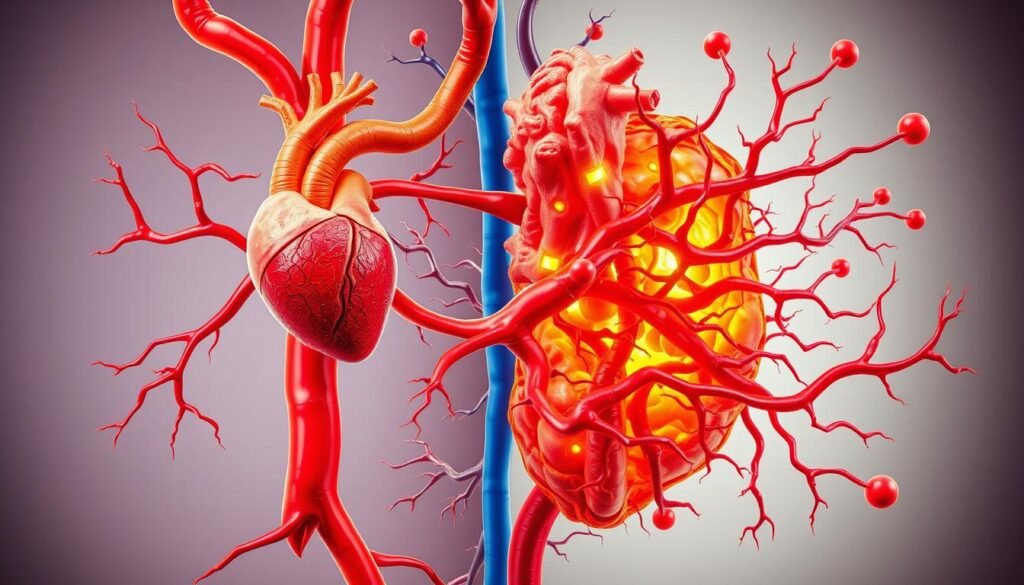
High cholesterol levels can harm your heart and blood vessels. It’s vital to know these risks to keep your heart healthy. High cholesterol can lead to serious problems, like atherosclerosis. This is when plaque builds up in the arteries, making them narrow and reducing blood flow.
This condition can result in dangerous complications. People with high cholesterol are more likely to face:
- Heart attacks
- Strokes
- Peripheral arterial disease (PAD)
- Chest pain (angina)
About 71 million people in the U.S. have high cholesterol, showing it’s a common issue. Your lifestyle, like your diet, exercise, and if you smoke, affects your cholesterol. Also, things you can’t change like your age, gender, and ethnicity play a role. Some people have familial hypercholesterolemia (FH), making them prone to high cholesterol despite a healthy lifestyle.
Often, high cholesterol does not show symptoms, which is why it’s called a silent threat. That’s why getting your cholesterol checked regularly is very important. Doctors suggest a mix of lifestyle adjustments and medications to control cholesterol. The latest advice includes personalized plans that deal with diet, exercise, and medicine together to lower heart disease risk.
High Cholesterol Impact on the Body
High cholesterol is key in many health issues, like atherosclerosis. It builds up in arteries, causing them to narrow. This can harm your health. Knowing about cholesterol’s effects can motivate us to control it.
Atherosclerosis and Its Consequences
Atherosclerosis happens when cholesterol causes plaques in the arteries. These plaques block blood flow, which can lead to heart attacks and strokes. High cholesterol not only harms the heart but also other organs. It highlights the importance of keeping cholesterol in check.
Link to Heart Attacks and Strokes
High cholesterol is closely linked to heart diseases. It increases the risk of heart attacks and strokes. When arteries get clogged, blood flow to crucial areas is blocked. This shows why we must keep an eye on our cholesterol levels. With 40% of American adults having high cholesterol, it’s critical to understand its dangers. This can help prevent serious heart problems.
Managing Cholesterol Levels
Managing your cholesterol is key to cutting health risks linked to high cholesterol. Changing your diet can greatly improve heart health. These changes, along with more physical activity, are very effective.
Dietary Changes to Lower Cholesterol
To reduce LDL (bad) cholesterol, it’s important to eat less saturated and trans fats. Instead, eat more foods rich in soluble fiber like fruits, veggies, and whole grains. The American Heart Association suggests keeping saturated fat under 6% of daily calories.
Foods high in saturated fats include processed meats and fatty dairy. The Mediterranean Diet, which balances fat intake, is highly recommended for heart health. Healthy snacks like nuts, seeds, and Greek yogurt with fruit also help lower cholesterol. Learn more about effective dietary changes.
Exercise and Lifestyle Adjustments
Exercise plays a big role in managing cholesterol. Doing 150 minutes of moderate exercise weekly boosts HDL (good) cholesterol and lowers the bad. Quitting smoking also helps lower bad fats in your blood and raises HDL cholesterol.
Even losing 5% to 10% of your weight can help improve cholesterol levels and cut heart disease risk. Drinking less alcohol and healthier cooking methods, like baking instead of frying, aid cholesterol management.
Assessing Your Cholesterol Levels
Getting your cholesterol levels checked regularly is key to a healthy heart. Doctors use lipid panels for this. These tests measure different types of cholesterol and fats in your blood. Knowing these levels helps you understand your health risks better. This way, you can make smart choices about how to live healthier.
Understanding Lipid Panels
Lipid panels show several important numbers: total cholesterol, LDL (the “bad” cholesterol), HDL (the “good” cholesterol), and triglycerides. Health care providers use these numbers to plan how to take care of your heart. For instance, having LDL-C at 100 mg/dL or lower is linked to lower heart disease risks.
It’s a good idea for adults to have cholesterol checks every four to six years. Kids and teens should get checked too, especially if they have risk factors. People at higher risk might need checks more often. Knowing these guidelines helps you manage your health better.
Usually, you should not eat for 8 to 12 hours before a cholesterol test for the most accurate results. Doctors look at these results along with your family history and how you live day-to-day. They do this to fully understand your risk for heart problems. This shows how vital cholesterol checks and lipid panels are for your health.
Cholesterol and Cardiovascular Health
Understanding the link between cholesterol and heart health is key. High “bad” cholesterol, or LDL, ups the risk for heart disease. On the flip side, more “good” cholesterol, HDL, guards the heart. The American Heart Association says balancing both types is crucial to lower heart disease risk.
Eating better, like swapping red meat for plants, can cut LDL cholesterol. Trans fats in processed foods hurt cholesterol levels. Since 2018, the U.S. has cut out harmful partially hydrogenated oils, showing we know the risks of trans fats.
Staying at a healthy weight and exercising can help control cholesterol. This leads to better heart health. A diet full of fruits, veggies, whole grains, lean protein, and fatty fish also boosts good cholesterol. This helps the heart too.
- Risk Factors for Heart Disease:
- High blood pressure
- Diabetes
- Obesity
- Smoking
- Family history of heart disease
- Inflammatory conditions
- Preventive Measures:
- Quitting smoking
- Regular exercise
- Healthy eating
- Annual health check-ups
Working with doctors to keep an eye on cholesterol is vital. High cholesterol needs quick action to prevent serious heart issues like heart attacks or strokes.
| Cholesterol Type | Effect on Heart Health | Recommended Levels |
|---|---|---|
| LDL (Low-Density Lipoprotein) | Increases heart disease risk | Less than 100 mg/dL |
| HDL (High-Density Lipoprotein) | Protects against heart disease | 60 mg/dL or higher |
| Triglycerides | High levels can contribute to heart risk | Less than 150 mg/dL |
Regular Health Checks and Screenings
Regular health checks are key to preventing illnesses. Getting your cholesterol checked is especially crucial. It helps find problems early, before they get serious. Everyone has different needs for how often to get checked. If you’re young, a test every five years is advised. But if you’re a man between 45 to 65 or a woman 55 to 65, you need checks more often, like every one to two years. And once you’re over 65, get your cholesterol checked every year.
People at risk for heart disease might need to test more often. It’s important to keep an eye on your LDL cholesterol, the “bad” kind. High LDL can clog arteries and lead to heart problems. Keeping LDL low helps keep your heart healthy.
A cholesterol test measures levels in milligrams per deciliter of blood. You want your total cholesterol under 200 mg/dL. A level between 200 to 239 mg/dL is borderline high. Anything 240 mg/dL or above is too high. So, getting regular checks is critical to manage and monitor cholesterol.
The following table shows how often you should get your cholesterol screened:
| Age Group | Recommended Screening Frequency | Note |
|---|---|---|
| Under 20 | Once between ages 9-11, once between ages 17-21 | Increased frequency for obesity or diabetes |
| 20-35 | Every 4-6 years | If no risk factors are present |
| Men 35+ | Every 5 years | Starting at age 35 |
| Women 45+ | Every 5 years | Starting at age 45 |
| Men 45-65, Women 55-65 | Every 1-2 years | More often if at high risk |
| Over 65 | Annually | Consider ongoing health status |
Following a regular health check schedule lets you take charge of your health. This helps lower risks from high cholesterol and heart disease. Making changes in how you live and getting screened on time can greatly improve your health over the years.
Conclusion
Understanding cholesterol is key for heart and overall health. It helps in many body processes. Yet, too much cholesterol can be bad for your health.
It’s important to keep cholesterol levels balanced. High LDL cholesterol can cause atherosclerosis and heart diseases. So, monitoring and managing these levels is crucial.
Making good lifestyle choices helps control cholesterol. Eat heart-healthy foods and do aerobic exercise. Managing stress also helps. Knowing about your genetics can also guide healthy decisions.
There are options for those needing extra help, like statins. These medications can lower the risk of heart problems.
To reduce health risks, take active steps in managing cholesterol. Use resources like guides on lowering cholesterol for help. By doing so, you can improve your health in the long run.