Did you know nearly 40% of American adults have high cholesterol? This fact highlights the need to know about the cholesterol ratio. Specifically, the LDL to HDL ratio is crucial. Since heart disease is a top cause of death in the U.S., understanding this ratio is vital.
The cholesterol ratio is a key heart health indicator. It predicts the risk of serious heart issues. This article offers a deep dive into cholesterol and how to manage it well.
Key Takeaways
- The cholesterol ratio reflects the balance between harmful LDL and protective HDL.
- A total cholesterol-to-HDL ratio below 5:1 is generally recommended for optimal heart health.
- Regular lipid testing is crucial, especially for individuals over 20 years old, as recommended by the American Heart Association.
- Lifestyle changes can significantly impact cholesterol levels and overall heart health.
- Understanding cholesterol measures can empower individuals to reduce their cardiovascular risk.
Understanding Cholesterol and Its Functions
Cholesterol is important for our health. It is a type of fat needed for building cell walls and making hormones. By knowing about the different kinds of cholesterol, people can make better health choices. We will explore what cholesterol is, and the importance of HDL and LDL cholesterol.
What is Cholesterol?
Cholesterol is a waxy substance in all body cells. It helps make hormones, vitamin D, and substances that digest fats. Though our bodies produce it naturally, we also get cholesterol from foods, mainly from animals. Having the right balance of cholesterol is crucial for health. Keeping an eye on cholesterol levels is essential.
Types of Cholesterol: HDL vs LDL
There are two main types of cholesterol: HDL and LDL. They have different roles in our body’s fat management. Knowing these differences is important for heart health.
| Type of Cholesterol | Description | Health Role |
|---|---|---|
| HDL Cholesterol | High-density lipoprotein cholesterol, known as “good” cholesterol. | Transports cholesterol back to the liver, reducing the risk of heart disease and stroke. |
| LDL Cholesterol | Low-density lipoprotein cholesterol, often referred to as “bad” cholesterol. | Can lead to plaque formation in blood vessels, increasing the risk of heart disease. |
High LDL cholesterol levels are a risk for heart disease and stroke. On the other hand, high HDL cholesterol levels are better for your heart. Understanding these cholesterol types can help you manage your health better.
https://www.youtube.com/watch?v=0U7YHRW5dyc
What is a Lipid Profile?
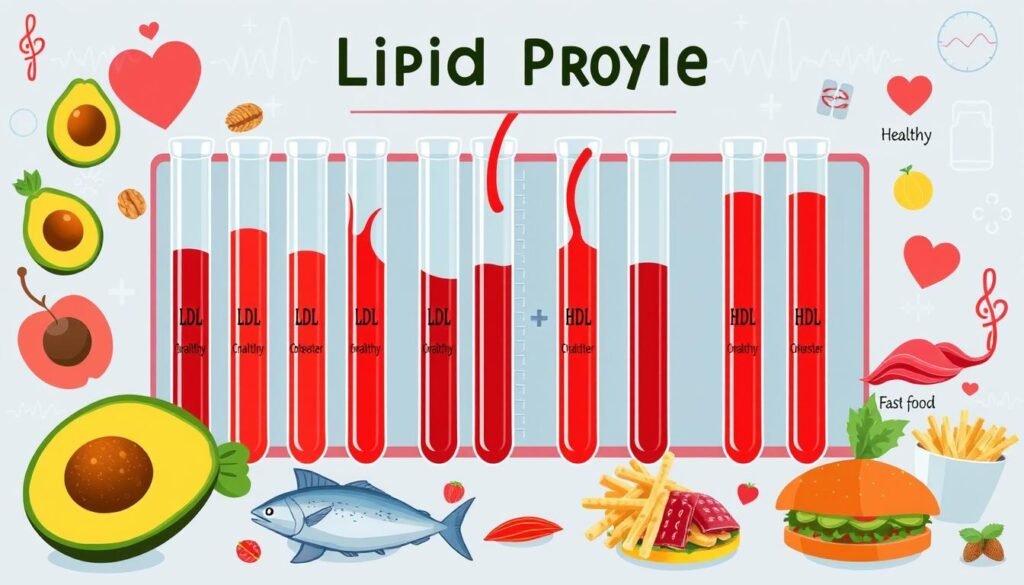
A lipid profile is key to checking heart health. It involves cholesterol testing that measures different cholesterols and triglycerides. These elements can show if there’s a risk for heart issues. Learning what a lipid panel includes is the first step to spotting problems early.
Components of a Lipid Panel
A standard lipid panel has a few important parts:
| Component | Normal Range |
|---|---|
| Total Cholesterol | Less than 200 mg/dL |
| HDL (Good Cholesterol) | 35 to 80 mg/dL (men) |
| HDL (Good Cholesterol) | 35 to 65 mg/dL (women) |
| LDL (Bad Cholesterol) | Less than 100 mg/dL |
| Triglycerides | Less than 150 mg/dL |
These numbers help doctors figure out the risk of heart disease and other problems. High total or LDL cholesterol could mean a greater danger of heart disease.
Importance of Regular Lipid Testing
It’s important to check cholesterol levels often. The American Heart Association says adults should have a lipid profile every four to six years. This is even more crucial if they have other heart disease risks. Staying on top of these numbers helps people take charge of their heart health. To learn more about cholesterol tests, check out Cleveland Clinic.
Cholesterol Ratio: LDL to HDL
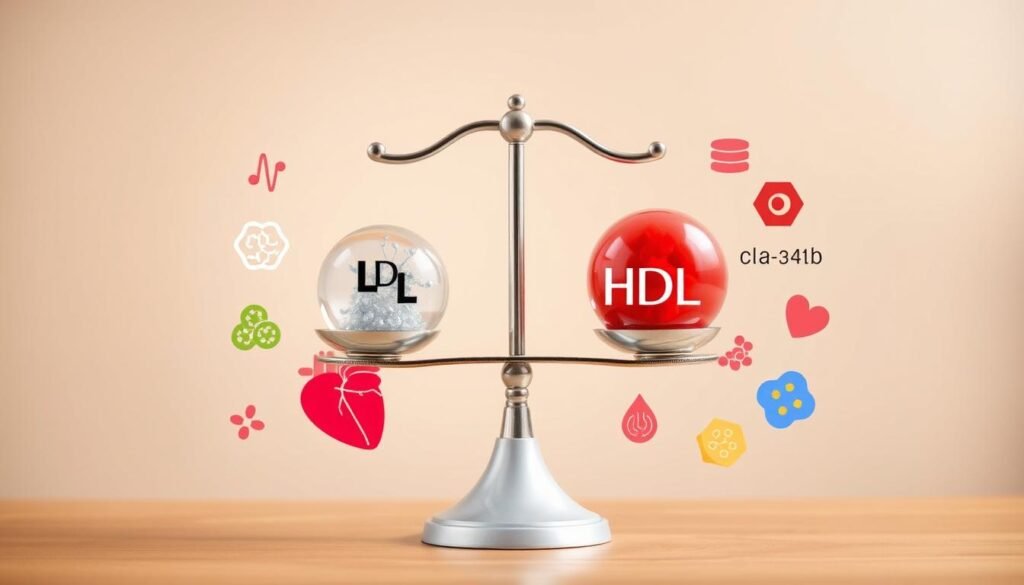
The cholesterol ratio is key to knowing heart health. It shows the balance between good and bad cholesterol. This balance affects the risk of heart disease.
How to Calculate Your Cholesterol Ratio
To find your cholesterol ratio, divide your total cholesterol by your HDL level. For example, if your total cholesterol is 200 mg/dL and your HDL is 50 mg/dL, your ratio is 4:1. Aim for a ratio of less than 5:1. A ratio below 3.5:1 is best. It’s crucial to check these numbers regularly for heart health.
Importance of the Cholesterol Ratio
The LDL to HDL ratio tells about heart health. High LDL levels mean more risk because LDL can block arteries.
Knewing this ratio helps you take steps to better heart health. Eating well, exercising, and sometimes taking statins can lower LDL. This lowers heart disease risk.
| Cholesterol Level | Optimal Level | Higher Risk |
|---|---|---|
| Total Cholesterol | LDL | HDL |
| Ideal Ratio | Recommended Maximum Ratio | Increased Risk for Heart Disease |
Understanding Cardiovascular Risk
Understanding how cholesterol affects heart health is key. High LDL cholesterol levels pose a major risk, leading to atherosclerosis. Learning about these factors is crucial for health.
The Link Between Cholesterol Levels and Heart Disease
High cholesterol is a big health risk, especially for heart disease. An LDL:HDL ratio over 4.75 means high cardiovascular risk. In contrast, keeping LDL under 100 mg/dL and HDL over 50 mg/dL shows a healthy ratio of 2. This means a lower risk for heart issues. Studies confirm a ratio above 2.33 raises the chance of heart problems. It’s important to watch these levels closely.
How Atherosclerosis Develops
Atherosclerosis happens when arteries get clogged with plaque, mainly from too much LDL cholesterol. This can make arteries narrow, leading to heart attacks or strokes. People with genetic conditions like familial hypercholesterolemia are at even higher risk. So, it’s vital to keep track of cholesterol to avoid serious health issues.
| Cholesterol Ratio | Cardiovascular Risk Level |
|---|---|
| Below 2 | Low |
| 2 to 4.75 | Moderate |
| Above 4.75 | High |
Managing Your Lipid Profile
Managing lipids means paying attention to diet and exercise. A good diet helps control cholesterol levels. Regular exercise improves heart health and cholesterol.
Impact of Diet on Lipid Levels
Your diet choices affect your body’s lipid levels. Foods high in bad fats can raise cholesterol. Here are some examples:
- Saturated fats – These are in red meat and full-fat dairy and raise cholesterol.
- Trans fats – Found in processed foods, they up cholesterol too.
- Omega-3 fatty acids – Salmon and similar foods can lower blood pressure and boost heart health.
- Soluble fiber – Helps lower how much cholesterol gets into your blood.
- Whey protein – Found in dairy, it can reduce bad LDL cholesterol and total cholesterol.
The Role of Exercise in Cholesterol Management
Exercise is key to managing cholesterol. Working out for 30 minutes five days a week makes a big difference. Physical activity helps in many ways:
- It lowers bad LDL cholesterol, keeping arteries clear.
- It increases good HDL cholesterol, which helps remove excess cholesterol.
- Helping with weight loss, it can lower LDL and increase HDL.
- It boosts overall heart health.
Stopping smoking boosts your good cholesterol quickly. Drinking alcohol in moderation can also raise HDL. Exercise fights off stress and other lifestyle factors that hurt cholesterol. Diet and exercise are essential for managing lipids well.
| Dietary Component | Impact on Cholesterol |
|---|---|
| Saturated Fats | Increase total cholesterol levels |
| Trans Fats | Raise overall cholesterol levels |
| Omega-3 Fatty Acids | Reduce blood pressure, improve heart health |
| Soluble Fiber | Reduces cholesterol absorption |
| Whey Protein | Lower LDL and total cholesterol levels |
Signs of Dyslipidemia
Knowing the dyslipidemia signs is important for health. This issue means your lipid levels aren’t normal. It can cause big heart problems. Sometimes, it’s hard to spot the signs, so learning about them is key.
What to Look Out For
Watch out for several symptoms that suggest a cholesterol problem. They include:
- Unexpected fatigue
- Chest pain during physical activities
- Unusual bruising without clear cause
- Mild headaches or dizziness
Going for regular health checks helps spot these dyslipidemia signs early. This way, you can treat them quickly.
When to Consult a Healthcare Provider
It’s crucial to know when to get help for handling dyslipidemia well. If you show any earlier symptoms, or if you’re at high risk because of family history, obesity, or high cholesterol, see a doctor. Catching it early can make a big difference for your health.
About 93 million U.S. adults have too much cholesterol. This places them at risk for heart diseases, the top killer in the country. Keeping an eye on your cholesterol, especially the LDL type, is necessary for good health. For more tips on managing cholesterol, visit this dyslipidemia guide or learn about cholesterol ratios here.
Heart Disease Prevention Strategies
To stay healthy, it’s vital to prevent heart disease. Learning about foods that lower “bad” cholesterol (LDL) is key. Changing your diet and moving more can boost your heart health and lower risks.
Maintaining a Healthy Lifestyle
Living a healthy life involves several key practices to avoid heart disease. This includes staying active, keeping weight in check, and reducing stress. Doing moderate exercise for 30 minutes five days a week not only improves heart health but also raises “good” cholesterol (HDL).
It’s important to have a healthy body weight. Aim for a BMI between 18.5 and 24.9. Also, men should keep their waist under 40 inches and women under 35 inches for better metabolic health.
Dietary Recommendations for Lowering LDL
To lower LDL cholesterol, eating right is critical. A diet full of fruits, veggies, and whole grains helps a lot. Cut down on saturated fats and eat more fiber and omega-3s from fish and flaxseeds for a healthier heart.
Drinking alcohol in moderation can also increase HDL cholesterol. Women should stick to one drink a day and men up to two. Following these dietary tips for lowering LDL can greatly help in fighting heart disease. Keeping HDL cholesterol above 60 mg/dL offers the best heart protection.
By adopting these lifestyle and diet changes, you’re on the path to a healthier future. Regularly checking your cholesterol levels helps keep track of your progress. For more info on cholesterol, check this resource.
| Health Measure | Recommended Levels |
|---|---|
| Total Cholesterol | Below 200 mg/dL |
| LDL Cholesterol | Below 130 mg/dL (for general population) |
| LDL Cholesterol (High Risk) | Below 100 mg/dL |
| HDL Cholesterol (Men) | Above 60 mg/dL |
| HDL Cholesterol (Women) | Above 60 mg/dL |
| Triglycerides | Below 150 mg/dL |
| Blood Pressure | At or below 120/80 mmHg |
Evaluating Your Test Results
Understanding your cholesterol test results is key to keeping your heart healthy. It helps you make wise health choices. By knowing your cholesterol levels, you spot health risks early. This leads to better lifestyle choices.
Normal Cholesterol Ranges
Knowing what’s normal for cholesterol is crucial for heart health. Here are the standards:
| Cholesterol Type | Ideal Level (mg/dL) |
|---|---|
| Total Cholesterol | Below 200 |
| HDL (“Good” Cholesterol) | 60 and above |
| LDL (“Bad” Cholesterol) | Less than 100 |
| Triglycerides | Less than 100 |
Aiming for a total cholesterol to HDL ratio under 3 is best. High triglycerides can mean a higher risk of heart issues.
Understanding Your Risk Assessment
Checking your cholesterol regularly helps understand your risk better. Talk to your doctor if you have cholesterol worries. Making changes to your diet and exercising can boost your health.
Conclusion
The importance of managing cholesterol cannot be overstated. The ratio of LDL to HDL is key in knowing your heart disease risk. Keeping the total cholesterol to HDL ratio at 3.5:1 is ideal. A higher ratio means a greater chance of heart issues. Getting regular tests is crucial for staying informed and talking effectively with doctors.
Making healthy lifestyle choices has a huge effect on cholesterol. Eating well and staying active can keep LDL and HDL levels in check. It’s very important to keep LDL low and HDL high for heart health. This means taking action on your cholesterol management is crucial.
Keeping an eye on cholesterol is vital for preventing heart disease. By staying aware and making good lifestyle choices, you can greatly improve your heart’s health. This leads to a healthier, longer life.