Around 94 million American adults are fighting high cholesterol. This increases their chances of heart disease and stroke. It’s key to focus on a diet that lowers cholesterol by avoiding certain foods. Cholesterol helps make hormones and cells, but it’s important to keep it balanced. To control cholesterol, keep saturated fats under 7% of your daily calories. Also, try to eat less than 200 mg of cholesterol each day. Choosing the right foods and knowing which ones to avoid can lead to a healthier life.
Key Takeaways
- High cholesterol affects around 94 million adults in the US.
- Limit saturated fat intake to less than 7% of daily calories.
- Keep daily cholesterol intake below 200 mg for effective management.
- Recognizing which foods to avoid is essential for a cholesterol-lowering diet.
- Emphasizing fiber-rich and low-sodium foods can help manage cholesterol levels.
- Adopting a heart-healthy diet leads to long-term benefits for cholesterol levels.
Understanding Cholesterol and Its Importance
Cholesterol is necessary for our bodies. It helps make cell membranes and hormones. Yet, many don’t know the dangers of high cholesterol. The CDC reports that 94 million American adults have high cholesterol. This condition raises the risk of heart disease and stroke.
It’s important to keep cholesterol levels healthy. High cholesterol can cause atherosclerosis, which means plaque builds up in your arteries. This can increase your chances of having a heart attack or stroke. High cholesterol is linked to the leading cause of death worldwide. Learning how to manage cholesterol with diet is important.
Eating heart-healthy foods like fruits, vegetables, whole grains, and healthy fats is key. These foods can lower “bad cholesterol” or LDL levels. On the other hand, foods high in saturated fats can raise your cholesterol. A diet with less processed food and more fiber is good for your cholesterol. It also benefits your blood pressure and immune system.
- Fruits and vegetables: Provide essential vitamins and minerals.
- Whole grains: Help lower cholesterol and improve digestive health.
- Nuts and seeds: Contain healthy fats that support heart health.
Staying consistent with a healthy diet is crucial. Avoiding foods high in trans fats and added sugars is smart. Choose a diet rich in nutrient-dense options instead. This helps lower your dependence on high-cholesterol foods. Following this advice can lead to a healthier life and prevent future diseases.
| Food Type | Impact on Cholesterol |
|---|---|
| Fruits and Vegetables | Lower LDL levels |
| Whole Grains | Prevent cholesterol absorption |
| Nuts and Seeds | Support healthy cholesterol levels |
| Saturated Fats | Increase LDL |
| Processed Foods | Elevate cholesterol and unhealthy fats |
What High Cholesterol Means for Your Health
High cholesterol means too much fat in the blood. It can start as early as childhood or the teenage years. That’s why it’s crucial to start checking cholesterol levels at age nine. Often, people don’t show symptoms, which can lead to serious health problems without any warning.
Managing cholesterol is crucial due to its risks. It can cause plaque to build up in arteries, leading to atherosclerosis. This makes heart attacks and strokes more likely, which are serious health threats. Surprisingly, one in five people who die from coronary artery disease are under 65. This shows how dangerous high cholesterol can be.
Getting regular check-ups can help lower these risks. If you’re male, you should get checked every five years until you’re 45. Then, it should be every one to two years until you’re 65. Women should get checked every five years until 55, then more often. This shows the importance of keeping an eye on cholesterol as you age.
Lifestyle is key to keeping cholesterol in check. Staying active, avoiding bad cholesterol foods, and managing stress helps. Obesity, too much alcohol, and not enough exercise make high cholesterol risks worse. Making healthy lifestyle choices is necessary.
Adopting heart-healthy habits is vital. Eating lots of fruits, vegetables, and whole grains helps. You should limit saturated fats to less than 6% of your daily calories. Also, try to do at least 150 minutes of exercise like walking or cycling each week. This can increase good cholesterol and lower the bad.
| Cholesterol Management Strategies | Frequency of Screening |
|---|---|
| Engage in regular aerobic exercise | Every one to two years, beginning at age 9 |
| Limit saturated fat intake | Every five years for those assigned male until age 45 |
| Monitor alcohol consumption | Every five years for those assigned female until age 55 |
| Adopt a heart-healthy diet | Every one to two years after age 55 for females and 65 for males |
| Maintain a healthy weight | Annual screenings over age 65 |
Understanding high cholesterol’s impact is critical for maintaining heart health. For tips on food and cholesterol, check out this guide.
Why High Cholesterol is Dangerous
High cholesterol can lead to serious health problems like heart attacks and strokes. The effects of high cholesterol influence our health in negative ways. Issues like erectile dysfunction and heart problems can arise from blocked blood flow. This highlights why it’s key to monitor cholesterol levels and see doctors regularly.
Lack of exercise, being overweight, and poor diet boost bad cholesterol and triglycerides. Those with a BMI of 30 or more face higher risks. Smoking lowers “good” cholesterol, while too much alcohol raises total cholesterol levels.
High cholesterol ups heart disease risk, often because of unhealthy food choices. Saturated and trans fats in certain meats, snacks, and desserts are to blame. Keeping saturated fats below 5% to 6% of your daily calories is advised for a healthy heart.
Getting your cholesterol checked often is essential. Men 45 to 65 and women 55 to 65 should get tested every one to two years. If you’re over 65, test annually. Following these recommendations helps in managing health and avoiding high cholesterol issues.
To prevent high cholesterol, eat less salt, reduce animal fats, and exercise. A heart-healthy diet like the Mediterranean Diet focuses on plants and fish. It greatly reduces heart disease risk.
Foods to Avoid When High Cholesterol
When you have high cholesterol, choosing the right foods is key for heart health. Certain foods can really impact your cholesterol levels. It’s important to know which ones to stay away from for a healthier diet.
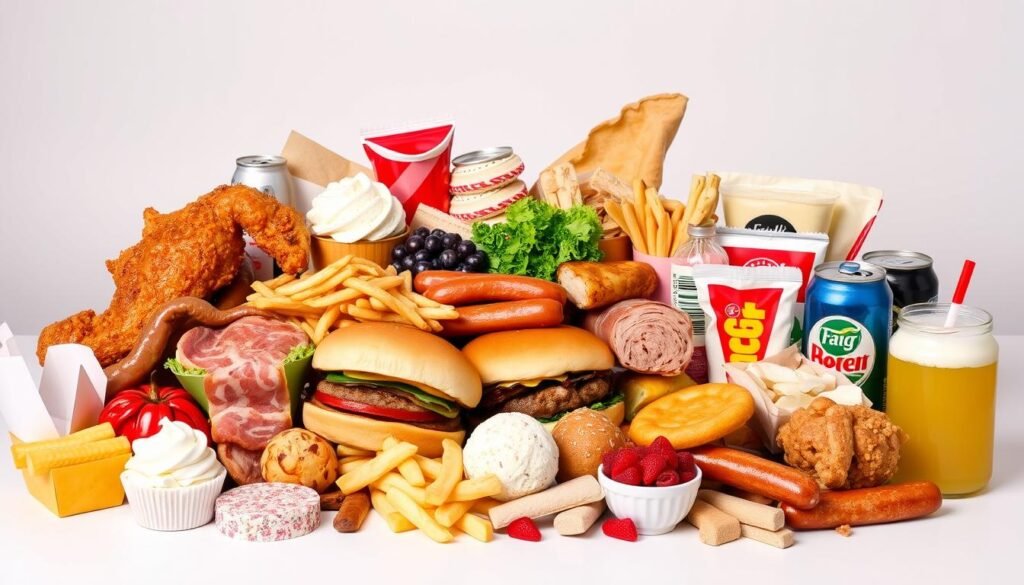
High-cholesterol foods with trans fats
Trans fats can raise your LDL cholesterol, which increases the risk of heart disease. Foods like pastries, fried foods, and processed snacks are high in trans fats. Avoid these to keep your heart healthy. Always check food labels for trans fats, which might be listed as “partially hydrogenated oils.”
Salty high-cholesterol foods
Salty foods, such as canned soups and fast food, can raise your blood pressure. They also bump up your risk of heart problems. Eating too much salt can make managing high cholesterol harder. Choose lower-sodium options to help your heart. Pairing less salt with a balanced diet is a good way to control cholesterol.
Processed meats and their impact
Processed meats like bacon, sausage, and deli meats are high in bad fats and cholesterol. These foods can push your cholesterol levels up. To manage cholesterol better, try to cut down on these meats. Go for lean proteins instead, as they’re better for your heart. For more details on foods to avoid, here’s a great guide on the top ten worst foods for high cholesterol.
Identifying Bad Cholesterol Foods
It’s key to know which foods raise your cholesterol. This helps you pick healthier options. We’ll look at two main problems: foods full of saturated fats and how sugars affect cholesterol.
Common sources of saturated fats
Foods rich in saturated fats should be avoided to keep cholesterol in check. These fats are mostly found in animal products. They can push up your cholesterol levels. Some common examples are:
- Whole milk: Contains 33 milligrams of cholesterol per cup, along with 8 grams of fat and 5 grams of saturated fat.
- Cheddar cheese: Offers 30 milligrams of cholesterol per ounce, with 9 grams of fat and 6 grams of saturated fat.
- Eggs: A single egg contains 212 milligrams of cholesterol, 5 grams of total fat, and 2 grams of saturated fat.
- Pork chops: Provide 85 milligrams of cholesterol in a 3 ½ oz portion, along with 25 grams of total fat and 10 grams of saturated fat.
- Chicken liver: Is notorious for its high cholesterol content, reaching 631 milligrams in a 3 ½ oz portion.
How sugars elevate cholesterol levels
Eating too much sugar is bad for cholesterol. High-sugar foods can make you gain weight. This can then boost your cholesterol and your risk of heart disease. Keep these in mind:
- Processed foods: Often packed with hidden sugars, they can lead to bad eating habits.
- Sweetened beverages: These are full of sugar and add calories without good nutrition.
- Snack foods: Foods like cookies and candies can make your blood sugar and cholesterol go up.
High Cholesterol Diet: What to Exclude
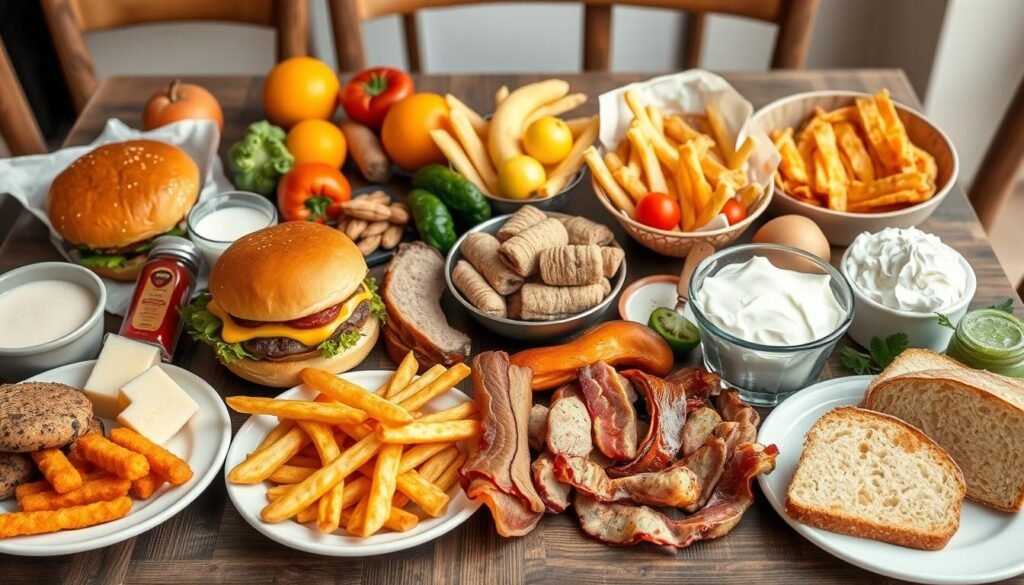
To follow a high cholesterol diet, you need to know what foods to avoid. Some foods are really bad for cholesterol control. Trans fats and saturated fats are at the top, as they raise cholesterol a lot.
Try to eat no more than three to four egg yolks a week. Just one yolk has about 186 milligrams of cholesterol, over half of what you should get daily. Most cheeses have a lot of fat. Choose ones made from non-fat milk, like mozzarella and ricotta, instead. Also, avoid high-fat snacks like cookies, pastries, and doughnuts to help lower cholesterol.
People in the USA eat more than five teaspoons of salt each day. That’s way more than needed and it can make cholesterol worse. Foods high in cholesterol, like shrimp and organ meats, are not good. For instance, a 3-ounce serving of beef liver has 333 milligrams of cholesterol.
On a high cholesterol diet, avoid whole milk, cream, and foods made with a lot of eggs. Egg whites are a great choice because they don’t have cholesterol and work well in meals.
Processed foods, like commercially made baked beans with sugar or pork, should be avoided. Choose healthier nuts like almonds and walnuts over peanuts. Knowing what foods to cut out helps a lot in controlling cholesterol with your diet.
To learn more about eating right to control cholesterol, check out this guide.
Heart-Healthy Diet for High Cholesterol
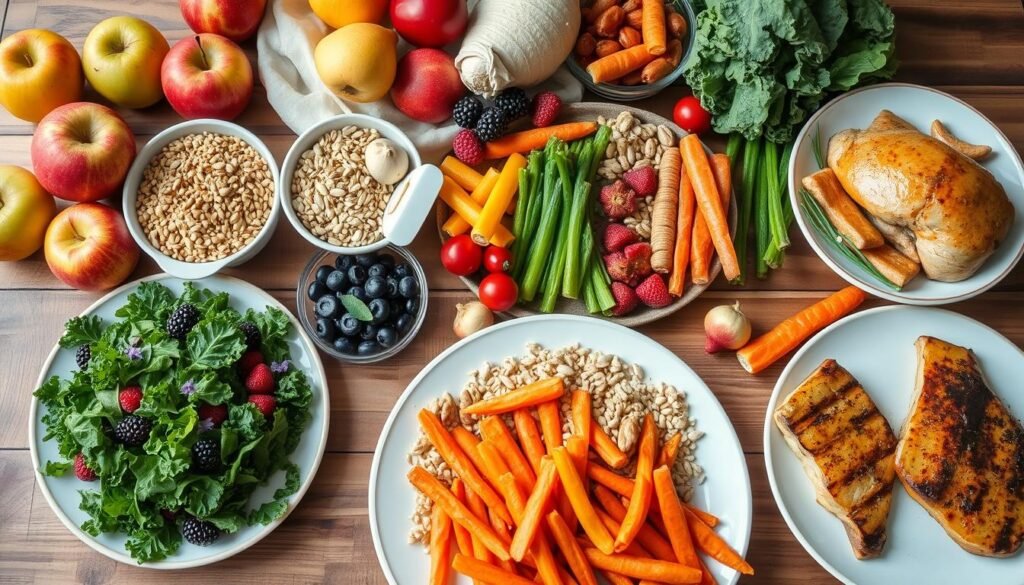
A heart-healthy diet is key to managing high cholesterol. It emphasizes nutritious foods over processed ones. This diet helps improve health and offers tasty meals that are good for the heart.
Cholesterol-lowering tips for meal planning
Planning meals is important for a heart-healthy diet. Here are some tips for balanced meals:
- Incorporate a variety of fruits and vegetables into daily meals, aiming for at least five servings.
- Choose lean proteins, such as poultry and fish, over red meats, limiting intake of processed meats.
- Include at least 8 ounces of fatty fish like salmon or trout each week to benefit from omega-3 fatty acids.
- Use liquid vegetable oils, like olive or canola, instead of solid fats to enhance flavor and nutrition.
- Increase whole grain consumption by opting for brown rice, quinoa, and whole grain pasta.
Cholesterol-friendly recipes to consider
Try these delicious recipes to eat healthily and enjoyably:
| Recipe | Key Ingredients | Benefits |
|---|---|---|
| Oatmeal with Berries | Oats, mixed berries, almond milk | High in soluble fiber, supports cholesterol reduction |
| Quinoa Salad | Quinoa, chickpeas, vegetables, olive oil | Packed with protein and nutrients |
| Baked Salmon | Salmon, lemon, herbs | Rich in omega-3 fatty acids |
| Vegetable Stir Fry | Assorted vegetables, tofu, low-sodium soy sauce | Supports heart health and maintains low sodium intake |
| Bean Chili | Canned beans, tomatoes, onion, spices | High in fiber and heart-healthy |
Monitoring Cholesterol Levels Through Diet
Regular checks on cholesterol are key when adjusting your diet to manage it. Changing what you eat can boost heart health over time. This makes it important to know which foods work best.
Tracking what you eat and your cholesterol levels helps stick to a healthy diet. It’s best to choose healthy fats over trans fats. Trans fats increase LDL cholesterol, which can be harmful. Eating foods like nuts and olive oil, which have good fats, helps keep cholesterol normal.
Canadian guidelines recommend cholesterol tests for adults over certain ages to catch risks early. Keeping a healthy weight can also reduce bad LDL and increase good HDL cholesterol. Adding at least 150 minutes of exercise weekly also improves cholesterol levels.
Using nutrition labels is a smart way to watch cholesterol in your diet. Eating fresh foods like veggies, fruits, and lean meats helps manage cholesterol. Also, natural items like plant sterols in some products can lower LDL levels.
Staying on top of cholesterol over time is crucial for making healthy changes last. Regular check-ups help tweak your diet to keep improving cholesterol levels. With a balanced plan, managing cholesterol enhances overall health.
Long-term Benefits of a Low Cholesterol Diet Plan
Starting a diet low in cholesterol can greatly improve your health over time. It’s clear that diet affects cholesterol for those who stick with good eating habits. By changing what you eat, you could lower the risk of heart issues and high blood pressure.
A plant-focused diet helps lower bad cholesterol and triglycerides. People might see changes in just four weeks. Also, losing a small amount of weight can make a big difference in cholesterol levels. Dropping 5-10% of body weight can boost your health significantly.
Staying on a low cholesterol diet means eating heart-friendly foods often. You should fill up on whole grains, fruits, and veggies. They’re full of nutrients but low in bad fats. Choosing no-fat dairy over high-fat versions also helps lower cholesterol.
Making lifestyle changes can lead to long-term health rewards, sometimes even with medication. Customizing diets to fit personal health needs helps keep cholesterol in check. Getting your blood tested regularly shows if you’re on the right track or need to adjust your diet.
Conclusion
Changing what you eat can greatly help your heart health, especially if you have high cholesterol. Knowing what foods to cut down on is key. This helps you make a diet plan that keeps your cholesterol levels better.
When bad cholesterol (LDL) gets too high, it can clog your arteries. This raises your chance of heart disease and stroke. Eating right can lower these risks and boost your health overall.
Eat more grains, fruits, veggies, and lean meats. Try to eat less eggs and processed meats that have a lot of cholesterol. It’s all about your whole diet, not just single nutrients. As science gets better, diet advice can become more personal.
Getting your cholesterol checked regularly helps keep an eye on it. If things look off, you might need to see a doctor. For more tips on balancing cholesterol in your diet, check out this important resource. Smart eating choices can help you tackle cholesterol problems and live a heart-healthy life.