Did you know that cardiovascular disease claims over 650,000 American lives each year? Heart health is a big issue. Including beans and legumes in your diet is a natural way to help. These foods are full of fiber. They are tasty and have been proven to help the heart in many studies.
Beans and legumes belong to the Fabaceae family. They are loaded with vitamins, minerals, and plant protein. Eating them regularly can lower cholesterol and help control blood sugar. This is important since over 42% of U.S. adults are obese. A diet good for the heart can help fight these problems.
This article will talk about the many good things legumes do for the heart. Foods like chickpeas and navy beans are great for you. They should be part of your meals every week.
Key Takeaways
- Beans and legumes are essential contributors to a heart-healthy diet.
- Regular consumption can lower cholesterol levels and assist in blood sugar regulation.
- Fiber-rich foods like legumes improve gut health.
- Incorporating beans like chickpeas and navy beans can help reduce heart disease risks.
- Healthy eating patterns should prioritize legumes for overall cardiovascular health.
Introduction to Beans and Legumes
Beans and legumes are popular worldwide for their unique tastes and textures. They belong to the Fabaceae or Leguminosae family, which has over 20,000 species. Some well-known ones are chickpeas, lentils, kidney beans, and black beans. These foods are not only tasty but also good for your heart.
Beans and legumes are full of fiber, making you feel full. They give you important vitamins and minerals. They are eco-friendly too, emitting much less greenhouse gas than other crops.
Experts suggest about 3 cups of legumes per week. The DASH Eating Plan recommends 4-5 half-cup servings each week. This matches the 2020-2025 Dietary Guidelines for Americans, which advise half a cup daily for health.
Pulses, like beans, can be stored for a long time without losing nutrients. They are affordable and a good meat substitute. Including them in your diet supports heart health and overall well-being.
If you’re interested in how food affects cholesterol, check out this guide. It shows how making smart food choices helps keep cholesterol levels healthy.
Nutrition Profile of Beans and Legumes
Beans and legumes are key for a healthy diet. They’re packed with vitamins, minerals, and protein. These foods are great for your health and add variety to meals.
Essential Vitamins and Minerals
They’re full of B vitamins, like folate and thiamine, which boost metabolism and energy. Minerals such as iron, magnesium, and potassium in beans support the heart and more. For example, a cup of cooked black beans gives you 244 micrograms of folate and other key nutrients, which makes them a top choice in beans nutrition.
Plant-Based Protein Content
Legumes are known for their high plant-based protein. They provide 14 to 31 grams of protein per cup. For instance, a half cup of cooked lentils has about 8 grams of protein and is low in fat. This makes them perfect for vegetarians or vegans looking to get enough protein without saturated fats.
Beans and Legumes for Heart Health
Eating beans and legumes helps your heart stay healthy. They lower cholesterol and blood pressure, which keeps your heart strong. The fiber in these foods removes extra cholesterol from your blood.
Beans and legumes have lots of fibers and proteins. Eating them regularly can make you healthier. For example, they can lower the chances of heart diseases by 8% and coronary diseases by 10%.
One study found that eating a cup of legumes each day for three months improves your health. People lost weight, reduced their waist size, and lowered their blood sugar and bad cholesterol. Eating these foods often can cut the risk of heart attacks by 38%.
Let’s look at the nutrition in common beans per cup:
| Type of Legume | Calories | Protein (g) | Fat (g) | Carbohydrates (g) | Fiber (g) |
|---|---|---|---|---|---|
| Chickpeas | 269 | 14.5 | 4.25 | 45 | 12.5 |
| Lentils | 230 | 17.9 | 0.75 | 39.8 | 15.6 |
| Kidney Beans | 225 | 15.3 | 0.89 | 40.4 | 13.1 |
| Black Beans | 227 | 15.2 | 0.93 | 40.8 | 15 |
| Pinto Beans | 245 | 15.4 | 1.0 | 45.0 | 13.0 |
| Soybeans | 296 | 31.3 | 15.4 | 14.4 | 10.3 |
Adding beans for heart health to your meals brings good changes. Legume benefits show why we should eat them for a strong heart. They offer great flavors and health perks.
Benefits of Incorporating Legumes into Your Diet
Legumes in daily meals bring great benefits. They are key for a healthy heart, stable blood sugar, and a happy gut. Learning about their benefits helps people make smart food choices.
Impact on Cholesterol Levels
Legumes are good for managing cholesterol. Studies show they can lower “bad” LDL cholesterol. For instance, one study noted a drop in cholesterol from -11.8 mg/dL to -8.0 mg/dL. This helps lower heart disease risk.
Blood Sugar Regulation
Legumes are also great for blood sugar. They have a low glycemic index, which means they don’t spike blood sugar. People who eat them see better A1C and blood glucose levels. This is especially good for those with type 2 diabetes.
Supporting Gut Health
Eating legumes is good for gut health because they have lots of fiber. A serving has about 7-9 grams of fiber. This fiber helps grow good gut bacteria. It improves digestion and protects against stomach problems.
Top Heart-Healthy Beans and Legumes
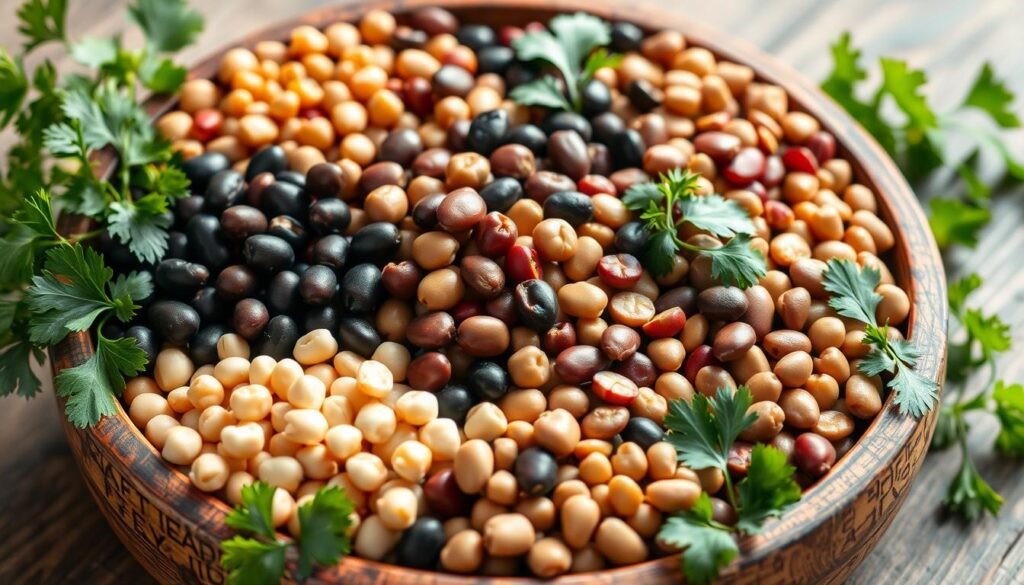
Eating certain beans and legumes is great for your heart. Each kind has special nutrients that help your heart stay healthy. Let’s look at some good beans and legumes for your heart:
Chickpeas and Their Advantages
Chickpeas are super versatile and great for your heart. They are packed with protein and fiber. This helps keep your blood sugar stable. Check out their chickpeas benefits for more info. A ½-cup of cooked chickpeas has about 135 calories, 22 grams of carbs, and 6 grams of fiber.
Lentils as a Nutritional Powerhouse
Lentils are really good for you, especially your heart. They’re full of iron and fiber. This helps lower cholesterol and keeps your digestion running smoothly. A ½-cup of cooked lentils has 115 calories, 20 grams of carbs, and 9 grams of protein. Lentils are important for keeping your heart working well.
Kidney Beans for Cardiovascular Support
Kidney beans are great for your heart because they have a lot of folate. They help manage cholesterol and keep your blood pressure in check. With about 125 calories and 9 grams of protein in a ½-cup, they’re a smart food for your heart. Eating them regularly helps people with type 2 diabetes control their blood sugar.
Understanding Fiber-Rich Foods
Fiber is key for good health, especially for the heart. Knowing about different fiber types can help people eat more fiber-rich foods.
Types of Dietary Fiber
There are two types: soluble and insoluble. Soluble fiber is found in beans, oats, and flaxseed. It dissolves in water. It helps lower cholesterol by binding with it. This removes cholesterol from the blood, which is good for the heart. Insoluble fiber doesn’t dissolve in water. It helps with digestion and prevents constipation. You can find it in whole grains, nuts, and many vegetables.
How Fiber Contributes to Heart Health
Eating fiber-rich foods brings many health benefits. It can lower the risk of constipation, hemorrhoids, and colorectal cancer. The National Academy of Medicine suggests how much fiber we need daily. Women over 50 should get 21 grams, under 50 should get 25 grams. Men over 50 need 30 grams, under 50 need 38 grams. The dietary guidelines recommend eating 14 grams of fiber for every 1,000 calories, for those 2 and older.
| Fiber Source | Fiber Content (per serving) |
|---|---|
| Raspberries | 8.0 grams (1 cup) |
| Green Peas | 9.0 grams (1 cup) |
| Split Peas | 16.0 grams (1 cup) |
| Chia Seeds | 10.0 grams (1 ounce) |
Mixing different fiber types in meals can improve your health. It can help with weight management and lower heart disease risk. A bean and vegetable salad can give you about 11 grams of fiber. This helps a lot with meeting daily fiber goals. Adding fiber slowly to your diet can prevent stomach problems. This makes it easier to keep your heart healthy through what you eat.
Easy Bean and Legume Recipes
Working with beans and legumes is easy and rewarding. You can make refreshing salads or hearty soups. Here are some great bean recipes to try.
Chickpea Salad Ideas
A chickpea salad is crunchy and full of flavor. You can combine chickpeas, diced tomatoes, red onions, and fresh cilantro. For a zesty taste, just add olive oil, honey, and white wine vinegar. This salad is tasty and good for your heart.
Here are more chickpea salad ideas:
- Chickpea and avocado salad with lime dressing.
- Spicy chickpea salad with jalapeños and cilantro.
- Mediterranean chickpea salad with feta cheese and olives.
Lentil Soup Recipes
Lentil soup is warm, comforting, and packed with nutrients. It includes a mix of vegetables and is low in fat. Try making classic lentil soup with carrots, celery, and garlic cooked in vegetable broth. It’s filling, high in fiber, and full of protein.
Check out these lentil soup variations:
- Curried lentil soup with coconut milk.
- Vegetable lentil soup with lots of seasonal veggies.
- Lentil and sausage soup for a richer taste.
| Recipe Type | Beans or Legumes Used | Key Ingredients |
|---|---|---|
| Chickpea Salad | Chickpeas | Tomatoes, onions, cilantro, dressing |
| Lentil Soup | Lentils | Carrots, celery, garlic, vegetable broth |
| Two Bean Salad | Mixed beans | Dijon mustard, red onion, olive oil |
| Three Bean Chili | Kidney beans, black beans, pinto beans | Tomato sauce, bell peppers, spices |
Adding these bean recipes to your meals is good for your health and makes eating fun. With so many options like chickpea salads and lentil soups, beans are great for any diet.
Legumes and Their Role in a Heart-Healthy Diet
Legumes are key to a heart-healthy diet, offering benefits of legumes that boost heart wellness. Foods like beans, lentils, and peas are full of nutrients. They make tasty legumes meals that are good for your heart.
Eating lots of legumes lowers the risk of heart diseases. People who eat them most have a 14% lower risk of heart issues. This is because legumes are high in protein and fiber.
They help keep your blood sugar stable. And they make you feel full for a long time.
Experts say legumes are great for fighting heart disease. Even small changes, like swapping refined carbs for legumes, are helpful. Eating them regularly can lower bad cholesterol and help control blood pressure.
Just one cup of legumes a day can improve your health. It can lead to weight loss and a smaller waistline.
Legumes are great for many diets, including vegetarian and gluten-free. They are super versatile. They also help the environment by reducing the need for nitrogen fertilizers.
Exploring the Health Benefits of Different Varieties
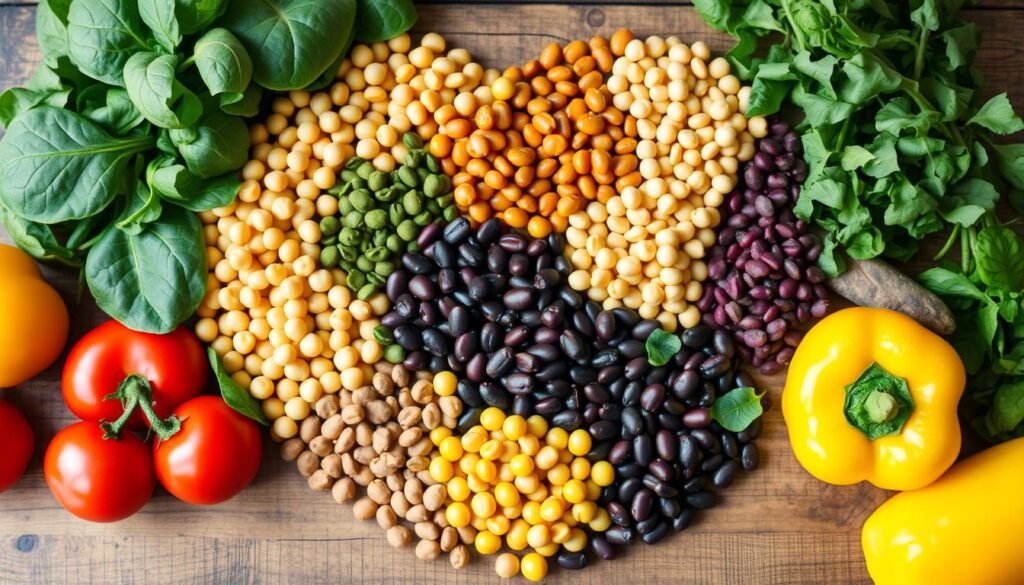
Beans and legumes are packed with nutrients that boost our health. Varieties like black beans, pinto beans, and edamame each have special health perks. They make our diets richer and improve our well-being.
Black Beans
Black beans are full of antioxidants and fiber. They may lower blood pressure and boost heart health. They also help with digestion and are a great plant-based protein source.
Eating them regularly can make our diets healthier. They’re also easy to add to many different meals.
Pinto Beans
Pinto beans are loaded with vitamins, minerals, and fiber. They can help reduce cholesterol and boost energy metabolism. This makes them not only nutritious but also good for your heart and metabolic health.
They’re versatile in cooking, making them a must-have in many kitchens.
Edamame
Edamame is a great protein source, especially for vegetarians and vegans. Packed with essential vitamins and minerals, they’re good for the heart. These young soybeans are dense in nutrients, making them a perfect snack or addition to meals.
| Bean Type | Health Benefits | Nutritional Highlights |
|---|---|---|
| Black Beans | Antioxidants, heart health, digestion support | 15g protein, 15g fiber per cup |
| Pinto Beans | Lower cholesterol, metabolic support | 14g protein, 13g fiber per cup |
| Edamame | Complete protein, vitamin-rich | 17g protein, 8g fiber per cup |
Scientific Research Supporting Legumes for Heart Health
Scientific research on legumes shows how good they are for heart health. Studies on heart health prove that eating lots of legumes cuts down heart disease risks. A key study with 121 type-2 diabetes patients found that a diet low in glycemic index (GI) with plenty of legumes improved their blood sugar control and heart disease risk in three months.
David J.A. Jenkins, MD, PhD, DSc, found that a low-GI, high-legume diet lowers blood pressure and cuts heart disease risk. U.S. health guidelines suggest eating one to two cups of beans and peas every week. This helps lower cholesterol for people with or without diabetes.
Heart disease causes around 17.9 million deaths worldwide each year. By 2035, it could affect 130 million people in the United States alone. With many dying from coronary artery disease and strokes, it’s key to focus on preventive diets.
Legumes are rich in protein, complex carbs, and fiber which help the heart. Kidney beans, especially, are good at lowering cholesterol. Legumes also have bioactive peptides, like those in hyacinth beans and mungbeans, that lower blood pressure.
With a wealth of nutrients and research backing them, legumes are vital in fighting heart disease. They should be a bigger part of our everyday meals.
Practical Tips for Incorporating Beans into Your Meals
Adding beans and legumes to your daily meals can be fun and healthy. With some easy tips, making meals with beans becomes simple. Knowing the best ways to store and cook them is key to delicious flavors and textures.
Meal Planning with Beans and Legumes
Meal planning with beans can make them a key part of your diet. Starting with batch cooking is helpful. This means cooking lots of beans at once to use in many meals during the week. Here’s how to enjoy them:
- Mix beans into salads for added protein.
- Use them in soups to create a hearty meal.
- Combine beans with rice or quinoa for a filling side dish.
- Blend beans into hummus or bean dips for healthy snacks.
- Add beans into tacos or stir-fries for extra flavor.
Storage and Preparation Techniques
Proper storage of legumes is important for keeping them fresh. Keep dried beans in a cool, dark place in airtight containers. Choose low-sodium canned beans, and always rinse them to lower sodium levels.
Preparing beans is easy but needs some planning. Soak dried beans in water for at least 12 hours to reduce gas. Then boil them for 10 minutes and simmer on low for about 45 minutes until tender.
Using these tips, anyone can get good at meal planning with beans. This makes nutritious beans an enjoyable part of your meals.
Conclusion
Beans and legumes are vital for heart health and should be a major part of our diets. They are full of fiber and plant proteins, which are great for the heart. Eating these foods often can help us enjoy many tasty meals and keep our nutrition balanced. This balance can help cut the risk of heart disease.
Beans and legumes don’t just help the heart; they also assist in controlling weight and blood sugar. Research shows that adding pulses to meals can make us feel fuller, lower body fat, and reduce obesity risks. So, eating legumes often is good not only for the heart but for overall health as well.
Choosing a diet with lots of beans and legumes can improve our overall health. As we pick what to eat, focusing on these nutrients can guide us to better heart health. It shows us the power of a diet filled with nourishing, enjoyable foods.