Did you know nearly 1 in 3 Americans have high cholesterol? This makes them more likely to face heart problems. It’s vital to keep an eye on cholesterol for good heart health. The balance between LDL (Low-Density Lipoprotein) and HDL (High-Density Lipoprotein) is key.
LDL is the “bad” cholesterol that adds to artery plaque, risking heart attacks and strokes. HDL, the “good” cholesterol, clears cholesterol from blood, fighting heart disease. This guide will cover cholesterol types, importance of a healthy lipid profile, and how diet and lifestyle can manage cholesterol. For more, visit Understanding the roles of LDL and.
Key Takeaways
- Maintaining a balance between LDL and HDL is crucial for heart health.
- High levels of LDL cholesterol significantly increase the risk of heart disease.
- HDL cholesterol helps to expel excess cholesterol from the body.
- Regular cholesterol testing is essential for managing risks, especially as one ages.
- A diet high in healthy fats and low in trans fats can improve cholesterol levels.
- Regular physical activity and weight management contribute positively to cholesterol balance.
Understanding Cholesterol and Its Types
Cholesterol is important for our bodies. It comes from food and is made in the liver. We need it for making cell walls, helping with digestion, and making hormones. But, knowing about different kinds of cholesterol is key for heart health.
What is Cholesterol?
Cholesterol moves in our blood attached to proteins called lipoproteins. There are two main kinds, LDL and HDL, that affect the heart differently. LDL can clog arteries, raising the risk of heart disease. It’s best to keep LDL low, especially if there’s a history of heart problems.
The Difference Between LDL and HDL
HDL is known as “good” cholesterol. It helps remove cholesterol from arteries, which can lower heart disease risk. Men need HDL of 40 mg/dL or more. Women should have 50 mg/dL or higher. For best results, HDL should be over 60 mg/dL for everyone.
Exercise can boost HDL cholesterol. Try to be active for 30 minutes on most days. Many things can affect your cholesterol, like age, diet, and genetics. So, it’s important to check your cholesterol levels often.
If you have high cholesterol, you might need to eat better, change your lifestyle, or take medicine. Knowing about cholesterol and its different types can help you stay or get healthy.
The Importance of a Healthy Lipid Profile
A healthy lipid profile is key for heart health. It involves checking different types of cholesterol in our blood. This includes total cholesterol, LDL, and HDL. Having a good lipid profile helps avoid serious health problems.
Defining Lipid Profile
The lipid profile checks your cholesterol levels. It helps figure out your heart disease risk. A good profile has low LDL but high HDL cholesterol. This helps stop artery clogs, which can cause heart issues or strokes.
Health Risks Associated with High LDL and Low HDL
High LDL cholesterol is bad for our health. It’s linked to heart disease and stroke. Low HDL levels make this worse. Men need HDL over 40 mg/dL, and women over 50 mg/dL. High triglycerides also pose risks with high LDL or low HDL. It’s important to track and improve your lipid profile for heart health.
Balancing LDL and HDL Levels
Keeping your cholesterol level balanced is key for a healthy heart. This balance requires managing LDL and HDL cholesterol. It’s also important to watch your triglyceride levels, as high amounts can affect your heart.
Key Strategies for Achieving Balance
To keep your cholesterol in check, make some lifestyle changes. Getting your cholesterol tested regularly helps you know if these changes are working.
- Adopt a heart-healthy diet: Eat more omega-3 rich foods like mackerel and salmon. Cut back on saturated fats found in red meat and dairy.
- Engage in regular exercise: Staying active boosts your HDL while lowering your LDL, improving your overall cholesterol.
- Maintain a healthy weight: Keeping a healthy weight helps keep your cholesterol levels under control.
- Avoid smoking: Giving up smoking can increase your HDL, which is great for your heart.
- Limit alcohol consumption: Drinking alcohol in moderation is crucial for managing cholesterol.
- Consider medical intervention: Sometimes, medications like statins might be necessary to help control cholesterol.
The Role of Triglycerides in Heart Health
Triglycerides are fats in our blood that give us energy. But when too high, they make balancing cholesterol harder. They can raise your risk of heart disease and stroke, especially if your LDL is high or your HDL is low.
Doctors suggest keeping triglycerides under 150 mg/dL to lower heart risks. This often means making the same lifestyle changes needed for cholesterol balance. Here’s a table of the cholesterol and triglyceride levels you should aim for:
| Cholesterol Type | Target Level (mg/dL) | Importance |
|---|---|---|
| LDL (Low-Density Lipoprotein) | <100 | Low levels reduce risk of heart disease. |
| HDL (High-Density Lipoprotein) | ≥60 | Higher levels protect against heart disease. |
| Total Cholesterol | <200 | Overall indicator of heart health. |
| Triglycerides | <150 | Lowering levels reduces cardiovascular risk. |
Dietary Interventions for Heart Health
A healthy diet is key to managing cholesterol well. What we eat greatly affects our cholesterol levels and heart health. By choosing the right foods, we can control our cholesterol and lower the risk of heart diseases.
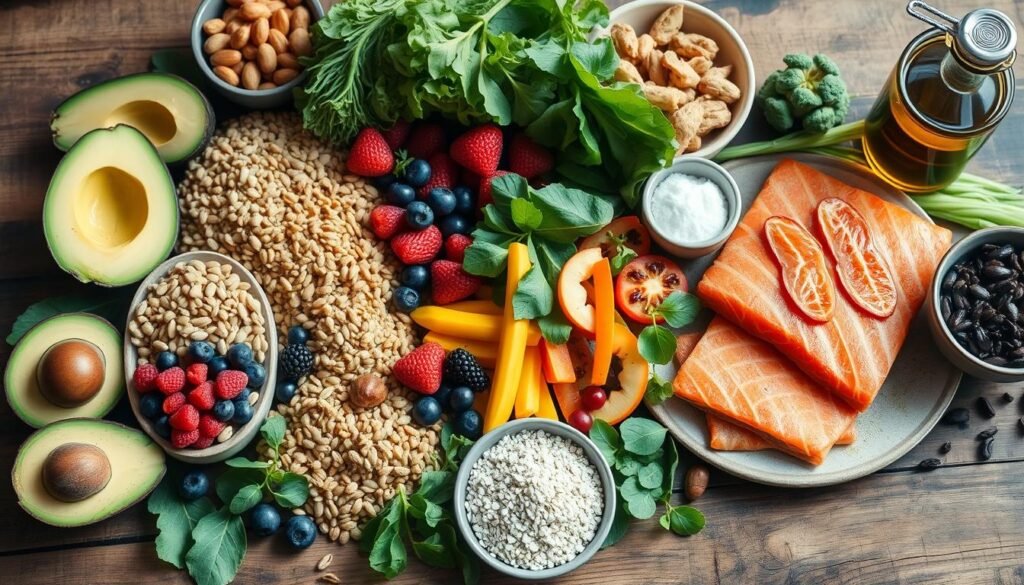
Heart-Healthy Foods to Include
Eating heart-healthy foods is very important. You should choose foods that help lower “bad” cholesterol and increase “good” cholesterol. Some top choices include:
- Fruits and vegetables: Choose a variety of colors for many vitamins and antioxidants.
- Whole grains: Options like oats and whole grain cereals have soluble fiber to reduce cholesterol.
- Lean proteins: Go for skinless poultry, fish, and legumes for protein with less fat.
- Healthy fats: Foods rich in omega-3 fatty acids like fish, walnuts, and flaxseed are great for cholesterol management.
The Mediterranean Diet is a great example. It combines these foods to lower heart disease risk. It focuses on healthy fats and nutrients for a diverse, nutrient-rich diet.
Foods to Avoid for Cholesterol Management
Avoiding certain foods is just as important for controlling cholesterol. Try to cut down on or avoid these:
- Saturated fats: Found in red meat and full-fat dairy. Aim for less than 6% of daily calories from these.
- Trans fats: Mostly in processed and fast food, these fats are bad for cholesterol levels.
- Dietary cholesterol: Keep it under 200 mg per day by eating more plants and lean proteins.
It’s also smart to keep sodium under 2,300 mg a day for heart health. Reducing bad fats and eating more soluble fiber, about 10 to 25 grams daily, is key. This helps stop cholesterol from being absorbed in the body.
Lifestyle Modifications for Healthy Cholesterol Levels
Making lifestyle changes is key for healthy cholesterol. Adding regular exercise and watching your weight can majorly boost heart health. It can also make your cholesterol levels much better.
The Impact of Physical Activity
Regular exercise improves your good cholesterol and decreases the bad one. The American Heart Association suggests 150 minutes of exercise like walking or swimming each week. These activities improve heart strength and help with weight, which is good for your cholesterol.
Weight Management and Its Effects on Cholesterol
Keeping a healthy weight is essential for managing cholesterol. Losing just a little weight can make a big difference. It lowers your bad cholesterol and raises the good one. Eating foods like veggies, whole grains, and healthy fats helps with weight and cholesterol too.
| Lifestyle Change | Impact on Cholesterol |
|---|---|
| Regular Physical Activity | Increases HDL, Decreases LDL |
| Weight Loss | Decreases LDL, Increases HDL |
| Balanced Diet (Including Healthy Fats) | Lowers LDL, Improves Overall Lipid Profile |
| Reducing Refined Carbs and Added Sugars | Decreases LDL and Improves Blood Sugar |
| Increased Fiber Intake | Lowers LDL, Supports Metabolic Health |
Understanding Statin Medications and Their Role
Statin medications are key for controlling cholesterol and preventing heart disease. They stop the liver enzyme that makes cholesterol. This lowers the “bad” LDL cholesterol in the blood. Many people need statins, along with diet and lifestyle changes, for a healthy heart.
What Are Statins?
Statins, like Atorvastatin (Lipitor), Rosuvastatin (Crestor), and Simvastatin (Zocor), cut down LDL cholesterol and fats. They also raise “good” HDL cholesterol a bit. Drugs like Ezetimibe (Zetia) reduce cholesterol absorption. For high LDL levels or when other drugs won’t work, PCSK9 inhibitors like Alirocumab (Praluent) are options. Knowing when to use statins depends on your cholesterol levels and health risks.
When Statin Treatment is Recommended
Statin treatment is for those with high LDL levels, over 190 mg/dL, or familial hyperlipidemia. The U.S. Preventive Services suggests low to moderate-dose statins for certain adults. This is for people 40 to 75 with some risk factors and a chance of heart issues in ten years.
Statins are shown to cut heart attack risks, even for diabetics, regardless of LDL levels. Though most aim for a total cholesterol under 200 mg/dL, higher risk individuals should aim lower.
| Medication | Primary Action | LDL Reduction | HDL Effect |
|---|---|---|---|
| Atorvastatin (Lipitor) | Inhibits enzyme in liver | Decreases | Slight increase |
| Ezetimibe (Zetia) | Cholesterol absorption inhibitor | Decreases | Slight increase |
| Alirocumab (Praluent) | PCSK9 inhibitor | Decreases | No significant effect |
| Lovastatin (Altoprev) | Inhibits enzyme in liver | Decreases | Slight increase |
| Niacin (Niacor, Niaspan) | Increases HDL | Decreases | Increases |
Statins work well, but they can have side effects like headaches, nausea, and muscle aches. Very high doses might harm muscles or the liver. Knowing when to use statins helps keep your heart healthy and lowers the risk of heart problems.
Monitoring Your Cholesterol Levels
Keeping an eye on your cholesterol is key to a healthy heart. It’s vital to know how to test your cholesterol, for it helps gauge the risk of heart disease. Doctors use blood tests to check your cholesterol and triglycerides. These tests shed light on your heart’s health and if you need to tweak your lifestyle.
How to Get Your Cholesterol Tested
It’s easy to get your cholesterol tested. Just make regular visits to healthcare providers. Kids should start getting checked between 9 and 11 years old, then every five years. Adults start at different times: men at 45 and women at 55, with checks every one to two years. Not eating for 9-12 hours before the test ensures its accuracy. Sometimes, you might need a VLDL test too.
Understanding Your Cholesterol Numbers
Knowing what your cholesterol numbers mean is important for your heart health. Here’s what good levels look like:
| Category | LDL (mg/dL) | HDL (mg/dL) | Triglycerides (mg/dL) |
|---|---|---|---|
| Desirable | Less than 100 | 40 and higher (men) 50 and higher (women) |
Less than 150 |
| Borderline High | 100 – 129 | Not applicable | 150 – 199 |
| High | 130 – 159 | Not applicable | 200 and above |
| Very High | 160 or more | Not applicable | 500 or more |
Understanding your cholesterol helps you make wise health choices. For example, an LDL level over 190 mg/dL might need medication. And if HDL is below 40 mg/dL for men and 50 for women, that’s not good. Staying in the safe range can lower your heart disease risk. Taking charge of your cholesterol is a big step towards a healthy heart.
The Role of Smoking and Alcohol Consumption
Lifestyle choices like smoking and drinking alcohol affect your cholesterol. They change levels of HDL and LDL. Knowing how they do can guide your heart health decisions.
How Smoking Affects HDL and LDL Levels
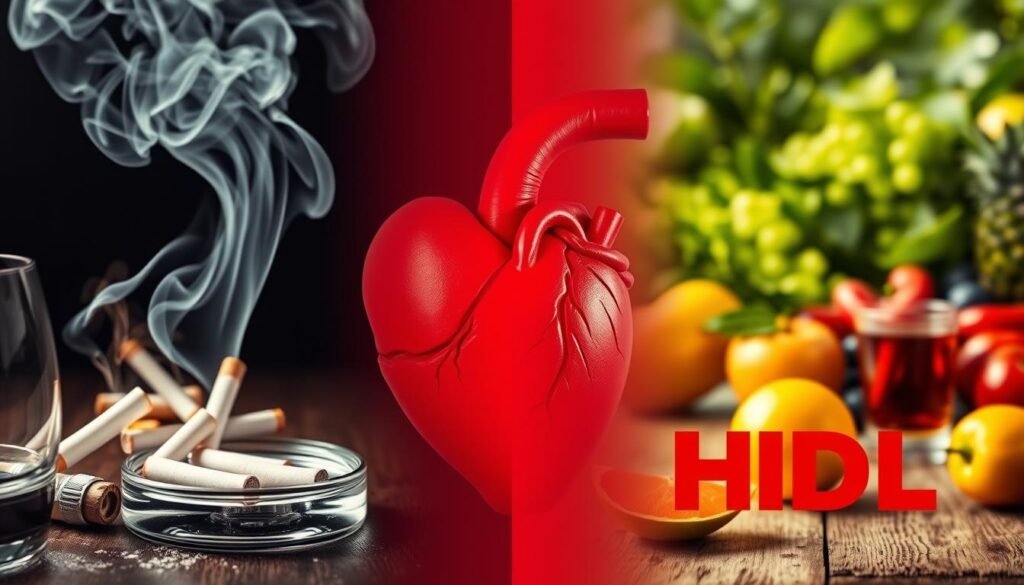
Smoking raises your LDL, which is bad for your heart. Smokers usually have worse cholesterol ratios than non-smokers. This raises their heart disease risk.
But if you quit smoking, your HDL can get better. This helps your heart stay healthy.
Moderation in Alcohol Consumption for Heart Health
Drinking a little alcohol might be good for your HDL. People who drink in moderation often have better cholesterol ratios than those who don’t drink at all. But this means only up to one drink a day for women and two for men.
Drinking too much, though, is bad for you. It can lead to heart problems, high blood pressure, and more chances of having a stroke. Yet, if you drink a little, eat healthily, and exercise, your heart disease risk might go down.
| Lifestyle Factor | Effect on HDL Levels | Effect on LDL Levels | Health Risks |
|---|---|---|---|
| Smoking | Low | High | Increased risk of heart disease |
| Moderate Alcohol Consumption | High | Low | Reduced risk of CVD |
| Excessive Alcohol Consumption | Variable | High | High blood pressure, increased stroke risk |
Other Factors Affecting Cardiovascular Health
Cardiovascular health isn’t just about diet and exercise. Stress management and genetics are also key. Learning to relax can greatly improve heart health. It makes us feel better all around.
Stress Management and Its Importance
Managing stress is vital for a healthy heart. Mindfulness, yoga, and exercise can lower stress. Too much stress can raise blood pressure and harm your cholesterol. Combining stress relief with other healthy habits is essential.
Genetics and Family History Considerations
Genetics are a big part of heart health. If heart disease runs in your family, you might be at higher risk. Knowing this can help you take early action, like getting checked more often. The American College of Cardiology advises knowing your family’s health history. This way, you can make changes to lower your risk.
| Risk Factor | Impact on Heart Health | Control Method |
|---|---|---|
| Stress | Can elevate blood pressure and cholesterol levels | Mindfulness, exercise, therapy |
| Genetics | Increases risk for certain heart diseases | Regular screenings and preventive strategies |
| Physical Activity | Boosts HDL (good cholesterol) levels | Regular exercise routine |
| Nutrition | Impacts cholesterol and triglyceride levels | Healthy diet emphasizing low-salt and unsaturated fats |
Conclusion
Getting the balance right between LDL and HDL is key for a healthy heart. Simple steps like eating right, staying active, and checking cholesterol help a lot. Your LDL should be under 130 mg/dL, and even lower if you’re at risk for heart issues. HDL should be over 40 mg/dL for men and over 50 mg/dL for women.
Living a healthy life reduces heart disease risk. This includes keeping your weight in check and not smoking. Adding heart-smart practices, like exercising and eating foods good for the heart, boosts your health. Sometimes, people with a family history of high cholesterol need medicine to manage it.
By working on keeping LDL and HDL levels in check, you lower your high cholesterol risks. Being informed and taking action for your health leads to a heart-healthy lifestyle. This greatly cuts down the chances of getting heart disease. Find out more about how to do this here.