A study showed that an avocado-rich diet nearly doubled the LDL (bad cholesterol) reduction. People on this diet saw an average decrease of about 14 milligrams per deciliter in their LDL cholesterol. This highlights how great avocados are for the heart. Avocados are full of “good fats,” with 75% being unsaturated fats. They’re not only tasty but also bring a lot of benefits. They contain zero cholesterol, help increase HDL (good cholesterol), and lower LDL levels.
It’s vital to understand how avocados affect cholesterol levels. This knowledge helps in making smart food choices. As we learn more about the heart benefits of avocados, adding them to our diet seems wise. They can make our overall health better. This piece aims to explore the relationship between avocados and cholesterol. It points out why avocados are a smart pick for those wanting to boost heart health. For deeper insight on avocados and cholesterol, check out this helpful article.
Key Takeaways
- Avocados contain healthy unsaturated fats that can significantly impact cholesterol levels.
- Including avocados in a balanced diet can help lower LDL cholesterol while promoting HDL cholesterol.
- Substituting avocados for saturated fats can lead to better cholesterol management.
- Regular consumption of avocados contributes important nutrients beneficial for heart health.
- Planning meals that incorporate avocados can provide a tasty way to enhance dietary habits.
Understanding Cholesterol: The Basics
Cholesterol is important in our bodies. It helps build cells, make hormones, and produce vitamins. It mainly comes from the liver, but food affects it too. Knowing about cholesterol basics is key to keeping it under control. High cholesterol can raise the risk of heart disease and stroke.
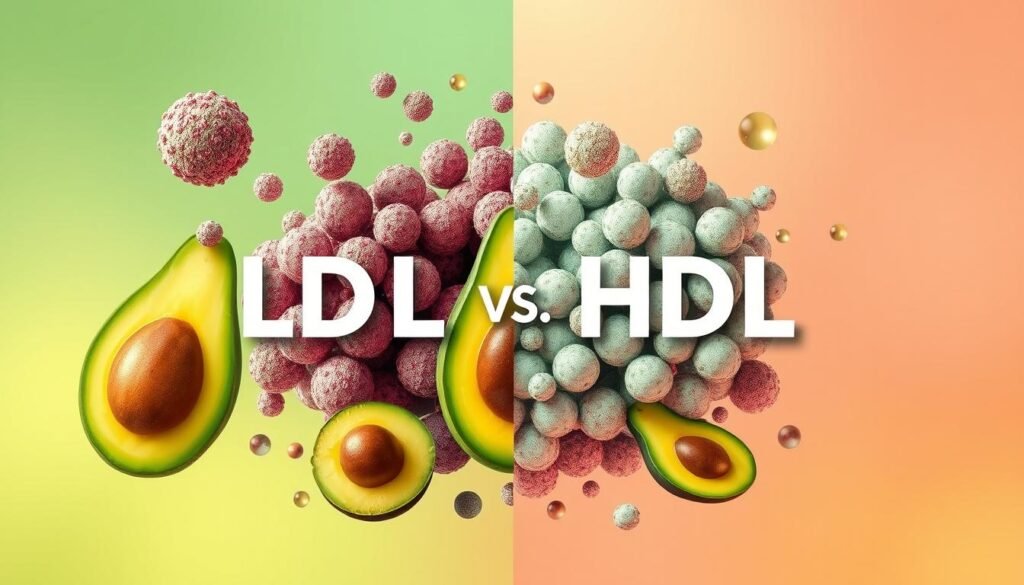
There are two main types: LDL and HDL cholesterol. LDL is called “bad” cholesterol because it can clog arteries. HDL is “good” cholesterol. It helps move cholesterol to the liver to be removed.
To keep your heart healthy, you need to watch your cholesterol levels. Diet impacts about 20% to 30% of your blood cholesterol. Eating animal products like meat and cheese adds cholesterol to your diet.
To improve heart health, eat 10 to 25 grams of soluble fiber daily. This lowers LDL cholesterol. Keep saturated fats to under 5% to 6% of your daily calories. Avoid trans fats entirely. Check food labels to eat less saturated fat.
Being active also matters for controlling cholesterol. Adults 18 to 64 should get 30 to 60 minutes of exercise on most days. Those 65 and up should aim for at least 30 minutes of moderate activity daily. It’s okay to break this into shorter sessions.
The Mediterranean Diet is good for your heart. It suggests eating healthy fats, like those in avocados, for managing cholesterol. For more details on how avocados can help, see this resource.
What is LDL and HDL Cholesterol?
It’s important to know about cholesterol for a healthy heart. There are two main types of cholesterol: LDL and HDL. Each serves a different purpose in our bodies. Knowing the difference helps us manage our cholesterol well.
The Role of LDL Cholesterol
LDL cholesterol, or “bad cholesterol,” brings cholesterol to our cells. If we have too much, it can lead to plaque in our arteries. This increases the risk of heart disease. Eating too much saturated and trans fats can raise LDL levels. That’s why what we eat matters for controlling cholesterol.
The Importance of HDL Cholesterol
On the other hand, HDL cholesterol is considered “good cholesterol.” It removes cholesterol from the blood, taking it to the liver to get rid of. High levels of HDL cholesterol can lower heart disease risk. This shows why it’s important to keep a good balance between LDL and HDL cholesterol for heart health.
Avocado and Cholesterol Levels: The Connection
Avocados are full of nutrients that are good for the heart. This makes them a top pick for managing cholesterol. Research has found that these fruits can help lower LDL cholesterol, which is the bad kind. Their ability to do this comes from their high unsaturated fat content, especially monounsaturated fats.
How Avocados Influence LDL Cholesterol
Eating avocados as part of a healthy diet can help reduce cholesterol levels. They are free of cholesterol and packed with unsaturated fats. These fats can take the place of the unhealthy ones. Doing so may cut down LDL cholesterol, a known risk factor for heart disease. Studies show that eating avocados can lead to a significant drop in LDL levels. This supports their role in keeping the heart healthy.
Effects on HDL Cholesterol Levels
Avocados also have a positive effect on HDL, or good cholesterol. While outcomes may differ, eating avocados might boost HDL levels. In many studies, people who added avocados to their diet had higher HDL than those who didn’t. By improving HDL levels, avocados help with heart health and overall cholesterol management.
| Cholesterol Type | Avocado Impact |
|---|---|
| LDL Cholesterol | Lowering cholesterol levels when substituted for saturated fats |
| HDL Cholesterol | Potentially increases HDL levels, contributing to heart health |
| Total Cholesterol | Decreased in participants consuming avocados |
Adding avocados to your daily diet is a tasty way to help manage cholesterol. It’s also great for improving heart health.
Nutritional Benefits of Avocados
Avocados are very good for your heart’s health. They are full of healthy fats, especially monounsaturated fats like oleic acid. These fruits help lower bad cholesterol levels. Let’s dive into how avocado nutrition benefits heart health, including its fats, vitamins, and minerals.
Monounsaturated Fats and Heart Health
Healthy fats in avocados are great for the heart. Studies show that eating one avocado a day can reduce oxidized LDL cholesterol. This is especially true for people who are overweight or obese. Lower levels of bad cholesterol lead to better heart health and lower risk of heart disease. Avocados also have phytosterols which lower cholesterol even more. Adding avocados to your diet helps your body absorb more nutrients from other veggies, which is good for your heart.
Vitamins and Minerals in Avocados
Avocados aren’t just about healthy fats. They are full of important vitamins and minerals. You’ll find Vitamin K, Vitamin E, Vitamin C, and B vitamins in them, all critical for good health. Potassium and magnesium in avocados also help keep your blood pressure in check. All these nutrients work together to keep your body healthy and efficient. It shows why adding avocados to your daily meals is a smart choice for better health.
How to Incorporate Avocado into Your Diet
Adding avocados into your meals is both simple and tasty. Their creamy texture and rich taste make many dishes better. They’re filled with healthy fats, good for your health. Here are fun ways to eat more avocados every day.
Simple Avocado Recipes
It’s easy and fulfilling to make quick avocado meals. Here are some ideas:
- Avocado Toast: Mash half an avocado on whole-grain toast. Add salt, pepper, and lemon juice.
- Guacamole: Mix avocados, tomatoes, onions, cilantro, lime juice, and spices for a great dip.
- Avocado Salad: Put avocado slices in salad with tomatoes, cucumbers, and light dressing.
Experimenting with Avocados in Meals
Avocados bring new flavors to your meals. Try adding them to different foods:
- Smoothies: Make a smoothie with avocado, spinach, banana, and yogurt. It’s creamy and full of nutrients.
- Tacos: Top your tacos with avocado slices for extra taste and health benefits.
- Pasta Sauces: Make a smooth sauce with avocado, garlic, olive oil, and herbs for pasta.
These tips show just a few ways to add avocados to your meals. They offer 8g of good fats per 50g serving. This makes them a smart choice for a better diet.
Other Dietary Changes for Cholesterol Management
It’s not just about adding avocados to your meals. To really lower your cholesterol, a balanced plan is key. This means knowing what foods to avoid and eating more heart-healthy foods.
Foods to Avoid
Some foods can really push your cholesterol up. Try to eat less or none of these:
- Processed foods like chips and cookies
- Fast food options
- Processed meats such as bacon and sausage
- Fried foods
- High-sugar items
Foods to Include for Heart Health
On the other side, some foods help your heart and lower cholesterol. Adding these to your diet is a smart move:
- Fish: Fatty fish like salmon and mackerel are great for Omega-3 fats.
- Nuts: Almonds and walnuts pack healthy fats and fiber.
- Legumes: Beans, lentils, and chickpeas are full of fiber and protein.
- Leafy greens: Spinach and kale give you fiber and antioxidants.
- Fruits: Apples and berries help reduce cholesterol with their fiber.
- Olive oil: Extra virgin olive oil has good fats for cholesterol control.
The Impact of Exercise on Cholesterol Levels
Being active is key to controlling cholesterol levels. Working out often can lower bad LDL cholesterol and raise good HDL cholesterol. It also helps keep your heart healthy. Knowing the right exercises for better cholesterol is important.
Recommended Physical Activities
Activities like walking, jogging, biking, and swimming boost heart health. They have a strong effect on managing cholesterol. Strength training also benefits your heart. The American Heart Association recommends:
- 150 minutes of moderate aerobic exercise weekly
- Strength training sessions twice a week
Doing both aerobic and strength activities helps manage cholesterol well.
Exercise Frequency for Optimal Heart Health
A regular exercise schedule is vital for a healthy heart. It not only manages cholesterol but also improves well-being. Aim for 150 minutes of exercise weekly, along with strength training. Using a mix of activities gives long-lasting health results.
Lasting changes like regular exercise deeply impact cholesterol. Combining exercise with healthy eating is great for your heart.
Quitting Smoking and Cholesterol Levels
Quitting smoking is a major step towards a healthier life. Smoking increases “bad” cholesterol (LDL) and reduces “good” cholesterol (HDL). This increases the risk of heart disease.
How Smoking Affects Cholesterol
Smoking damages more than just the lungs; it hurts the heart too. It hurts blood vessels and makes it hard for the body to handle cholesterol. Smoking, along with not moving much, makes it even harder to get rid of the bad cholesterol. The cholesterol impact of smoking raises the risk of heart disease. That’s why stopping smoking is vital.
Benefits of Quitting Smoking
Stopping smoking has many benefits for your health. People who quit see their good cholesterol levels go up and their heart risk go down. Quitting smoking means you have better cholesterol, lower blood pressure, and a much smaller chance of getting heart disease. These benefits show how important it is to quit smoking for heart health.
| Impact of Smoking | Cholesterol Effects | Benefits of Quitting |
|---|---|---|
| Raises LDL cholesterol | Increases risk of heart disease | Improves HDL cholesterol levels |
| Lowers HDL cholesterol | Reduces blood vessel function | Enhances overall cardiovascular health |
| Harms blood vessel integrity | Contributes to artery hardening | Decreases heart disease risk |
Conclusion
Eating avocados can help lower cholesterol, making them key for a healthy diet. One to 1.5 avocados every day can cut total cholesterol and bad LDL levels. This swap works best when avocados take the place of saturated fats. Yet, taking care of our hearts involves more than just avocados.
To manage cholesterol well, adding avocados to your meal plans is a good step. But don’t stop there. Exercise regularly, don’t smoke, and eat plenty of healthy fats. These changes can boost your heart health and lower cholesterol risks. You’ll start to feel better overall.
Avocados do more than make your dishes tastier; they’re a smart pick for heart health. Smart diet and lifestyle choices can lead to a healthier heart. This helps greatly in managing cholesterol, aiming for a healthier life ahead.