Did you know twelve large shrimp have about 130 milligrams of cholesterol? This is surprising because one large scrambled egg has 169 milligrams. That’s more than half of what some people try to stay under each day. But does eating shrimp really affect your heart health badly?
Many think of shrimp as a high-cholesterol food. However, it’s not just about cholesterol when it comes to heart disease. Shrimp is low in the bad fats and is a good source of protein, selenium, and B vitamins. To really understand its effects, we have to look at recent studies. These studies show how shrimp affects cholesterol levels and heart health.
Let’s dive deep into shrimp nutrition facts. We’ll see if these tasty seafood treats are good for a heart-healthy diet. Remember, eating them in moderation is key.
Key Takeaways
- Shrimp can provide about 130 milligrams of cholesterol for twelve large pieces.
- It’s low in saturated fat and high in protein, selenium, and B vitamins.
- Consumption of shrimp may increase HDL cholesterol and lower triglycerides.
- Preparation methods affect shrimp’s health impact; healthier choices include grilling or steaming.
- Choosing high-quality shrimp from reputable sources is crucial for maximum health benefits.
Understanding Cholesterol: The Basics
Cholesterol is essential in our bodies. It helps make hormones, vitamin D, and substances that digest food. There are two main types: LDL and HDL. LDL is often called “bad” cholesterol because high levels can cause health problems. HDL is “good” cholesterol and protects against heart disease if you have enough of it. It’s important to keep LDL around 100 mg/dL and HDL over 40 mg/dL for men and 50 mg/dL for women.
Cholesterol in our diet comes from foods we eat. Some foods, like shrimp and eggs, have raised concerns. But, it’s more important to look at what you eat overall. Eating heart-healthy foods is key. Include fruits, vegetables, whole grains, and healthy fats in your diet. These foods help maintain a good cholesterol balance.
Having total cholesterol over 200 mg/dL can be risky. An ideal level is about 150 mg/dL. Lifestyle really affects cholesterol levels. Eating too much saturated and trans fat, not exercising, and being overweight can raise your cholesterol. Conditions like diabetes can also increase the risk. By eating right and staying active, you can keep your heart healthy and lower your risk of heart disease and strokes.
Are Shrimp High in Cholesterol?
How much cholesterol is in shrimp? It’s important to know if you care about what you eat. Shrimp has about 200 milligrams of cholesterol in every 3.5-ounce serving. But, it’s low in bad fats. This fact makes shrimp a standout choice among seafood, especially when we think about cholesterol in seafood. For comparison, each egg has about 169 milligrams of cholesterol.
Cholesterol Content in Shrimp Compared to Other Foods
Shrimp packs a good amount of cholesterol. Let’s see how it stacks up against other foods:
| Food Item | Cholesterol Content (mg) | Fat Content (g) |
|---|---|---|
| Shrimp (100g) | 189 | 0.3 |
| Egg (1 large) | 169 | 5 |
| Ground Beef (100g) | 110 | 20 |
Shrimp has far less fat than other foods with a lot of cholesterol. The American Heart Association thinks shrimp can even help lower cholesterol levels. That’s pretty good news.
What Research Says About Shrimp and Cholesterol Levels
There’s been a lot of research on shrimp and cholesterol. It turns out, shrimp doesn’t really bump up LDL, or bad cholesterol, that much. One study by Rockefeller University found a tiny rise in LDL but a big leap in HDL, the good cholesterol. So, eating shrimp might actually be good for your heart.
Basically, the cholesterol in shrimp doesn’t mess up our body’s cholesterol too much. Our bodies adjust their cholesterol making based on what we eat. Adding shrimp and other seafood to your diet can be a smart move. They provide important nutrients and help keep your cholesterol in check.
The Nutritional Profile of Shrimp
Shrimp is a protein-rich seafood that fills you up and brings health benefits. It’s vital to know its nutrition facts for better diet choices. A 3-ounce serving has roughly 84 calories, labeling it as low-calorie. This serving size also offers about 20.4 grams of protein, showing why shrimp is great for protein-rich diets.
Vitamins and Minerals Found in Shrimp
Shrimp includes essential vitamins and minerals for health. These nutrients are:
- Vitamin B12: 1.4 mcg (59% of the daily value)
- Selenium: 31.8 mcg
- Phosphorus: 201 mg (16% of the daily value)
- Zinc: 1.39 mg
- Iron: 0.433 mg
- Magnesium: 33.2 mg
- Potassium: 220 mg
These nutrients boost immune function, bone health, and brain performance. Thus, shrimp is one of the healthiest seafood choices.
Saturated Fat vs. Dietary Cholesterol in Shrimp
Despite popular belief, shrimp has less than 1 gram of saturated fat per serving. Lowering saturated fat helps reduce LDL cholesterol in the body. Shrimp is high in dietary cholesterol, about 161 mg per serving, but it doesn’t typically harm blood cholesterol levels for most. Its low saturated fat makes shrimp great for heart health, proving it to be a solid choice in a balanced diet.
Cholesterol in Seafood: A Broader Comparison
Looking at seafood cholesterol means comparing different types. Shrimp may have more cholesterol than fish. However, it is healthier than beef or pork because it has less saturated fat. Knowing the cholesterol levels can help people eat better.
Comparison of Cholesterol Content in Common Seafood
The cholesterol content varies across seafood types. Here are the average amounts per 100g:
| Seafood Type | Cholesterol (mg/100 g) |
|---|---|
| Shrimp | 120 |
| Crab | 96.2 |
| Lobster | 80 |
| Scallops | 30.1 |
| Clams | 23.4 |
| Mussels | Varies (low) |
| Oysters | Varies (higher levels of sterols) |
Despite its cholesterol, shrimp is not all bad. Clams and scallops offer less cholesterol. The American Heart Association says eating seafood 2-3 times a week is healthy. You can learn more from research here.
Shrimp vs. Other High-Cholesterol Foods
Compared to beef and cheese, shrimp is a better choice. It has less saturated fat. For example, lean ground beef has more cholesterol than shrimp, which is also rich in protein. Eating four large shrimp meets about 14% of daily cholesterol needs—way better than steak.
So, shrimp and other seafood can fit into a heart-healthy diet. Choosing healthy seafood options helps manage dietary cholesterol. We can still enjoy tasty meals without too much saturated fat.
Health Impacts of Eating Shrimp
Looking into how eating shrimp affects heart health is quite enlightening. It’s interesting to see its effects on LDL and HDL cholesterol. Shrimp might increase HDL (good) cholesterol more than it does LDL (bad) cholesterol. This suggests eating shrimp could help maintain cholesterol balance.
The Effect of Shrimp on LDL and HDL Cholesterol
A study showed that eating 300 grams of shrimp each day slightly raised LDL cholesterol by 7.1%. Yet, it boosted HDL cholesterol by an impressive 12.1%. Overall, cholesterol levels stayed even, meaning shrimp might keep the LDL to HDL ratio in check. Now, the Dietary Guidelines for Americans recommend eating cholesterol mindfully. They suggest heart-healthy foods like shrimp can fit into this diet.
Research Studies on Shrimp Consumption and Heart Health
Research confirms that shrimp can be good for your heart. People who ate shrimp had lower chances of high blood pressure and cholesterol. The advice is to eat seafood, shrimp included, about 8 ounces weekly. This supports a nutritious diet while managing cholesterol.
Even though shrimp have less omega-3 fatty acids than fish like salmon, they still boost heart health.
| Food | Cholesterol (mg per 100g) | Protein (g per 100g) |
|---|---|---|
| Shrimp | 189 | 24 |
| Salmon | 60 | 25 |
| Lobster | 145 | 28 |
| Crab | 84 | 19 |
Knowing shrimp can be part of a heart-healthy diet is reassuring. It helps balance cholesterol, so you can enjoy it even if watching your cholesterol. This allows you to eat shrimp without worry.
Myths and Misconceptions About Shrimp
Some think shrimp is bad because of its cholesterol. But, this view needs a closer look. Research shows seafood cholesterol may not be harmful.
Debunking Common Myths Related to Shrimp and Cholesterol
Many believe we should not eat shrimp due to its cholesterol—116 milligrams per 4 ounces. This seems high, but context matters. Health experts no longer set a strict limit on dietary cholesterol. They now see shrimp as part of a healthy eating plan.
Only 15% of our body’s cholesterol comes from food. The liver makes about 85%. Thus, shrimp has little effect on our cholesterol levels. Foods like shrimp impact blood cholesterol less than once thought.
Understanding the Rabbit Studies and Their Implications
Early rabbit studies linked shrimp’s cholesterol to higher blood cholesterol. But rabbits digest differently from humans. Now, research focuses on overall diet. It looks at fats’ roles in heart health. Trans fats are the real heart disease risk, not shrimp’s cholesterol.

Shrimp is low in bad fat and has omega-3s, which are good for the heart. Sadly, myths stop people from enjoying shrimp’s health benefits. If cooked right, shrimp is a great choice for balanced meals.
Incorporating Shrimp into a Low Cholesterol Diet
Adding shrimp to a low cholesterol diet makes for exciting eating. It’s full of protein yet low in bad fat. If cooked and served right, shrimp fits perfectly into meals that are good for your heart.
Serving Suggestions for Heart-Healthy Meals
You can cook shrimp in ways that keep it healthy. Use steaming, grilling, or baking with tasty herbs. This keeps extra fats away. Recommended dishes include:
- Steamed shrimp tossed in a fresh herb sauce with lemon.
- Grilled shrimp skewers with vibrant veggies.
- Baked shrimp with a dash of whole grain breadcrumbs.
These recipes make shrimp a star in a cholesterol-lowering diet. They offer deep flavors without heavy sauces that may harm the heart. Shrimp shines in healthful meals, especially when grilled or steamed.
Balancing Shrimp with Other Nutrient-Dense Foods
For a complete meal, add shrimp to high-fiber veggies, grains, and good fats. Some top pairing ideas:
- Grilled shrimp on quinoa with roasted veggies.
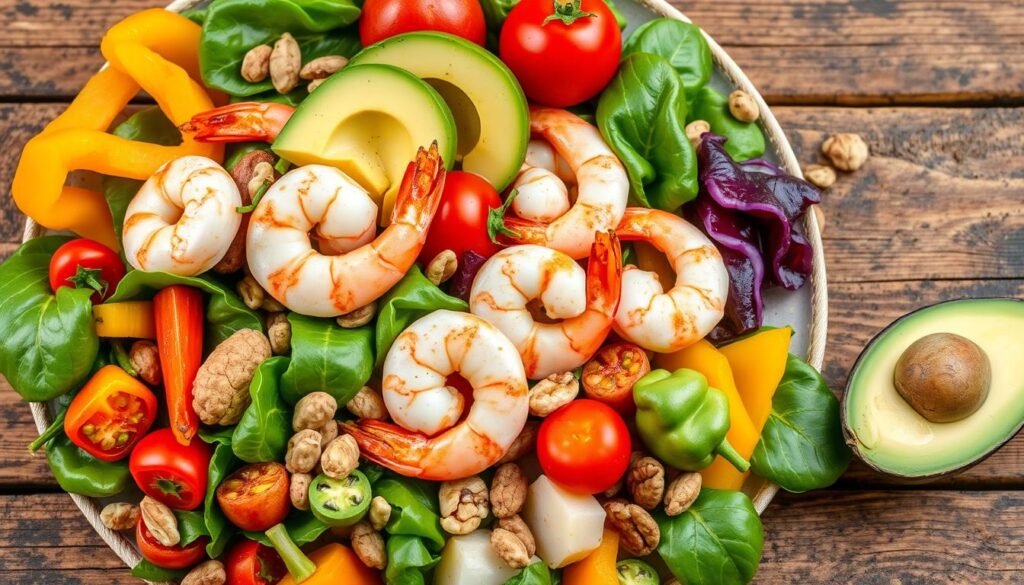
- Shrimp mixed into a fresh spinach, avocado, and walnut salad.
- Shrimp tacos in whole grain tortillas with cabbage and mango salsa.
Mixing shrimp with varied heart-healthy foods balances your diet. By eating shrimp with these nutritious meals, you enjoy great taste while sticking to a low cholesterol diet. This supports your heart’s health overall.
The Importance of Omega-3 Fatty Acids in Seafood
Omega-3 fatty acids are vital for heart health, especially in seafood. These fats lower inflammation and reduce heart disease risk. The American Heart Association suggests eating omega-3-rich fish at least twice a week. This is because these unsaturated fats are key to a heart-healthy diet.
Role of Omega-3s in Cardiovascular Health
Omega-3 fatty acids like EPA and DHA boost heart wellness. They offer several benefits:
- Reduction in triglyceride levels.
- Lowering of blood pressure.
- Decreased risk of blood clots.
- Improvement in arterial function.
- Potential benefits in heart rhythm regulation.
Choosing fish with omega-3s supports a heart-healthy diet. Adults are advised by the U.S. Food and Drug Administration to eat two servings of such fish weekly. This helps maintain a balanced diet.
Shrimp and Other Seafoods Rich in Omega-3s
Shrimp is nutritious but has less omega-3 than other seafood. Here’s a look at how some popular seafoods compare:
| Seafood Type | Omega-3s per 3 Ounces (Cooked) |
|---|---|
| Herring, Wild | 1,500+ mg |
| Salmon, Farmed | 1,000-1,500 mg |
| Mackerel, Wild | 1,000-1,500 mg |
| Sardines, Canned | 1,000 mg |
| Tuna, Canned (White Albacore) | 300-500 mg |
| Shrimp, Wild & Farmed | Less than 200 mg |
Although shrimp has lower omega-3 levels, it’s still a favorite in many dishes. Including shrimp with omega-3-rich fish is a smart way to eat. Variety in seafood choices boosts overall nutrient intake.
Eating Shrimp: Moderation Is Key
Eating shrimp can be good for you if you don’t overdo it. To keep a healthy diet, it’s key to know how much and how often you should eat it. This part will cover how much shrimp you can enjoy while staying healthy.
Recommended Serving Sizes for Shrimp Consumption
A common serving of shrimp is about 3 ounces. This amount has more than half the daily cholesterol you need, which matters if you’re watching your cholesterol. With 100 grams of cooked shrimp giving you about 189 milligrams of cholesterol, eating it in moderation is important. This way, you won’t go over your daily cholesterol limit.
How Often Should You Enjoy Shrimp?
Having shrimp once or twice a week is a good balance. This lets you enjoy this *healthy seafood option* without raising your cholesterol too much. Following this advice helps you get the benefits of shrimp, like protein and key nutrients, while keeping your cholesterol in check. The fact that Americans eat about 4 pounds of shrimp a year fits well with these tips.
| Criteria | Recommendations |
|---|---|
| Serving Size | 3 ounces (approx. 85 grams) |
| Frequency | 1 to 2 times per week |
| Calories (per 100g cooked) | 99 calories |
| Cholesterol (per serving) | 189 mg |
| Protein (per 100g cooked) | 24 g |
The Role of Saturated Fat in Cholesterol Levels
Saturated fat is key in determining cholesterol levels. Diets rich in this fat boost “bad” cholesterol, known as LDL. Shrimp, however, is low in saturated fat and is a good choice in moderation. It’s important to pick heart-healthy foods, especially for managing cholesterol.
How Saturated Fat Affects Heart Health
Eating a lot of saturated fat is bad for the heart. It raises LDL cholesterol, which is risky for people with heart conditions or those keeping their heart healthy. Shrimp is high in omega-3 fatty acids and low in saturated fat, which is good for the heart. It has healthy fats, beneficial for the heart.
Better Alternatives to High-Saturated Fat Foods
Adding lean proteins and heart-healthy foods to meals is good for health. Consider these options:
- Grilled chicken or turkey
- Fish like salmon or tuna
- Legumes such as lentils and chickpeas
- Nuts and seeds in moderation
- Pastas and whole grains for protein
How you cook matters too. Grilling, steaming, or boiling shrimp is healthy. It’s vital to watch dietary cholesterol and eat heart-healthy foods for good health.
| Food Item | Cholesterol per 100g | Saturated Fat Content |
|---|---|---|
| Shrimp | 195 mg | 0.5-1 g |
| Scallops | 53 mg | 0.3 g |
| Whole Egg | 200 mg | 1.5 g |
| Beef (ground) | 90 mg | 8.5 g |
| Pork (chops) | 70 mg | 2.7 g |
Healthy Seafood Options Beyond Shrimp
Looking for a low cholesterol diet? Check out healthy seafood options beyond shrimp. There are plenty of nutritious choices available. Adding various seafood to meals boosts health and offers essential nutrients.
Other Low-Cholesterol Seafood Choices
Some seafood varieties are low in cholesterol but high in nutrition. Here are some great options:
| Seafood Type | Calories (per 3 oz) | Protein (g) | Omega-3s (mg) |
|---|---|---|---|
| Wild Caught Salmon | 155 | 22 | 1570 |
| Canned Sardines | 200 | 22 | 350 |
| Black Cod | 212 | 15 | 1000 |
| Atlantic Mackerel | 223 | 20 | 2000 |
| Cod | 71 | 17 | 200 |
Benefits of a Diverse Seafood Diet
A varied seafood diet supports a low cholesterol lifestyle and heart health. It matches dietary guidelines, which suggest adults eat at least eight ounces of seafood weekly. For pregnant or breastfeeding women, the goal is eight to 12 ounces each week.
This strategy ensures we get enough protein, omega-3 fatty acids, vitamins, and minerals. Trying different types of seafood can make meals more enjoyable. It adds new flavors and textures.
Conclusion
Asking if shrimp is high in cholesterol shows it’s good for a balanced diet. Compared to other animal foods like beef liver or two large eggs, shrimp has less cholesterol. With 140mg in a 100g serving, it’s good for people watching their cholesterol.
Studies reveal shrimp can improve your “good” cholesterol, HDL. It also helps keep your “bad” cholesterol, LDL, from going up. The omega-3 fatty acids in shrimp are great for your heart’s health, thanks to their anti-inflammatory effects.
Eating shrimp in moderation can be part of a healthy heart diet. It’s all about what else you eat and making smart choices with seafood. For more about how cooking shrimp affects its health benefits, see this study.