Did you know that nearly 33% of American adults have high cholesterol? This puts them at a higher risk for heart disease. Understanding your cholesterol HDL ratio is key for heart health. This ratio, found by dividing your total cholesterol by your HDL, shows your heart health state.
It’s vital to test your cholesterol levels regularly through a lipid profile. These tests reveal your HDL levels and the risks of higher ratios. Knowing your cholesterol profile helps you make better health choices. It guides you in managing your heart health effectively.
Key Takeaways
- The optimal level of non-HDL cholesterol is less than 130 mg/dL.
- Regular cholesterol testing is vital, with varying frequencies based on individual risk factors.
- A normal cholesterol/HDL ratio is typically below 5:1, with excellent being 3.5:1 or lower.
- Higher cholesterol ratios indicate a greater risk of heart disease and should be monitored closely.
- Healthy lifestyle changes can positively impact HDL cholesterol levels, significantly benefiting cardiovascular health.
What is Cholesterol and Why is it Important?
Cholesterol is a waxy stuff our bodies need for important tasks. This includes making hormones and cell membranes. But, it’s key to keep cholesterol at the right levels. Too much can cause health issues, especially for the heart.
The Role of Cholesterol in the Body
Cholesterol helps make hormones, vitamin D, and aids digestion by making bile. Our liver makes all the cholesterol we need. Plus, we get more from food, which affects our health.
Types of Cholesterol: HDL vs. LDL
It’s crucial to know the types of cholesterol. HDL is “good” cholesterol. It takes extra cholesterol to the liver to get rid of it. LDL, on the other hand, is “bad” cholesterol. Too much LDL leads to plaque in arteries, raising heart disease risk.
Healthy Cholesterol Levels and Their Impact on Health
It’s essential to keep cholesterol levels healthy to lower heart risk. The American Heart Association suggests getting a lipid profile every four to six years, unless risk is higher. Here’s a table showing normal cholesterol levels:
| Cholesterol Type | Normal Range (mg/dL) |
|---|---|
| Total Cholesterol | Below 200 |
| HDL (Men) | 35 – 65 |
| HDL (Women) | 35 – 80 |
| LDL | |
| Triglycerides |
A good cholesterol ratio is between 3.5 and 1. This means a lower risk of heart disease. Doctors aim for a ratio below 5:1 for better heart health. Keeping an eye on these cholesterol types and levels is key for wellbeing.
https://www.youtube.com/watch?v=0U7YHRW5dyc
The Importance of Lipid Profile Testing
Lipid profile testing is key for checking cholesterol and heart health. It looks at total cholesterol, LDL (bad cholesterol), HDL (good cholesterol), and triglycerides. People should not eat for 12 hours before this test to get accurate results. Regular check-ups help manage the risk of heart issues.
Understanding a Lipid Profile
A typical lipid profile checks different parts of your cholesterol. Here’s what they include:
- Total Cholesterol – All the cholesterol in your blood.
- LDL Cholesterol – Called “bad” cholesterol, too much can clog arteries.
- HDL Cholesterol – Known as “good” cholesterol, it cleans cholesterol from blood.
- Triglycerides – A fat that can affect heart health.
The NHLBI advises getting a cholesterol test every 1 to 2 years for men aged 45 to 65 and women aged 55 to 65. Those over 65 should have it every year.
What Do the Results Mean?
Understanding results means knowing what levels are healthy. Here are the numbers to aim for:
| Component | Desirable Level (mg/dL) |
|---|---|
| Total Cholesterol | Below 200 |
| LDL Cholesterol | Below 70 (for those with coronary artery disease) |
| HDL Cholesterol | Below 40 (men), Below 50 (women) |
| Triglycerides | Below 150 |
It’s crucial to understand these numbers. High cholesterol can lead to heart disease. By checking cholesterol regularly, you can catch and address issues early.

Understanding Your Cholesterol HDL Ratio
Learning to check your cholesterol HDL ratio is key for heart health. This ratio comes from your total cholesterol, HDL (high-density lipoprotein), LDL (low-density lipoprotein), and triglycerides. Figuring out this ratio helps you see heart disease risks and your health’s direction.
How to Calculate Your Cholesterol HDL Ratio
To figure out this ratio, mix total cholesterol with HDL levels. Aim for a ratio under 5:1 for heart wellness; best is around 3.5:1. Women need HDL over 50 mg/dL, men need over 40 mg/dL for a healthy score.
What is Considered a Healthy Ratio?
A good cholesterol ratio is crucial to lower heart risks. Ideal total cholesterol is 200 mg/dL or below. Studies show that women with ratios at 3.5 or less have the least heart attack risks. On the flip side, ratios of 5.0 or more up heart attack chances by 89%. Keeping HDL over 40 mg/dL for men and 50 mg/dL for women is advised.
Associated Risks with High Ratios
High cholesterol HDL ratios mean more heart risks. The American Heart Association says high LDL can lead to artery plaque, while HDL helps by moving cholesterol back to the liver. This is vital as high triglycerides also up heart disease risk. Knowing these details can guide towards better health choices or needed medical care.
Factors Influencing HDL Cholesterol Levels
Many things affect HDL cholesterol levels, like what you eat, your genes, and how active you are. Knowing about these can help people choose better for their cholesterol health.
The Impact of Diet on HDL Levels
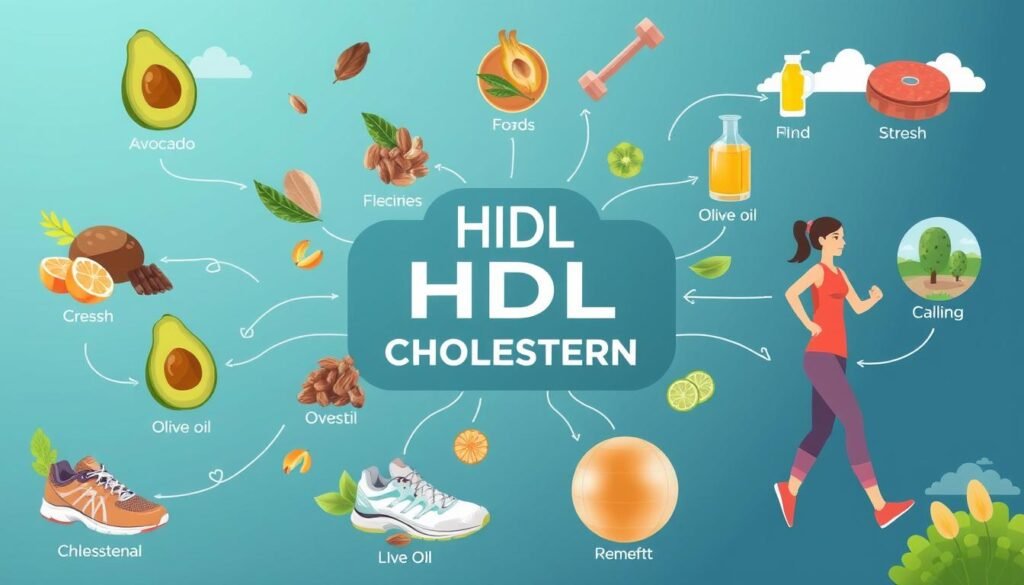
Eating right is key for good cholesterol levels. Foods with unsaturated fats, such as avocados and olive oil, are good for HDL. But, foods high in saturated fats can lower it. Adding whole grains, fruits, and veggies helps support a good HDL level.
Genetic Factors Affecting Cholesterol Levels
Cholesterol management is also about genetics. Some genetic conditions can make cholesterol levels shoot up. If high cholesterol runs in your family, it’s wise to keep an eye on it. Talking to a healthcare expert for advice is a smart move.
How Exercise Affects HDL Cholesterol
Being active boosts HDL cholesterol. Workouts that get your heart pumping can raise HDL. This includes things like walking, running, or biking. These activities, along with living healthy, work wonders for your heart.
| Factors | Effects on HDL |
|---|---|
| Diet | High in unsaturated fats can improve HDL |
| Genetics | Can predispose individuals to high or low HDL |
| Exercise | Regular activity can elevate HDL levels |
| Smoking | Reduces HDL levels |
| Medications | Certain drugs may negatively impact HDL |
It’s crucial to know how these factors play together for good HDL cholesterol levels. This knowledge can help reduce heart disease risk.
Want to learn more about cholesterol? Check out the National Heart, Lung, and Blood Institute.
Healthy Lifestyle Changes to Improve Your Cholesterol Levels
Making healthy changes in your life can really boost your cholesterol and heart health. Focus on eating right, moving more, and keeping stress in check. Doing these can greatly help manage your cholesterol. Plus, they make your heart healthier for the long run.
Dietary Changes to Adopt
Choosing the right foods is key to better cholesterol. Here’s what to do:
- Cut down on saturated fats in red meat and full-fat dairy to lower bad LDL cholesterol.
- Eat more fruits, veggies, and whole grains to up your fiber and help manage cholesterol.
- Get omega-3 fatty acids from fatty fish and flaxseeds to drop blood pressure and cholesterol.
- Stay away from trans fats in partially hydrogenated oils, banned by the FDA by January 1, 2021, since they raise bad cholesterol.
The Role of Physical Activity
Being active is crucial for keeping cholesterol in check. Aim for 150 minutes of moderate exercise weekly, like:
- Lowering bad LDL and raising good HDL cholesterol.
- Reducing triglycerides for heart health.
- Helping with weight control, as extra weight can increase cholesterol.
Pick fun activities like walking, biking, or swimming. Enjoyable exercise keeps you motivated and on track.
Stress Management Techniques
Too much stress can mess with your cholesterol, raising the bad and lowering the good. It’s vital to manage stress well. Here are some good ways:
- Try yoga or meditation for mindfulness and relaxation.
- Use deep breathing to calm your mind and body.
- Find hobbies or fun activities for stress relief and happiness.
Bringing these lifestyle changes into your life can make a big difference in your cholesterol and heart well-being. Embracing a heart-smart diet, staying active, and handling stress wisely set you on a path to better health and longer life.
The Connection Between Cholesterol and Cardiovascular Health
Cholesterol is key for heart health. It affects heart disease risk. High LDL, or “bad” cholesterol, can cause artery plaque, raising heart disease risk. Knowing how cholesterol works with heart health lets people make good health choices. These choices can lower their heart disease risks.
How High Cholesterol Affects Heart Disease Risk
High cholesterol is serious. Having total cholesterol over 200 mg/dL is considered high. This impacts many people in the United States. The main concern is the balance between LDL and HDL cholesterol. Too much LDL raises the risk of heart disease and stroke. These are leading causes of death. Eating lots of saturated and trans fats, not exercising, and having conditions like obesity or type 2 diabetes increase this risk. It’s vital to keep an eye on these issues with regular health checks.
The Significance of Maintaining Optimal Triglyceride Levels
Keeping triglyceride levels in check is important too. These should be under 150 mg/dL. High triglycerides, along with low HDL cholesterol, make heart disease more likely. Research shows controlling triglycerides and cholesterol benefits heart health. Eating right helps manage cholesterol levels. This supports heart health.
| Cholesterol Criteria | Optimal Levels | High Levels |
|---|---|---|
| Total Cholesterol | 150 mg/dL | Above 200 mg/dL |
| LDL Cholesterol | Under 100 mg/dL | Above 100 mg/dL |
| HDL Cholesterol | 40 mg/dL (men) 50 mg/dL (women) |
Below 40 mg/dL (men) Below 50 mg/dL (women) |
| Triglyceride Levels | Less than 150 mg/dL | Above 150 mg/dL |
Recommended Practices for Monitoring Cholesterol Levels
It’s vital to monitor your cholesterol to keep your heart healthy. By checking regularly, you can keep an eye on your cholesterol levels. This way, you’ll know if you need to change your lifestyle. Knowing your cholesterol testing frequency and learning to read lipid panel results helps you make smart health choices.
Frequency of Cholesterol Testing
The right time to test your cholesterol depends on several things. These include your age, your family’s health history, and your own health. Here’s what the American Heart Association suggests:
- Adults: Every 4-6 years starting at age 20.
- Children: Screen for cholesterol between ages 9-11, and again between 17-21.
Testing is key, especially if you’re at higher risk for heart issues. This might be due to being overweight or having family heart problems. Catching problems early can make a big difference in your health later on.
Understanding Your Lipid Panel Results
Looking at your lipid panel results can seem confusing, but it’s crucial. Here’s what to pay attention to:
| Cholesterol Type | Desired Level (mg/dL) | Classification |
|---|---|---|
| Total Cholesterol | Under 200 | Desirable |
| LDL (bad) Cholesterol | Under 100 | Optimal |
| HDL (good) Cholesterol | 60 or higher | Best |
| Triglycerides | Under 149 | Desirable |
Knowing your cholesterol levels lets you understand your health better. If your results need improvement, talk to your doctor. Together, you can come up with a plan that’s right for you.
When to Seek Professional Help
It’s vital to know when to get help for cholesterol issues. If you notice signs of high cholesterol, it’s time to act. Seeing a healthcare provider early can help manage your cholesterol better.
Signs of High Cholesterol to Watch For
High cholesterol might not show clear signs, but there are clues. Over time, you might notice certain symptoms. Look out for chest pain, fatty deposits around the eyes or joints, and yellowish skin patches.
- Chest pain or angina, which stems from reduced blood flow to the heart due to narrowed arteries
- Fatty deposits called xanthomas, often found around the eyes, elbows, or knees
- Yellowish patches on the skin caused by cholesterol buildup
Regular cholesterol checks are crucial. Adults should have a blood test every 4 to 6 years. If you’re at risk, you might need tests more often.
Medications and Their Role in Cholesterol Management
Sometimes, diet and exercise aren’t enough to lower cholesterol. In these cases, doctors may prescribe medications like statins. These drugs lower bad cholesterol and cut heart disease risk. For concerns about cholesterol, seeking help is vital to get a full treatment plan.
Conclusion
An understanding of the cholesterol HDL ratio is crucial for managing heart health well. This article has explained the different roles of cholesterol, what affects its levels, and why we must check it regularly. It also shows how living healthy can lower heart disease risk. This makes it vital for people to discuss their cholesterol levels with doctors for their health in the long run.
Research shows a good cholesterol/HDL ratio is below 3.5:1 for a longer life. Ratios above this can lead to health issues like atherosclerosis. It’s clear that our lifestyle greatly affects our cholesterol. Making big changes like exercising more and eating right can improve this ratio. Taking supplements like red yeast rice can also help manage cholesterol better.
Being informed and proactive about managing cholesterol is key to better heart health. For anyone wanting to know more about managing cholesterol, checking out this summary of cholesterol management is a good idea.