Did you know that nearly 95 million adults in the U.S. have high cholesterol? This fact shows how crucial it is to understand the LDL/HDL ratio chart. This tool is key for checking heart disease risk. It compares levels of LDL, or “bad” cholesterol, to HDL, or “good” cholesterol. This way, individuals can know their risk of heart disease.
Getting regular check-ups to monitor cholesterol levels is important. It helps people spot issues early. This can lead to needed changes in lifestyle or medical help. The LDL/HDL ratio helps us see how cholesterol affects our health. It guides us in managing risks related to the heart. In this article, we’ll delve into the LDL/HDL ratio chart. We’ll see why it’s vital for anyone wanting to keep their heart healthy.
Key Takeaways
- The LDL/HDL ratio chart is vital for assessing heart disease risk.
- Regular cholesterol checks are recommended every four to six years for adults aged 20 or older.
- Understanding cholesterol levels can lead to healthier lifestyle choices.
- The ideal LDL level should be under 100 mg/dL for optimal health.
- Monitoring trends in LDL and HDL levels is essential for cardiovascular health management.
Introduction to Cholesterol and Heart Health
Cholesterol is crucial for our heart’s health. It helps make cell membranes, hormones, and vitamin D. But, too much can harm us, leading to heart disease. It’s important to know about this to keep our hearts healthy.
LDL cholesterol, when high, causes atherosclerosis. This narrows arteries in the heart and other areas. Knowing your cholesterol levels early on helps manage them. It’s especially key for anyone over 20, as factors like age, genes, and lifestyle play a role.
Healthy adults should aim for LDL levels under 100 mg/dL and HDL above 40 mg/dL. Keeping total cholesterol below 200 mg/dL is best. Knowing these numbers helps spot heart risks early.
Eating plant-based foods can cut heart disease risks. Smart choices and understanding cholesterol’s role are vital for heart health. For more, check out cholesterol testing guidelines.
What is Cholesterol and Why is it Important?
Cholesterol is key for many body functions. It is needed for making hormones, vitamin D, and aiding digestion. It comes in two main types: LDL and HDL. LDL is the “bad” cholesterol, leading to dangerous plaque in arteries. This increases heart disease risk. HDL, or “good” cholesterol, helps clear cholesterol from blood, preventing blockages.
Knowing about cholesterol is vital. Regular tests, such as a lipid panel, help understand one’s cholesterol levels and heart health. The American Heart Association advises adults over 20 to get tested every 4 to 6 years, assuming they are at low risk for heart disease. It’s crucial to keep cholesterol in check for good health.
| Cholesterol Type | Function | Ideal Levels (mg/dL) |
|---|---|---|
| LDL | Contributes to plaque buildup | Under 100 (preferably |
| HDL | Removes excess cholesterol | Men: 35-65; Women: 35-80 |
| Total Cholesterol | Overall health indicator | Under 200 (normal); 200-239 (borderline high); ≥240 (high) |
Checking cholesterol levels regularly helps keep track of health. It guides us to make smart choices about lifestyle or medical care. Knowing about cholesterol types and their effects helps us take control of our health. It also allows for better conversations with doctors about heart disease.
Understanding LDL and HDL Cholesterol
Cholesterol is important for our bodies, but not all types are good for us. Knowing the difference between LDL and HDL cholesterol is key for a healthy heart. These two types do different things and affect our health in different ways.
LDL Cholesterol: The “Bad” Cholesterol
LDL cholesterol is often called “bad” cholesterol. It carries cholesterol to the arteries. If there’s too much LDL, it can cause plaque to build up in your blood vessels. This leads to atherosclerosis, raising the risk of heart attack, stroke, and other issues. Keeping LDL below 100 mg/dL is best to avoid these problems.
HDL Cholesterol: The “Good” Cholesterol
HDL cholesterol is the “good” kind. It takes cholesterol from the arteries to the liver to be removed. This lowers the risk of heart disease. Having HDL levels above 40 mg/dL for men and 50 mg/dL for women is ideal. A healthy lifestyle, including exercise and good nutrition, can boost HDL levels.
| Cholesterol Type | Function | Ideal Level |
|---|---|---|
| LDL Cholesterol | Transports cholesterol to arteries | Less than 100 mg/dL |
| HDL Cholesterol | Removes cholesterol from arteries | Above 40 mg/dL (men), Above 50 mg/dL (women) |
It’s important to keep an eye on both LDL and HDL cholesterol levels. Understanding and managing these can lead to better cholesterol balance. This way, you can work towards having a healthier heart.
The Role of Triglycerides in Your Lipid Panel
It’s vital to know about triglycerides if you’re focusing on heart health. These blood fats are key for storing and providing energy. Alongside LDL and HDL levels, they are checked in a lipid panel. This gives a full picture of your cardiovascular health.
What are Triglycerides?
Triglycerides are fats stored in your body from the food you eat. If you eat more calories than you burn, the extra turns into triglycerides. Keeping triglyceride levels normal is important for your energy. But, high levels can be harmful. For a healthy heart, the American Heart Association says keep them below 150 mg/dL.
Impact of High Triglycerides on Health
If your triglycerides are over 200 mg/dL, you might be at risk for heart disease. High triglycerides often mean bad LDL or low HDL levels. Both can increase the risk of heart problems. Here’s a table to explain the meanings behind different triglyceride levels and their health impacts:
| Triglyceride Level (mg/dL) | Category | Health Implication |
|---|---|---|
| Less than 150 | Normal | Optimal heart health |
| 150 to 199 | Borderline High | Watch for rising levels |
| 200 to 499 | High | Increased risk of heart disease |
| 500 and above | Very High | Severe risk of pancreatitis and cardiovascular issues |
To manage triglycerides, stay active and eat well. Choose foods low in sugar and refined carbs. Also, watch how much alcohol you drink. Doing these things can improve your next lipid panel test and boost your heart health.
What is an LDL/HDL Ratio Chart?
An LDL/HDL ratio chart is a tool doctors use to check heart disease risk. It shows the levels of “good” and “bad” cholesterol. Keeping this ratio balanced is key to healthy heart function and can reduce the chance of heart problems.
For best health, the LDL/HDL ratio should be under 2.0. A ratio under 5.0 is okay, but more than 5.0 means higher heart disease risk. Knowing your cholesterol levels is important because a high ratio could lead to more heart issues.
It’s recommended to check cholesterol often, depending on your age and health risk. Kids 9 to 11 should get checked every five years. For men 45 to 65 and women 55 to 65, screenings should be every 1-2 years. After 65, getting checked every year is a good idea to watch LDL/HDL ratios.
Keeping an eye on cholesterol is vital for heart health.
Staying in a healthy range can lower the risk of heart disease. Diet and exercise play a big role in managing cholesterol. Making healthy choices is important for staying well.
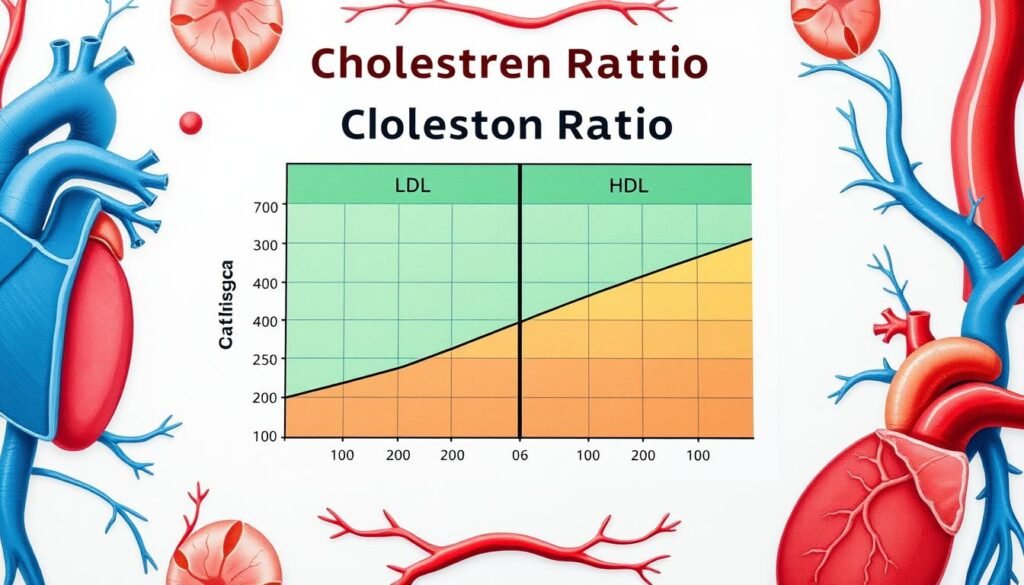
How to Read Your LDL/HDL Ratio Chart
Interpreting your LDL/HDL ratio chart is key to managing cholesterol. It shows your heart health through cholesterol levels in milligrams per deciliter (mg/dL). Learning to read these numbers helps you understand your cholesterol status and what steps to take next.
Understanding Measurement Units (mg/dL)
Cholesterol is measured in mg/dL. A low LDL level indicates better health. Remember these important figures:
- LDL cholesterol ideally should remain below 100 mg/dL.
- HDL cholesterol should be above 60 mg/dL for optimal health.
- Non-HDL cholesterol levels should be less than 130 mg/dL to reduce heart disease risks.
Normal vs. High Cholesterol Levels
Knowing the difference between normal and high cholesterol levels is crucial. See this table for typical values:
| Measurement Type | Value (mg/dL) | Status |
|---|---|---|
| LDL Cholesterol | Below 100 | Optimal |
| LDL Cholesterol | 190 or higher | Very High |
| HDL Cholesterol (Men) | 40 or higher | Desirable |
| HDL Cholesterol (Women) | 50 or higher | Desirable |
| Triglycerides | Below 150 | Normal |
Higher LDL and lower HDL levels may lead to heart disease. Keeping track of these values helps you make wise health choices.
How to Calculate Your LDL/HDL Ratio
Understanding your LDL/HDL ratio is key for keeping track of heart health. This method uses results from a lipid panel. It gives insights into the risk of heart disease. Simple cholesterol math helps you know more about your health.
Using Your Lipid Panel Results
Start by checking your lipid panel. It shows your total cholesterol, LDL, HDL, and triglycerides. You find the LDL/HDL ratio with a formula:
Calculating LDL/HDL ratio = LDL cholesterol / HDL cholesterol
Let’s say someone’s LDL is 100 mg/dL and their HDL is 50 mg/dL. So, the math goes like this:
- LDL/HDL ratio = 100 mg/dL / 50 mg/dL = 2.0
A ratio below 2.0 is ideal, showing a lower heart disease risk. Knowing your LDL, HDL, and triglycerides helps you make smart health choices.
Example Calculation for Context
Imagine a person’s lipid panel looks like this:
| Cholesterol Type | Value (mg/dL) |
|---|---|
| Total Cholesterol | 180 |
| LDL Cholesterol | 100 |
| HDL Cholesterol | 50 |
| Triglycerides | 120 |
Here’s how you do the calculation:
Calculating LDL/HDL ratio = 100 mg/dL / 50 mg/dL = 2.0
This example shows how lipid panel results are useful. They help people keep an eye on and manage their heart health. Correct cholesterol numbers allow for early action. This can lead to better health.
Lipid Profile: Your Key to Cardiovascular Health
A lipid profile is key to understanding heart health. It measures various cholesterol and triglyceride levels. This gives a full picture of heart health. Keeping an eye on these levels can catch risks early, allowing quick action.
Importance of Regular Testing
Keeping cholesterol in check is vital for heart health. Regular checks can spot problems early, leading to faster treatment. People over 20 should test their cholesterol every 4 to 6 years. If heart disease runs in your family, you might need tests more often.
Frequency Recommendations Based on Risk Factors
Here’s how often you should get your cholesterol tested based on risk factors:
- Adults aged 20 and older: Test every 4 to 6 years.
- Individuals with high-risk factors (e.g., diabetes, hypertension): Test annually.
- Those with a family history of hypercholesterolemia: Consult a healthcare provider for personalized testing guidance.
Following the cholesterol testing frequency can help manage lipid profiles. This improves cardiovascular health.

Healthy Lifestyle Choices for Better Cholesterol Levels
Making smart lifestyle choices is key to managing cholesterol. By choosing the right foods and being active, you can boost heart health. These healthy habits help lower bad cholesterol and increase your overall well-being.
Importance of a Healthy Diet
A healthy diet includes fruits, vegetables, whole grains, and healthy fats. It impacts cholesterol greatly. Eating foods low in saturated fats and high in fiber lowers bad cholesterol. It raises good cholesterol. The National Institutes of Health (NIH) suggests adults keep total cholesterol below 200 mg/dl. LDL cholesterol should be under 100 mg/dl. Adding heart-healthy foods to your meals is good for your heart and health.
Role of Exercise in Managing Cholesterol
Regular exercise means 150 minutes of activity a week. It helps manage cholesterol levels. Exercise lowers bad cholesterol and boosts good cholesterol. The CDC says not moving enough can make cholesterol worse. Adding exercise into your life can make a big difference over time.
| Food Item | Cholesterol (mg per serving) |
|---|---|
| Dairy (whole milk) | 33 |
| Cheddar cheese (1 oz) | 30 |
| Tofu (1/2 cup) | 0 |
| Egg (1) | 212 |
| Shrimp (3.5 oz) | 194 |
| Chicken liver (3.5 oz) | 631 |
| Pork chop (3.5 oz) | 85 |
| Veal (top round, 3.5 oz) | 135 |
By eating well and staying active, you can control your cholesterol. This leads to a healthier life.
Family History and its Impact on Cholesterol Levels
Family history has a big role in shaping an individual’s cholesterol and heart disease risk. Some people inherit conditions like Familial Hypercholesterolemia (FH). This means they naturally have higher cholesterol.
Different groups may have different cholesterol issues due to their ancestry. For example, White people often have higher total cholesterol. Asian Americans might battle with high LDL or “bad” cholesterol. And, Hispanic Americans usually have lower HDL or “good” cholesterol. This shows why it’s vital to have plans made for each person’s background.
Age and gender also affect cholesterol levels. Middle-aged adults, especially men, tend to have high LDL levels. This risk is more for men than women before menopause. Being overweight can make these problems worse, leading to unhealthy cholesterol levels.
Checking cholesterol early can help, particularly if heart disease runs in your family. Those with chronic conditions like diabetes or high blood pressure need to be extra careful. They should watch their cholesterol closely. Some medications can also change cholesterol levels. So, talking to doctors about these possible changes is crucial.

If high cholesterol runs in your family, making smart lifestyle choices is key. Changing what you eat and using heart-healthy oils can help. Oils like those from olives or avocados are good choices.
Knowing your family history helps in dealing with cholesterol levels. Regular doctor visits and being proactive are important. They keep your heart healthy.
Monitoring and Managing Your Cholesterol Levels
Keeping an eye on cholesterol is key to staying healthy. Everyone should keep track of their cholesterol numbers regularly. Health experts recommend starting to check cholesterol at age 20, then every four to six years. Screenings help find people who may be at risk for heart disease, especially if their levels are not normal.
When to Consult a Healthcare Provider
If your cholesterol is not where it should be or if you feel symptoms of high cholesterol, see a doctor. Symptoms might include chest pain or high blood pressure. Your doctor can give advice on how to watch your cholesterol closely. They’ll tell you what steps to take to stay healthy. The goal is to have a cholesterol ratio lower than 5 to 1 for better heart health. The best ratio is 3.5 to 1.
Potential Treatments for Abnormal Cholesterol Levels
Fixing cholesterol problems usually means changing how you live, like eating better and working out more. Sometimes, though, lifestyle changes alone aren’t enough. This is when doctors might give medicines, such as statins, to help. Statins are good at lowering the chances of having a heart attack or stroke, especially for those who already have heart worries.
Staying active and living healthy are also very important. Doing moderate exercise for 150 minutes a week helps manage cholesterol. Not smoking is another way to increase good cholesterol and decrease the bad one.
What you eat matters a lot in controlling cholesterol. Foods high in saturated and trans fats affect blood cholesterol more than the cholesterol in food does. Adding plant sterols to your diet can also lower bad cholesterol. It’s important to work with your doctor to find the best way to keep your cholesterol in check.
Conclusion
Knowing about the LDL/HDL ratio chart summary is crucial for managing cholesterol well. This can help keep the heart healthy. It lets people make smart choices to lower their risk of heart diseases.
Regular tests that monitor these ratios can spot health issues early. This means people can start taking care of their health sooner rather than later.
Also, the way we live has a big impact on our cholesterol. Eating right and staying active can make a big difference. A diet low in bad fats and high in good ones, along with exercise, helps a lot.
Lowering bad cholesterol and raising good cholesterol is good for our hearts.
Talking to doctors about cholesterol numbers is key. It helps customize how to prevent or treat heart problems. There’s a strong link between cholesterol levels and diabetes risk, shown by a study with over 100,000 participants.
To know more, check out this research study.