Did you know nearly 93 million adults in the U.S. have high cholesterol? That’s over 200 milligrams per deciliter (mg/dL). It’s key to check your cholesterol for heart health. High cholesterol can cause plaque in arteries, raising heart attack and stroke risk.
Cholesterol charts help us understand what levels are healthy. Blood tests check your total, LDL (bad), HDL (good) cholesterol, and triglycerides. It’s a way to keep your heart healthy.
To take care of your heart, pay attention to cholesterol levels. For tips on keeping cholesterol in check, visit this resource. It’s full of useful information.
Key Takeaways
- Ideal total cholesterol for adults is below 200 mg/dL.
- Start cholesterol checks at age 20, every 4–6 years, says the American Heart Association.
- A cholesterol/HDL ratio under 5:1 is normal. Under 3.5:1 is very healthy.
- Keep LDL cholesterol under 100 mg/dL to lower heart disease risk.
- Lifestyle changes, like diet and exercise, help improve cholesterol levels.
Understanding Cholesterol and Its Importance
Cholesterol is a waxy stuff made by your liver. It’s important for making hormones and absorbing fats. But too much cholesterol is bad. It can cause plaque to build up in your arteries. This can lead to heart problems.
It’s crucial to keep an eye on your cholesterol levels. They show if you’re at risk for heart disease. Regular checks help you understand your body better. For most, keeping non-HDL cholesterol under 130 milligrams per deciliter (mg/dL) is key. But, people who’ve had heart attacks may need it even lower.
A high cholesterol/HDL ratio means a higher risk for heart disease. For example, women with a ratio over 5:1 might face a 89% higher risk of heart attacks. It shows how vital managing cholesterol is. By doing so, we can protect our heart health.
- Optimal non-HDL cholesterol level: below 130 mg/dL
- Normal cholesterol/HDL ratio: below 5:1
- HDL levels for males: 35-65 mg/dL; for females: 35-80 mg/dL
Eating right and exercising helps keep cholesterol in check. Knowing risk factors allows us to be proactive about our health. This can stop plaque from forming in arteries, leading to a healthier heart.
What Is a Cholesterol Ratio Chart?
A cholesterol ratio chart is important for tracking heart health. It uses blood test results to find different cholesterol ratios. These ratios help gauge the risk of heart diseases like heart attacks and strokes.
The chart mostly looks at the total cholesterol to HDL and LDL to HDL ratios. Doctors say a total cholesterol to HDL ratio under 5:1 is good. Ideally, it should be lower, like 3.5:1. Knowing your cholesterol levels tells you a lot about your heart health.
For adults, it’s best if total cholesterol is under 200 mg/dL. Levels between 200 and 239 mg/dL are borderline high. Anything 240 mg/dL or higher is high risk for heart problems.
Getting regular cholesterol checks is vital. Making good lifestyle choices can lower these levels. Eating right and exercising helps a lot. This can boost your good cholesterol, keeping your heart healthy.
How Cholesterol Levels Are Measured
Doctors check cholesterol using a blood test call a lipid panel test. This test looks at different cholesterol types in the blood. It tells us how healthy the heart is. Before the test, you don’t eat for a bit so the test can be right.
The test checks HDL and LDL cholesterol. Adding these up gives the total cholesterol. This helps doctors give advice on heart health. The best total cholesterol is 200 mg/dL or less. The cholesterol ratio is also key.
Blood tests for cholesterol help people take care of their health better. Women should have HDL above 50 mg/dL. Men need it over 40 mg/dL. Drugs like atorvastatin (Lipitor) and rosuvastatin (Crestor) can lower bad cholesterol.
Checking cholesterol often finds heart disease risks early. Some may need more tests because of their family health or conditions. This helps people live healthier and make smart choices with their doctors.
| Cholesterol Type | Ideal Level | High Risk Level |
|---|---|---|
| Total Cholesterol | 200 mg/dL or less | Above 240 mg/dL |
| HDL (Good Cholesterol) | Above 60 mg/dL | Under 40 mg/dL (Men), Under 50 mg/dL (Women) |
| LDL (Bad Cholesterol) | Under 100 mg/dL | Above 160 mg/dL |
| Triglycerides | Below 150 mg/dL | Above 200 mg/dL |
Types of Cholesterol: HDL, LDL, and Triglycerides
Knowing the different types of cholesterol is key for heart health. Cholesterol isn’t just one thing. It’s made up of compounds that do different jobs in our body. We focus on HDL, LDL, and triglycerides because they’re important for heart health. Each type plays a role in keeping our body’s balance and affects our health.
What Are HDL Cholesterol Levels?
High-density lipoprotein (HDL) is the “good” cholesterol. It helps move cholesterol from the arteries to the liver, where it’s removed from the body. We should aim for HDL levels above 60 mg/dL, or at least 40 mg/dL, depending on our health. Higher HDL levels can mean a lower chance of getting heart diseases.
What Are LDL Cholesterol Levels?
Low-density lipoprotein (LDL) is the “bad” cholesterol. It can build up in arteries and form plaque. It’s best to keep LDL levels under 100 mg/dL. Even levels below 130 mg/dL can be okay in some cases. Lowering LDL levels is important to reduce the risk of heart problems and strokes.
Understanding Triglyceride Levels
Triglycerides are a type of fat that gives us energy. But, high levels are bad for the heart. It’s best to keep triglycerides under 150 mg/dL. Levels between 150-199 mg/dL are a bit high and could lead to heart disease. Making changes in your lifestyle can help lower these risks.
| Cholesterol Type | Ideal Level (mg/dL) | Associated Risk |
|---|---|---|
| HDL | Greater than 60 | Lower risk of heart disease |
| LDL | Less than 100 | Higher risk if elevated |
| Triglycerides | Less than 150 | Higher risk if elevated |

What Are Healthy Cholesterol Levels?
Knowing what healthy cholesterol levels are is key for good heart health. These levels change depending on factors like age and sex. It’s important to check your cholesterol often. This helps you understand your heart health and manage risks.
Healthy Cholesterol Levels by Age
Cholesterol goals are not the same for everyone. Adults should keep their total cholesterol under 200 mg/dL. For kids, the target is under 170 mg/dL. It’s important for children to get their first cholesterol test between 9 and 11. They should then get tested every five years.
Differences in Cholesterol Levels Based on Sex Assigned at Birth
Cholesterol levels can also differ by sex. Women should aim for HDL levels of 50 mg/dL or more. Men should try for at least 40 mg/dL. Because of these differences, health checks should be tailored for everyone. This helps in better managing cholesterol.
| Age Group | Total Cholesterol (mg/dL) | HDL (mg/dL) | Frequency of Testing |
|---|---|---|---|
| Children (9-11) | Under 170 | Greater than 45 | Every 5 years |
| Adults (20-45) | Under 200 | 60 or higher (Female) | Every 4-6 years |
| Adults (45-65) | Under 200 | 60 or higher (Female) | Every 1-2 years |
| Seniors (65+) | Under 200 | 60 or higher (Female) | Annually |
Cholesterol Ratio Chart: Your Guide to Health
Understanding the cholesterol ratio chart is key for managing cholesterol well. This chart shows how total cholesterol compares to HDL cholesterol. It tells us how well our body handles cholesterol. The ratio is important when checking heart health.
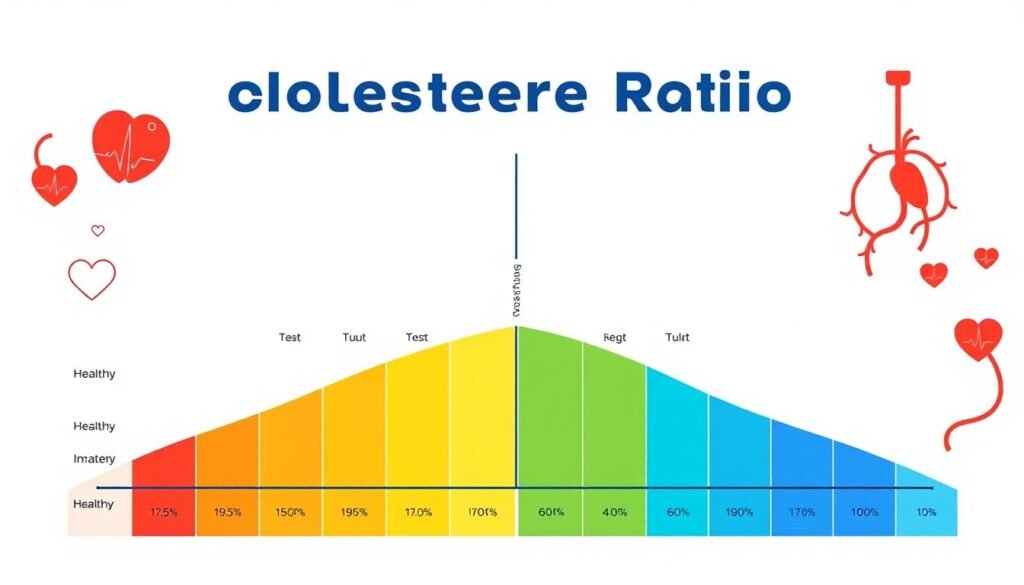
If your total cholesterol to HDL ratio is below 3.5, you’re doing great. It means there’s a good balance between your good and bad cholesterol. Knowing this helps us understand our metabolic health better. If your ratio is higher, it’s time to look into improving your cholesterol.
Getting regular check-ups is important. It helps to know how cholesterol affects your health. For instance, aim for a total cholesterol below 200 mg/dL. LDL cholesterol should be under 100 mg/dL. A full health guide can help you reach these goals.
Living a healthy life with a good diet and exercise is crucial. Using resources like understanding your cholesterol panel and metabolic blood tests makes managing cholesterol easier.
Being informed about cholesterol lets you make smarter health decisions. Knowing your cholesterol ratios and what they mean is key to staying healthy and keeping your heart in good shape.
The Impact of High Cholesterol on Cardiovascular Health
High cholesterol levels are a big risk to heart health. Finding these risks early can help prevent serious health issues. Dealing with cholesterol early leads to better health.
Understanding Atherosclerosis and Its Risks
Atherosclerosis happens when plaque builds up in arteries, making them stiff and narrow. This can slow or block blood flow, causing heart problems. High cholesterol can make you more likely to get this condition. Keeping an eye on cholesterol can help reduce these risks.
The Connection Between Cholesterol and Heart Disease Risk
High LDL cholesterol is linked to more heart disease. People with more LDL are at greater risk for heart attacks and strokes. A study of over 2 million young adults showed a clear link between cholesterol and heart disease. Eating better and living healthier can help keep your heart safe.
Research shows that watching your cholesterol can cut heart disease risk. Higher HDL cholesterol levels can mean lower heart problem risks. It’s key to know about cholesterol’s good and bad sides. Understanding your cholesterol can help you live a healthier, longer life.
For detailed info on managing cholesterol, check out the latest research here.
Lipid Panel: Understanding Your Cholesterol Test Results
A lipid panel is a key blood test. It checks various cholesterol levels. This info helps assess cardiovascular health. It looks at total cholesterol, LDL, HDL, and triglycerides. Understanding your results is the first step towards managing cholesterol.
The lipid panel sorts cholesterol levels clearly:
| Type of Cholesterol | Normal Range | Borderline High | High |
|---|---|---|---|
| Total Cholesterol | <200 mg/dL | 200-239 mg/dL | >=240 mg/dL |
| LDL Cholesterol | <100 mg/dL | 130-159 mg/dL | >=160 mg/dL |
| HDL Cholesterol | >40 mg/dL | – | <40 mg/dL (men); <50 mg/dL (women) |
| Triglycerides | <150 mg/dL | 150-199 mg/dL | >=200 mg/dL |
To prepare for a lipid panel, fasting for 12-14 hours is often needed. Tell your doctor about any meds or health issues. Stress, recent exercise, illness, or smoking can change your results.
The National Heart, Lung and Blood Institute advises starting cholesterol screenings between ages 9 and 11. How often you need tests changes with age. Young adults should get checked every five years. Those over 65 need annual tests, and if you’re 45 to 65, every 1 to 2 years is suggested. Watching these levels helps guide the right lifestyle changes or treatments.
Managing Your Cholesterol: Lifestyle Changes and Diet
Making smart choices in how we live is key to managing cholesterol. This means eating right and staying active. A focus on improving our diet and exercising can greatly help. These steps are important to keep cholesterol levels and our health in check.
Incorporating a Healthy Diet
Eating well is crucial for controlling cholesterol. Try to keep saturated fats to a minimum. This means less fatty meat, full-fat dairy, and processed snacks. Adding more fruits, veggies, whole grains, and lean meats to your meals helps lower bad cholesterol. Studies show that following a Mediterranean diet can greatly cut heart disease risks.
- Aim for less than 200 mg of dietary cholesterol daily.
- Incorporate at least 10 to 25 grams of soluble fiber each day to prevent cholesterol absorption.
- Consume 2 grams of plant stanols and sterols daily to assist in lowering LDL cholesterol.
- Include omega-3 fatty acids from sources like fish, nuts, and seeds to support healthy cholesterol levels.
- Limit sodium intake to a maximum of 2,300 milligrams per day to lower heart disease risk.
Reading nutrition labels helps us make smarter food choices and manage cholesterol better. Making these dietary shifts gradually can really benefit our heart’s health over time.
Exercise and Physical Activity Recommendations
Staying active is essential for managing cholesterol. Working out 150 minutes weekly can lower bad cholesterol and boost the good. Being active helps with weight control. This is important because being overweight can make cholesterol problems worse.
Here are some ways to get moving:
- Walking, jogging, cycling, or swimming for cardiovascular health.
- Incorporating strength training exercises to boost metabolism.
- Participating in activities that promote endurance, flexibility, and balance.
Eating well and exercising regularly is crucial for managing cholesterol. If you’re having trouble, a doctor can offer tailored advice and support. For more tips on taking care of your heart, check out this informative link.
When to See a Doctor for Cholesterol Concerns
Checking your cholesterol regularly is important, starting at age 20. It’s wise to get tested every 4 to 6 years. If you’re at higher risk for heart disease, you might need tests more often. Knowing when to see a doctor for cholesterol issues is key.
High cholesterol levels can lead to serious problems like heart attacks and strokes. If heart disease runs in your family, it’s even more urgent to talk to a doctor early. With 94 million American adults dealing with high cholesterol, taking action early is critical. Getting medical advice helps you manage through changes in lifestyle and treatment options effectively.
Cholesterol isn’t just about numbers. Strive for total cholesterol under 200 mg/dL, with HDL above 60 mg/dL and LDL under 100 mg/dL. These goals help improve overall health and lower heart disease risks. A doctor can guide you to make the right lifestyle changes and develop a treatment plan that fits your needs.

Conclusion
Managing cholesterol is key for heart health. Learning about cholesterol, how to measure it, and its effects helps people make better health choices. Using cholesterol charts can show your levels and risks.
Changing your lifestyle helps a lot. Eat foods high in omega-3 fatty acids, stay active, and don’t smoke. This can lower bad cholesterol and increase good cholesterol. It cuts the risk of heart problems.
It’s important to keep an eye on health, especially after 40 or if you have family risks. Controlling your cholesterol improves health and well-being. Choosing a healthy lifestyle and checking up regularly makes a big difference.