Did you know more than 80% of people find it hard to change their eating habits? The National Institute of Health reveals this challenge is common. Many want to eat better but struggle due to lack of time, high costs, and mental blocks.
This guide offers help. It provides steps to tackle these obstacles around healthy eating. Understanding both the mental and physical barriers helps. By doing so, you can start eating well and improve your health.
Key Takeaways
- Over 80% of individuals face barriers to changing their eating habits.
- Time constraints affect approximately 70% of people trying to eat healthier.
- Many perceive healthy foods as too expensive, impacting their nutrition choices.
- Psychological factors, including low self-esteem, can hinder dietary changes.
- Seeking support is crucial, yet many do not reach out for help.
Understanding the Importance of Healthy Eating
Eating well is key for your body and mind. A good diet helps manage weight and boosts energy. It also reduces the risk of illnesses like diabetes and heart disease. Sadly, not everyone sees the importance of healthy eating and its big effect on health.
Eating right can make you feel happier and give your immune system a boost. It can even help you live longer. Yet, 88% of people around the world don’t eat enough veggies. This shows we need to spread the word about the benefits of nutritious food choices. It’s hard to change what you eat, but it’s definitely possible with effort.
Shifting what you like to eat usually takes three months or more. Choosing fresh and whole foods might seem pricey, especially compared to fast food. But, planning your meals can help you avoid buying food on a whim. It shows that making deliberate food choices can improve your health.
“Healthy eating is not just a trend; it’s a lifestyle that everyone can embrace over time.”
| Aspect | Influence on Nutrition |
|---|---|
| Time to Change Food Preferences | 3 months or more |
| Cost Comparison | Healthy foods often more expensive than fast foods |
| Meal Planning Benefits | Reduces impulse eating |
| Global Vegetable Consumption | 88% of adults fall short of recommended intake |
Knowing about these aspects is vital for eating healthier every day. It’s important to see the hurdles and know that even small tweaks can make a big difference. Starting to eat healthily begins with smart choices and sticking to them.
Identifying Common Nutrition Challenges
People trying to eat healthily face many nutrition challenges. These include money issues, thinking healthy food costs too much, and too large meal sizes at family gatherings. In areas with less than 5,000 people, there’s a common trend towards eating junk food from fast-food joints and snacks from convenience stores.
Research shows that 57.9% of women are overweight or obese. This highlights a big hurdle in keeping a balanced diet. Stress also strongly affects what we choose to eat. About 39% of adults eat to reduce stress, which often leads them to desire more sugary and salty snacks. This makes eating well harder.
Not being able to exercise and daily life demands also play a role. They can make people too tired or not keen on making healthy meals. Social pressures to eat more at gatherings can also derail diet plans.
It’s crucial to tackle these hurdles to make lasting diet changes. The first step is knowing what blocks you from eating better. Community traditions that support preserving food can actually help us eat better. So, pinpointing the nutrition challenges one faces is key to moving towards healthier eating habits.
For more on how insulin resistance affects what we eat, check out this insight on cholesterol management. Also, this study here offers a look into local eating barriers. It gives a clearer view on what stops people from healthy eating habits.
| Common Barriers to Healthy Eating | Description |
|---|---|
| Financial Constraints | Perception that healthy food options are too expensive. |
| Portion Sizes | Large portions served during family gatherings. |
| Frequent Unhealthy Snacks | High consumption of unhealthy foods outside the home. |
| Lack of Time | Busy lifestyles leading to quick, unhealthy food choices. |
| Stress | Emotionally driven eating leading to high sugar and salt cravings. |
Overcoming Barriers to Healthy Eating
Eating healthy sometimes comes with challenges we must overcome for lasting diet improvements. It’s important to address both psychological barriers and physical limits. Doing so can lead to sustainable progress in healthier eating habits.
Recognizing Psychological Barriers
Overcoming diet challenges often starts by understanding psychological barriers. Many fear failure or doubt their self-confidence. These barriers are rooted in past failures and make healthy eating seem impossible. Consulting a professional can help boost self-esteem, encouraging a positive view towards eating and health.
Starting with small, manageable changes can also ease the process. It lowers fear and boosts confidence through tangible achievements.
Acknowledging Physical Limitations
Recognizing physical limitations is also key to healthier eating. Age and health conditions can limit food choices and ability to cook. Busy schedules often lead to quick, unhealthy eating choices.
Planning meals ahead and focusing on simple, affordable recipes can help. This approach avoids last-minute, unhealthy choices. Using fresh, in-season produce is both cost-effective and healthy.
Setting Realistic Goals for Healthy Eating
Setting realistic goals is key to healthier eating. It makes the journey more enjoyable. These goals help you slowly change to better nutrition. Knowing what counts as success helps improve your food choices and lose weight gradually. This way, you feel good about your progress and confident in keeping up the habits.
Defining Success vs. Failure
Success in healthy eating looks different for everyone. It’s not just about weight. Consider these broader signs:
- Increased consumption of fruits and vegetables, aiming for half your plate to be colorful produce.
- Incorporating whole grains in at least 50% of grain intake.
- Choosing fat-free or low-fat dairy products.
- Monitoring sodium levels by selecting lower sodium options.
- Replacing sugary beverages with water or unsweetened drinks.
Setting realistic goals around these factors shows progress. Focus on these milestones. This lets you see how well you’re doing and celebrate your success.
Creating Small, Achievable Milestones
Breaking big goals into smaller ones makes success more likely. Try these simple strategies:
- Commit to incorporating one new healthy eating goal each week for six weeks.
- Aim to consume at least eight ounces of seafood weekly to obtain omega-3 fatty acids.
- Reduce solid fats found in desserts and processed foods to create a healthier overall diet.
- Involve family in meal preparation techniques to alleviate time constraints and enhance social support.
Keep checking and adjusting your goals to match your changing needs. Seeing discomfort as growth helps you stay engaged. This balance between success and failure leads to a healthier eating lifestyle.

Developing Healthy Eating Habits
Getting into healthy eating is key for feeling good overall. Eating various foods makes meals exciting and meets nutritional needs. Mindful eating helps us notice what and how we eat. This means listening to when we’re hungry and really enjoying our food. It helps us have a good relationship with eating.
Incorporating Variety in Food Choices
Keeping your diet fun and varied is important. It stops eating healthy from becoming boring. Here are some ideas to try:
- Include different colors in meals to maximize nutrient intake.
- Experiment with new recipes featuring unfamiliar ingredients.
- Try international cuisines, which often offer unique flavors and preparation styles.
- Mix staple ingredients like grains and proteins to create diverse dishes.
Strategies for Mindful Eating
Mindful eating can really change how you eat for the better. Let’s look at some ways to eat mindfully:
- Eat slowly, taking time to appreciate the flavors and textures of food.
- Listen to your body’s hunger signals; stop eating when full.
- Minimize distractions during meals, such as screens or loud environments.
- Reflect on food choices and their effects on energy and mood.
By using these strategies, eating becomes more enjoyable. Adding variety keeps our meals interesting. This helps us stick to healthy eating. Below is a table showing how mindful eating can help:
| Strategy | Benefit |
|---|---|
| Eating slowly | Enhanced enjoyment and satiety |
| Listening to hunger cues | Prevents overeating |
| Avoiding distractions | Improved focus on food |
| Reflecting on choices | Better decision-making |
Meal Planning Tips for Busy Lives
Meal planning can change how busy people eat. By making smart choices and managing time well, having healthy meals is possible even with a tight schedule. This section talks about easy ways to prepare meals and gives recipes to show that eating well doesn’t take a lot of time.
Time Management Strategies for Meal Preparation
Having a plan makes meal time easier to handle. Here are some tips to help:
- Weekly vs. Monthly Plans: 56% prefer weekly meal plans, and 44% go monthly. Picking one that fits your life can make things smoother.
- Meal Prep Scheduling: 32% cook meals in advance, 24% do quick prep right before eating. 44% use a mix for more flexibility.
- Freezing Leftovers: Most save meals for later within 3 to 4 days. This cuts waste and saves time on busy days.
- Smart Shopping: 68% of families use discounts for adding special meals to their plan. This keeps things fun without spending too much.
Quick and Healthy Meal Recipes
Having some go-to quick recipes can change your meals. Here are some easy options that can be changed up with what you have:
- Oats or Low-Fat Yogurt with Berries: A 62% favorite for breakfast. It’s easy, healthy, and can be mixed up through the week.
- Canned Tomatoes and Legumes: 51% keep canned tomatoes, and 68% have legumes ready. They’re great for adding protein easily.
- Whole-Grain Rice: Loved by 44% of homes, it’s great for many dishes.
- Flax and Chia Seed Smoothies: Flax and chia seeds add a boost to smoothies. 52% of families love using frozen fruits for taste.

Eating Well on a Budget
Eating healthy doesn’t have to drain your wallet. Anyone can shop for nutritious food without spending a lot. You can save money and eat well by smart shopping.
Strategies for Affordable Healthy Shopping
Use sales to plan your meals. Buying seasonal produce saves money and boosts nutrition. Bulk purchases cut down on shopping trips and expenses.
- Monitor local grocery store flyers for sales and discounts.
- Plan meals using ingredients that are currently on sale.
- Shop at farmers’ markets for fresh produce at competitive prices.
- Explore warehouse stores like Costco for bulk purchases of fruits, vegetables, and whole grains.
Utilizing Sales and Discounts Effectively
Coupons help save even more money. Shopping during sales increases your savings. For organic food, compare prices between stores.
- Keep an eye out for bulk discounts on non-perishable items.
- Sign up for loyalty programs that offer ongoing discounts and exclusive sales.
- Use smartphone apps that track ongoing sales and available coupons.
- Purchase generic brands, which often provide the same quality as name brands at a lower price.
| Strategy | Description | Benefits |
|---|---|---|
| Buying in Bulk | Purchasing larger quantities of non-perishable items. | Saves money overall and reduces shopping frequency. |
| Seasonal Shopping | Focusing on fruits and vegetables that are in season. | Lower prices and better taste due to peak freshness. |
| Using Coupons | Collecting and applying coupons for in-store discounts. | Maximizes savings on necessary purchases. |
These strategies help you eat well without spending too much. You can enjoy good food and stay on budget.
Overcoming Food Preferences and Cravings
Overcoming food preferences and cravings is key to a healthy life. Having patience helps, as learning to like new foods takes time. We often choose foods that make us feel good, so it’s important to try new ones slowly.
Expanding Tastes Over Time
Start by adding small amounts of new foods to your meals. Our taste buds can learn to enjoy new things if we try them more than once. This helps us like a wider range of foods and cuts down on cravings for unhealthy snacks.
Eating lots of whole foods full of nutrients makes it easier to eat healthily. Studies show this leads to better eating habits.
Incorporating Favorite Foods into Healthy Choices
Making healthy versions of your favorite foods can be fun. Instead of giving them up, use ingredients that are good for you. A 2019 study found that feeling good about your food choices leads to better health.
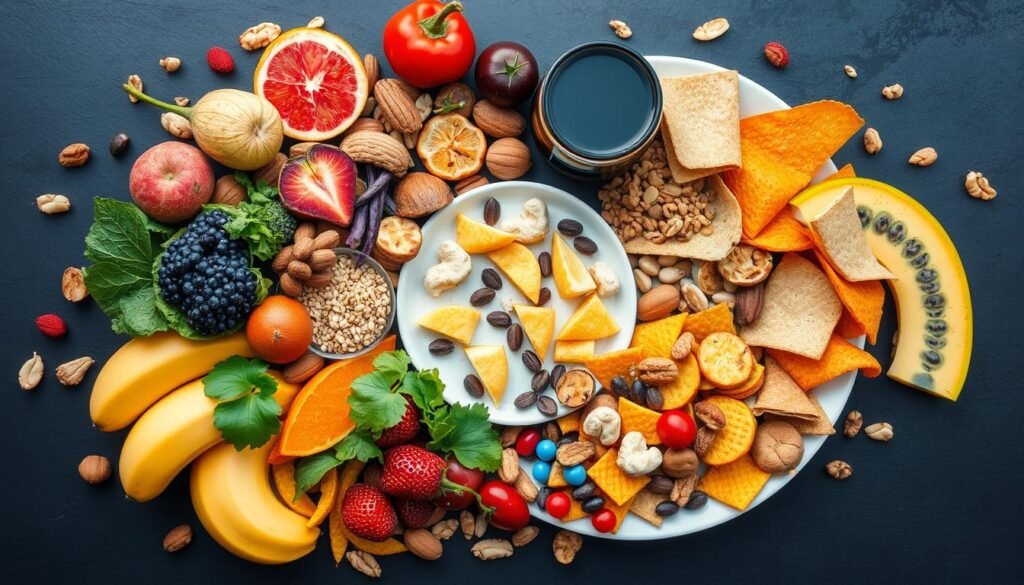
Enjoying your favorite foods from time to time is okay. It keeps you from feeling like you’re missing out. Small changes and being mindful about eating can help you find a good balance in what you eat.
Want to learn more about handling food cravings? Check out this article for tips on eating healthy for the long term.
Dealing with External Influences
External influences are big in shaping eating habits. These include social pressures, cultural norms, and available food choices. It’s key to know how these factors work together to help us make healthier choices. Having strong support can give the encouragement needed, making healthier living easier.
Finding Support from Family and Friends
Having the backing of family and friends can really boost healthy eating efforts. This support can lead to better accountability and motivation. If loved ones eat healthy too, it helps us keep on the right path. Sharing meals and recipe ideas can make everyone more committed to keeping up with better food choices.
Building a Community Around Healthy Eating
Being part of a community focused on healthy eating strengthens our dietary goals. Meeting others in health groups or online lets us swap tips, stories, and cheers. It can help us feel less alone as we change our lifestyles. Planning meals and cooking together encourage trying new recipes and skills, boosting our cooking know-how.
| Type of Support | Benefits | Examples |
|---|---|---|
| Family Support | Encouragement and accountability | Cooking together, sharing meal ideas |
| Friend Support | Motivation and inspiration | Group workouts, recipe sharing |
| Community Groups | Knowledge sharing and socializing | Workshops, potluck dinners |
Acknowledging the role of external influences and finding support makes healthy eating habits last. Whether it’s family, friends, or community groups, support is key.
Skills and Knowledge for Cooking
Anyone looking to cook healthy meals needs strong cooking skills. Practicing and improving these skills can lead to better eating habits. Cooking means more than just following recipes. It includes a lot of knowledge and skills for dietary success.
Enhancing Cooking Techniques
Getting better at cooking requires practice and sometimes, guidance. Cooking classes help university students learn a lot, a study shows. This study saw 80 students learn significantly more over six weeks.
These programs offer classes and resources like food market tours.
- Engage actively in cooking classes to practice skills.
- Learn to read nutrition labels to make informed choices.
- Recognize proper serving sizes for various food groups.
- Utilize meal planning as a framework for consistent healthy cooking.
Utilizing Resources for Learning New Recipes
Nowadays, finding new recipes online is easy. Beginners can use websites, social media, and tutorials for new dishes. They can also enjoy learning from experts in local classes. By checking out effective cooking interventions, they gain techniques and the courage to try new things in the kitchen.
Using different learning methods really helps improve cooking. As you get better, you’ll make healthier food choices. Each new dish you master boosts your confidence. This encourages you to keep eating healthily.
| Skill Area | Example Techniques | Resources |
|---|---|---|
| Cooking Fundamentals | Chopping, sautéing, boiling | YouTube tutorials |
| Meal Planning | Creating a weekly menu | Mobile apps, community classes |
| Nutritional Knowledge | Reading nutrition labels | Dietitian consultations |
| Recipe Development | Experimenting with ingredients | Online recipe blogs |
By focusing on better cooking techniques and using available resources, people can improve their cooking. This helps them eat healthier every day.
Maintaining a Healthy Eating Lifestyle
Maintaining a healthy eating lifestyle goes beyond mealtime choices. It requires forming habits that boost your overall health. Achieving small wins is important. They help raise your self-esteem and motivate you to keep going. An eating plan that includes nutritious choices in your daily life is key to making these habits stick.
Building Self-Esteem through Small Wins
Small achievements are the building blocks of self-esteem. When you pay attention to each step you make toward a healthy lifestyle, you support good habits. Here are some examples:
- Choosing a healthy snack over junk food.
- Doing meal prep for the week.
- Adding 20 minutes of exercise to your day.
Celebrating these milestones boosts your motivation. It helps you stay committed to healthy eating.
Creating a Routine around Healthy Eating
Having a regular eating schedule helps you stay healthy. Planning your meals each week can stop you from making spur-of-the-moment eating decisions. This can save you about $250 every month. Eating a variety of foods you like makes meals enjoyable and keeps your diet balanced. Soon, making healthier choices will feel natural.
| Activity | Estimated Time | Impact on Lifestyle |
|---|---|---|
| Daily Exercise | 20 minutes | Greatly improves your health and happiness |
| Weekly Meal Planning | 1-2 hours | Lowers impulse eating and saves money |
| Celebrating Small Wins | Ongoing | Raises self-esteem and promotes healthy decisions |
Creating a supportive setting for a healthy eating lifestyle is crucial. It boosts self-esteem and wellness. Making these practices part of your daily life brings lasting benefits and a better life quality.
Making Sustainable Lifestyle Changes
A journey to eat better is all about commitment and being able to adapt. It helps to know the steps of changing behavior. This means understanding stages like thinking about change, getting ready, taking action, and keeping up the good work. Each step is key to making lasting improvements in what we eat.
Tracking Progress Over Time
It’s important to keep an eye on how you’re doing. Watching what you eat and how much you move can show what’s working and what’s not. You can use a diary or apps like MyFitnessPal to track your progress. Doing this helps you stay on track and celebrate your wins.
Adjusting Goals as Needed
Being able to change your goals is needed for long-term wins. When moving through the steps of change, you might hit obstacles. Changing your goals helps you tackle these challenges. It also lets you stay true to your changing interests and life.
By aiming for realistic goals, you’ll keep going even when it’s tough. Noticing any hesitation helps you make changes that fit you better. This flexible approach raises your chances of sticking with healthy choices and always getting better.
| Stage of Change | Description | Key Focus |
|---|---|---|
| Contemplation | Thinking about making a change and becoming motivated. | Self-reflection and motivation |
| Preparation | Making plans and setting specific goals for action. | Goal-setting and strategy development |
| Action | Actively implementing changes in diet and activity levels. | Behavior modification and diligence |
| Maintenance | Establishing new habits over a sustained period. | Consistency and integration into daily life |
Conclusion
Overcoming barriers to healthy eating is a journey. It starts with recognizing personal challenges. Then, it moves to actively using effective strategies. A lot of people in the United States find it hard to follow the Dietary Guidelines. They face issues like not having enough time and the cost of food being high. By planning meals and preparing them ahead, people can greatly improve their odds of eating healthily. Studies have found that those who plan their meals are 9% more likely to keep up with healthy eating.
Also, practicing mindful eating can help you eat less, sometimes up to 20% less per meal. This method boosts your connection with what you eat. It makes managing cravings and likes easier. Plus, getting support from friends, family, or a health coach can raise your motivation and accountability. People with a support system are 12% more likely to keep up healthy eating habits, showing the value of community.
To keep a healthy lifestyle going, being flexible, eating in moderation, and adapting are key. Focusing on these points, along with tips from this guide, can lead to positive changes. For more in-depth advice on beating obstacles to healthy eating, check out this detailed guide. Although it might seem hard at first, with patience and resilience, enjoying a nutritious lifestyle is indeed possible.